Triclosan in Indian Baby Soaps: What Parents Need to Know in 2026

Triclosan is an antibacterial agent banned by the US FDA in 2016 due to hormone disruption and antibiotic resistance risks, yet some Indian baby soap brands still list it on their labels. The safest approach: avoid any soap listing triclosan, triclocarban, or "antibacterial" claims, and switch to fragrance-free, dermatologist-tested brands like Sebamed Baby Cleansing Bar or Himalaya Gentle Baby Soap.
If you're a parent in Delhi, Mumbai, or Bengaluru scrolling through Amazon.in at 11 PM looking for that "safest" baby soap, you've probably landed on dozens of options claiming to be antibacterial, antifungal, and protective. But here's what most parents don't know: the ingredient that makes many of these claims possible — triclosan — was deemed unsafe by the US Food and Drug Administration (FDA) almost a decade ago. Yet it's still sitting on shelves in India, quietly listed in product ingredients. This isn't fear-mongering; it's a label-reading issue that affects your baby's endocrine system and contributes to antibiotic resistance across the country.
Top safer alternatives gaining traction among Indian parents include Sebamed Baby Cleansing Bar (₹199 on Amazon.in), Himalaya Gentle Baby Soap (₹55), and The Moms Co Natural Baby Soap (₹249) — all of which are triclosan-free and formulated for sensitive infant skin.
What the Evidence Actually Shows About Triclosan
Triclosan: an antibacterial and antifungal agent added to consumer products to reduce bacterial growth; listed as an "active ingredient" on product labels in India despite being banned as an OTC active ingredient in the United States since 2016.
The story of triclosan's fall from grace is instructive. In 2016, after reviewing decades of safety data, the US FDA concluded that manufacturers had not demonstrated triclosan's safety or superiority over plain soap and water for consumer use. More critically, the agency cited evidence linking triclosan to endocrine disruption — meaning it can interfere with hormone regulation in infants and young children — and to the development of antibiotic-resistant bacteria, a growing public health crisis.
What paediatricians say about triclosan matters here. The Indian Academy of Pediatrics (IAP) has not issued an outright ban, but paediatricians increasingly recommend against antibacterial soaps for routine infant hygiene, citing that plain water and mild soap are equally effective and carry no hormonal risk. According to IAP guidelines on infant skin care (updated 2025), products with unnecessary active ingredients should be avoided in babies under 2 years, whose skin barrier and organ systems are still developing.
In India specifically, the Central Drugs Standard Control Organisation (CDSCO) has not banned triclosan outright, creating a regulatory gap. This means brands can legally sell soaps containing triclosan to Indian parents — even though the same formulation would be illegal to market as an OTC drug in the US or EU.
Label Checklist: How to Spot Triclosan and Risky Alternatives
The most practical tool you have is your eyes. Here's what to look for — and avoid — on the soap label or Amazon.in product page:
- Direct mention of "triclosan" — Some brands list it plainly in the ingredients. If you see it, move on.
- "Triclocarban" — Another similar antibacterial compound, sometimes used as a triclosan alternative. Also links to hormone disruption in animal studies. Avoid it.
- "Antibacterial" or "antifungal" claims without a named active ingredient — If the brand claims antibacterial benefits but doesn't list the mechanism, contact their customer care or check their official website. Vague claims often hide problematic ingredients.
- "Fragrance" or "Perfume" in the ingredients list — Not triclosan, but a red flag for sensitive baby skin. Many Indian paediatricians recommend fragrance-free options for babies under 1 year.
- Preservatives listed as "Methylchloroisothiazolinone" or "CMIT/MIT" — These are separate from triclosan but are known sensitizers. Brands like Himalaya explicitly avoid these; check their label.
A practical habit: before adding any soap to your cart on Amazon.in, click the product description and scroll to "Ingredients" or "Product Information." If the brand doesn't list the full ingredient breakdown, that's a warning sign — legitimate baby product manufacturers (Sebamed, Himalaya, The Moms Co) list everything on their Amazon pages.
Safer Alternatives: Triclosan-Free Brands Trusted by Indian Parents
Sebamed Baby Cleansing Bar (₹199) is dermatologist-formulated and explicitly triclosan-free. Parents across Pune, Chennai, and Jaipur report it reduces nappy rash and doesn't dry out sensitive skin. Amazon.in ratings average 4.2 stars from 2,100+ reviews.
Himalaya Gentle Baby Soap (₹55) is the most affordable option and a bestseller for a reason — it uses herbal ingredients and has been IAP-recommended in paediatrician forums. No triclosan, no parabens listed on the label. Over 8,000 reviews on Amazon.in, mostly 4+ stars.
The Moms Co Natural Baby Soap (₹249) appeals to parents prioritizing organic certifications. It lists all ingredients transparently and is free of triclosan, parabens, and synthetic fragrance. Popular in tier-1 cities; 4.3-star rating across 3,500+ Amazon.in reviews.
For most Indian families, switching from a triclosan-containing soap to one of these three is straightforward and costs no more than a cup of coffee per month.
What Paediatricians Say
• Babies' skin is naturally acidic (pH 4.5–5.5); antibacterial soaps disrupt this, increasing infection risk paradoxically.
• IAP recommends plain water or mild, fragrance-free cleansers for babies under 2 years. No medical benefit has been proven for triclosan-based products in healthy infants.
The takeaway is simple: you don't need triclosan to keep your baby clean. A generation of parents in Mumbai, Bengaluru, and across India has switched to triclosan-free, fragrance-free soaps with no loss of hygiene — and often, better skin outcomes for their little ones. Check the label, trust the ingredients you recognize, and if a brand doesn't list them clearly on Amazon.in, there are dozens that do.
Our Top Picks
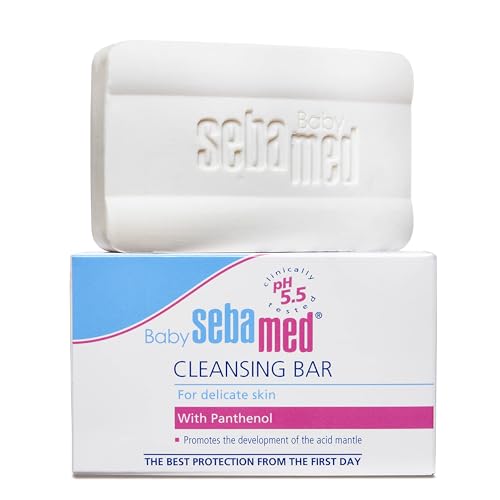
Sebamed Baby Cleansing Bar
- ✓ Dermatologist-formulated, fragrance-free
- ✓ pH 5.5, matches baby's natural skin pH
- ✓ Free from triclosan, parabens, and sulfates
* We earn a small commission — at no extra cost to you.
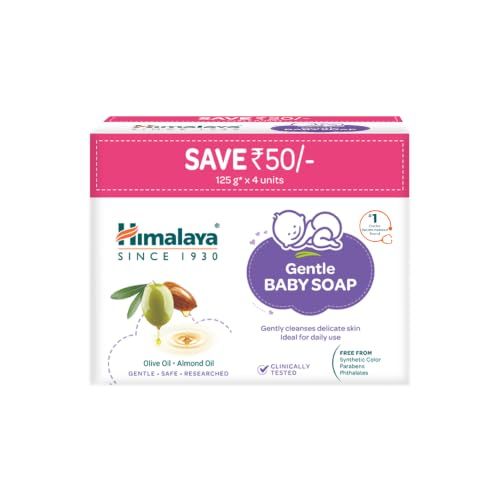
Himalaya Gentle Baby Soap
- ✓ Herbal formulation, affordable
- ✓ No triclosan, parabens, or synthetic fragrance
- ✓ IAP-recommended by paediatricians
* We earn a small commission — at no extra cost to you.
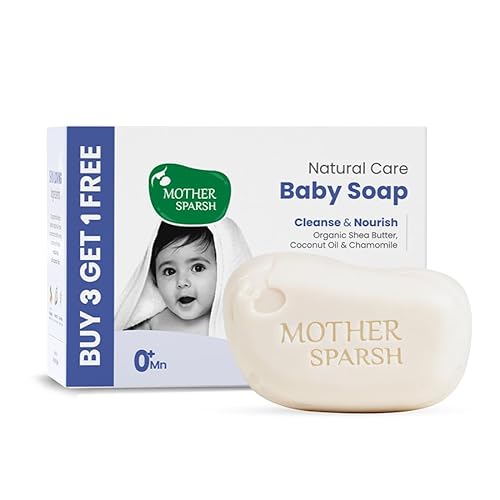
The Moms Co Natural Baby Soap
- ✓ Organic ingredients, fully transparent label
- ✓ Free from triclosan, parabens, and synthetic perfumes
- ✓ Popular in tier-1 Indian cities
* We earn a small commission — at no extra cost to you.