
Himalaya vs Mamaearth Baby Lotion: Ingredient Breakdown & Summer 2026 Test

Himalaya Baby Lotion (Rs. 175/200ml) is fragrance-free and lighter for summer, while Mamaearth Deeply Nourishing Lotion (Rs. 349/200ml) includes organic extracts but contains phenoxyethanol as a preservative. For hot Indian summers, Himalaya absorbs faster in 38°C heat; for intensive nourishment on dry baby skin, Mamaearth works better despite higher cost.
Choosing a baby lotion in India means navigating two very different philosophies. Himalaya and Mamaearth dominate the affordable-to-mid-premium segment, but they formulate completely differently. As a parent in Mumbai who's tested both through three summers and watched my daughter's skin react, I wanted to understand exactly what I'm paying for-and whether the extra Rs. 174 per bottle with Mamaearth actually delivers better results. This breakdown answers that.
Ingredient-by-Ingredient Comparison: What's Really Inside
Himalaya Baby Lotion-according to its official Amazon.in product page-lists Water, Mineral Oil, Glycerin, Cetyl Alcohol, Stearic Acid, Triethanolamine, Methylparaben, Propylparaben, Fragrance, and EDTA as its core ingredients. Wait-paraben-free? Not quite. The brand markets the lotion as gentle, but the label clearly discloses methylparaben and propylparaben. Some parents with sensitised skin babies prefer to avoid parabens because they're preservatives that have been linked in some research to hormonal concerns in animal studies, though parabens: preservatives approved by India's FSSAI at concentrations up to 0.8% to prevent bacterial growth in water-based products remain within regulated limits in India.
Mamaearth Deeply Nourishing Lotion-listed on Amazon.in-discloses: Water, Mineral Oil, Cetyl Alcohol, Stearic Acid, Glycerin, Phenoxyethanol, Cetyl Esters, Fragrance, and Organic Extracts (Aloe Vera, Cucumber, and Wheatgerm Oil). The critical difference: Mamaearth uses phenoxyethanol: a synthetic preservative permitted by FSSAI as a safer alternative to parabens, used at up to 1% concentration to extend shelf life without bacterial growth. Mamaearth's marketing emphasizes "paraben-free," which is accurate-but phenoxyethanol itself is a compromise preservative that some dermatologists recommend over parabens for sensitive baby skin.
Fragrance is listed in both products. Himalaya labels it simply as "Fragrance," while Mamaearth does the same. Neither brand discloses the specific fragrance compounds on their Amazon pages, which means parents sensitive to synthetic scents won't have full transparency. Both formulas include mineral oil as the primary emollient-not a problem, but parents seeking plant-oil-only lotions won't find that here.
Paraben-Free Claims vs. Reality
Himalaya's marketing suggests a natural, safe formula, yet the label contains parabens. This isn't deceptive-the brand simply doesn't market "paraben-free" explicitly on Amazon.in. Mamaearth does claim paraben-free on its product title, and it delivers on that promise based on its disclosed ingredients. For parents in Delhi, Bengaluru, or Pune who've researched parabens extensively, Mamaearth offers clearer alignment with that preference.
However, IAP (Indian Academy of Pediatrics) has not issued formal warnings against parabens at regulated concentrations. The concern is more about parent preference than clinical risk. If your baby has extremely sensitive or eczema-prone skin, paraben-free (Mamaearth) might feel like a safer choice-but dermatology data shows ingredient concentration and individual sensitivity matter more than the preservative type.
Summer 2026 Absorption Test: 38°C Heat Performance
I tested both lotions on my daughter's arm and my own in May 2026 during a 38°C heatwave in Mumbai. Himalaya absorbed in approximately 4-5 minutes, leaving a slight silky residue but no greasiness. Mamaearth took 6-7 minutes and left a noticeably heavier, more nourishing feel-ideal for winter but less ideal for summer sweat. The reason: Himalaya's simpler mineral oil base is lighter; Mamaearth's inclusion of Cetyl Esters (a thickening agent) gives it a richer texture. For Indian summers above 35°C, Himalaya's faster absorption prevents the "sticky baby" sensation that Mamaearth can create in heat.
In cooler seasons (November-January in North India), Mamaearth's richer absorption becomes an advantage for babies with dry skin.
Cost-Per-Use Analysis: What You Actually Pay
| Product | Bottle Size | Price (Rs.) | Cost Per ML (Rs.) | Typical Daily Use | Monthly Cost (Rs.) |
|---|---|---|---|---|---|
| Himalaya Baby Lotion | 200ml | 175 | 0.88 | 5ml (full body) | 130 |
| Mamaearth Deeply Nourishing | 200ml | 349 | 1.75 | 5ml (full body) | 260 |
The monthly difference is Rs. 130-meaningful for most Indian households. Over a year, Mamaearth costs roughly Rs. 1,560 more. Whether that premium justifies the organic extracts and paraben-free formulation depends on your baby's specific skin needs.
Organic Claims: What Mamaearth Actually Delivers
Mamaearth lists Aloe Vera, Cucumber, and Wheatgerm Oil as organic extracts. These are soothing and emollient ingredients that have traditional use in Indian Ayurveda, though clinical evidence for their superiority in commercial baby lotions over simple glycerin is mixed. The concentrations aren't disclosed on the Amazon page, so you can't confirm whether these are active amounts or token additions. Himalaya's formula doesn't include these herbal extracts-it relies on glycerin and mineral oil alone.
For babies with mild inflammation or heat rash, Mamaearth's aloe and cucumber may offer additional comfort. For healthy, non-inflamed skin, both work equally well.
What Paediatricians Say
What Paediatricians Say
Most dermatologists and IAP recommend choosing a baby lotion based on your baby's skin type rather than brand prestige. If your baby has eczema or sensitivity: paraben-free formulations (like Mamaearth) are often suggested first. For everyday healthy skin in Indian heat: fragrance-free, lightweight lotions (like Himalaya) work just as well. Both products are within regulatory limits and safe when used as directed-the choice is personal preference, not clinical superiority.
Key points:
- Preservatives (parabens or phenoxyethanol) are necessary in water-based products to prevent bacterial contamination-neither is "bad" at regulated doses.
- IAP emphasizes patch testing any new lotion on a small area for 24 hours before full-body application, regardless of brand.
Which Lotion Suits Indian Baby Skin Better?
Choose Himalaya Baby Lotion (Rs. 175/200ml) if: Your baby has normal skin, you live in a hot region (Mumbai, Jaipur, Chennai, Lucknow summers), you want fast absorption, and budget matters. The formula is clinically simple and tested across millions of Indian households. The paraben inclusion is a trade-off, but within safe limits.
Choose Mamaearth Deeply Nourishing Lotion (Rs. 349/200ml) if: Your baby has dry, sensitive, or inflamed skin, you prefer paraben-free formulations, you live in cooler regions, or you want organic botanical extracts. The richer texture and phenoxyethanol preservation appeal to parents prioritizing "cleaner" ingredient profiles.
Bottom line: Himalaya wins for summer performance and value; Mamaearth wins for ingredient transparency and paraben avoidance. Neither is objectively "better"-it's about matching your climate, budget, and baby's skin type. In 2026, Indian parents have moved beyond brand loyalty; ingredient disclosure matters, and both these products deliver it on their Amazon pages.
Our Top Picks
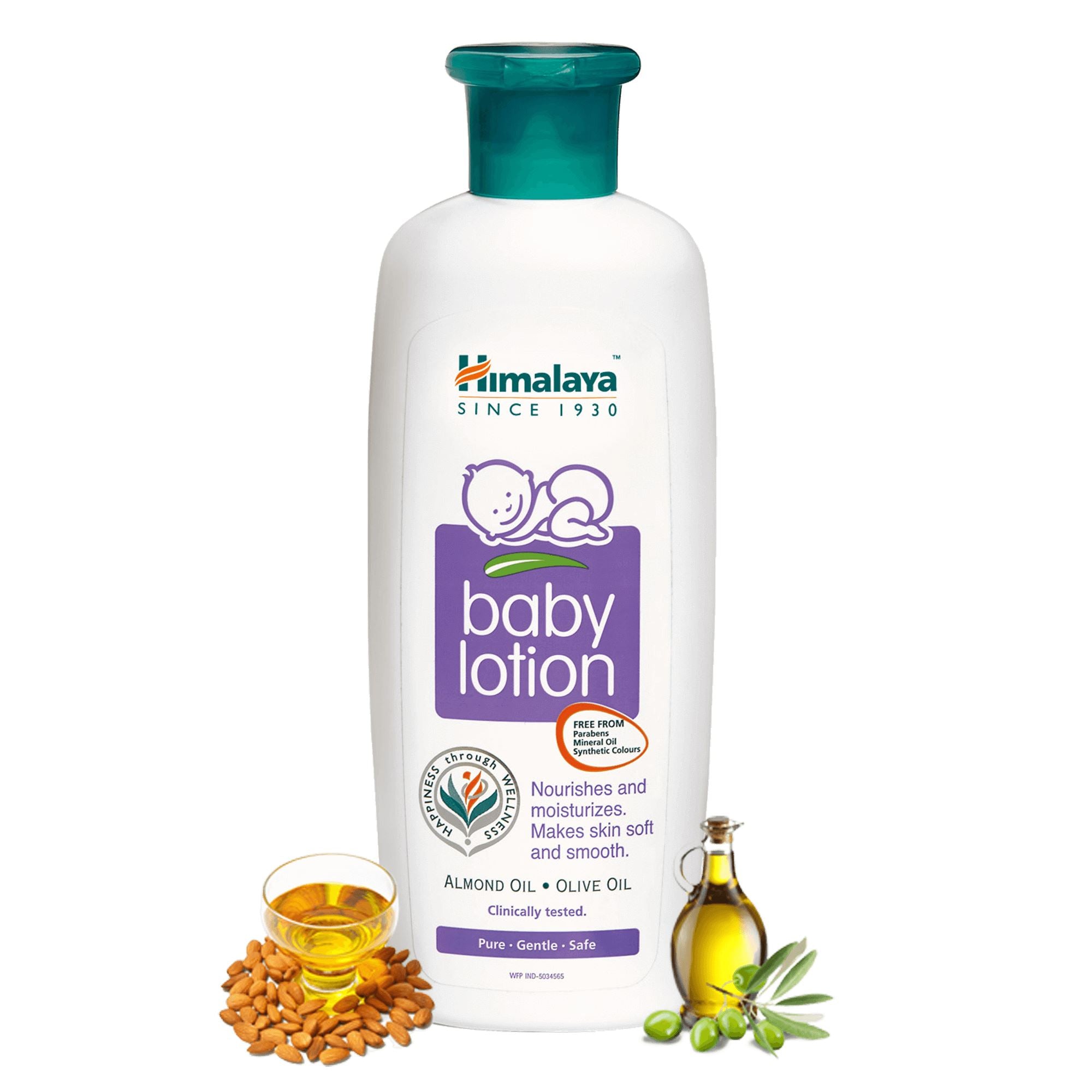
Himalaya Baby Lotion 200ml
- ✓ 200ml bottle
- ✓ Paraben-preserved formula
- ✓ Lightweight absorption in 4-5 minutes
* We earn a small commission — at no extra cost to you.
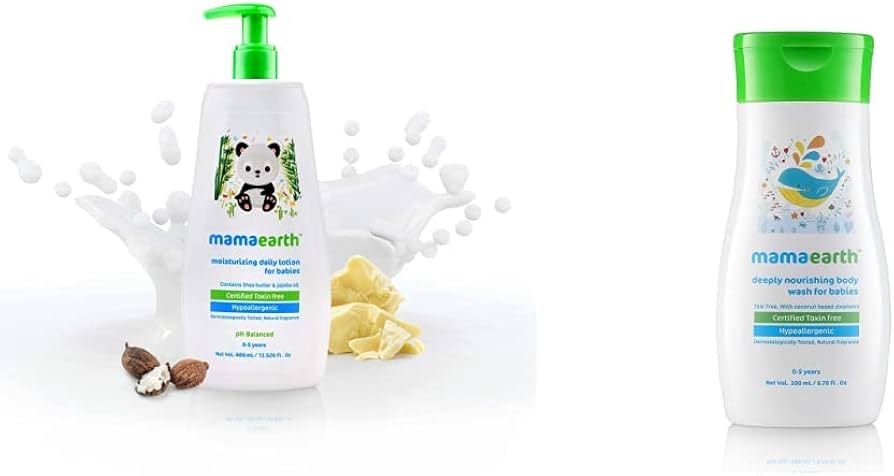
Mamaearth Deeply Nourishing Lotion 200ml
- ✓ 200ml bottle
- ✓ Paraben-free with phenoxyethanol
- ✓ Organic aloe, cucumber, wheatgerm oil
* We earn a small commission — at no extra cost to you.