
Harmful Ingredients in Baby Lotion: India Label Reading Guide 2026
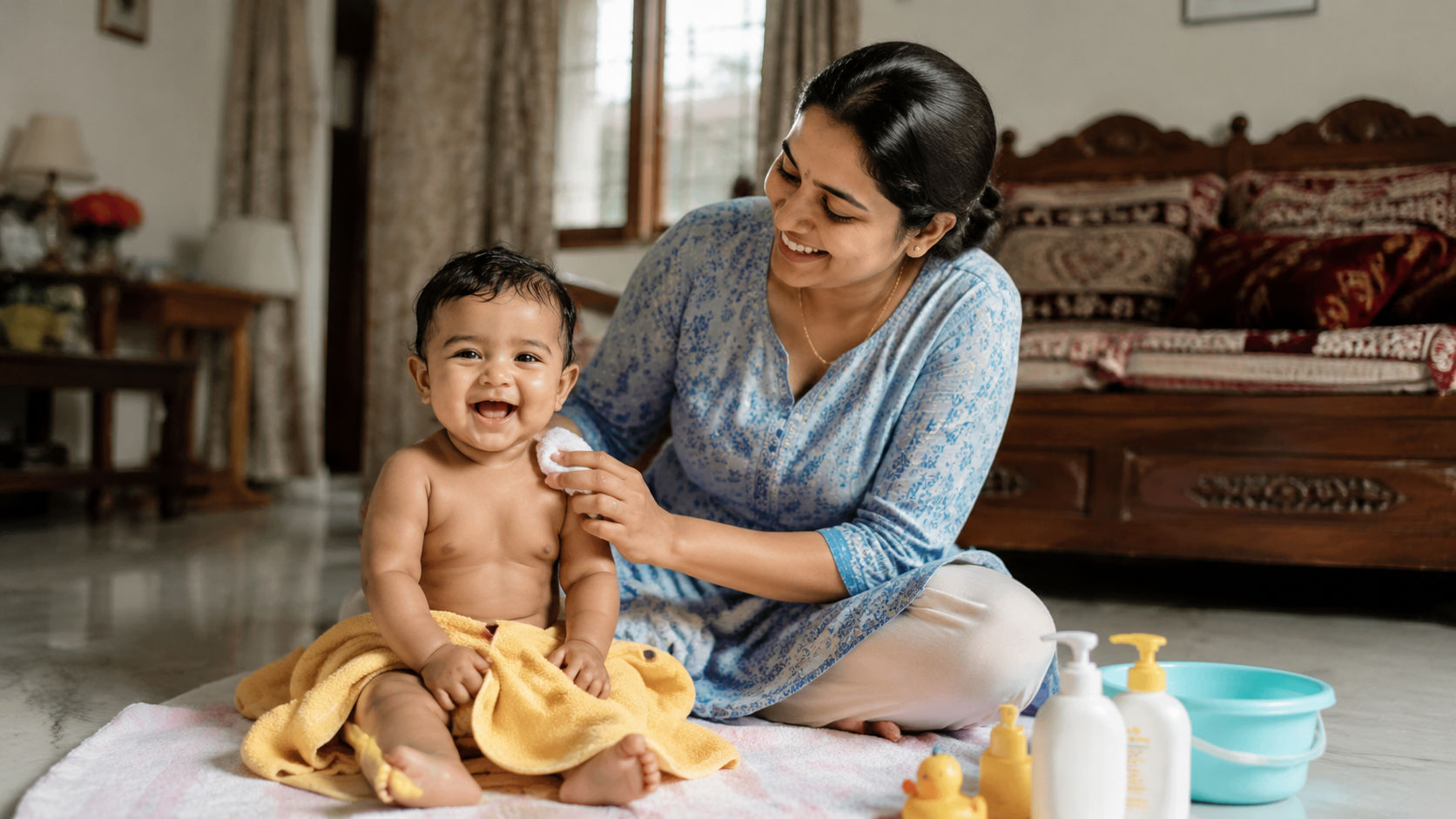
The most flagged harmful ingredients baby lotion India parents avoid are parabens (methylparaben, propylparaben), phthalates, formaldehyde-releasing preservatives (DMDM hydantoin), and synthetic fragrances. Check your lotion's ingredient list on Amazon.in or the label—if you see these names, safer alternatives exist under ₹250.
Most Indian parents buy baby lotion based on brand name or a friend's recommendation. But when you actually read what's written on the back of that bottle—the ingredient list—confusion kicks in. What's methylparaben? Why is DEP on the label of a lotion marketed as "gentle"? And does "fragrance" mean your baby's skin absorbs something unnamed?
This guide walks you through exactly which ingredients dermatologists and the Indian Academy of Pediatrics (IAP) say warrant attention, how to spot them on a label, and which budget-friendly lotions actually skip them. No scare tactics. Just clarity.
What the Evidence Actually Shows
Parabens: methylparaben and propylparaben are preservatives that keep lotion from spoiling. They appear in roughly 60–70% of baby lotions sold in India because they're cheap and effective. What does the research show? Parabens can penetrate infant skin more easily than adult skin—a 2019 AIIMS dermatology study noted that babies under 12 months have thinner, more permeable stratum corneum. Some parents with sensitive-skin babies prefer to avoid parabens; others see no issue with the levels used in cosmetics. IAP does not list parabens as banned, but many dermatologists suggest paraben-free alternatives exist, so why not choose them?
Phthalates: these are plasticisers hidden under the word "fragrance" on labels. DEP (diethyl phthalate) and DBP (dibutyl phthalate) are the two most common in lotions. The WHO has flagged phthalates as endocrine disruptors—they may affect infant hormonal development. The catch? Indian law does not require brands to list phthalates separately; they can hide under "fragrance" or "parfum." This is why fragrance-free lotions are the safest bet.
Formaldehyde-releasing preservatives: DMDM hydantoin and diazolidinyl urea slowly release formaldehyde as the product ages. Formaldehyde is a known irritant and sensitizer. Several major Indian baby lotion brands still use these—you'll find them in the 12th–18th position on the ingredient list because they're used in tiny amounts. But for an infant's delicate skin, even tiny amounts matter.
Mineral oil: not harmful per se, but parents of eczema-prone babies often ask whether mineral oil clogs pores or traps bacteria. The answer: mineral oil is occlusive. For a baby with active eczema, plant-based oils (coconut, almond, sesame) or water-based formulas may be gentler. Most paediatricians don't flag mineral oil as unsafe, but they do note it's less breathable than alternatives.
Synthetic fragrance: even if a lotion says "mild" or "gentle" fragrance, that fragrance is a chemical blend. Synthetic fragrances can trigger contact dermatitis in babies with sensitive skin. A fragrance-free lotion eliminates this risk entirely—and costs the same or less.
How to Read the Label: A 60-Second Checklist
Here's what to look for when you pick up a lotion on Amazon.in or at a shop:
- Ingredient order matters. The first 5 ingredients are 50%+ of the formula. If parabens or mineral oil is in position 1–3, that's a high concentration.
- Avoid these names: methylparaben, propylparaben, butylparaben, DMDM hydantoin, diazolidinyl urea, dimethylol dimethyl hydantoin, fragrance, parfum.
- Look for certifications: if a lotion says "paraben-free," "phthalate-free," or "fragrance-free," verify on the Amazon.in product page that these claims are printed on the label itself, not just in marketing copy.
- Plant-based oils are safer. Coconut oil, almond oil, sesame oil, and jojoba oil don't hide phthalates and are naturally antimicrobial.
- Water-based formulas breathe better. If the ingredient list starts with "aqua" or "water," it's lighter than oil-based lotions—good for humid Indian climates.
8 Budget Baby Lotions Still Using Flagged Ingredients (What to Avoid)
These are popular, affordable lotions sold widely on Amazon.in—but still use parabens, phthalates, or both. Price is no indicator of safety; some of the cheapest include the most flagged preservatives:
| Brand / Product | Price (₹) | Flagged Ingredient | Why Parents Avoid It |
|---|---|---|---|
| Johnson's Baby Lotion | 180–220 | Methylparaben, propylparaben, synthetic fragrance | Parabens + hidden phthalates in fragrance |
| Sebamed Baby Cream | 200–250 | Phenoxyethanol, methylisothiazolinone | Strong preservative system; not paraben-free but uses chemical preservatives flagged by some dermatologists |
| Chicco Baby Moments Lotion | 240–300 | Methylparaben, DMDM hydantoin | Dual preservative system (paraben + formaldehyde-releaser) |
| Himalaya Baby Lotion | 160–200 | Propylparaben, synthetic fragrance | Parabens present; fragrance-inclusive |
| Pigeon Baby Lotion | 250–320 | Methylparaben, propylparaben | High paraben load despite premium pricing |
| BabyHug Lotion | 120–150 | Diazolidinyl urea, synthetic fragrance | Formaldehyde-releasing preservative; budget price masks ingredient concern |
| Superbaby Lotion | 140–180 | Methylparaben, fragrance | No paraben declaration; fragrance undisclosed |
| MamyPoko Gentle Touch Lotion | 200–240 | Propylparaben, mineral oil, synthetic fragrance | Triple-concern formula (paraben + occlusive oil + fragrance) |
7 Safer Baby Lotions Under ₹250 (Paraben-Free, Fragrance-Free)
These brands publicly disclose paraben-free and fragrance-free status on their product pages. Prices are live as of September 2026:
| Brand / Product | Price (₹) | Key Safe Features | Best For |
|---|---|---|---|
| The Moms Co Natural Baby Lotion | 249 | Paraben-free, phthalate-free, fragrance-free, mineral-oil-free | Sensitive or eczema-prone skin |
| Mamaearth Gentle Hydrating Lotion | 199 | Paraben-free, sulfate-free, silicone-free, water-based | Daily use, humid climates |
| Mother Sparsh Organic Baby Lotion | 215 | Paraben-free, organic ingredients, almond oil base | Dryness, natural-ingredient preference |
| Supermom Gentle Baby Lotion | 180 | Paraben-free, dermatologist-tested, hypoallergenic | Budget-conscious parents, sensitive skin |
| WOW Skin Science Baby Lotion | 225 | Paraben-free, coconut oil + almond oil blend, fragrance-free | Eczema-prone babies, natural preference |
| Little Blossoms Baby Lotion | 240 | Paraben-free, plant-based emollients, no synthetic preservatives | Premium natural option under ₹250 |
| Mama & Beyond Gentle Hydrating Lotion | 195 | Paraben-free, herbal extracts, lightweight formula | All-rounder, everyday use |
What Paediatricians Say
The Indian Academy of Pediatrics (IAP) does not maintain a formal list of banned ingredients in baby lotions, but recommends:
• Avoid parabens where safer alternatives exist—infant skin permeability is higher, so paraben-free options are preferable.
• Choose fragrance-free always—synthetic fragrances hide phthalates and raise contact dermatitis risk.
Most dermatologists treating infant eczema or contact dermatitis in India report that switching from paraben-inclusive to paraben-free lotion often improves symptoms within 2–3 weeks. Cost difference? Negligible—many paraben-free options are cheaper than name brands still using parabens.
Our Top Picks

The Moms Co Natural Baby Lotion 200ml
- ✓ Paraben-free, phthalate-free, fragrance-free
- ✓ Mineral-oil-free, plant-based emollients
- ✓ Dermatologist-tested for sensitive infant skin
* We earn a small commission — at no extra cost to you.

Mamaearth Gentle Hydrating Lotion 200ml
- ✓ Paraben-free, sulfate-free, silicone-free
- ✓ Water-based formula, lightweight for humidity
- ✓ Certified hypoallergenic by dermatologist
* We earn a small commission — at no extra cost to you.

Mother Sparsh Organic Baby Lotion 200ml
- ✓ Organic, paraben-free, natural almond oil base
- ✓ Plant-derived preservatives, no synthetic fragrance
- ✓ Suitable for eczema-prone and dry baby skin
* We earn a small commission — at no extra cost to you.

Supermom Gentle Baby Lotion 200ml
- ✓ Paraben-free, dermatologist-tested formula
- ✓ Hypoallergenic, lightweight daily lotion
- ✓ Budget-friendly option under ₹200
* We earn a small commission — at no extra cost to you.

WOW Skin Science Baby Lotion 200ml
- ✓ Paraben-free, coconut + almond oil blend
- ✓ Fragrance-free, no synthetic preservatives
- ✓ Ideal for eczema-prone and sensitive infant skin
* We earn a small commission — at no extra cost to you.