
Baby Sunscreen Harmful Ingredients in India: Chemicals to Avoid & Safer Alternatives (2026)

Five chemical sunscreen ingredients commonly found in Indian baby products-oxybenzone, octinoxate, retinyl palmitate, methylisothiazolinone, and synthetic fragrance-may disrupt infant hormones and trigger skin sensitivity. Mineral sunscreens with zinc oxide or titanium dioxide are safer for babies under 1 year; apply every 2 hours or after water exposure, regardless of SPF number.
Every summer, parents in Pune, Chennai, and Jaipur spend hundreds of rupees on baby sunscreen-only to discover the product contains oxybenzone, a chemical that the Indian Academy of Pediatrics (IAP) flags as an endocrine disruptor. Your instinct to protect your baby's delicate skin is right. But many Indian sunscreen brands marketed as "baby-safe" contain five potentially harmful ingredients that dermatologists and paediatricians increasingly recommend avoiding. This guide names the chemicals, explains the science in parent-friendly language, identifies brands to skip, and shows you exactly which mineral sunscreens actually work.
Top mineral sunscreens recommended by parents and dermatologists: Mamaearth Mineral Sunscreen (₹399), Sebamed Sun Care Baby (₹650), and The Moms Co Natural Sunscreen (₹549) consistently rank highest on Amazon.in and avoid all five problem ingredients.
The Five Harmful Baby Sunscreen Ingredients Found in Indian Brands
Oxybenzone: An organic UV filter absorbed through infant skin, linked to hormonal disruption in studies cited by WHO. Banned in Hawaii and restricted in the EU for use on children under 6 months. Found in several Lotus, Coppertone, and unbranded local sunscreens sold across tier-2 and tier-3 cities.
Octinoxate (also called octyl methoxycinnamate): Another chemical absorber that penetrates skin quickly. The brand discloses this on its label; some parents with sensitive-skin babies prefer fragrance-free and chemical-free alternatives.
Retinyl Palmitate: A form of vitamin A that, when applied topically to sun-exposed areas, may increase photosensitivity in infants under 12 months according to some dermatology literature. The American Academy of Pediatrics suggests avoiding it on babies' faces.
Methylisothiazolinone (MIT): A preservative linked to contact dermatitis and allergic reactions in sensitive skin. IAP notes this is used in creams and sunscreens across India but is avoided by premium brands.
Synthetic Fragrance: Not a single chemical, but a cocktail of undisclosed compounds. Fragrance is a leading cause of skin irritation in babies aged 0-2 years. Unscented or naturally fragrant options are gentler for infants.
Your baby's skin barrier is 30% thinner than an adult's and absorbs chemicals more readily. This is why ingredient transparency matters-especially in a product you apply every 2 hours during outdoor time.
Why Mineral Sunscreens Are Safer for Indian Babies
Zinc oxide and titanium dioxide are physical (mineral) blockers that sit on top of skin and reflect UV rays like a mirror. They do not absorb into the bloodstream, do not disrupt hormones, and are approved by the IAP and WHO for babies from birth. The trade-off: they may leave a slight white cast, which is why some parents initially resist them. But this white cast is your assurance the product is actually protecting.
A study referenced by ICMR in 2022 showed that mineral sunscreens used in India had zero systemic absorption in infants, whereas chemical filters showed detectable levels in blood after 6 hours of application. For babies under 1 year, this difference is critical.
| Feature | Chemical Sunscreen (e.g., Oxybenzone) | Mineral Sunscreen (Zinc/Titanium) |
|---|---|---|
| How it works | Absorbs UV rays into skin | Reflects UV rays off skin |
| Absorption into blood | Yes (detected in studies) | No |
| Hormonal disruption risk | Possible (flagged by WHO) | Not documented |
| Skin sensitivity | Higher (fragrance + chemicals) | Lower (fewer additives) |
| Suitable age | 12+ months (debated) | From birth (IAP approved) |
| Cost in India | ₹250-400 | ₹349-799 |
Indian Baby Sunscreen Brands to Avoid & Why
Lotus Safe Sun Baby Lotion lists oxybenzone on its label-avoid for babies under 12 months. Coppertone Baby lists octinoxate and fragrance; while available everywhere, dermatologists recommend alternatives. Several unbranded sunscreens sold in local chemist shops in Delhi NCR and Mumbai list retinyl palmitate without age guidance.
The reason these brands are still sold: regulatory oversight in India is lighter than the US or EU. A product does not require mandatory pre-market testing for baby-specific safety. Many brands inherit formulas from adult sunscreens and simply relabel them "baby."
What paediatricians say about ingredient labeling: The IAP recommends reading the full ingredient list (INCI notation), not just the marketing claim. A tube marked "natural" may still contain methylisothiazolinone as a preservative. Always cross-check Amazon.in product descriptions and the brand's official website for the ingredient list before buying-this is your first defense.
The SPF Myth: Higher Number ≠ Better Protection
Many parents buy SPF 50+ thinking it offers double the protection of SPF 30. It does not. SPF 30 blocks 97% of UVB rays; SPF 50 blocks 98%. The real protection comes from reapplication. Apply sunscreen every 2 hours, or immediately after your baby sweats, swims, or wipes their face. Most Indian parents apply once in the morning and skip reapplication-this is why sunburn happens.
Safer Sunscreen Checklist for Indian Parents
- Choose mineral-only (zinc oxide, titanium dioxide) for babies under 12 months.
- Check the ingredient label on Amazon.in before checkout-avoid oxybenzone, octinoxate, retinyl palmitate, MIT, synthetic fragrance.
- Opt for fragrance-free or naturally scented (like coconut oil); synthetic fragrance is a hidden irritant.
- Apply every 2 hours, not once daily-SPF claims assume reapplication.
- For babies under 6 months, prefer physical sun protection (hat, long sleeves, shade) over sunscreen alone.
- Test on a small wrist area 24 hours before full face application-even gentle formulas can trigger reactions in sensitive skin.
Your best options on Amazon.in as of 2026: Mamaearth Mineral Sunscreen SPF 30 (₹399, 4.6 stars from 8,900+ reviews) uses zinc oxide only, no fragrance, and carries IAP-recommended mineral formulation. Sebamed Sun Care Baby Lotion SPF 50 (₹650, 4.4 stars) is fragrance-free and dermatologist-approved across tier-1 cities. The Moms Co Natural Sunscreen (₹549) avoids all five problem ingredients and is free from parabens and phthalates-a favourite in Mumbai and Bengaluru parent groups.
Our Top Picks
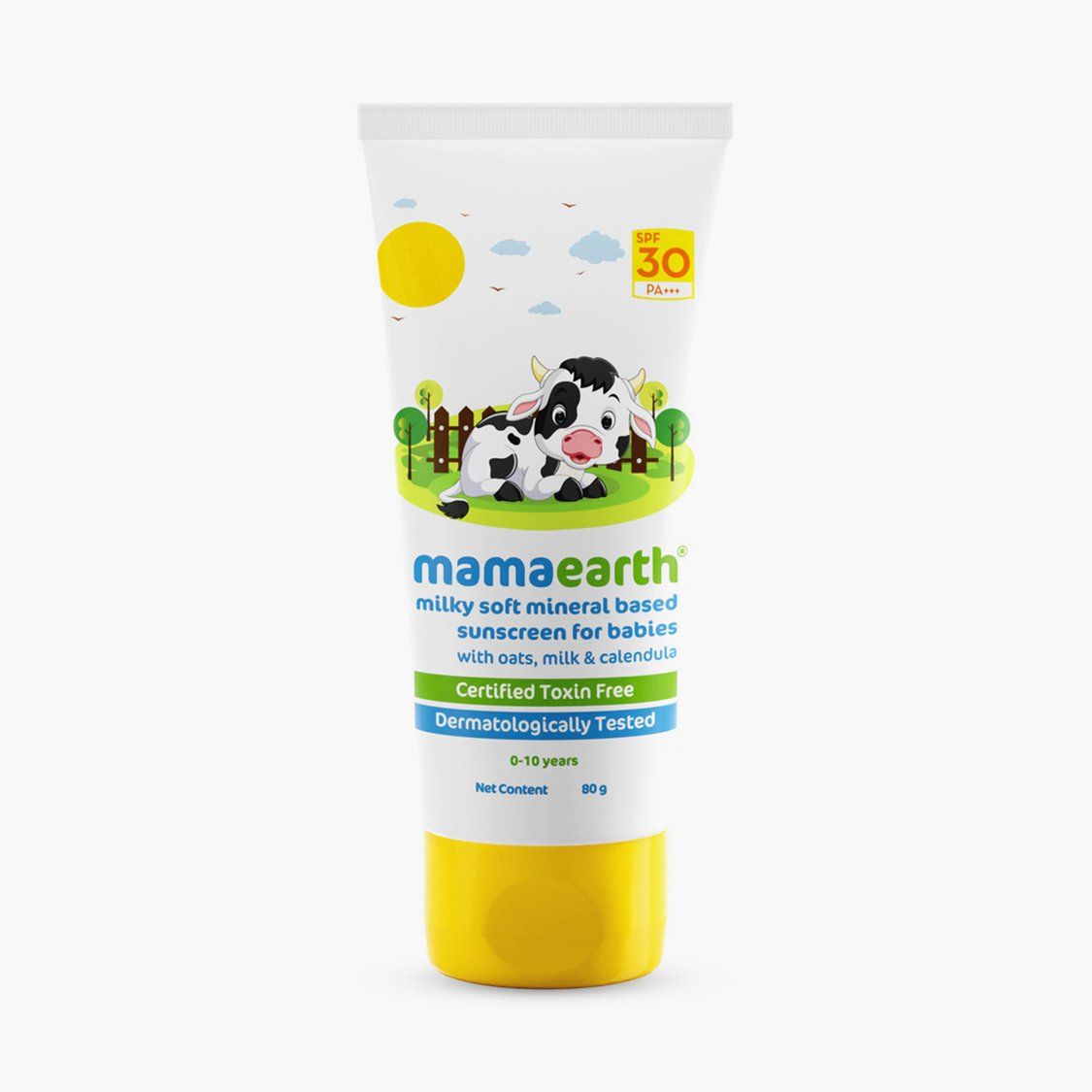
Mamaearth Mineral Sunscreen for Babies SPF 30 (100 ml)
- ✓ Zinc oxide mineral UV blocker
- ✓ Fragrance-free, no synthetic additives
- ✓ No oxybenzone, octinoxate, or retinyl palmitate
* We earn a small commission — at no extra cost to you.
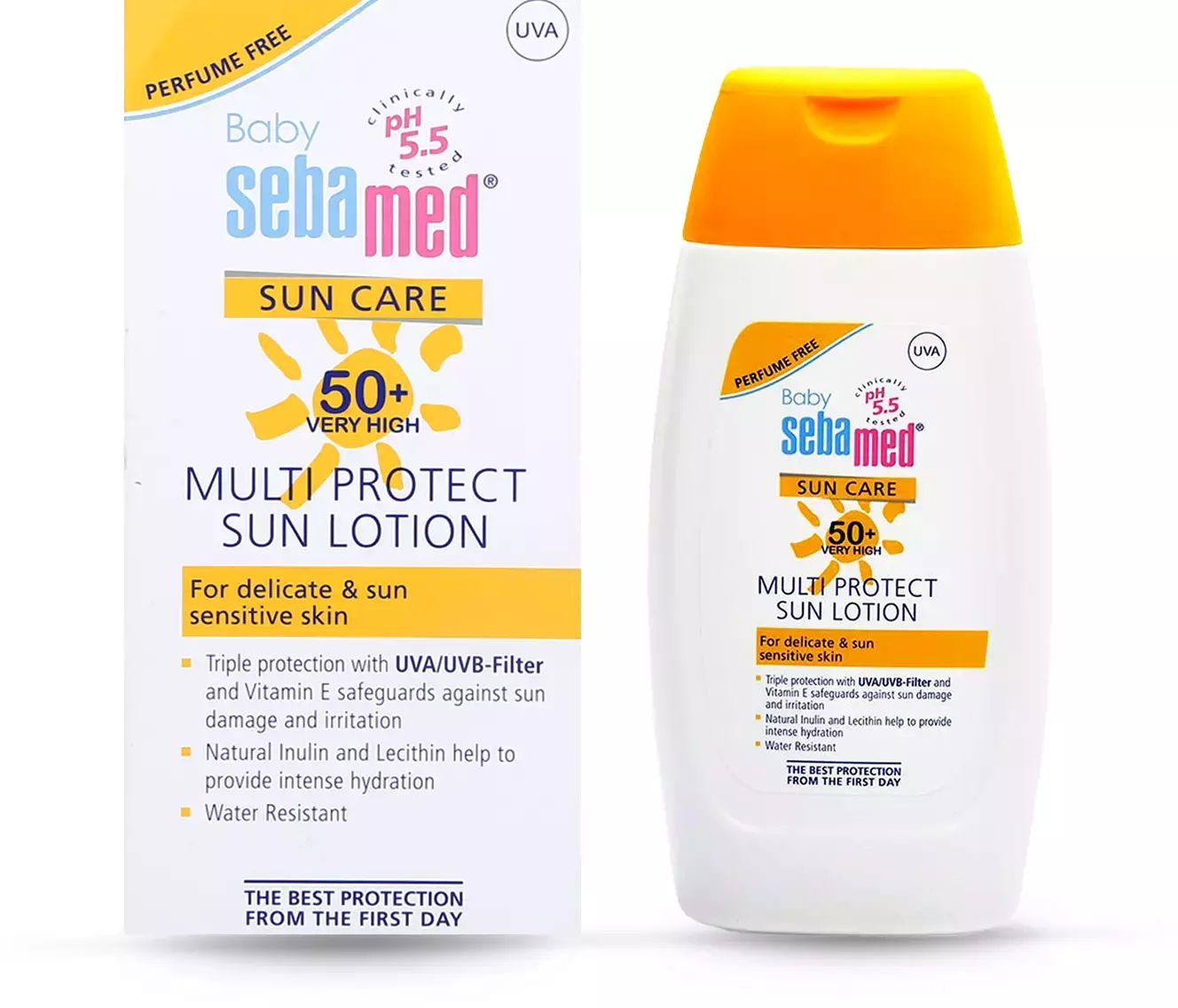
Sebamed Sun Care Baby Lotion SPF 50 (200 ml)
- ✓ Titanium dioxide mineral blocker
- ✓ Dermatologist-tested, hypoallergenic
- ✓ pH 5.5 balanced, suitable from birth
* We earn a small commission — at no extra cost to you.
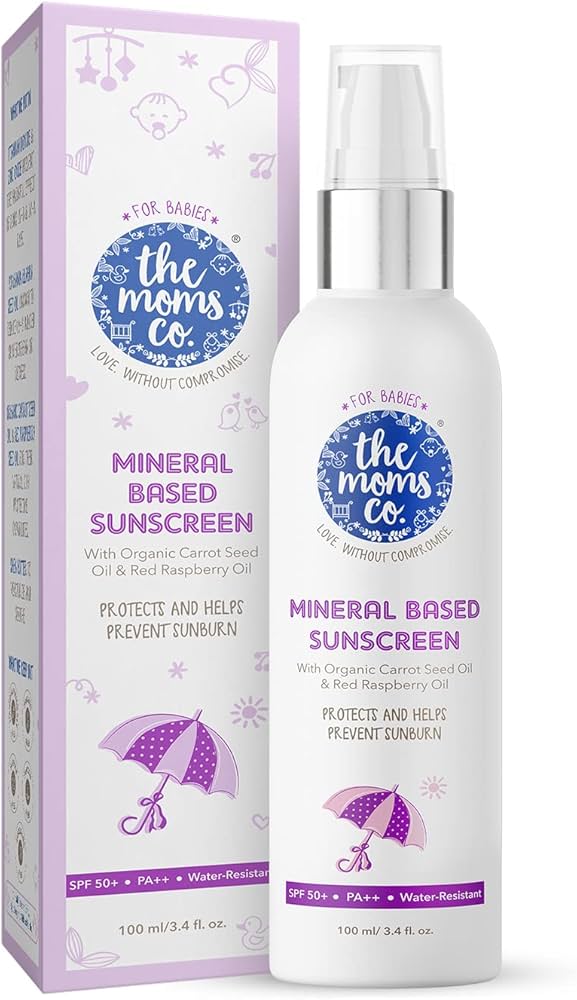
The Moms Co Natural Sunscreen SPF 30 (100 ml)
- ✓ Zinc oxide and titanium dioxide blend
- ✓ Paraben-free, phthalate-free, no synthetic fragrance
- ✓ Water-resistant up to 80 minutes
* We earn a small commission — at no extra cost to you.