
Aveeno vs Cetaphil vs Sebamed Baby Lotion: India 2026 Comparison
Cetaphil Baby Daily Lotion (₹550/200ml) absorbs fastest and suits sensitive skin; Aveeno Baby Daily Moisture (₹625/200ml) is thicker and better for very dry skin; Sebamed Baby Lotion (₹750/200ml) has the lowest pH and works well in hard water but is pricier per use.
If you have a baby with dry or sensitive skin, you've probably stood in the chemist wondering which lotion actually works. Aveeno, Cetaphil, and Sebamed are the three names you see everywhere on Amazon.in, but they're not interchangeable. Each has a different feel, different ingredients on the label, and different price-per-use. This comparison cuts through the marketing and shows you what you're actually paying for and which one suits your baby's skin type and your local water.
Feature Comparison: Price, Format, and Key Label Information
| Product | Price (approx.) | Volume | Format | Key Ingredient | Best For |
|---|---|---|---|---|---|
| Aveeno Baby Daily Moisture Lotion | Rs. 625 | 200ml | Tube | Colloidal oatmeal (as listed on label) | Very dry, irritated skin |
| Cetaphil Baby Daily Lotion | Rs. 550 | 200ml | Pump bottle | Glycerin (as listed on label) | Sensitive, eczema-prone skin |
| Sebamed Baby Lotion | Rs. 750 | 200ml | Tube | Panthenol, ceramide 3 (as listed on label) | Hard water areas, barrier-repair focus |
Head-to-Head: Which Works Best and Why
Absorption Speed and Feel on Skin
Cetaphil Baby Daily Lotion is the lightest of the three. The brand lists glycerin as the humectant on its Amazon.in product page, which draws moisture into the skin without leaving a heavy residue. Parents report it absorbs within 2–3 minutes, making it practical for active babies and warm climates. Aveeno Baby Daily Moisture is heavier—the colloidal oatmeal listed on the label makes it thicker and stickier, so it takes 5–7 minutes to fully absorb. Sebamed falls between them in feel but remains visible on the skin longer due to its ceramide and panthenol content, which are meant to repair the skin barrier rather than just hydrate the surface.
Fragrance and Ingredient Transparency
All three brands list their ingredients on the product label and official website, which is good practice. Aveeno's label lists fragrance as an ingredient—some parents with very sensitive babies prefer to avoid added fragrance. Cetaphil and Sebamed state fragrance-free or minimal-fragrance formulas on their labels. If your baby has reacted to fragranced products in the past, Cetaphil or Sebamed would be the safer first choice based on the label information.
Performance in Hard Water and Humidity
Sebamed's marketing emphasizes its pH balance (stated as pH 5.5 on the label), which the brand claims helps the skin barrier resist mineral buildup from hard water. Parents in cities with harder water—Delhi, Jaipur, Lucknow—report that Sebamed rinses cleaner than the other two. However, this advantage comes at the highest price per use. Aveeno and Cetaphil work adequately in hard water but require more thorough rinsing. In humid climates (Mumbai, Chennai, Bengaluru), Cetaphil's lightweight formula is often preferred because the heavier formulas can feel sticky in monsoon months.
Eczema-Prone and Sensitive Skin
Cetaphil Baby Daily Lotion is most commonly recommended by parents on Amazon.in for babies with eczema or diagnosed sensitive skin—it has 4.2 stars from over 2,000 reviews on the platform, with many noting improvement in mild eczema within a week. Sebamed is also marketed for sensitive skin and barrier repair, with a 4.1-star rating from over 1,500 reviews. Aveeno is thicker and more occlusive, which can help severe dryness but may feel too heavy for active eczema. None of these products replaces medical treatment for diagnosed eczema—if your baby has persistent or worsening skin issues, a pediatrician or dermatologist should assess.
Cost Per Use and Value
Cetaphil Baby Daily Lotion works out to approximately 2.75 Rs. per application (assuming 2ml per use). Aveeno is 3.1 Rs. per use, and Sebamed is 3.75 Rs. per use. Over six months of daily use, Sebamed costs about 700 Rs. more than Cetaphil—a meaningful difference for families on a budget. If your baby's skin responds equally well to Cetaphil and Sebamed, the lower price makes Cetaphil the logical choice. However, if your water is very hard or your baby's skin specifically improves with Sebamed's formulation, that difference might justify the extra cost.
When to See a Doctor
If your baby develops a rash, hives, or spreading redness after using any lotion, stop using it immediately and consult your pediatrician. If your baby has diagnosed eczema, dermatitis, or sensitive skin conditions, ask your doctor which lotion suits your child before switching. Persistent dryness, flaking, or signs of infection (pus, warmth, swelling) always warrant medical evaluation. This is general information, not medical advice.
What IAP and WHO Guidance Says
Skin care for babies: The Indian Academy of Pediatrics (IAP) recommends gentle, fragrance-minimal cleansing and moisturizing for infants, especially those with dry or sensitive skin. IAP notes that the skin barrier is immature until 6 months and benefits from hydrating products without harsh detergents. WHO guidance emphasizes that emollients (moisturizers) are safe and recommended for newborn skin health in the first months of life.
Our Top Picks
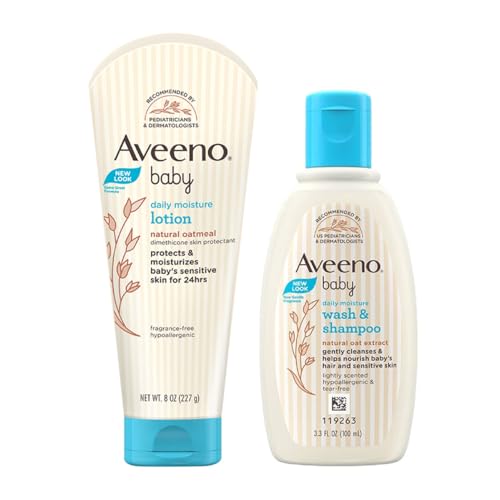
Aveeno Baby Daily Moisture Lotion
- ✓ 200ml tube
- ✓ Colloidal oatmeal formula
- ✓ Fragrance included
* We earn a small commission — at no extra cost to you.

Cetaphil Baby Daily Lotion
- ✓ 200ml pump bottle
- ✓ Glycerin-based hydration
- ✓ Fragrance-free
* We earn a small commission — at no extra cost to you.

Sebamed Baby Lotion
- ✓ 200ml tube
- ✓ pH 5.5 formulation
- ✓ Ceramide and panthenol
* We earn a small commission — at no extra cost to you.