
When to Buy Next Size Baby Clothes: Seasonal Sizing Strategy for India (2026)
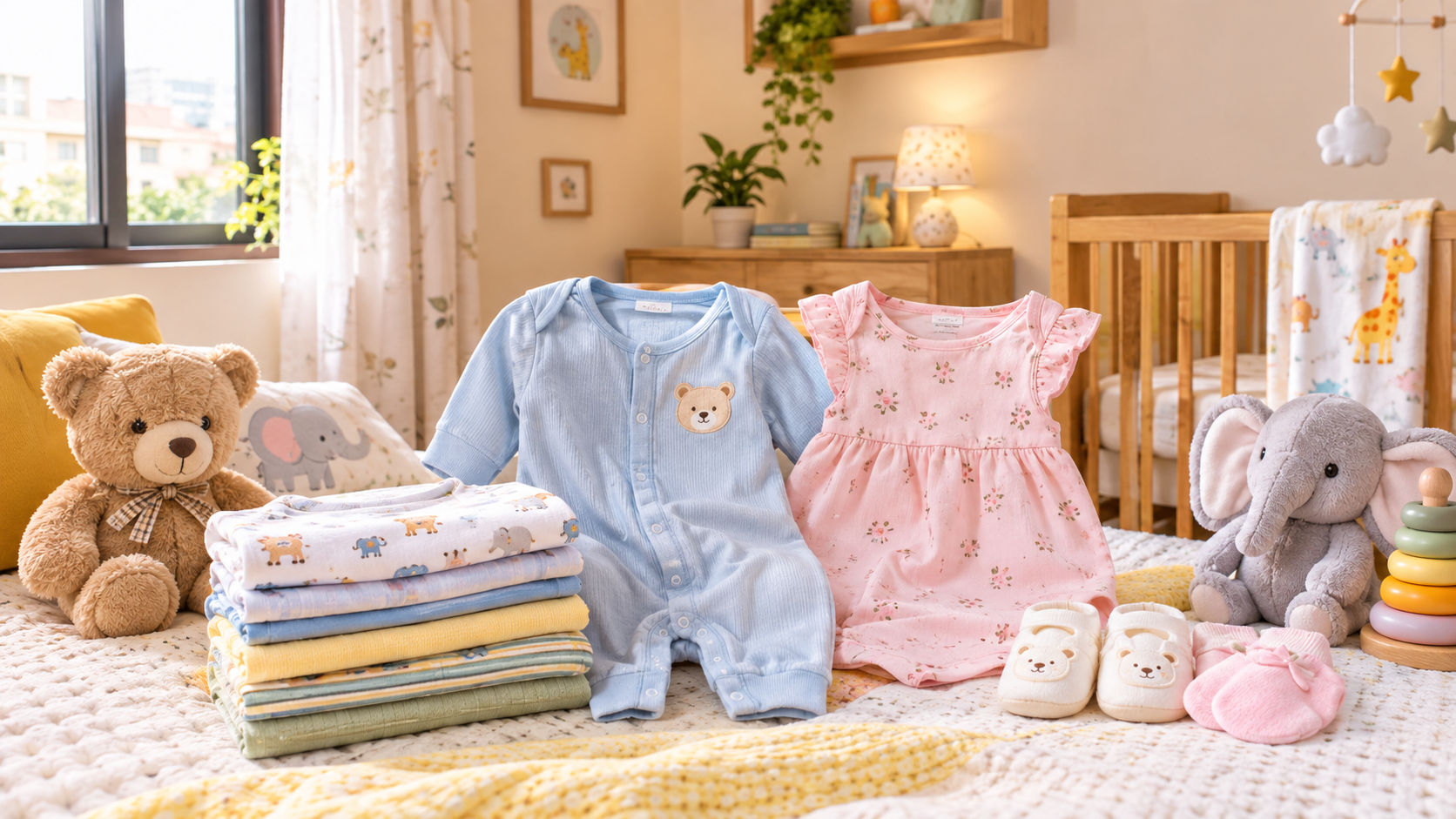
Buy newborn and 0-3 month sizes in the current season; purchase 3-6 month sizes one season ahead; and buy 6-12 month sizes two seasons ahead. This timing aligns baby's growth spurts with seasonal clothing needs and prevents buying thick layers for summer months or light clothes for winter. Brand sizing varies—Mothercare runs small, FirstCry Cute Walk is true to size, and Babyhug is generous.
Getting baby's wardrobe timing right is trickier than it sounds. Most parents buy all sizes at once or panic-purchase when nothing fits—then end up with drawers of unworn clothes or gaps when the seasons change. The real trick is understanding how fast babies grow, how weather affects what they need, and that not all brands size the same way. An October baby and a January baby need completely different strategies, even at the same age.
This guide walks you through the seasonal sizing cycle, tells you which sizes to buy when, explains why brand sizing matters more than you think, and gives you a storage rotation checklist to keep clothes fresh between seasons.
The Seasonal Sizing Checklist: When to Buy Each Size
- 0-3 Months: Buy Now (Current Season)
Why this matters: Newborns wear these sizes for roughly 3 months. If your baby arrives in October (monsoon ending, heading into cool season), newborn and 0-3m clothes bought in October will still fit through December and into January as temperatures drop—you won't overshoot into summer. If your baby arrives in April (summer starting), you buy light 0-3m clothes in April and use them through June, avoiding heavy winter stock. - 3-6 Months: Buy One Season Ahead
Why this matters: At 3 months old, most babies are starting to outgrow 0-3m sizes. If your baby turns 3 months in January (cool season), you need 3-6m sizes then—so buy them in October, when cool-season stock is out. If your baby turns 3 months in July (monsoon), buy 3-6m sizes in April or May before the monsoon stock clears. This avoids paying clearance prices or finding the wrong weight fabric for the season ahead. - 6-12 Months: Buy Two Seasons Ahead
Why this matters: Babies at 6-12 months grow more slowly than newborns (typically 5-7 cm over 6 months, compared to 15 cm for 0-3 months), so these sizes last longer. When your baby is 3-4 months old, buy 6-12m sizes for the season that will arrive when they're 6 months old. This also hedges against guessing weight—you have time to return or swap if the fit is off. - 12+ Months (Toddler): Buy One Season Ahead, Then Monitor
Why this matters: From 12 months onwards, growth slows further and individual variation increases. Fit is less predictable. Buy the next seasonal stock a month before you expect to use it, but check regularly—some toddlers jump sizes; others wear the same size for 6 months.
October Babies vs. January Babies: Why the Same Age Looks Different
An October-born baby and a January-born baby are both newborns, but they live in opposite seasonal worlds. An October baby (born when monsoon is ending and cool season is starting) will wear light wraps in October, light layers in November, and gradually move to thicker clothing in December and January as winter peaks. A January-born baby hits peak cold immediately and will wear thick clothing for their entire 0-3m phase, then move to lighter clothes in April—exactly when an October baby is doing the opposite.
This is why buying all sizes at once fails. If you bought a full winter wardrobe for a January newborn in January, you'd have leftover heavy winter clothes in May when they're already outgrowing those sizes and ready for summer wear. October babies in thick winter stock face the same problem in reverse: too much warm clothing in the newborn phase when they don't need it, then racing to find summer sizes in April.
The seasonal strategy prevents this. October babies buy 0-3m in light-to-medium weight in October, then 3-6m in medium-to-heavy weight ready for winter use. January babies buy 0-3m in heavy weight in January, then 3-6m in medium weight ready for spring. Both avoid waste and always have the right weight for the season.
How Brand Sizing Varies: Which Brands Run Small, True, or Large
Even if you time your purchases perfectly, buying the wrong brand size wastes money and time. Amazon.in reviews and parent feedback consistently show that sizing is not standardized across Indian baby brands.
Mothercare runs noticeably small. Parents on Amazon.in frequently report that a 3-6m Mothercare outfit fits more like a 0-3m. If you're buying Mothercare, go one size up from what your baby is currently wearing. This is especially important when buying ahead of time—a 3-6m Mothercare item bought when your baby is 2 months old might not be generous enough even when they're 4 months old.
FirstCry Cute Walk is true to size. The brand's sizing matches age-based recommendations fairly consistently. A 3-6m size fits a 3-6 month old without much slack. This makes Cute Walk reliable for seasonal buying—buy the age size and expect it to work when that age arrives.
Babyhug (FirstCry's own baby basics line) runs generous. A 3-6m Babyhug size often has room for a 0-3m baby with room to grow into, making it a safer bet if you're unsure about your baby's growth curve. This generosity is helpful if you're buying across two seasons (e.g., a 3-6m item bought at 2 months that needs to last until month 6).
Always check the size chart on the product page—most Amazon.in listings now include length and chest measurements. Measure your baby's current chest and length, then look at the next size's measurements. If the next size would be baggy right now but snug in 2 months, that's the right one to buy ahead.
Storage and Rotation: Keeping Clothes Fresh Between Seasons
Buying ahead means storing off-season clothes for weeks or months. Mold, mildew and mustiness are real risks in India's humid monsoons, and stained or smelly clothes waste money. Here's the storage checklist:
- Wash and dry completely. Wash new and worn clothes before storing. Dry in direct sun for at least 2-3 hours to kill mold spores. Damp or slightly damp clothes stored for weeks will develop mildew, especially during monsoon.
- Use breathable storage. Avoid airtight plastic boxes during monsoon (June-September). Use cotton bags, open baskets, or cardboard boxes with air holes. Even sealed plastic boxes need airflow. If you must use plastic, leave the lid loose or drill holes.
- Add a moisture absorber. Place a small cloth bag of uncooked rice, baking soda, or silica gel beads (food-grade, kept away from baby) in the storage container. Replace every 4 weeks if stored longer than 6 weeks.
- Label by age and season. Write "6-12m, Summer 2026" on a sticky label on the box. When you need that size, you know exactly what weight and fabric type is inside without opening everything.
- Check once midway. If you're storing sizes for 3-4 months, open the box once at the halfway point. Quick look for mold or mustiness. If you spot any, rewash and re-dry those items.
- Wash again before using. Even if stored perfectly, clothes pick up dust and stale air. A quick wash the day before use keeps them fresh.
Are Newborn and 0-3 Months the Same Size?
No, but they overlap. Most brands offer a separate "Newborn" or "NB" size for the first 4-6 weeks, then "0-3m" sizes for 0-3 months. A newborn size is shorter and narrower—made for babies fresh from the hospital who are typically 2.5-3.5 kg. A 0-3m size is longer and wider to accommodate growth through month 3 (when babies can reach 4.5-5.5 kg). A 2-week-old baby in a true 0-3m outfit will look lost; a 2-month-old baby in a pure newborn size will bust out of it. Overlap happens around week 3-4, when a bigger newborn might fit a snug 0-3m size. Buy a few newborn essentials (like onesies and sleepsuits) in NB size, then stock 0-3m as your main 0-3 month range.
What IAP and WHO Guidance Says
Growth tracking: IAP recommends monitoring head circumference, length, and weight at each immunization visit (typically every 2-3 months in the first year). Use these check-ups to confirm your baby is growing as expected and adjust size purchases accordingly.
Seasonal clothing: WHO guidance on infant thermoregulation emphasizes that babies lose heat quickly in cool environments and overheat easily in warm ones. Dressing for the season—not guessing one size fits all months—helps maintain stable body temperature without overheating.
This is general information, not medical advice. If you're unsure about your baby's growth or if they're fitting unusually tight or loose at standard ages, ask your pediatrician at the next visit.
Our Top Picks

FirstCry Cute Walk by Babyhug Unisex Cotton Onesie (0-3 Months)
- ✓ 100% cotton
- ✓ True to size (0-3 months)
- ✓ Snap buttons for easy diaper changes
* We earn a small commission — at no extra cost to you.

Babyhug Organic Cotton Long Sleeves Sleepsuit (3-6 Months)
- ✓ Organic cotton blend
- ✓ Generous fit (runs large)
- ✓ Zip closure for night changes
* We earn a small commission — at no extra cost to you.

Mothercare Baby Boy Short Sleeves Bodysuit (0-3 Months)
- ✓ 100% cotton
- ✓ Runs small (size up recommended)
- ✓ Button front closure
* We earn a small commission — at no extra cost to you.

Babyhug Unisex Thermal Sleepwear Set (6-12 Months)
- ✓ Cotton-polyester blend with thermal lining
- ✓ Generous sizing for room to grow
- ✓ Two-piece set (top + bottom)
* We earn a small commission — at no extra cost to you.