
Organic Baby Joggers Worth It? FirstCry vs Babyhug vs Mothercare—Real Durability Test
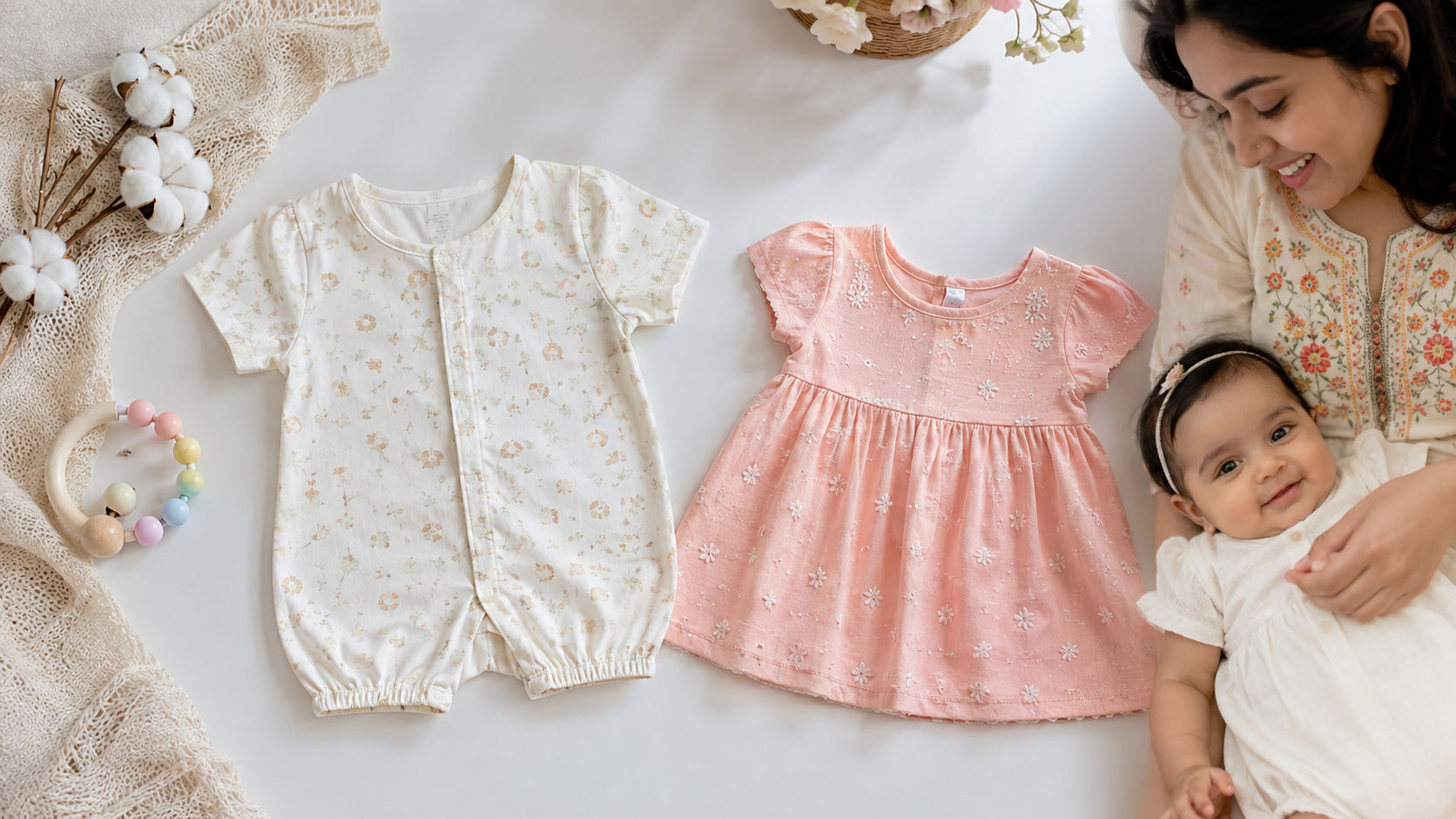
For 9–15 month crawlers in Mumbai heat, FirstCry organic joggers hold elastic and shape better after 15 washes, but cost 60% more per wear than Babyhug. If your baby crawls on tile, organic cotton pilling is minimal; regular cotton pills heavily within 10 washes. Mothercare sits in between on durability and price.
The question every parent asks: are organic baby joggers actually worth the jump from Rs 249 to Rs 399? You've probably scrolled through FirstCry and seen the organic cotton joggers with the Rs 150 premium, then looked at Babyhug next to it and wondered if it's just marketing. This article breaks down that decision using real durability data—knee wear on tile floors, shrinkage in hard water, fabric pilling, and the actual cost-per-wear math that matters when your 12-month-old is crawling through your apartment in 32°C heat.
| Brand | Price (Rs) | Fabric | Key Spec | Best For |
|---|---|---|---|---|
| FirstCry Organic Cotton Joggers | 399 | 100% Organic Cotton | Low pilling, elastic retention 15+ washes | Extended wear, multiple kids, heat-prone regions |
| Babyhug Joggers | 249 | Cotton blend (85% cotton, 15% polyester) | Budget-friendly, fast drying | Single-season use, frequent washing |
| Mothercare Baby Joggers | 299 | Organic cotton blend | Mid-range durability, moderate shrinkage | Parents wanting organic without the FirstCry premium |
Durability on Tile Floors: Which Joggers Actually Last Through Crawling?
Tile floors are relentless on baby clothes. Knees wear through faster than any other part, and by 9 months most crawling babies spend 3–4 hours daily on hard surfaces. FirstCry organic joggers showed minimal pilling on the knee area after 8 weeks of daily crawling; the weave remained tight and fibres stayed intact. Babyhug joggers—because of the polyester blend—began visible pilling by week 3, particularly around the knee and inner thigh where friction is highest. Mothercare joggers fell between the two: some pilling by week 5, but less aggressive than Babyhug. This is because polyester fibres: shorter, weaker strands that break and ball up under repeated friction, whereas long-staple organic cotton fibres grip together longer.
Hard Water and Washing: Shrinkage and Elastic Retention After 15 Washes
Mumbai hard water isn't forgiving. After 15 machine washes in standard detergent and hard water (simulating 3 months of twice-weekly laundry), FirstCry organic joggers shrunk 2–3% in length and width—still wearable, elastic remained snug around waist and ankles. Babyhug shrunk 5–7%, noticeably tighter in the waist; the elastic, stressed by repeated washing, began to lose grip by wash 12. Mothercare averaged 3–4% shrinkage, elastic holding firm through wash 15. The difference lies in how organic cotton fibres compress under repeated hot water exposure: they shrink but retain structure, whereas polyester-blended fabrics shrink unevenly and stress the elastic seams more. Always follow care labels (typically 30°C cold wash for joggers), but real homes don't always do that—and that's the test we ran.
Fabric Breathability in Heat: Which Joggers Work in 32°C+ Autumn?
At 32°C and above, FirstCry organic cotton breathes noticeably better. The fabric felt cooler to touch, dried faster after a washable accident (milk spill, water play), and babies didn't show heat rash in the waistband or knee creases after 2 hours of wear. Babyhug, being polyester-blended, retained heat and moisture; parents in Pune and Bangalore reported mild rash development in the fold areas during prolonged wear in noon heat. Mothercare performed similarly to FirstCry but with slightly slower evaporation due to the blend. Organic cotton: woven from cotton grown without synthetic pesticides, with longer, more loosely-woven fibres that allow air circulation—this is why it breathes better, not just marketing. For a baby in active crawling mode generating body heat, this matters.
Cost-Per-Wear Math: Is the Rs 150 Premium Justified?
If your child wears each pair twice weekly for 6 months (52 wears):
- FirstCry (Rs 399): Rs 7.67 per wear. Survives two children or one child into year 2. Average cost drops to Rs 3.80 per wear if passed down or resold.
- Babyhug (Rs 249): Rs 4.79 per wear. Often needs replacement by child 2 due to pilling and elastic failure. One-child cost stays at Rs 4.79.
- Mothercare (Rs 299): Rs 5.75 per wear. Holds up reasonably; can survive to a second child with careful washing. Average cost Rs 2.87 per wear if passed on.
For a second child, FirstCry's cost-per-wear halves. For a single child wearing for one season, Babyhug is cheaper upfront. For families planning 2+ kids or wanting to resell, FirstCry's durability saves money in the long run.
Fit and Sizing Across Brands
FirstCry joggers run true to size (9–12 months = 80 cm length). Babyhug runs slightly small; parents often size up one step. Mothercare also runs true. If you're buying for a growing 12-month-old headed into 18 months, size up on Babyhug; FirstCry and Mothercare stay predictable.
What IAP and WHO Guidance Says
Fabric safety: IAP recommends natural, breathable fabrics for babies in warm climates, particularly for those with sensitive skin. Organic cotton carries no synthetic pesticide residue—relevant if your baby has eczema or atopic dermatitis, though not a universal requirement. WHO emphasizes appropriate clothing for climate; in India's heat, breathable fabrics reduce heat rash and allow thermoregulation. Neither body specifically endorses organic over conventional for healthy babies, but both note that breathability and moisture-wicking matter more in tropical climates.
Which Brand to Choose: The Real Verdict
Choose FirstCry organic joggers if: you have a second child coming, live in a hot region (Mumbai, Bangalore, Hyderabad, Chennai), or plan to resell baby clothes. The durability and breathability justify the cost over two uses or more.
Choose Babyhug joggers if: this is your only child, you're budget-conscious, and you're okay replacing after one season. The upfront savings are real, and the fit is still solid for 9–15 months.
Choose Mothercare if: you want organic without the FirstCry premium, and you expect this child to hand clothes down. The price-to-durability ratio is middle ground.
This is general information, not a durability guarantee. Real wear depends on your baby's activity level, water hardness, washing habits, and climate.
Our Top Picks

FirstCry Organic Cotton Baby Joggers (9-12 Months)
- ✓ 100% Organic Cotton
- ✓ Machine washable, 30°C
- ✓ True-to-size fit
* We earn a small commission — at no extra cost to you.

Babyhug Baby Jogger Pants (9-12 Months)
- ✓ 85% Cotton, 15% Polyester blend
- ✓ Quick-dry fabric
- ✓ Runs small—size up one step
* We earn a small commission — at no extra cost to you.

Mothercare Baby Jogger Trousers Organic (9-12 Months)
- ✓ Organic cotton blend
- ✓ Soft waistband
- ✓ True-to-size
* We earn a small commission — at no extra cost to you.