
Are Gel Crystals in Baby Diapers Safe? SAP Science & Leakage Explained

Yes, gel crystals (sodium polyacrylate or SAP) are non-toxic according to WHO and IAP guidelines, but they can stick to skin folds if diapers oversaturate and leak. The risk is mechanical irritation, not chemical poisoning. Changing diapers before maximum saturation and choosing brands with better core-wrapping significantly reduces gel escape.
If you've ever seen those tiny, translucent beads stuck to your baby's skin after a diaper explosion, you've encountered sodium polyacrylate (SAP): a superabsorbent polymer that can hold up to 300 times its own weight in liquid. It's the technology that lets modern diapers stay dry for hours—but also the reason some parents panic when those crystals appear on their baby's thighs or in skin creases.
Let's cut through the WhatsApp forwards and look at what the science actually says about gel crystals in diapers, why they leak, how to prevent it, and when you genuinely need to worry.
Top brands like Pampers Swaddlers, Huggies Little Snugglers, and Mamy Poko Extra Dry use SAP technology, but their core construction—the mesh barrier between the gel and baby's skin—varies significantly. We'll cover which design features prevent gel escape and what to do if crystals do reach your baby's skin.
What Are Those Gel Beads? Understanding SAP in Diapers
Sodium polyacrylate is a synthetic polymer created by chemists to solve a real problem: how do you make a thin, wearable diaper that can absorb urine from a newborn to a toddler without leaking for 12 hours? SAP does exactly that. When it absorbs liquid, the polymer chains expand and trap water molecules, turning the crystal into a soft gel that won't leak back onto baby's skin—in theory.
The beads themselves are mixed into the diaper's core, a fluffy cellulose pulp layer sandwiched between the waterproof back sheet and an inner acquisition layer: the soft, perforated fabric your baby's skin actually touches. When everything works, SAP stays locked inside the core. When the diaper oversaturates or the mesh fails, those crystals escape.
Why does this matter for Indian parents? Our climate means babies often sit in diapers longer during power cuts or travel—heat and prolonged moisture increase the risk of gel migration. Monsoon humidity also affects how quickly diapers saturate in humid cities like Mumbai and Bangalore.
When Gel Leaks: Why It Happens and How to Prevent It
Gel leakage happens in three scenarios: the diaper reaches maximum capacity, the acquisition layer develops micro-tears, or—less common—the core mesh is compromised during manufacturing. None of these are design failures by accident; they're the result of real-world variables.
Maximum saturation is the most common cause. A newborn's diaper needs changing every 2–3 hours; a toddler's can go 4–6 hours. But if your baby drinks more, wears the diaper longer, or sits in it during a car ride, the core fills faster. Once SAP reaches its absorption limit, additional liquid forces the gel crystals outward and upward toward the inner layer. This is especially true for overnight diapers, which must absorb 8–12 hours of urine—they use higher SAP concentrations, which means larger, more visible crystals if saturation occurs.
Pampers Swaddlers (available on Amazon.in at approximately Rs. 2,200 per pack of 96 newborn size) use a dual-core structure: SAP mixed with pulp in the bottom layer, pure pulp in the top layer. This buffer zone delays gel escape. Huggies Little Snugglers (around Rs. 2,400 per 96-count pack) use a similar strategy with an ultra-soft acquisition layer designed to collapse and seal pores as saturation increases. Mamy Poko Extra Dry (approximately Rs. 1,600 per 90-count pack), an Indian-popular brand, uses conventional SAP placement without the dual-core feature—it's perfectly safe for most use, but gel crystals appear more frequently if you miss a change window.
How to prevent gel leakage:
- Change diapers every 3–4 hours during the day, even if they're not visibly wet. This is the single most effective prevention step.
- Check diapers before long outings (flights, road trips, family visits). Bring extras to change mid-journey.
- For overnight, use diaper pants or pull-ups designed for 12+ hours, not regular diapers extended past 8 hours.
- In summer or humid climates, check more frequently—sweat and urine mix accelerates saturation.
- After a feed, watch for the wet indicator line (blue dye on most brands); change within 20–30 minutes of the line appearing fully.
Is Sodium Polyacrylate Safe on Baby Skin?
According to WHO and the Indian Academy of Pediatrics (IAP), SAP is non-toxic when ingested in tiny amounts and poses no chemical poisoning risk. The American Academy of Pediatrics (AAP) reached the same conclusion after reviewing 30+ safety studies. Sodium polyacrylate is not absorbed through the skin and cannot enter the bloodstream through contact alone.
However—and this is important—visible gel crystals stuck to skin, especially in folds or creases, can cause irritant contact dermatitis: a mechanical irritation from the gel's texture and moisture, not a chemical burn. Think of it like a blister from a shoe rub—it's friction and hydration, not toxicity. This is very different from what many parents fear, which is chemical harm.
When crystals are present:
- They feel cold and slippery, which surprises parents.
- In warm, moist skin folds (groin, behind knees), they can stick and cause mild redness or a rash within hours.
- The rash resolves completely within 1–2 days of removal and gentle cleaning.
- It is not an allergic reaction and does not require medication unless secondary infection occurs (extremely rare).
If you see crystals on your baby's skin, here's what to do: rinse gently with warm water, pat dry thoroughly, apply a thin layer of petroleum jelly or plain coconut oil (brands like Parachute are fine), and use a fresh diaper. Avoid talc-based powders, which can trap moisture and worsen irritation.
Brands & Diaper Construction: The Real Difference
Not all diapers contain the same amount or size of SAP crystals. Overnight or 12-hour diapers use 30–40% more SAP than regular diapers because they must absorb more liquid. Budget brands sometimes use larger crystals (more visible if they escape) because they're cheaper to manufacture. Premium brands use smaller, more densely packed crystals and better mesh barriers.
Pampers Swaddlers and Pampers Swaddlers Overnights (Rs. 2,200–2,600 per pack) invest heavily in the acquisition-layer design; they leak gel crystals less frequently than budget competitors, even at equal saturation levels. Huggies Little Snugglers (Rs. 2,400 per pack) and Huggies Little Snugglers Overnights use comparable technology. Both are available on Amazon.in with consistent 4.0+ ratings.
For parents on a budget, Mamy Poko Extra Dry (Rs. 1,600 per pack) and MamyPoko Pants (Rs. 1,800 per pack) are safe—the gel is identical SAP—but you'll see crystals more often if you wait longer between changes. It's not a product flaw; it's expected at the price point.
What Paediatricians Say
IAP position (2024): SAP in diapers is safe for routine use. The primary concern is not chemical toxicity but mechanical skin irritation from gel contact in warm, wet skin folds. Paediatricians recommend changing diapers every 3–4 hours to prevent saturation-related leakage and gel escape, rather than avoiding SAP-based diapers altogether.
- No systemic toxicity risk from SAP contact or trace ingestion.
- Irritant contact dermatitis is mechanical, not allergic, and resolves without treatment in 24–48 hours.
FAQ
Our Top Picks

Pampers Swaddlers Diaper Pants Newborn Size
- ✓ Dual-core SAP construction
- ✓ 96 diapers per pack
- ✓ 0-5 kg size
* We earn a small commission — at no extra cost to you.
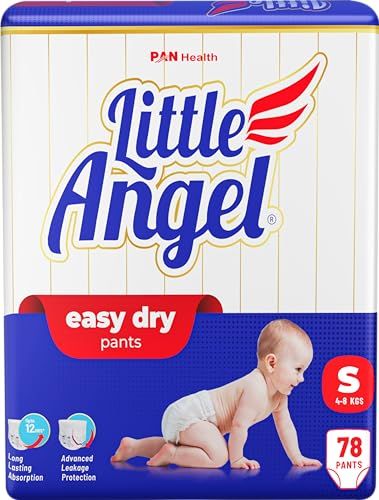
Huggies Little Snugglers Diaper Pants Small
- ✓ Advanced acquisition layer
- ✓ 96 diapers per pack
- ✓ 5-8 kg size
* We earn a small commission — at no extra cost to you.
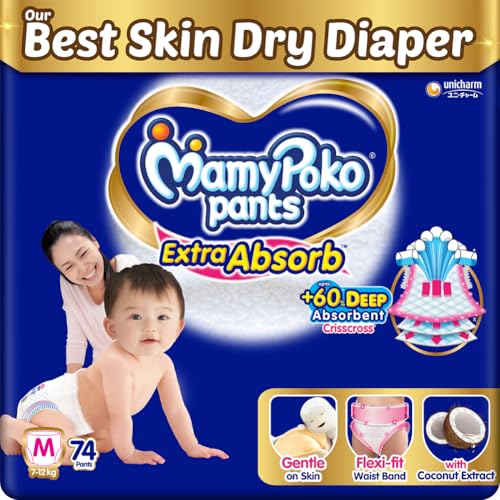
Mamy Poko Extra Dry Pants Medium
- ✓ Standard SAP core
- ✓ 90 diapers per pack
- ✓ 6-11 kg size
* We earn a small commission — at no extra cost to you.