
Newborn Wardrobe 0-3 Months: Exact Piece Count & Budget Breakdown for Indian Parents
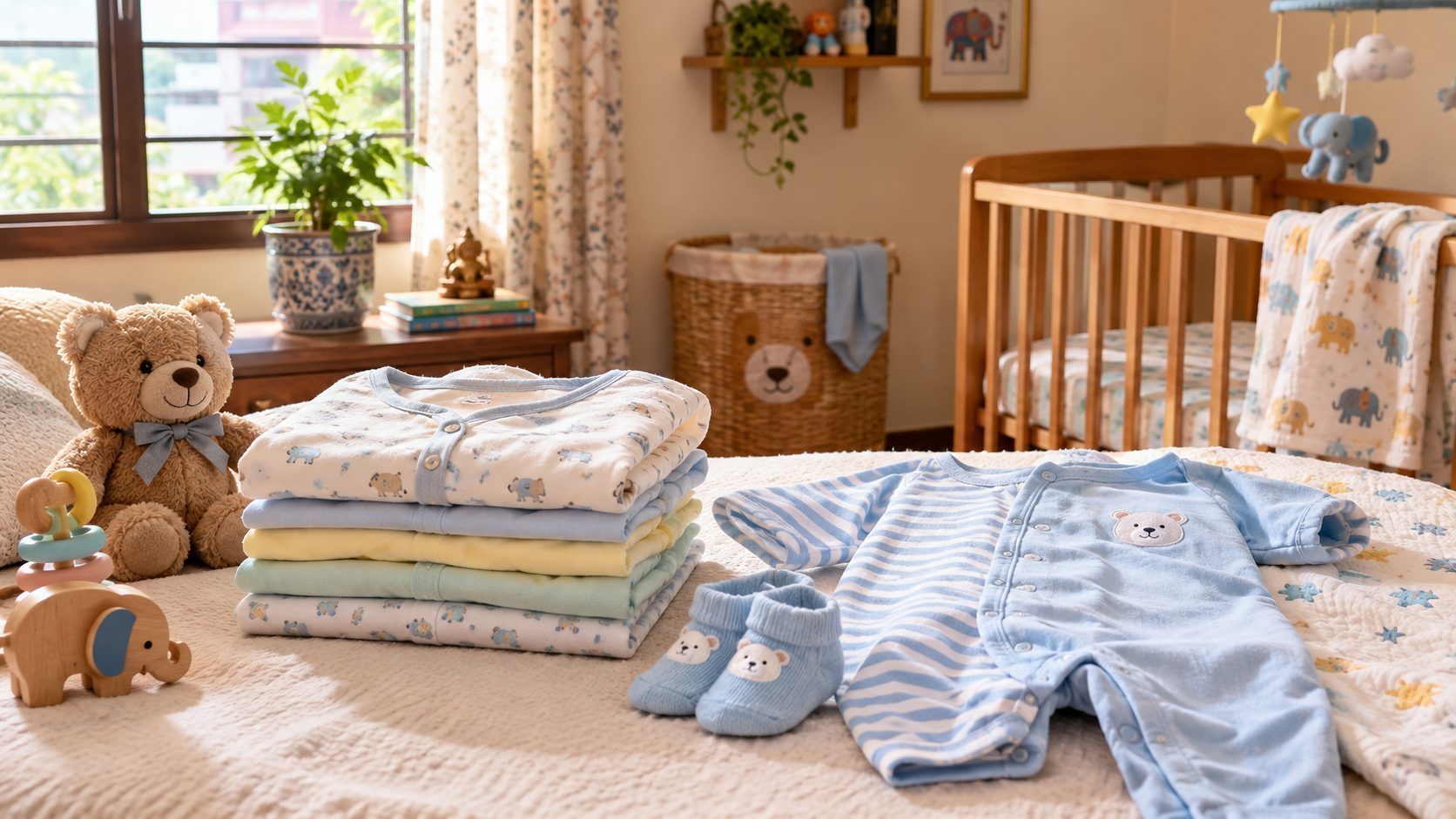
For a 0–3 month newborn, plan 6–8 jhablas, 4–6 bodysuits, 3–4 sleepsuits, and 4–6 muslin wraps depending on your city's climate and laundry frequency. Budget ₹1,800–2,500 total. Buy newborn AND 0–3M sizes; many babies fit newborn for 4–6 weeks, then shift into 0–3M around week 6–8.
The moment you find out you're having a baby, your mother-in-law or best friend will probably thrust a list at you: "You need 12 jhablas, 20 nappies, 5 sleepsuits..." Then you spend ₹8,000 on tiny clothes your baby wears for 6 weeks and outgrows. I was there too. After talking to dozens of Indian parents across Delhi, Mumbai, Bengaluru, and smaller tier-2 cities, I realised the real answer isn't a generic number—it depends on your climate, how often you wash, and whether you have reliable drying space. This guide gives you the actual checklist, the honest sizing reality, and a realistic budget you won't regret.
The Core Wardrobe Checklist for 0–3 Months
- 6–8 Jhablas (short-sleeved cotton bodysuits): The workhorse of a newborn's wardrobe. Jhablas are soft, easy to change, and dry fast. If you wash every 2 days, 6 is enough; if you wash every 3–4 days (common in drier cities like Delhi or Jaipur), go for 8. Many parents in Mumbai and Bengaluru with high humidity prefer 7–8 because hang-drying takes longer.
- 4–6 Bodysuits (full-sleeved or sleeveless): For layering in cool weather or as a base under dungarees. Tier-1 cities with AC-heavy homes need more; tier-3 towns in warmer regions need fewer. A mix of sleeveless and full-sleeved gives you flexibility.
- 3–4 Sleepsuits or night jhablas: Dedicated sleep-wear, slightly thicker than day jhablas. These prevent temperature fluctuation during night feeds. If your home is cold (northern cities Oct–Feb), you'll use these daily; in warm regions, 2 is plenty.
- 4–6 Muslin wraps or lightweight stoles: Use these as burp cloths (one after every feed), lightweight blankets for pram outings, or nursing covers. They dry the fastest of all fabrics—often within 2–3 hours in sun—so you can reuse frequently. Essential for laundry days.
- 2–3 Cardigans or light jackets: For outdoor outings or temperature-controlled homes. Tier-1 city parents use these year-round; warmer regions might skip them entirely.
- 3–4 Pairs of leggings or lower wear: If using jhablas, you still need bottoms for outings or formal visits. Cotton leggings are easiest; avoid elastic-heavy designs that lose stretch after 5 washes.
Sizing Reality: Newborn vs 0–3 Months
Newborn size: fits babies from birth to roughly 4–6 weeks, typically weighing under 4 kg. Chest measurement is around 40–46 cm.
0–3M size: designed for 8–14 week olds, chest around 46–52 cm. However, Indian babies—especially those born at a healthy 3.2–3.8 kg—often skip newborn size entirely and fit straight into 0–3M by week 4.
Real talk from tier-1 city parents: buy both. Get 3–4 newborn jhablas (just in case) and 4–5 in 0–3M. By week 5, you'll shift completely to 0–3M; the newborn pieces become burp cloths or hand-me-downs. This costs an extra ₹400–500 but saves the panic of everything being too snug by week 3.
Fabric & Drying Reality
Your laundry routine depends on fabric choice. Pure cotton dries fastest (2–3 hours sun-dried in Delhi, 4–6 hours in humid Mumbai). Cotton-polyester blends hold moisture slightly longer but resist shrinkage better. Muslin wraps are the speed champions—they dry within 2 hours even in semi-shade, which is why experienced mothers buy extra muslin pieces instead of extra jhablas.
Shrinkage happens on wash 1 for most budget brands. A jhabla listed as 0–3M might shrink 3–5% in the chest and 2–3% in length after the first hot wash. Higher-quality cotton (FirstCry BabyHug, Mothercare) shrinks less; lower-priced generics from smaller brands shrink 5–8%. Always wash in cold water, air-dry, and check fit before planning your wardrobe count.
City-Specific Wardrobe Adjustments
Tier-1 Cities (Delhi, Mumbai, Bengaluru, Pune): Plan for AC climates indoors and variable weather outdoors. You need 3–4 light layers and at least 1 cardigan. Humidity in Mumbai means slower drying—opt for 8 jhablas instead of 6. Delhi's dry winters mean faster drying but you'll need warm sleepsuits, so invest in 4 sleepsuits here instead of 3.
Tier-2 Cities (Lucknow, Jaipur, Chandigarh, Ahmedabad): Seasons are more pronounced. Summers are hot and dry (drying is fast; fewer clothes needed). Winters are cold (more layers and sleepsuits essential). Buy 6 jhablas, 4 sleepsuits, and plan for seasonal rotation rather than year-round sameness.
Tier-3 Towns & Warmer Regions: If you're in Goa, Kerala, or smaller towns in Tamil Nadu, keep it simple: 6 lightweight jhablas, 2–3 sleepwear pieces (for AC'd homes only), and skip heavy cardigans. Air-drying is fast and reliable here.
Budget Breakdown (₹1,800–2,500)
Here's what realistic spending looks like:
| Item | Quantity | Price per Piece (Rs.) | Total (Rs.) |
|---|---|---|---|
| Jhablas (cotton) | 7 | 250–350 | 1,750–2,450 |
| Bodysuits | 5 | 200–300 | 1,000–1,500 |
| Sleepsuits | 3 | 400–600 | 1,200–1,800 |
| Muslin Wraps (pack of 3) | 1 | 249–400 | 249–400 |
| Light Cardigans | 2 | 300–500 | 600–1,000 |
| Leggings | 3 | 200–300 | 600–900 |
Budget estimate: ₹1,800–2,500 for a complete starter set across all categories. Buying budget multi-packs (e.g., FirstCry BabyHug 3-piece jhabla sets at ₹399) brings you closer to ₹1,800; investing in mid-range brands like Mothercare or Marks & Spencer pushes you toward ₹2,500 but offers better durability and less shrinkage.
What Paediatricians Say
Expert Guidance
The Indian Academy of Pediatrics (IAP) recommends keeping a newborn's skin in breathable, soft cotton for the first 3 months—synthetic blends are acceptable but pure cotton minimises the risk of heat rash and friction irritation. IAP also notes that frequent clothing changes (more than 3–4 per day) are unnecessary; aim for a clean jhabla after feeds, nappy changes, and sweating episodes.
- Temperature check: Dress your baby in one more layer than you're wearing; avoid overdressing in AC homes.
- Washing: Wash baby clothes separately with a mild detergent. Cold water for first wash, warm after; hot water accelerates shrinkage and is unnecessary for newborn laundry.
FAQs
Q: Can I put a newborn straight into 0–3 month clothes?
A: Yes, most Indian newborns (3–3.8 kg) fit 0–3M size from week 1. Newborn size is a safety net, not a necessity. Buy 2–3 newborn pieces as backup; invest the budget in 0–3M pieces instead.
Q: How often should I wash newborn clothes?
A: Every 2–3 days for daily wear (jhablas, bodysuits). If you have reliable drying space and line-dry in sun, every 2 days works. Sleepsuits and wraps can go 1 day because you use clean ones for safety reasons—never reuse bedding or sleepwear unwashed.
Q: Which fabric dries fastest?
A: Muslin dries in 2–3 hours (fastest). Pure cotton jhablas take 3–4 hours in sun. Cotton-polyester blends take 4–5 hours. Avoid silk or fancy blends; they dry slowly and snag easily.
Q: What's the difference between a jhabla and a romper?
A: A jhabla is a loose short-sleeved shirt worn with leggings. A romper is a one-piece outfit covering the torso and legs. For nappy changes and frequent clothing swaps in the 0–3 month phase, jhablas are faster and more practical.
Q: Do expensive baby clothes last longer?
A: Not always. A ₹350 cotton jhabla and a ₹800 jhabla both wear out by 15–20 washes. The difference is shrinkage (premium brands shrink 2–3%, budget brands 5–8%) and softness (premium cottons feel smoother initially but fade identically). For 0–3M clothes, budget or mid-range is fine; your baby grows out before wear-and-tear becomes an issue.
Q: Should I buy newborn clothes before birth?
A: Buy 1–2 newborn sets after birth if possible. You won't know your baby's exact weight or size; some babies are 2.8 kg, others 4.2 kg. Buying after birth lets you size accurately. If you must buy early, stick to 0–3M sizes—they fit most newborns by week 2–3 anyway.
Our Top Picks

FirstCry BabyHug Pure Cotton Jhablas Set of 3
- ✓ Pure cotton material
- ✓ Set of 3 jhablas
- ✓ Newborn and 0–3M sizes available
* We earn a small commission — at no extra cost to you.

Mothercare Soft Cotton Bodysuits Pack of 2
- ✓ 100% cotton construction
- ✓ Full-sleeved and sleeveless options
- ✓ Envelope neck for easy changing
* We earn a small commission — at no extra cost to you.

Marks & Spencer Cotton Sleepsuits
- ✓ Organic cotton blend
- ✓ Full-length sleepwear coverage
- ✓ Zip fastening for quick nappy changes
* We earn a small commission — at no extra cost to you.

Mee Mee Muslin Nappies and Wraps Pack of 3
- ✓ 100% muslin cotton
- ✓ Pack of 3 wraps (70x70 cm each)
- ✓ Ultra-soft and breathable
* We earn a small commission — at no extra cost to you.