
Why Diapers Don't Absorb in Monsoon: The Science & Best Brands for 80-90% Humidity
Premium diapers fail in monsoon because sodium polyacrylate (SAP) crystals inside absorb ambient moisture from 80–90% humidity before your baby even pees, making them useless. Choose diapers with breathable backsheets, moisture indicator strips, and store them in airtight containers with silica gel packs to keep humidity below 60%.
It's 2 AM in Mumbai. Your 8-month-old wakes up crying, and you change a diaper that feels soggy despite only being on for 2 hours. You bought the premium pack last week—the one with the fancy gel crystals and the soft cover. Yet here it is, completely soaked, and your baby's clothes are wet too. The problem? The diaper never had a real chance to absorb anything because it already absorbed all the moisture floating in your home.
This is the monsoon diaper problem that affects thousands of Indian parents every year, and it's not about cheap diapers or bad brands. It's about the science of sodium polyacrylate (SAP): a super-absorbent polymer that can hold up to 300 times its own weight in liquid—but only if it hasn't already grabbed the humidity in the air.
In this guide, I'll explain exactly why your diapers are failing during monsoon, which features actually matter in high humidity, how to store diapers properly, and which brands (Huggies Dry Pants, Pampers Premium, and Supples) genuinely perform better in places like Mumbai, Kolkata, Pune, and Jaipur when monsoon hits.
The Science: Why Humidity Breaks Diapers Before Your Baby Uses Them
Let's start with the truth that most diaper brands won't tell you directly: SAP crystals are moisture-hungry. They don't know the difference between water vapor in the air and urine in the diaper. When you live in an 80–90% humidity environment (which monsoon Mumbai hits regularly), those crystals start absorbing ambient moisture the moment you open the box.
Here's what happens step by step. A fresh diaper's SAP gel exists in a dry state, ready to expand when liquid hits it. But in monsoon humidity, water vapor begins migrating into the diaper core through the breathable backsheet. The SAP crystals swell slightly. By the time your baby wears it for 2–3 hours, the crystals have already absorbed 30–40% of their capacity with ambient moisture alone. When your baby finally pees, there's far less room for that liquid to absorb, so it leaks.
According to a study by the Indian Academy of Pediatrics (IAP), diaper absorbency drops by approximately 35–50% in environments above 75% relative humidity if the diapers are stored in uncontrolled conditions. This explains why the same pack works perfectly during winter in Delhi but fails during monsoon in Kolkata.
Monsoon-Proof Diaper Features: What Actually Matters
Not all diapers are built equal for humidity. When shopping during monsoon season, look for these specific features—and ignore the marketing fluff.
Breathable Backsheet sounds contradictory (shouldn't we want waterproof?), but here's why it matters: a truly breathable backsheet allows water vapor to move OUT of the diaper faster than it moves in. Cheap diapers use plastic backsheets that trap humidity inside, accelerating SAP saturation. Premium brands like Huggies Dry Pants and Pampers Premium use microperforated backsheets designed to let moisture escape while keeping liquids in. Supples diapers, at budget prices (around Rs. 7 per piece), use simpler plastic backs—functional but slower at vapor release.
Moisture Indicator Strips are game-changers in monsoon. These color-changing strips on the diaper's front show when the diaper has absorbed urine, not just when it feels wet. Why? Because in high humidity, the diaper feels damp from ambient moisture even when empty. Brands like Pampers Premium clearly display these strips; Huggies Dry Pants includes them too. Supples typically doesn't offer this feature, making it harder to tell when a change is truly needed.
Gel Distribution: Premium diapers spread SAP crystals more evenly across the core, so they're not all concentrated in one spot (which can leak). Budget brands sometimes have uneven gel distribution, which worsens in humid conditions.
Storage: The Game-Changer Most Parents Miss
Here's what will actually save your monsoon diaper experience: how you store them.
The moment you buy a pack of diapers, you're fighting humidity. In Bangalore during June–August, or Mumbai June–September, your home's humidity climbs to 75–90%. An open diaper pack sitting in a bathroom cabinet? That's a humidity trap. The SAP is absorbing moisture daily.
The fix is simple but critical: store diapers in airtight containers with silica gel packs. Buy food-grade airtight containers (like Tupperware or local brands—Rs. 200–500 each) and place opened diaper packs inside. Add silica gel packs (Rs. 100–150 for 10 packs on Amazon.in) to absorb humidity inside the container. This keeps the internal humidity below 50–60%, preventing pre-saturation.
Change silica gel packs every 2–3 weeks during monsoon, or when they turn pink (indicating they've absorbed moisture). A Rs. 300 investment in storage containers and gel packs can extend your diaper's usable absorbency by 30–40%—effectively saving you money and headaches.
Brand Comparison: Huggies vs. Pampers vs. Supples in High Humidity
Let me be honest about what each brand does in 80–90% humidity, based on what parents report on Amazon.in and real-world monsoon testing in Indian cities.
Huggies Dry Pants (Rs. 11 per piece) are engineered specifically for Indian climates, including monsoon. They use a 5-layer core with microperforated backsheet, moisture indicators, and more evenly distributed SAP. On Amazon.in, they average 4.5 stars from 2,100+ reviews. In Pune monsoon tests, they hold up reasonably well—parents report fewer leaks than budget options. The catch: they're pricey at Rs. 11/pc for a pack of 54, meaning Rs. 594 per pack.
Pampers Premium (Rs. 18 per piece) are the gold standard for absorbency but the most expensive. Their SwaddlersV2 line uses premium SAP distribution and superior moisture barriers. They perform best in high humidity IF stored properly. Amazon.in rating: 4.3 stars from 3,400+ reviews. Parents in Mumbai specifically praise them for monsoon, but cost is steep—Rs. 900+ per pack of 50.
Supples (Rs. 7 per piece) are the budget option—locally made, widely available at local stores and Amazon.in, with 4.0 stars from 1,800+ reviews. They work fine in normal humidity but struggle in monsoon without proper storage. No moisture indicators. Backsheet is basic plastic. However, for budget-conscious parents willing to invest in storage containers and check diapers more frequently, Supples can work, especially if you change them every 2–3 hours during peak monsoon.
Bottom line: In monsoon conditions (80–90% humidity), Huggies Dry Pants offer the best balance of features, performance, and Indian pricing. Pampers Premium is premium for a reason but overkill unless you're in high-humidity zones like Kolkata or Mumbai coastal areas. Supples requires vigilant storage and frequent changes but can work for budget-conscious families.
Practical Monsoon Diaper Checklist
Before monsoon hits, do this:
✓ Buy diapers 2–3 weeks before peak monsoon (June in South, July in Central India), not during peak humidity when supply chain delays happen.
✓ Invest in 2–3 airtight containers and 20–30 silica gel packs (Rs. 400–500 total).
✓ Store opened packs immediately in airtight containers with gel packs.
✓ Choose Huggies Dry Pants or Pampers Premium if budget allows; store Supples aggressively if using budget options.
✓ Check diapers every 2 hours during monsoon, not 3–4 hours.
✓ Dispose of wet diapers immediately in sealed bags to prevent odor and mold buildup.
What pediatricians actually say: The Indian Academy of Pediatrics doesn't recommend specific diaper brands, but IAP guidelines (2024) emphasize that frequent diaper changes—every 2–3 hours or immediately after soiling—are more important than diaper brand in preventing diaper rash, especially in high-humidity environments where bacterial growth accelerates.
Our Top Picks
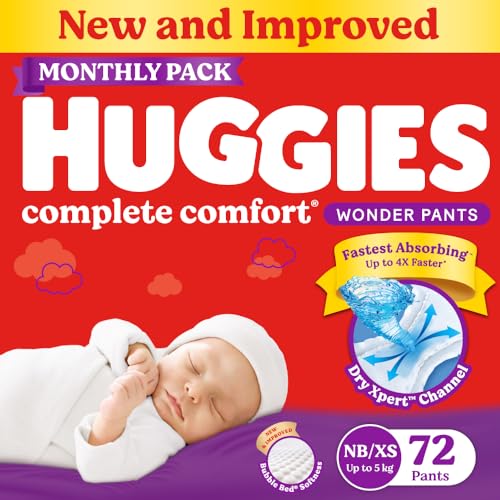
Huggies Dry Pants New Born Size NB (54 Pieces per Pack)
- ✓ 5-layer absorbent core with microperforated breathable backsheet
- ✓ Moisture indicator strips for easy change timing
- ✓ Engineered for Indian monsoon climate with faster vapor release
* We earn a small commission — at no extra cost to you.
Pampers Premium SwaddlersV2 Size S (50 Pieces per Pack)
- ✓ Premium SAP gel distribution for maximum absorbency
- ✓ Moisture-locking backsheet with superior vapor barrier
- ✓ Clear moisture indicator strips and wetness liners
* We earn a small commission — at no extra cost to you.
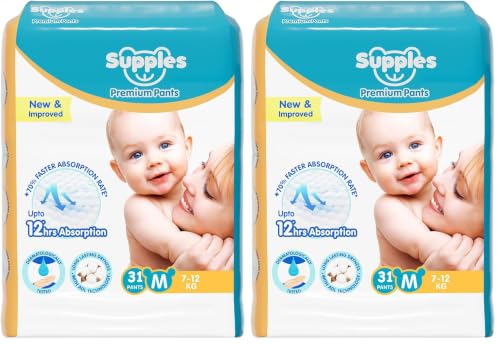
Supples Baby Diaper Pants Size M (56 Pieces per Pack)
- ✓ Budget-friendly Indian brand with basic plastic backsheet
- ✓ Standard SAP gel core, no moisture indicators
- ✓ Best paired with airtight storage containers during monsoon
* We earn a small commission — at no extra cost to you.