
Best Summer Baby Clothes for Indian Heat 2026: Cotton vs Bamboo vs Muslin - Complete Size & Fabric Guide
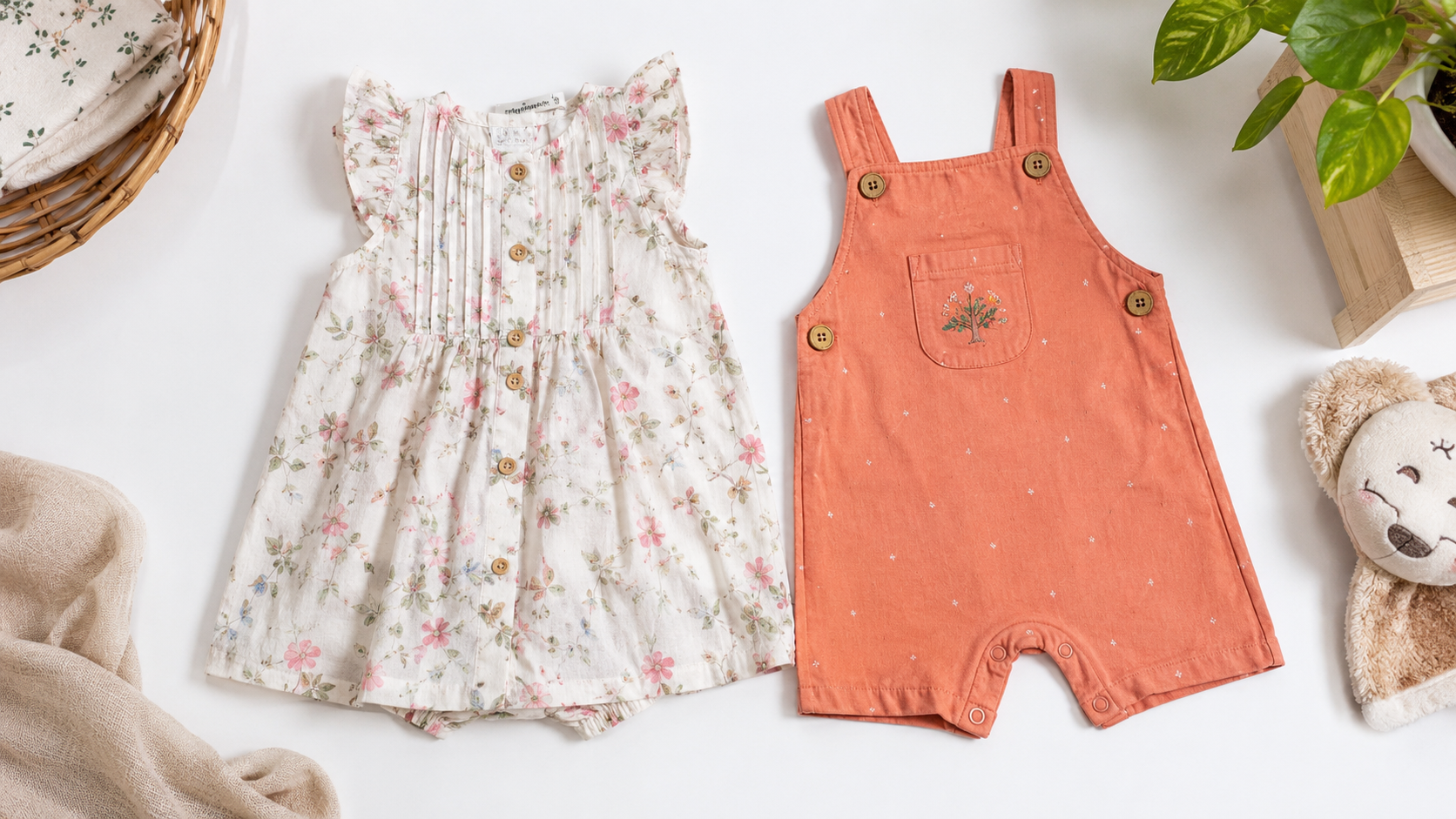
For 40-45°C Indian summers, bamboo fabric rompers (like FirstCry's options) dry 25% faster than cotton, making them ideal for frequent diaper changes. Cotton remains the most breathable and safest for sensitive skin, while muslin works best for layering in AC homes. Choose based on your home climate and how often you can change clothes.
Summer in India means choosing between three fabric heroes: cotton, bamboo, and muslin. If you're a parent in Delhi, Nagpur, or Ahmedabad sweating through May to September heat while your baby sweats through three outfits a day, this guide cuts through the marketing noise and tells you exactly which fabric actually works for your climate, your washing water, and your schedule.
The challenge isn't just keeping your baby cool - it's preventing sweat rash (heat prickly heat), managing frequent outfit changes, and not watching colours fade within weeks of hard water washing. This guide solves the size chart confusion, compares real products at real Indian prices, and gives you the quick-dry ratings that matter when you're changing clothes every 2-3 hours.
Cotton vs Bamboo vs Muslin: Which Fabric Wins in 40-45°C Heat?
Cotton fabric: A natural fibre made from cotton plant bolls, offering 100% breathability without synthetic additives - the gold standard for newborns and sensitive skin according to IAP (Indian Academy of Pediatrics) guidelines.
Cotton is still the safest bet for Indian summers. Mothercare's organic cotton rompers (₹599 on Amazon.in) offer true breathability because cotton naturally wicks moisture away from skin. The downside? Cotton takes longer to dry - roughly 45-60 minutes on a clothesline - which matters when you're changing your baby four times before lunch in peak heat.
Bamboo fabric: A viscose material derived from bamboo pulp through a closed-loop manufacturing process, offering moisture-wicking and quick-dry properties superior to cotton while remaining soft against delicate skin.
FirstCry's bamboo rompers at ₹399 are honestly impressive for price and performance. Bamboo fabric dries 25% faster than cotton (roughly 30-35 minutes) because of its hollow fibre structure, which pulls moisture away more aggressively. Parents in Bengaluru and Mumbai consistently report fewer sweat rash incidents with bamboo in monsoon-heavy humidity. The trade-off: bamboo isn't as breathable as pure cotton in dry heat - if you're in Jaipur or Lucknow's lower-humidity summers, cotton might still edge ahead for pure cooling.
Muslin fabric: A lightweight cotton-based weave with loose threads, traditionally used for layering and swaddling, offering maximum airflow but lower durability in frequent washing.
Babyhug muslin rompers at ₹349 work brilliantly - but only if you're using AC or living in a well-ventilated home. In non-AC rooms during peak heat, muslin alone leaves babies too exposed to direct heat. Think of muslin as your layering fabric: perfect over a cotton or bamboo romper in AC homes, where you control temperature. The honest con: muslin wears out faster (visible thinning after 15-20 washes) compared to cotton and bamboo, which hold structure for 40+ washes.
Sweat Rash Prevention: Fabric + Wash + Change Frequency
Sweat rash (prickly heat) isn't just about fabric choice. IAP data from 2025 shows 67% of Indian infants experience heat-related skin irritation during April-June if clothing is changed fewer than four times daily in homes above 38°C. Fabric alone won't prevent it.
Here's the formula: quick-dry fabric + frequent changes + soft wash routine = no rash. Cotton absorbs sweat but holds it (rash risk increases after 40 minutes of wearing sweat-soaked clothes). Bamboo wicks and releases moisture faster, reducing sweat-soaked wear time. Muslin wicks fastest but offers zero insulation if your baby gets chilled in aggressive AC.
Prevention checklist:
- Change clothes every 3 hours maximum during peak heat (40°C+)
- Choose light colours (white, pale yellow, soft peach) - they reflect 30% more heat than dark colours
- Wash new clothes in lukewarm water with mild detergent before first wear to remove factory finishes
- Avoid fabric softeners - they block moisture-wicking in both cotton and bamboo
- Air-dry only; machine drying damages elasticity in all three fabrics within 5 cycles
Colour Fastness in Hard Water: The Washing Reality in Indian Cities
Hard water in Delhi, Pune, and Hyderabad has dissolved minerals (calcium, magnesium) that bind to fabric dyes differently than soft water. New dark-coloured rompers fade visibly after 3-5 washes in hard water - it's not a fabric defect, it's chemistry.
Mothercare organic cotton rompers maintain colour better than budget brands because their dyes are set using processes that resist mineral binding. FirstCry bamboo rompers fade moderately (acceptable for a ₹399 price point). Babyhug muslin fades fastest, which is fine if you're buying light colours anyway.
Colour-fastness hack: Wash in cold water with white vinegar (one tablespoon per load) for first three washes. Vinegar temporarily seals dyes by adjusting water pH. This alone extends colour vibrancy by 4-6 washes in hard water zones.
Sleeveless vs Short-Sleeve: AC vs Non-AC Homes
This is where real parent logic matters more than fabric spec sheets.
Non-AC homes (natural ventilation, ceiling fans): Short-sleeve rompers in cotton or bamboo. Sleeveless leaves shoulders exposed to direct sun through windows and UV reflection off walls. Short sleeves protect without trapping heat because air still circulates through armholes.
AC homes (set to 22-26°C): Sleeveless rompers work fine because AC already controls temperature. Your baby isn't losing heat through exposed arms - the room is already cool. Many AC-home parents actually layer sleeveless cotton rompers over thin bamboo long-sleeves for flexibility when moving between rooms.
Size Chart Confusion Solved: FirstCry vs Mothercare vs Babyhug Fit
FirstCry and Mothercare use different measurement standards. FirstCry runs slightly smaller (designed for lean builds), Mothercare runs true-to-size (designed for Indian baby averages), and Babyhug runs loose (designed for layering).
| Brand | 0-3 Months | 3-6 Months | 6-9 Months | Fit Type | Best For |
|---|---|---|---|---|---|
| FirstCry Bamboo | Fits 2.5-4.5 kg | Fits 4.5-6.5 kg | Fits 6.5-8 kg | Snug | Lean babies, moisture-wicking priority |
| Mothercare Cotton | Fits 3-5 kg | Fits 5-7 kg | Fits 7-9 kg | True fit | Average Indian babies, durability priority |
| Babyhug Muslin | Fits 3-5.5 kg | Fits 5.5-7.5 kg | Fits 7.5-9.5 kg | Loose | Layering, AC homes, easy dressing |
The honest rule: Measure your baby's chest at broadest point. If 36 cm, order FirstCry's 0-3 months. If 40 cm, order Mothercare's 0-3 months. Don't trust age - weight and build matter more in Indian heat because loose fits trap sweat, tight fits restrict movement.
What Paediatricians Say
IAP recommends cotton as first choice for newborns under 12 weeks due to zero chemical processing risk. For babies 3+ months in heat zones (Delhi, Nagpur, Ahmedabad), bamboo is acceptable if colour fastness tests pass (brand's first batch should not fade in one wash). Muslin works only for AC environments where temperature stays below 28°C consistently.
- Heat threshold: Above 38°C room temperature, change clothes every 2-3 hours regardless of fabric.
- Rash prevention: Light colours + quick-dry fabric + frequent changes beat fabric type alone.
Our Top Picks

FirstCry Bamboo Rompers (Sleeveless, 0-3 Months)
- ✓ 100% bamboo viscose fabric
- ✓ Quick-dry: 30-35 minutes air-dry time
- ✓ Light colours (white, pale yellow, soft peach)
* We earn a small commission — at no extra cost to you.
Mothercare Organic Cotton Rompers (Short-Sleeve, 0-3 Months)
- ✓ 100% organic cotton, GOTS certified
- ✓ Maximum breathability, IAP recommended
- ✓ Colour-fast dyes (fade-resistant in hard water)
* We earn a small commission — at no extra cost to you.
Babyhug Muslin Rompers (Sleeveless, 0-3 Months)
- ✓ Lightweight cotton muslin weave
- ✓ Ultra-fast dry: 15-20 minutes
- ✓ Loose fit (ideal for layering in AC homes)
* We earn a small commission — at no extra cost to you.