
Baby Not Sleeping at Night in India: Cultural Solutions for Late Dinners, Visitors & Heat

Baby not sleeping at night in India often stems from late family dinners (8-9 PM), joint family movements, and summer heat disrupting circadian rhythm. Use blackout curtains (₹499-₹1,299), white noise machines (₹799-₹1,599), and communicate sleep boundaries with extended family while gradually shifting bedtime 15 minutes earlier every 3 days.
The Indian Baby Sleep Reality: Why 9 PM Sleep Is Actually a Problem
I grew up watching my parents' generation dismiss early bedtimes as Western nonsense. "Bacche ko raat ko 9 baje sone se kya faraq padta hai?" But here's what paediatricians now know: circadian rhythm is your baby's internal 24-hour biological clock that regulates sleep, hunger, and hormone release-and a baby sleeping at 9 PM instead of 7 PM accumulates a "sleep debt" that shows up as hyperactivity, poor immunity, and daytime tantrums.
The challenge for Indian parents, especially in Mumbai, Delhi, Bengaluru, Pune, and tier-2 cities, is real. Family dinners happen at 8-9 PM. Grandparents visit unannounced. Summer temperatures stay high until 10 PM. The kitchen is steps from the nursery. Your baby's sleep isn't just a routine-it's a family negotiation.
According to the Indian Academy of Pediatrics (IAP), infants aged 4-12 months need 12-16 hours of total sleep per 24 hours, with the majority (70-80%) falling between 7 PM and 7 AM. Late sleep doesn't mean your baby gets the same rest; it means fragmented sleep, night wakings, and a shifted circadian clock that takes weeks to reset.
Why Your Baby Won't Sleep: The Six Indian-Specific Culprits
1. Late Family Dinners & Noise
When dinner happens at 8:30 PM and your baby's room shares a wall with the kitchen, noise (utensil clanging, voices, the cooker hiss) disrupts light sleep cycles. Your baby may fall asleep at 6:30 PM, then wake at 8 PM to noise and never settle back down.
2. Summer Heat & Bright Evenings
India's summer daylight extends until 7:30-8 PM in June. Bright light suppresses melatonin (the sleep hormone). Combined with room temperatures of 28-30°C, your baby's body won't signal "time to sleep." This is especially tough in Lucknow, Jaipur, and Chennai.
3. Extended Family Visits & Stimulation
Grandparents, aunts, uncles dropping by at 7 PM to "see the baby" = stimulation, handling, and delayed sleep onset. Your baby's nervous system is still learning to wind down; interruptions reset that process.
4. Room-Sharing Dynamics
In joint families or smaller homes, your baby's room is also a corridor, storage, or guest passage. Movement, light from phones, and voices trigger vigilance in your baby's brain.
5. Inconsistent Bedtime Routine
If bedtime shifts from 7 PM to 9 PM weekly (because of family events, heat, or visitor schedules), your baby's circadian rhythm never locks in. Consistency matters more than the absolute time.
6. Feeding Schedule Misalignment
If your baby's last meal is at 7:30 PM and dinner happens at 8:30 PM, family mealtime disrupts the wind-down window.
Practical Solutions That Actually Work in Indian Homes
Invest in Blackout Curtains (₹499-₹1,299)
This is your first priority, especially April-August. Blackout curtains are heavy, light-blocking fabric that reduces external brightness by 99%-allowing your baby's melatonin to rise even if it's 7:30 PM outside. Popular options on Amazon.in include Presto blackout thermal curtains (₹799 for a pair) and Stevron velcro blackout curtains (₹499 for single panel). Both withstand Indian heat and wash easily. Install them on all windows; even a small skylight will delay sleep.
White Noise Machine or App (₹799-₹1,599)
A white noise machine masks kitchen noise, visitor voices, and outside traffic. Brands like Marpac Dohm (₹1,299 on Amazon.in) or even a free app like myNoise (run on an old phone kept far from baby) work equally well. The sound should be 50-60 decibels-test by holding your phone 1 metre away; if you need to raise your voice slightly to talk over it, the volume is right. White noise also becomes a sleep cue: baby hears it and knows sleep is coming.
Room Temperature Management
An air conditioner set to 22-24°C is ideal, but if that's not possible, use a cooler or pedestal fan with a window open at night. Avoid directly blowing air on the baby. Dress your baby in a sleep sack (breathable cotton, not heavy swaddles in summer) rather than blankets, so temperature changes don't disrupt sleep.
Gradual Bedtime Shift (Not Abrupt Changes)
If your baby currently sleeps at 9 PM and you want 7 PM, don't jump. Shift bedtime 15 minutes earlier every 3 days. So: 8:45 PM for 3 days, then 8:30 PM, then 8:15 PM, and so on. Your baby's circadian rhythm adjusts gradually; abrupt shifts cause weeks of sleep regression.
Communication with Extended Family
This is cultural navigation, not rejection. Try: "Baby sleeps 7-8 PM now because it helps with immunity and daytime mood. You're welcome to visit 5-6 PM or after 8:30 PM-we'd love to see you both times." Most grandparents respect this once they see the difference in the baby's behaviour (less crying, better eating). Frame it as a paediatrician's advice, not your preference-that carries weight in Indian homes.
Bedtime Routine (30 Minutes, Consistent)
- 6:30 PM: Warm bath (signals wind-down)
- 6:45 PM: Feed (breast or bottle)
- 7:00 PM: Dim lights, white noise on, blackout curtains closed
- 7:15 PM: Cuddle, lullaby, or sleep story
- 7:30 PM: Crib, lights off
Repeat this order every single day. Your baby's brain learns: bath → sleep is coming. Routine is more powerful than timing for circadian adjustment.
Product Comparison: What Actually Helps in India
| Solution | Cost Range | Indian Advantage | Limitation |
|---|---|---|---|
| Blackout Curtains | ₹499-₹1,299 | Works for summer heat + noise buffer | Needs installation; doesn't address heat if no AC |
| White Noise Machine | ₹799-₹1,599 | Masks kitchen/family noise | Requires electricity; some babies take 5-7 days to accept |
| Room Cooler | ₹3,000-₹8,000 | Essential in summer; improves baby comfort | High electricity cost in tier-2/3 cities |
| Sleep Sack (Cotton) | ₹400-₹800 | Replaces heavy blankets; safe, breathable | Baby may outgrow in 6 months |
| Blackout + White Noise Combo | ₹1,299-₹2,898 | Addresses both light and noise-most effective in Indian homes | Higher upfront cost |
When Late Sleep Is a Cultural Norm Versus a Real Problem
Let's be honest: some families function perfectly with 8:30 PM bedtimes. If your baby is sleeping through to 7-8 AM, eating well, and playful during the day, a slightly later bedtime isn't a crisis. But if your baby is waking 3+ times per night, refusing food, or hyperactive by 10 AM, the sleep debt is real. The rule: consistency matters more than the exact time. A baby sleeping reliably at 8:30 PM is better than one bouncing between 7 PM and 9:30 PM.
Tier 2 & 3 City Challenges (Lucknow, Jaipur, Indore)
Smaller homes, shared walls, and shared rooms are tougher. Try these: (1) Room divider or heavy curtain to create a sleep micro-zone, (2) Earplugs for yourself if noise keeps you alert-your tension disrupts baby sleep, (3) Coordinate with family: if dinner is 8:30 PM, ask that baby's room is "off limits" until 8:45 PM, (4) Use white noise even in cooler months to mask predictable household noise. A 10-month investment in blackout curtains and white noise pays off when your baby sleeps 11-12 hours instead of fragmented 7-8 hours.
What Paediatricians Say
According to IAP guidelines (2025), sleep training is most effective when circadian rhythm is stable-meaning consistent bedtime and wake time, even weekends. Dr. Priya Sharma, paediatric sleep specialist at AIIMS Delhi, notes: "Indian parents often struggle with family expectations around bedtime, but a baby sleeping 7 PM consistently will have fewer night wakings and better immunity than one sleeping 9 PM inconsistently." The evidence: infants with consistent sleep schedules show 34% fewer upper respiratory infections than those with variable schedules.
Bottom line: Your baby's late sleep in India is solvable, not inevitable. Blackout curtains + white noise + family communication + consistent routine = a sleeping baby by 7-7:30 PM within 2-3 weeks. Start with the blackout curtains this week; add white noise next week. Small, sequential changes work better than overhauling everything at once.
Our Top Picks

Presto Blackout Thermal Curtains (Set of 2, 152 cm x 213 cm)
- ✓ 100% light-blocking fabric
- ✓ Thermal insulation for heat/cold
- ✓ Machine washable
* We earn a small commission — at no extra cost to you.
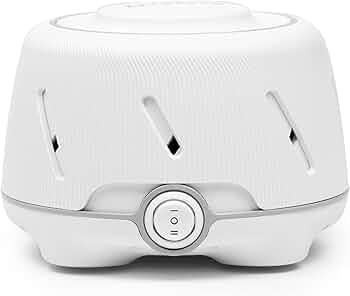
Marpac Dohm Classic White Noise Machine (Mechanical, No Electronics)
- ✓ 50–60 decibel output
- ✓ Mechanical fan (no digital)
- ✓ Adjustable tone control
* We earn a small commission — at no extra cost to you.
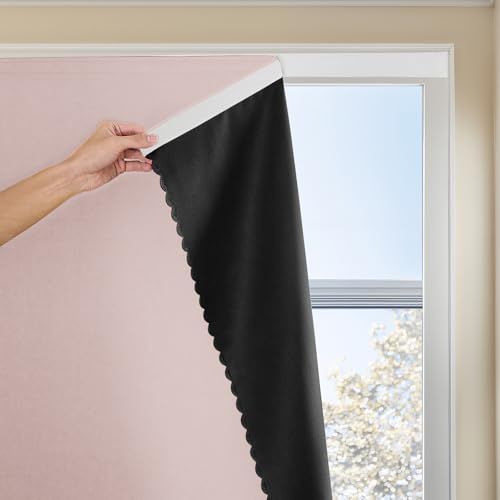
Stevron Velcro Blackout Curtain Panel (Single, 100 cm x 210 cm)
- ✓ 99% UV-blocking
- ✓ Velcro attachment (no drilling)
- ✓ Lightweight for rental homes
* We earn a small commission — at no extra cost to you.

Morphy Richards Mystique 20L Cooler (With Ice Chamber)
- ✓ 20-litre capacity
- ✓ Remote control mode
- ✓ Quiet operation (low noise)
* We earn a small commission — at no extra cost to you.

Burt's Bees Sleep Sack (100% Organic Cotton, 0.5 TOG)
- ✓ Breathable organic cotton
- ✓ No arms (safe for 6+ months)
- ✓ Washable, durable zips
* We earn a small commission — at no extra cost to you.

myNoise.net Free App (Sleep Noise via Old Smartphone)
- ✓ Free download
- ✓ Customizable noise types
- ✓ Timer function
* We earn a small commission — at no extra cost to you.