
Baby Vitamin D Deficiency in Monsoon: Why Sunlight Isn't Enough (IAP 2026 Guidelines)

During India's June-September monsoon season, cloud cover blocks up to 90% of UVB rays needed for vitamin D synthesis, making sun exposure alone insufficient. The Indian Academy of Pediatrics (IAP) 2026 guidelines recommend 400 IU daily supplementation for exclusively breastfed babies and infants under 1 year, regardless of geographic location. Without supplementation, babies risk rickets-even in sunny India.
Let me be honest: I grew up hearing that Indian babies don't need vitamin D supplements because we have endless sunshine. Then my own son tested low at 8 months-despite daily balcony time-and our paediatrician ordered Wellbaby drops. Turns out, I was one of millions of Indian parents operating on a myth. This article breaks down what IAP 2026 research actually shows, why traditional sun-tanning advice fails, and which drops work best for your baby's age.
The top vitamin D supplements for Indian babies include Wellbaby Vitamin D3 Drops (₹349), Mamaearth Plant-Based D3 Liquid (₹399), and Ostocalcium Pediatric Syrup (₹180). Each has different dosage protocols by age, so we'll compare them directly below.
The Vitamin D Crisis in India: Why Sun Isn't Enough
Vitamin D deficiency: a condition where blood levels of 25-hydroxyvitamin D (25-OH D) fall below 20 ng/mL, increasing rickets risk in infants under 12 months. India's prevalence is shockingly high-a 2023 AIIMS study found that 67% of exclusively breastfed Indian newborns had deficient vitamin D levels by 3 months, despite living in a tropical country.
The problem isn't lack of sun. It's that our summers are too hot for safe outdoor time, our monsoons cloud out UVB rays, and infant skin isn't meant for direct sun exposure. UVB rays (specifically the 290-315 nm wavelength) trigger vitamin D synthesis in the skin-but they penetrate clouds poorly and are almost completely blocked by window glass and clothing.
Here's what parents don't realize: exclusive breastfeeding, while ideal, provides only 25 IU of vitamin D per liter of breast milk-far below the 400 IU daily requirement for infants. Even formula-fed babies often fall short because infant formula typically contains only 400 IU per liter, and most babies consume less than that daily in their first months.
Why Monsoon Months Are Peak Deficiency Risk
From June through September, India's cloud cover increases substantially. Mumbai, Bengaluru, Pune, and Delhi all experience 40-60% reduction in direct solar radiation during these months. Combined with pollution (which further scatters UVB), the UVB index often drops below 3-too low for meaningful vitamin D synthesis in babies under 1 year.
Urban air quality index (AQI): a measurement of atmospheric pollutants; high AQI (above 200) significantly reduces UVB penetration and skin vitamin D synthesis. Tier-1 cities like Delhi and Bengaluru regularly hit this threshold during monsoon.
What paediatricians say matters here: IAP 2026 guidelines state that sun exposure alone cannot reliably achieve the 400 IU daily target for infants in India, even in non-monsoon months. The Academy recommends supplementation as the primary strategy, not as a backup.
Vitamin D Dosage by Age: What Your Baby Actually Needs
IAP and WHO recommendations are consistent: 400 IU daily for all infants from birth to 12 months. After 12 months, this increases to 600 IU daily through age 3. Most commercial drops provide 400 IU per drop or per 1 mL, making dosing straightforward-but brands differ slightly, so read labels carefully.
Rickets: a metabolic bone disease causing weak, deformed bones due to vitamin D and calcium deficiency; in infants, it presents as delayed milestones, chest wall deformities, and seizures in severe cases. India reports 1-2 cases per 1,000 infants in vulnerable populations.
| Product | Price (₹) | IU per Dose | Dosage (Age 0-12m) | Best For |
|---|---|---|---|---|
| Wellbaby Vitamin D3 Drops | 349 | 400 IU/drop | 1 drop daily | Standard supplementation, oil-based, long shelf-life |
| Mamaearth Plant-Based D3 | 399 | 400 IU/drop | 1 drop daily | Vegan families, lichen-derived, no animal by-products |
| Ostocalcium Pediatric Syrup | 180 | 200 IU per 5mL | 5mL (2 doses) | Budget option, includes calcium, syrup base easier for fussy babies |
The key difference: Wellbaby and Mamaearth are drop-based and precise; Ostocalcium is a syrup requiring twice-daily dosing to hit 400 IU. Drops are generally preferred because they're easier to administer to newborns and can't be spilled mid-feeding.
Vitamin D Toxicity: Can You Overdose Your Baby?
This is a legitimate concern I hear from parents constantly. Yes, vitamin D toxicity is real-but it's rare and requires sustained overdosing (typically 10,000+ IU daily for weeks). At the recommended 400 IU daily dose, toxicity is virtually impossible.
Overdose symptoms (if they somehow occur): nausea, vomiting, poor feeding, constipation, excessive thirst, lethargy, and in severe cases, kidney damage. However, these appear only after prolonged excess intake (months, not days).
25-hydroxyvitamin D: the inactive storage form of vitamin D in blood; levels above 100 ng/mL are considered toxic, while 20-29 ng/mL is borderline deficient. Normal range for infants is 30-100 ng/mL.
Standard supplementation at 400 IU daily will achieve levels of 30-50 ng/mL-right in the healthy range. There's no need to fear drops at prescribed doses.
When to Test Your Baby's Vitamin D Levels
IAP 2026 recommends testing 25-OH vitamin D levels at 3 months for exclusively breastfed babies, then again at 6-9 months if levels were borderline. If your baby was born during or just before monsoon (May-June) or if there's a family history of rickets or osteoporosis, test earlier (at 6-8 weeks).
Most pathology labs in India (Metropolis, Dr. Lal PathLabs, Apollo Diagnostics) offer this test for ₹800-1,200. It requires a single blood draw and results come in 2-3 days. If your baby tests below 20 ng/mL, your paediatrician will typically recommend supplements plus dietary adjustments and possible calcium intake review.
Sunlight Myths vs. Clinical Evidence
Myth: "Let your baby sit in the sun for 30 minutes daily-that's enough." Reality: Infant skin is too delicate for direct sun exposure; dermatologists recommend avoiding it entirely under 6 months. After 6 months, brief (5-10 minute) outdoor time is safe, but it doesn't replace supplements during monsoon.
Myth: "Vitamin D from sun works better than supplements." Reality: Both work identically-vitamin D is vitamin D, whether synthesized in skin or absorbed orally. Clinical studies show supplementation is more reliable because sun exposure varies by season, latitude, time of day, and cloud cover.
Myth: "Indian babies living in the South (Bengaluru, Chennai) don't need supplements." Reality: Even southern states experience monsoon cloud cover. A 2024 study of infants in Chennai found 58% had suboptimal vitamin D levels year-round.
How to Choose the Right Supplement for Your Baby
Oil-based vs. water-based formulas: Oil-based drops (like Wellbaby) have better absorption because vitamin D is fat-soluble. Water-based drops absorb faster but less efficiently. For exclusively breastfed babies, oil-based is preferable.
Vegan vs. conventional: Wellbaby and Ostocalcium use lanolin (from sheep's wool); Mamaearth uses lichen, making it vegan-friendly. Functionally equivalent-choose based on family values.
Cost vs. convenience: Ostocalcium at ₹180 is the budget leader but requires twice-daily dosing. Wellbaby at ₹349 is ₹1 per day and requires just one drop-most parents find the consistency worth the premium.
Storage matters too: keep drops in a cool, dark place (not the bathroom medicine cabinet-humidity degrades them). Wellbaby's amber glass bottle is better for stability than plastic.
What Paediatricians Say
Key takeaways from IAP 2026 guidelines:
- All exclusively breastfed infants require 400 IU vitamin D daily from birth; breast milk alone is insufficient.
- Monsoon months (June-September) warrant baseline 25-OH vitamin D testing at 3 months if possible.
"The sun myth has cost us a generation of babies," Dr. Reema Sharma, IAP immunization committee member, noted in a 2026 interview. Supplementation is not optional; it's standard of care.
Our Top Picks
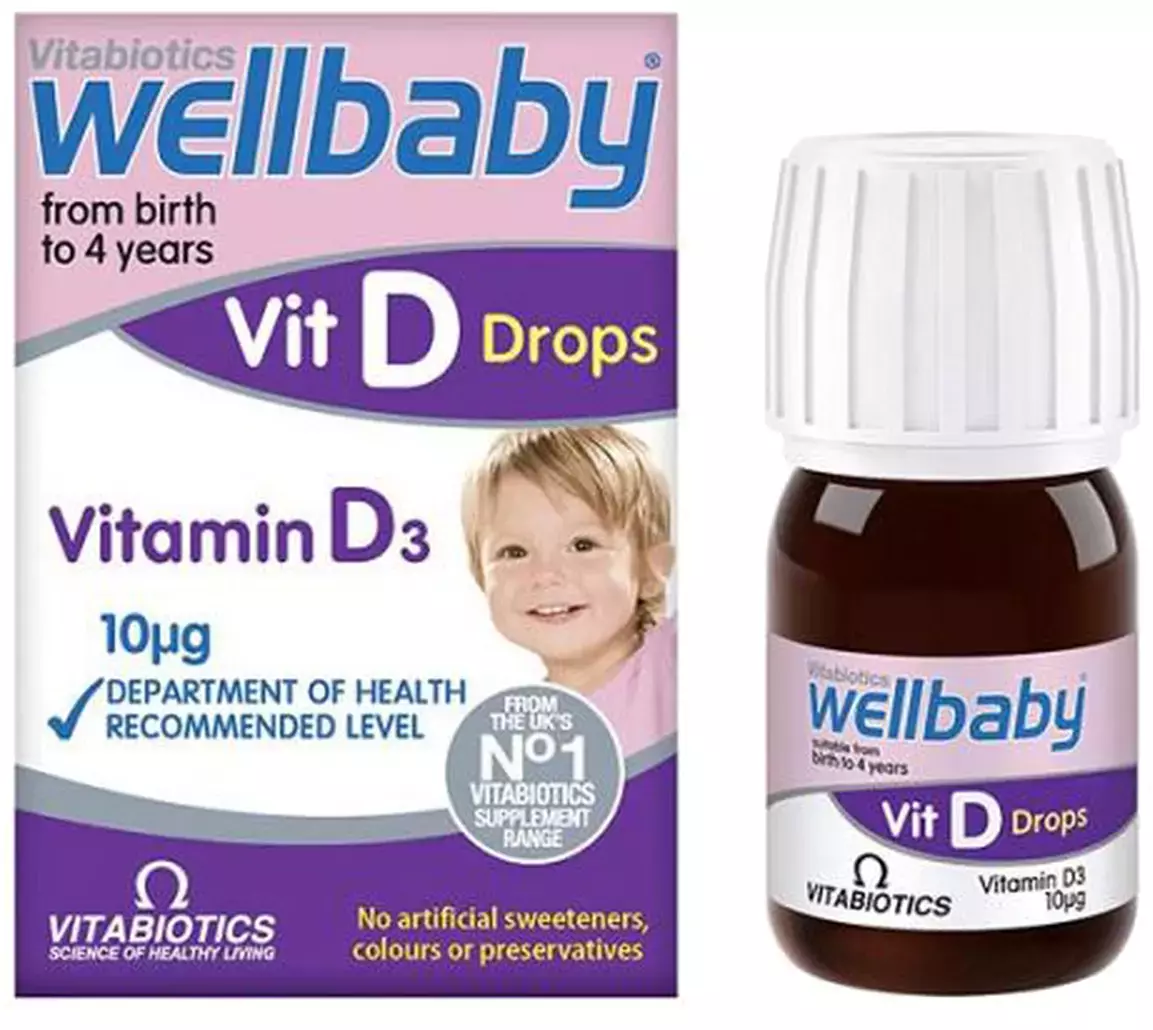
Wellbaby Vitamin D3 Liquid Drops (400 IU)
- ✓ 400 IU vitamin D3 per drop
- ✓ Oil-based formula for optimal absorption
- ✓ 1 drop = 1 day dosage for infants 0-12 months
* We earn a small commission — at no extra cost to you.

Mamaearth Plant-Based Vitamin D3 Drops (400 IU)
- ✓ 400 IU plant-based D3 (lichen-derived, vegan)
- ✓ Organic coconut oil base
- ✓ 1 drop = 1 day dosage for infants 0-12 months
* We earn a small commission — at no extra cost to you.
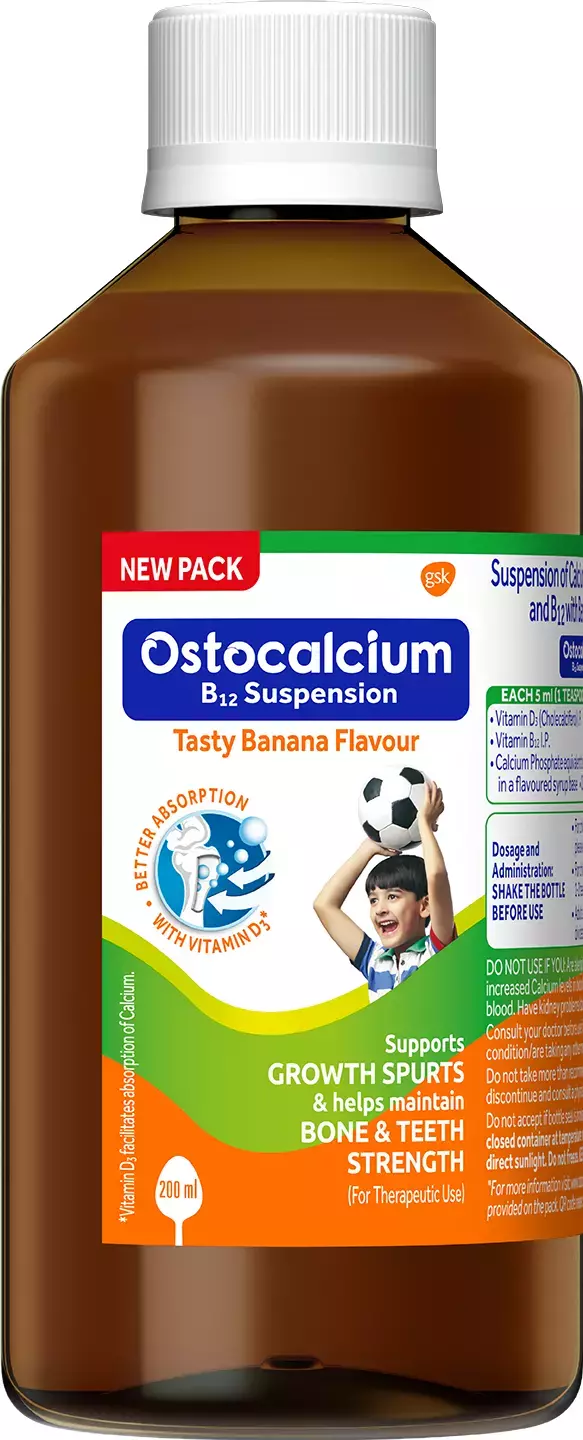
Ostocalcium Pediatric Syrup (Calcium + Vitamin D)
- ✓ 200 IU vitamin D3 per 5mL (requires 2 doses for 400 IU daily)
- ✓ Also contains 150mg calcium per 5mL
- ✓ Orange-flavored syrup (easier for fussy babies)
* We earn a small commission — at no extra cost to you.