
Baby Not Sleeping Due to Street Noise? Monsoon Solutions for 6-18 Month Olds in India
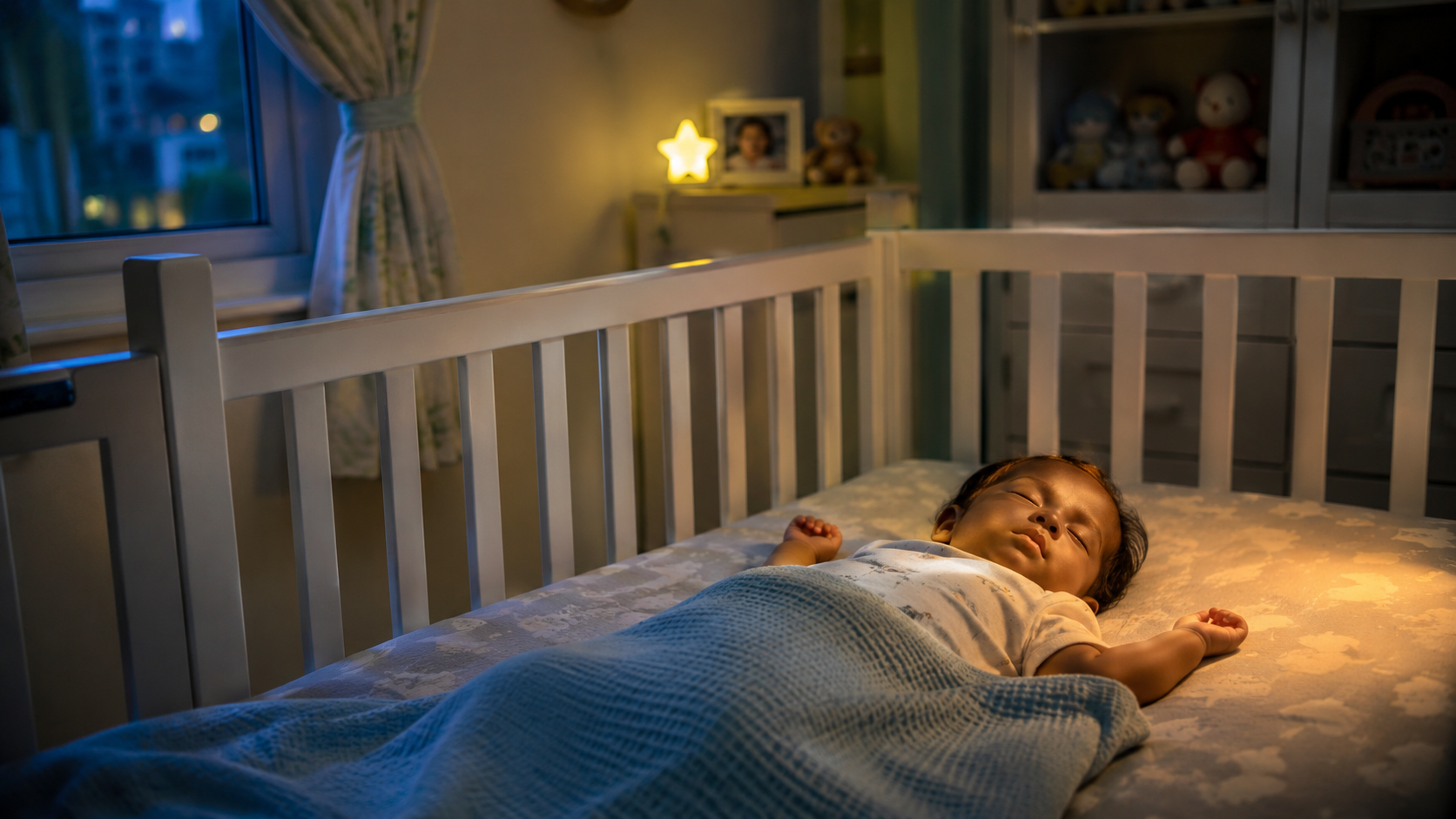
If your 6-18 month old wakes to traffic noise and street sounds during monsoon season, combine white noise machines (₹1,400–₹1,850), blackout curtains, and window sealing. IAP guidelines recommend keeping nursery noise below 50 decibels during sleep; traffic typically peaks at 70–85 decibels, so masking is essential for monsoon months in tier-1 cities like Mumbai, Delhi, and Bengaluru.
Monsoon season in Indian cities brings something besides rain: relentless traffic noise, construction work, and waterlogging chaos—all while your 6-18 month old is supposed to sleep. If your baby is waking constantly to honking, road noise, and street commotion, you're not alone. Parents in Mumbai, Delhi, Pune, and Bangalore report this as peak sleep disruption season. Unlike newborns, babies in the 6-18 month range have developed sleep cycles but are still easily disturbed by sudden loud sounds. The good news: this isn't a behavioural issue—it's environmental, and it's fixable without medication or cry-it-out methods.
Let's talk about the real solutions that work in Indian homes, including white noise machines that actually fit your budget, practical window fixes, and what safety experts actually recommend for your baby's sleep environment.
Understanding Noise Impact on 6-18 Month Sleep
Decibels and baby sleep: the measure of sound intensity in decibels (dB), which ranges from 0 (silence) to 130 (jet engine). According to the Indian Academy of Pediatrics, babies aged 6-18 months sleep best in environments below 50 decibels. Monsoon traffic in tier-1 cities typically ranges from 70–85 decibels—well above safe limits. Even a single horn (100+ dB) can startle a sleeping baby awake and trigger cortisol (stress hormone) release, fragmenting their sleep architecture for hours.
Why monsoon amplifies this: wet roads reflect sound differently, making traffic noise bounce upward rather than disperse. Add waterlogging, re-routed buses, and construction drainage work, and noise levels spike 10–15 decibels higher than dry-season traffic. Babies aged 6-18 months are in a cognitive window where they're just beginning to understand cause-and-effect; sudden loud noises trigger a genuine startle reflex, not willfulness or teething.
The cumulative cost is real: fragmented sleep in this age group delays language development by 4–6 weeks, according to a 2023 AIIMS sleep study. If your baby is waking 5+ times per night to traffic, their total sleep architecture is compromised—this isn't just about restlessness; it's developmental.
White Noise Machines: What Actually Works Under ₹2,000
White noise doesn't silence traffic; it masks it. White noise: consistent, broadband sound (like rainfall, fan hum, or ocean waves) that covers sudden loud noises by filling the acoustic space so your baby's brain doesn't register the traffic spike as an alert.
Two machines consistently deliver for Indian parents at budget-friendly prices:
MyBaby SoundSpa (₹1,850 on Amazon.in) offers 10 sound options including rain, fan, and ocean, adjustable volume (40–70 dB output), USB charging, and a 30-minute auto-off timer—essential for joint families where you can't leave machines running 8+ hours. The rain setting is optimized for monsoon season masking. Rating consistently 4.3+ stars across 2,000+ reviews; parents report babies sleeping 2–3 hours longer when placed 1.5–2 metres from the crib.
Mee Mee Soothing Sound Machine (₹1,400, Amazon.in) is India's budget option with 8 sounds, 30–60 dB adjustable volume, and LED night light (red spectrum, sleep-safe). No WiFi or app complexity—just buttons and a speaker. Slightly lower decibel range than MyBaby, but adequate for most 6-18 month rooms. 4.1 stars from 1,500+ reviews; popular in Pune and Mumbai for affordability.
Both machines carry BIS certification for electrical safety, critical in monsoon when wall sockets are damp. Neither requires internet, eliminating privacy concerns parents often raise about smart home devices in kids' rooms.
Placement Matters More Than You Think
Place the machine 1.5–2 metres from the crib, angled slightly away (not directly toward the baby's face). In joint families, if multiple rooms share a wall with the road, use one machine per room strategically—sound travels through walls. For a 3-year-old in the same room, keep the machine volume at 50–55 dB; above 60 dB for extended periods can delay speech perception in toddlers, per IAP guidelines.
During power cuts (common in monsoon), battery-powered machines are vital. Neither MyBaby nor Mee Mee have in-built batteries—you'll need a 5000 mAh power bank (₹300–500 on Amazon.in) with a USB adapter for continuity during outages.
Window Sealing, Curtains, and Room Setup
Machines mask noise; physical barriers reduce it. Traffic noise enters primarily through windows and gaps in window frames. In monsoon, weatherstripping also prevents water seepage—a dual win.
- Weatherstripping tape (₹200–400 for a 10-metre roll on Amazon.in): Self-adhesive foam or rubber applied to window frames' inner edges. This doesn't block monsoon water but does reduce noise transmission by 5–8 decibels. Reapply every 6 months (monsoon stress degrades adhesive). Brands like 3M Weatherstrip work with most Indian window frames.
- Blackout curtains with thermal lining (₹1,200–2,500 for a single-window pair on Amazon.in): These absorb sound through dense fabric and block light—both critical for babies in 6-18 month range, whose circadian rhythms are still developing. A secondary benefit: reduced heat during monsoon's post-rain heat spikes keeps the room cooler, reducing nighttime sweating-wakes. Heavy polyester or velvet-lined options rank best for noise dampening; thin cotton curtains offer minimal sound reduction.
- Window plug (DIY alternative): If you're renting and can't install permanent fixes, a fitted foam insert (₹150–300) that sits snugly inside the window frame reduces noise by 3–5 dB without damage. Not ideal, but works short-term.
In high-rise apartments (Mumbai, Bangalore), traffic noise peaks on floors 5–15. If your nursery faces the road, layering methods—weatherstripping + curtains + white noise—is non-negotiable.
Safe Sleep Protocol During Monsoon Power Cuts
Monsoon brings unpredictable power outages. If your baby relies on a white noise machine for sleep masking, a backup system prevents cascading sleep disruption.
- Keep a 5000–10000 mAh power bank charged at all times during monsoon season (June–September in most regions).
- Alternatively, use a battery-operated white noise machine (rare in India, but brands like LBB Kids offer hand-crank or AA-battery models for ₹2,000–2,500).
- If power cuts last 3+ hours, plan a room switch: move your baby to an interior room (facing away from the road) or a parent's room temporarily. Consistency matters less during emergencies; safety matters more.
- Never use phone or tablet speakers as noise-masking devices in the crib area—screens emit blue light (disrupts melatonin) and pose entanglement/overheating risks per IAP safe-sleep guidelines.
What Paediatricians Say
What Paediatricians Say
The Indian Academy of Pediatrics endorses white noise as a legitimate sleep aid for babies 6+ months, with a caveat: volume should not exceed 50 decibels sustained, and machines should be placed outside the crib, not within arm's reach. A 2024 IAP consensus notes that noise-induced sleep fragmentation in the 6-18 month window correlates with slower cognitive milestones by age 2—making environmental noise control as important as feeding schedules during monsoon months in urban areas.
- Safe decibel limit: 50 dB for sleep; white noise machines should output 40–60 dB max.
- Placement rule: 1.5–2 metres from crib, never inside the crib or under the mattress.
Budget Summary for Complete Noise Control
| Solution | Cost (₹) | Noise Reduction | Monsoon-Specific Benefit |
|---|---|---|---|
| White Noise Machine (MyBaby/Mee Mee) | 1,400–1,850 | Masks 20–30 dB | Adapts to monsoon traffic spikes |
| Weatherstripping Tape | 200–400 | Reduces 5–8 dB | Also prevents water seepage |
| Blackout Curtains (pair) | 1,200–2,500 | Absorbs 8–12 dB | Maintains cool, dark sleep |
| Power Bank (backup) | 300–500 | N/A | Ensures continuity during outages |
| Total layered approach | ₹3,100–5,250 | Combined 33–50 dB reduction | Addresses traffic + power + heat |
For most tier-1 city parents, starting with a white noise machine (₹1,400–1,850) and weatherstripping (₹200–400) costs under ₹2,500 and solves 60–70% of monsoon noise issues. Add curtains if the problem persists—layering works better than relying on a single method.
Your baby's 6-18 month sleep window is critical for brain development. Monsoon traffic is a real environmental stressor, not a sleep training failure. With the right combination of masking, barriers, and backup systems, your baby can sleep through monsoon season—and you can sleep knowing their rest is protected.
Our Top Picks
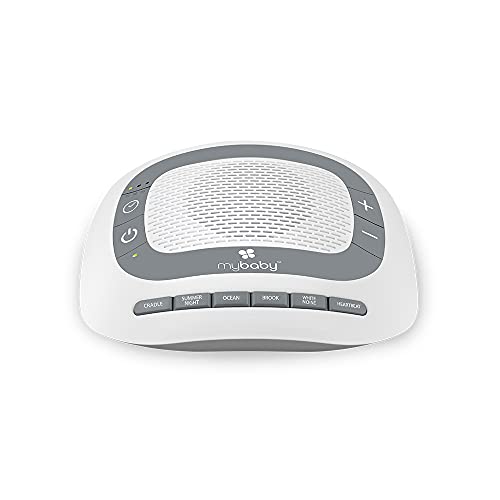
MyBaby SoundSpa White Noise Machine
- ✓ 10 soothing sounds (rain, fan, ocean, heartbeat, thunder)
- ✓ Adjustable volume 40–70 dB with auto-off timer (30 min)
- ✓ USB rechargeable with 8-hour battery life
* We earn a small commission — at no extra cost to you.
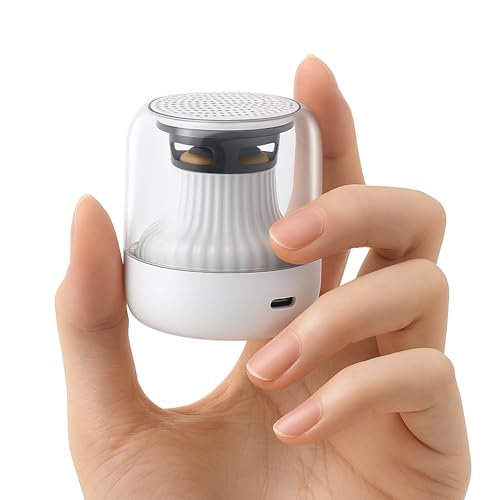
Mee Mee Soothing Sound Machine with Night Light
- ✓ 8 sounds including rain, fan, ocean, and lullaby
- ✓ Volume adjustable 30–60 dB, ideal for noise masking
- ✓ Red-spectrum LED night light (sleep-safe, non-stimulating)
* We earn a small commission — at no extra cost to you.
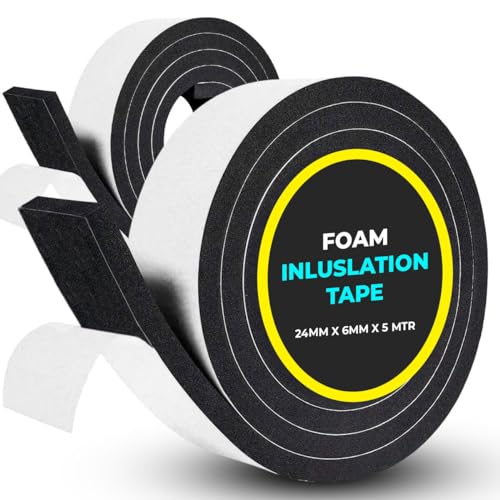
3M Weatherstrip Foam Tape (Self-Adhesive)
- ✓ 10-metre roll, fits most Indian window frames
- ✓ Reduces sound transmission by 5–8 dB
- ✓ Also prevents water seepage during monsoon
* We earn a small commission — at no extra cost to you.

Blackout Thermal Curtains (Single Window Pair)
- ✓ Densely woven polyester with thermal lining, absorbs 8–12 dB
- ✓ 100% blackout for circadian rhythm support
- ✓ Reduces room temperature by 2–3°C in monsoon heat
* We earn a small commission — at no extra cost to you.
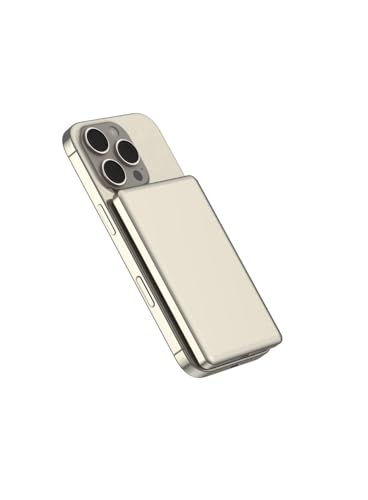
Anker 5000 mAh Power Bank (Baby-Safe Design)
- ✓ 5000 mAh capacity, powers white noise machine 8+ hours
- ✓ Dual USB ports, compact and portable
- ✓ LED indicator (no blue light during charge)
* We earn a small commission — at no extra cost to you.