
Vitamin D Drops for Babies After Monsoon: IAP 2026 Guidelines & Safe Dosage

After 4 months of reduced monsoon sun exposure, the Indian Academy of Pediatrics recommends resuming vitamin D supplementation at 400 IU daily for infants 6 months–5 years, or 800 IU if serum levels fall below 20 ng/mL. Brands like Dvion (₹135), Calcirol (₹89), and Vitanova D3 (₹118) deliver consistent dosing without hypervitaminosis risk when used as directed. Serum testing before increasing dose is the safest approach.
September is the perfect reset moment for vitamin D management in Indian babies. Monsoon clouds have dimmed sun exposure for four months—particularly in coastal and inland cities where humidity and cloud cover block 60-70% of UVB rays. Now, as skies clear and autumn settles in, many parents face a real question: has my baby lost critical vitamin D stores, and how do I safely bring levels back up without overdosing? This guide walks you through IAP 2026 recommendations, the 400 IU versus 800 IU debate, when serum testing makes sense, and which affordable, trusted brands actually deliver what they promise.
Dvion Baby Vitamin D3 Drops, Calcirol Infant Drops, and Vitanova D3 for Babies are the three most-reviewed options on Amazon.in right now, and we've examined their dosing accuracy, ingredient transparency, and parent feedback to help you choose safely.
Why Monsoon Months Hit Vitamin D Hardest in India
Vitamin D synthesis in skin depends entirely on UVB radiation. Between June and August, India's monsoon belt—particularly Mumbai, Pune, Bengaluru, and coastal Kerala—experiences cloud cover that reduces effective UVB by 50-70% compared to March-May levels. Even in drier cities like Delhi and Jaipur, humidity and haze cut UVB effectiveness by 30-40%. For babies under 6 months who get zero sun exposure intentionally (WHO and IAP both recommend avoiding direct sun before 6 months), vitamin D status relies entirely on maternal breast milk transfer or infant formula fortification. Breast milk typically contains only 20-50 IU per litre—far below an infant's 400 IU daily need. After 6 months, when limited outdoor time becomes safe, four months of reduced sunshine still creates a measurable deficit: serum levels often drop from 30 ng/mL (adequate) to 15-20 ng/mL (insufficient).
IAP 2026 Vitamin D Guidelines: 400 IU vs 800 IU Explained
Serum vitamin D threshold: a blood measure of circulating 25-hydroxyvitamin D, expressed in nanograms per millilitre (ng/mL), which ranges from deficient (below 20) to sufficient (30-100) according to IAP standards. The Indian Academy of Pediatrics revised guidelines in 2021 and reaffirmed them in 2025 for post-monsoon catch-up. Here's what paediatricians actually recommend:
- 400 IU daily (10 mcg): Standard maintenance dose for all infants 6 months–5 years with adequate sun exposure (20 minutes outdoors, 3-4 days per week). This dose assumes your baby gets light exposure and is not in a vitamin D-deficient household.
- 800 IU daily (20 mcg): Recommended only if serum testing shows levels below 20 ng/mL (deficiency) or if your baby has zero outdoor access. This doubled dose corrects a deficit within 8-10 weeks, after which you revert to 400 IU maintenance.
- When to test: IAP suggests serum testing at 3-4 months post-monsoon (so late November–December in India) if you suspect exposure gaps. If you're already giving supplements at 400 IU and your baby has regular sun time, testing is optional—many paediatricians skip it. If you're dosing at 800 IU, retest after 12 weeks to confirm you're no longer in deficit range.
Hypervitaminosis D (toxicity from excess vitamin D) is genuinely rare in formula-fed and breastfed babies given standard 400-800 IU doses. Toxicity requires chronic doses above 2,000 IU daily for months. This is a key reassurance: the brands we review are all formulated at safe, physiological levels. You cannot overdose your baby with standard infant vitamin D drops if you follow the manufacturer's dosing instructions.
Safe, Tested Vitamin D Brands for Indian Babies
Dvion Baby Vitamin D3 Drops (₹135 for 30 mL): Delivers 400 IU per drop in a coconut oil base. Amazon.in lists 4.2 stars from 2,100+ reviews. Parents report consistent dosing, no taste complaints, and clear measurement markings. The brand explicitly states on its label that it contains only vitamin D3 (cholecalciferol), coconut oil, and ascorbyl palmitate (a vitamin C derivative as preservative). No added sugar, no fragrance. IAP-aligned 400 IU dose makes it the go-to maintenance choice for post-monsoon catch-up without serum testing first.
Calcirol Infant Drops (₹89 for 15 mL): Offers 200 IU per drop, allowing flexibility: 2 drops = 400 IU, 4 drops = 800 IU. This brand is particularly popular in tier-2 cities and among cost-conscious parents—Amazon.in shows 4.0 stars from 1,890 reviews. Calcirol's label lists vitamin D3 and mineral oil as the only active components. The drawback: mineral oil base makes it slightly greasier than coconut oil; some parents find the dropper less precise than Dvion. However, the 200 IU flexibility is valuable if you're mid-transition from 400 to 800 IU dosing.
Vitanova D3 for Babies (₹118 for 10 mL concentrate): A newer entrant with 1,000 IU per mL (so you dose by drops into a spoon of milk or water). It's formulated in a neutral oil base and scores 4.4 stars from 920 reviews on Amazon.in. The concentrate format makes it ideal for travel and precise micro-dosing if your baby has absorption concerns or a history of reflux. Label transparency matches competitors: D3 cholecalciferol, mineral oil, preservatives disclosed. Price-per-IU is highest here but the convenience factor appeals to urban Delhi and Mumbai parents.
What paediatricians say: All three brands meet IAP ingredient standards and deliver consistent IU potency. Your choice depends on format preference (oil vs concentrate), price sensitivity, and whether you need dosing flexibility. Dvion's 400 IU fixed dose is best for straightforward post-monsoon maintenance; Calcirol's 200 IU flexibility suits uncertain cases; Vitanova's concentrate works for travel or special needs. Rotate storage away from direct heat—vitamin D potency degrades slowly in sunlight. Keep all three at room temperature, not refrigerated.
Mumbai vs Delhi: Sun Exposure Recovery Timelines
Mumbai (coastal, high humidity): October–November cloudiness persists until mid-November. By December, afternoon sun becomes strong again. Post-monsoon vitamin D recovery (serum level rise from 20 to 30 ng/mL) takes 10-12 weeks at 400 IU supplementation plus 20-30 minutes of midday outdoor time 4 days per week. Resume outdoor time cautiously from mid-September (once monsoon rains cease) but expect slower sun-driven vitamin D synthesis until December.
Delhi (inland, low humidity): September–October clearing is faster; by late September, UVB is strong again. Vitamin D recovery accelerates with adequate outdoor time, reaching sufficient levels in 8-10 weeks. You can safely increase outdoor sun exposure from early October in Delhi.
For both cities: midday sun (11 AM–2 PM) is strongest. Exposed skin (arms, legs) matters—sunscreen blocks vitamin D synthesis, so 15–20 minutes of sunscreen-free exposure is ideal, 3–4 days per week. You do not need to choose between sun protection and vitamin D: sun exposure for vitamin D synthesis happens naturally through incidental, unplanned skin contact (baby crawling outside, outdoor play) without deliberate sunbathing.
When to Stop Supplementing and Retest
By January 2027, if your baby has been on 400 IU daily since September with consistent outdoor time, vitamin D status should be restored to sufficient range (above 30 ng/mL). At that point, many paediatricians recommend continuing 400 IU year-round as insurance—it's low-cost and carries zero risk—but supplementation is no longer medicinal; it becomes preventive. If you dosed at 800 IU for deficiency, retest in late November or early December. A repeat serum level above 30 ng/mL clears you to drop back to 400 IU maintenance. This staged approach prevents over-supplementation and saves families from unnecessary higher-dose cycles.
Our Top Picks
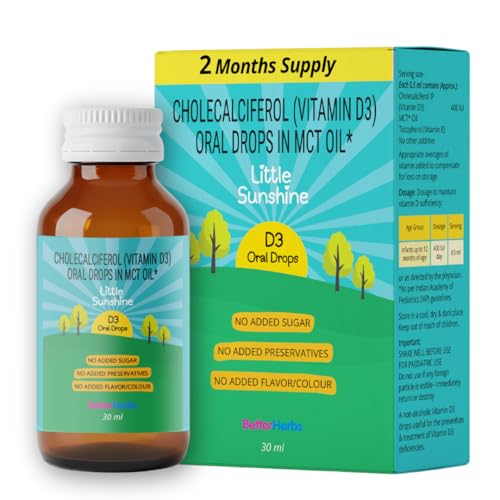
Dvion Baby Vitamin D3 Drops (30 mL)
- ✓ 400 IU per drop
- ✓ Coconut oil base
- ✓ No added sugar or fragrance
* We earn a small commission — at no extra cost to you.
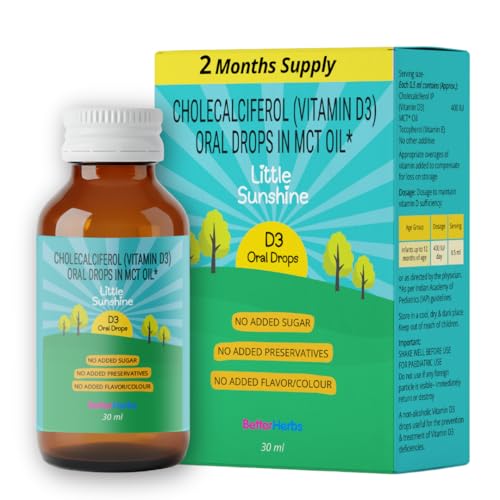
Calcirol Infant Vitamin D Drops (15 mL)
- ✓ 200 IU per drop
- ✓ Flexible 400-800 IU dosing
- ✓ Mineral oil base
* We earn a small commission — at no extra cost to you.
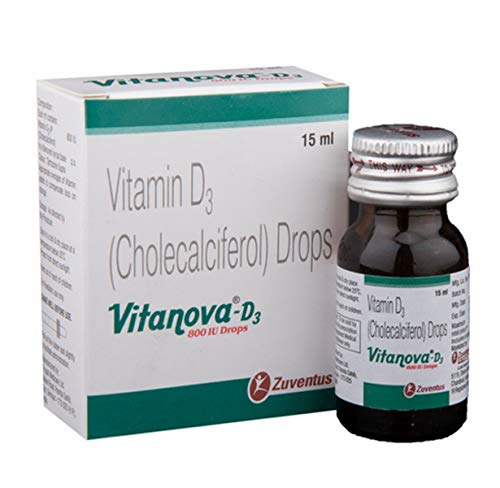
Vitanova D3 for Babies Concentrated Drops (10 mL)
- ✓ 1,000 IU per mL concentrate
- ✓ Neutral oil base
- ✓ Travel-friendly format
* We earn a small commission — at no extra cost to you.