
Best Toys for 13 Month Old Walkers in India 2026: 5 Types That Build Balance & Coordination
At 13 months, babies need toys that support cruising and walking confidence—push toys (₹900), soft foam blocks (₹450), ride-on toys (₹1200), activity walkers (₹1400), and musical mats (₹650) are ideal. Avoid wheeled baby walkers, which IAP lists as unsafe and delay independent walking.
Your 13-month-old is probably shuffling along furniture, taking wobbly steps, and testing gravity hourly. This is the moment toys matter—not for entertainment, but for building the coordination, balance and confidence that turn shuffling into actual walking. The right toy at this age doesn't entertain; it coaches. And the wrong ones (looking at you, wheeled baby walker) can actually slow progress.
We've compared 5 toy types specifically designed for this stage, with real Amazon.in prices and what each one actually builds in a toddler who's learning to trust their legs.
Five Essential Toy Types for 13-Month-Old Walkers
The checklist below shows what to prioritize. Each type serves a specific skill your child is learning right now—pushing forward, balancing, coordinating hand and foot together. Not all of them are "fun" in the noisy-lights sense; most are simply honest tools for a body learning to move.
- Push toys (like Fisher-Price Corn Popper) — These teach forward momentum and balance simultaneously. Your baby pushes the toy to make it move; the toy doesn't push the baby. This is the critical difference. Prices: ₹800–1200 on Amazon.in. Why: The child controls the speed and direction, building confidence in their own power rather than relying on the toy to hold them up.
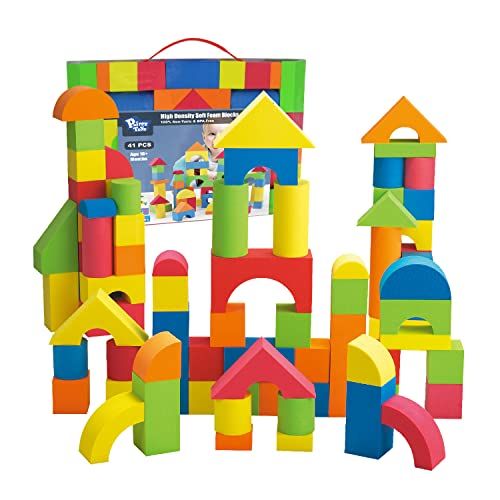
- Soft foam blocks for stacking — Large (10–15 cm), lightweight blocks that stack and topple without injury. Prices: ₹350–600. Why: Cruising babies squat, bend, and reach while holding furniture. Blocks teach hand-foot coordination and the courage to let go briefly.
- Ride-on toys without pedals — Toddler-sized vehicles (no wheels the child pedals) where they walk-and-ride or push with their feet. Prices: ₹1000–1800. Why: These let a newly-walking baby practice weight-shifting and steering while having a "vehicle" to hold onto, mimicking a push toy but with seated confidence-building.
- Activity walkers (stationary or very slow-roll) — Multi-activity panels on a frame, designed for babies to pull up and play standing. Prices: ₹1200–1800. Why: Unlike wheeled baby walkers, these don't move on their own. The baby stands, plays with buttons/gears/shapes, and practices balance and fine motor control at the same time.
- Musical mats and step-on toys — Foam mats or pressure-sensitive play surfaces that light up or sound when stepped on. Prices: ₹500–800. Why: Stepping, bouncing, and weight-shifting build ankle stability and encourage rhythmic walking practice in a safe, engaging way.
Why Baby Walkers Are Still Not Safe (IAP 2026 Guidance)
The Indian Academy of Pediatrics (IAP) continues to recommend against wheeled baby walkers in 2026, citing two main concerns: they reduce a child's natural motivation to walk independently and increase injury risk from uncontrolled speed and falls. Babies in walkers also cannot learn proper weight distribution, which delays confident walking by weeks.
If you're considering a walker for mobility help, activity walkers (stationary frames with no wheels) are the safe alternative. They provide the same standing-and-play opportunity without motion that can cause falls or reduced walking effort. Many Indian parents confuse the two; they're entirely different tools.
What to Avoid at 13 Months
Toys with small detachable pieces (beads smaller than a toilet paper roll), toys with sharp edges, anything with cords or strings longer than 20 cm—these are standard hazards. But for this age group specifically, avoid:
- Wheeled baby walkers (unsafe per IAP, delays independent walking)
- Toys that roll faster than your baby can follow (leads to chasing, not controlling)
- Heavy ride-on toys your child cannot tip back if stuck (risk of entrapment)
- Toys requiring sitting in a fixed position (at 13 months, the goal is movement freedom, not containment)
How to Choose the Right Toy for Your Child's Walking Stage
Every 13-month-old walks differently. Some are confident cruisers barely touching furniture; others are still building courage. Match the toy to the stage:
Early cruisers (touches furniture constantly) — Start with soft foam blocks and musical mats. These don't require holding on; your baby stands freely and practices balance while playing.
Confident cruisers (walks while holding one finger) — Push toys and activity walkers are ideal. They offer gentle support while encouraging forward motion.
Early independent walkers (takes 5+ steps alone) — Ride-on toys and push toys now become coordination teachers, not crutches.
The key: if your baby is using a toy *instead of* walking, it's the wrong toy for right now. The goal is to practice walking, not to replace it.
What IAP and WHO Guidance Says
Indian Academy of Pediatrics (2026): Babies benefit most from toys that encourage independent standing and stepping rather than wheeled support. WHO developmental milestones: By 15 months, most children walk 10+ steps independently; toys that build confidence without limiting movement speed independent walking success.
Budget-Friendly Toy Combinations Under ₹3000
You don't need one expensive toy. A combination works better and covers more skills:
Combo 1 (₹1800 total): Push toy (₹900) + foam blocks (₹450) + musical mat (₹450). Best for: Early cruisers just building confidence. Covers pushing, standing balance, and rhythmic stepping all in one package.
Combo 2 (₹2600 total): Activity walker (₹1400) + push toy (₹900) + foam blocks (₹300). Best for: Confident cruisers. Adds multi-sensory play (buttons, gears) to walking practice.
Combo 3 (₹2400 total): Ride-on toy (₹1200) + push toy (₹900) + blocks (₹300). Best for: Nearly-independent walkers. Introduces coordinated movement and steering.
When to See a Doctor
If your 13-month-old is not cruising at all by 14 months, walks with one foot always dragging, cannot bear weight on one leg, or seems to avoid walking after previously trying, speak to your paediatrician. This is general information, not medical advice.
Our Top Picks

Fisher-Price Corn Popper Push Toy
- ✓ Encourages forward walking and momentum control
- ✓ Pops corn kernels as baby pushes (auditory feedback)
- ✓ Lightweight, easy to push at low speeds
* We earn a small commission — at no extra cost to you.
Infantino Foam Stacking Blocks Set (10-Piece)
- ✓ Large soft foam blocks (10–15 cm each), topple safely
- ✓ Bright colours for visual engagement
- ✓ Lightweight for independent stacking by toddler
* We earn a small commission — at no extra cost to you.

Baybee Ride-On Push Car (No Pedals)
- ✓ Walk-and-ride design; baby propels with feet
- ✓ Stable handle bar for support while riding
- ✓ Teaches weight-shifting and steering
* We earn a small commission — at no extra cost to you.

Sunbaby Activity Walker (Multi-Activity Panel, Stationary)
- ✓ Stationary frame (no wheels) for safe balance practice
- ✓ Buttons, gears, musical panels for fine motor play while standing
- ✓ Sturdy handle bar for cruising and pulling up
* We earn a small commission — at no extra cost to you.

Musical Step-on Play Mat (Foam, Pressure-Sensitive)
- ✓ Lights up and sounds when stepped on
- ✓ Foam construction, soft and safe
- ✓ Encourages rhythmic stepping and weight-shifting
* We earn a small commission — at no extra cost to you.