
Toys for 18-Month-Old Under ₹1,500: 5-Piece Starter Set for Motor & Language Skills
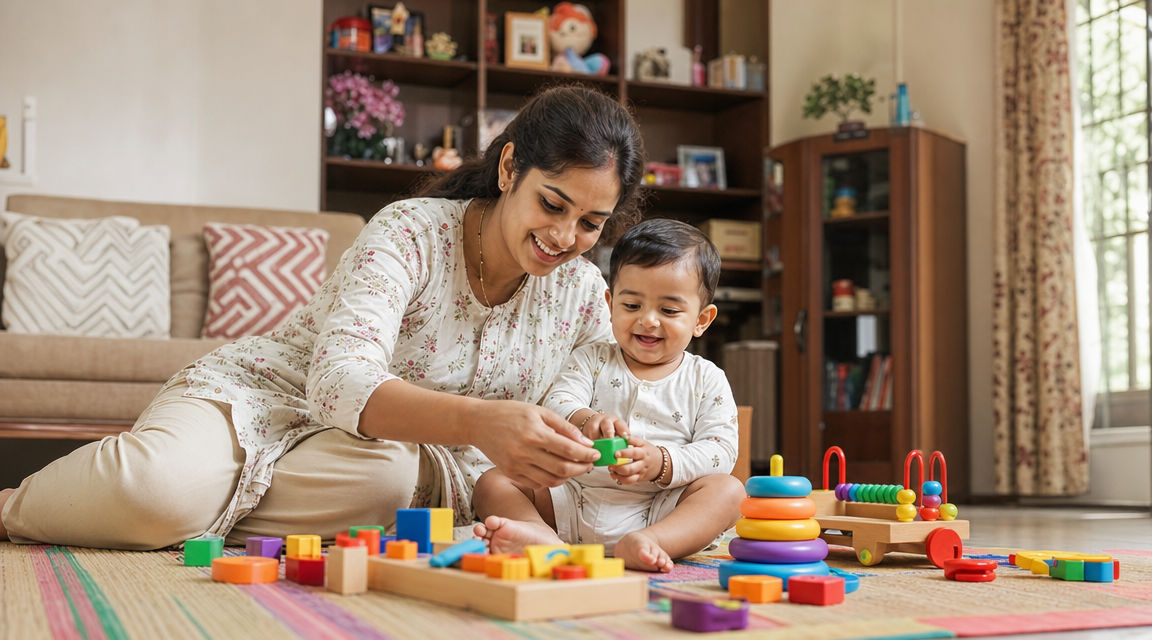
A ₹1,400 bundle of five toys—push-pull walker, stacking rings, shape sorter, soft ball, and board book—covers all major developmental milestones for an 18-month-old. One quality item per skill area beats five cheap toys gathering dust.
At 18 months, your toddler is almost certainly walking, stacking things, throwing with wild enthusiasm, and demanding books at 2 a.m. The temptation is to buy every colourful noise-maker in sight. The smarter move: one focused toy per developmental domain, quality over quantity, and a rotation system so nothing gets boring—and nothing breaks under real toddler stress.
This guide breaks down exactly which toys for 18-month-old under 1500 actually earn their shelf space. No gimmicks, no batteries, no toys that do the playing for your child. Just five pieces that work with how toddlers actually develop between 15 and 24 months.
The Developmental Checklist for 18-Month Toys
- Gross motor balance & coordination: Push or pull toy that encourages standing and walking. A push-pull walker like Toyshine (₹450) stabilises wobbly legs and builds confidence on inclines or uneven floors at home.
- Fine motor grip & stacking: Stacking or nesting toy with 4–6 rings. Funskool 5-Ring (₹180) teaches hand-over-hand coordination and colour recognition without frustration (large rings, easy grip).
- Cognitive problem-solving: Shape sorter box with 4–6 shapes. Ratna's Sorting Box (₹320) teaches spatial reasoning and patience—toddlers learn that some shapes fit only one way.
- Gross motor throwing & hand strength: Soft, lightweight ball for indoor throwing. Giggles Fabric Ball (₹120) is safe on walls, easy to chase, and teaches cause-and-effect (I throw, it moves).
- Language & early literacy: Board book with simple words and pictures. Dreamland First 100 Words (₹149) builds vocabulary through repetition and ritual (bedtime stories stick better than random screen time).
Why this combination works: These five items cover the four pillars of 18-month development—gross motor, fine motor, cognitive, and language—without overlap. No two toys do the same thing, so your toddler isn't bored or frustrated by repetition. Total spend: ₹1,219 (before sales or used options), leaving ₹200 buffer for damage or an impulse add-on.
Best Push-Pull Toy for Walking Confidence: Toyshine Walker
At 18 months, most toddlers walk solo, but many still wobble on stairs, carpets, or outside pavements. A push-toy gives them something to grip and lean on without feeling babied (unlike a parent's hand). Toyshine's wooden walker has a stable frame, quiet wheels, and a small storage compartment—toddlers love putting toys in and pulling them out on the go. Cost: ₹450 on Amazon.in; lasts two years and resells easily.
Stacking Rings for Fine Motor Play: Funskool 5-Ring
Stacking toys teach toddlers that order exists—big ring goes on first, then smaller ones. Funskool's set has chunky rings, a sturdy base rod, and bright (but not neon) colours. At ₹180, it's durable plastic and won't wobble if your toddler hurls it across the room (which they will). The large rings fit easily over tiny fingers, so frustration stays low and success happens often. A 15-minute session of stacking-and-knocking-over repeats is normal; it's not boring—it's building muscle memory.
Shape Sorter for Problem-Solving: Ratna's Sorting Box
Shape sorters teach spatial reasoning: does this square fit the circle hole? No. The triangle? Yes. Ratna's Sorting Box (₹320) has six shapes, a hinged roof (toddlers love opening and closing lids), and chunky, graspable pieces. It's the first real puzzle activity most toddlers engage with, and the reward (pieces disappear, then you open the box and they're there—magic!) keeps them coming back. This one teaches patience and problem-solving, not just hand-eye coordination.
Soft Ball for Throwing: Giggles Fabric Ball
Toddlers throw. It's not misbehaviour; it's physics practice. A soft fabric ball (Giggles, ₹120) is safe indoors, light enough to throw repeatedly without arm fatigue, and easy to wash if your toddler chews it. At 18 months, throwing is clumsy but intentional—they're learning that actions have outcomes. A ball rolling across the floor teaches cause-and-effect better than any app. Plus, chasing and retrieving the ball is active play (and tires them out before nap time).
First Board Book for Language: Dreamland First 100 Words
Board books are not optional at 18 months—they're the cheapest language investment you can make. Dreamland's First 100 Words (₹149) uses simple illustrations and repeated words (dog, dog, dog—toddlers love repetition). A bedtime book routine, even five minutes, builds vocabulary and creates a calming wind-down signal. This one resists chewing, survives sticky fingers, and costs less than two coffees. Vocabulary growth between 18 and 24 months is rapid; a book with familiar words in your home language accelerates it naturally.
What IAP and WHO Guidance Says
Developmental play at 18 months: The Indian Academy of Pediatrics emphasises that toddlers learn through play, not structured lessons. Push-pull toys encourage balance and muscle confidence; shape sorters build early problem-solving skills. WHO guidance notes that active play (throwing, stacking, pulling) supports motor development and reduces screen time dependency. Quality over quantity is the consistent recommendation—one toy used intentionally beats five toys that create clutter.
What NOT to Buy Yet for 18-Month-Olds
Avoid toys with small detachable parts. Even though your toddler is past 12 months, toys with beads, loose buttons, or whistles smaller than a toilet-paper roll are choking hazards if they fall off. Check Amazon reviews for "parts came off" before buying. Skip battery-powered toys. Electronic noises don't teach skills—they just teach toddlers to demand stimulation. Stick to toys that respond to their action (you push, it rolls; you throw, it bounces). Don't buy multi-toy combo sets yet. A 20-piece "developmental toy bundle" often contains ten useless pieces that end up in a bin. Five focused, quality toys teach more than 20 cheap toys. Hold off on ride-on toys. At 18 months, most toddlers still lack the balance for a tricycle or push-car. Save this for 2–2.5 years when coordination is stronger.
Monthly Rotation Plan to Prevent Boredom
Week 1–2: All five toys out. Toddler explores freely; you observe which one holds attention longest. Week 3: Rotate out the shape sorter and soft ball. Reintroduce them after one week of absence—they feel new again. Week 4: Swap the stacking rings and board book for a week. Keep the push-toy and ball out (gross motor stays active). Month 2 onwards: Rotate two toys every 7–10 days. This sounds tedious but takes 30 seconds and extends toy life by months. Toddlers have short attention spans; the same toy reintroduced after two weeks feels like a fresh gift. Storage tip: Use a low shelf or basket. Toddlers who can see and grab toys play longer than toddlers who need to ask. Rotate silently—don't announce, just swap.
Total Budget & Where to Buy
| Toy | Brand | Price (Rs.) | Why This One |
|---|---|---|---|
| Push-Pull Walker | Toyshine | 450 | Wooden, stable, quiet wheels |
| Stacking Rings | Funskool | 180 | Chunky rings, sturdy base |
| Shape Sorter | Ratna's | 320 | Hinged roof, six shapes |
| Soft Ball | Giggles | 120 | Washable fabric, lightweight |
| Board Book | Dreamland | 149 | 100 familiar words, sturdy pages |
| Total | 1,219 |
All five are available on Amazon.in with Prime delivery. Buy them over a month or two if budget is tight; quality toys hold resale value (Facebook parent groups in your city often have used Funskool and Ratna's toys at 40–50% off). A single high-quality toy beats a basket of cheap impulse buys that break or bore within days.
This is general information, not medical advice. If your 18-month-old is not walking, throwing, or showing interest in objects, consult your paediatrician.
Our Top Picks

Toyshine Wooden Push Walker with Storage
- ✓ Wooden construction, sturdy base
- ✓ Quiet wheels for indoor use
- ✓ Storage compartment for toys
* We earn a small commission — at no extra cost to you.
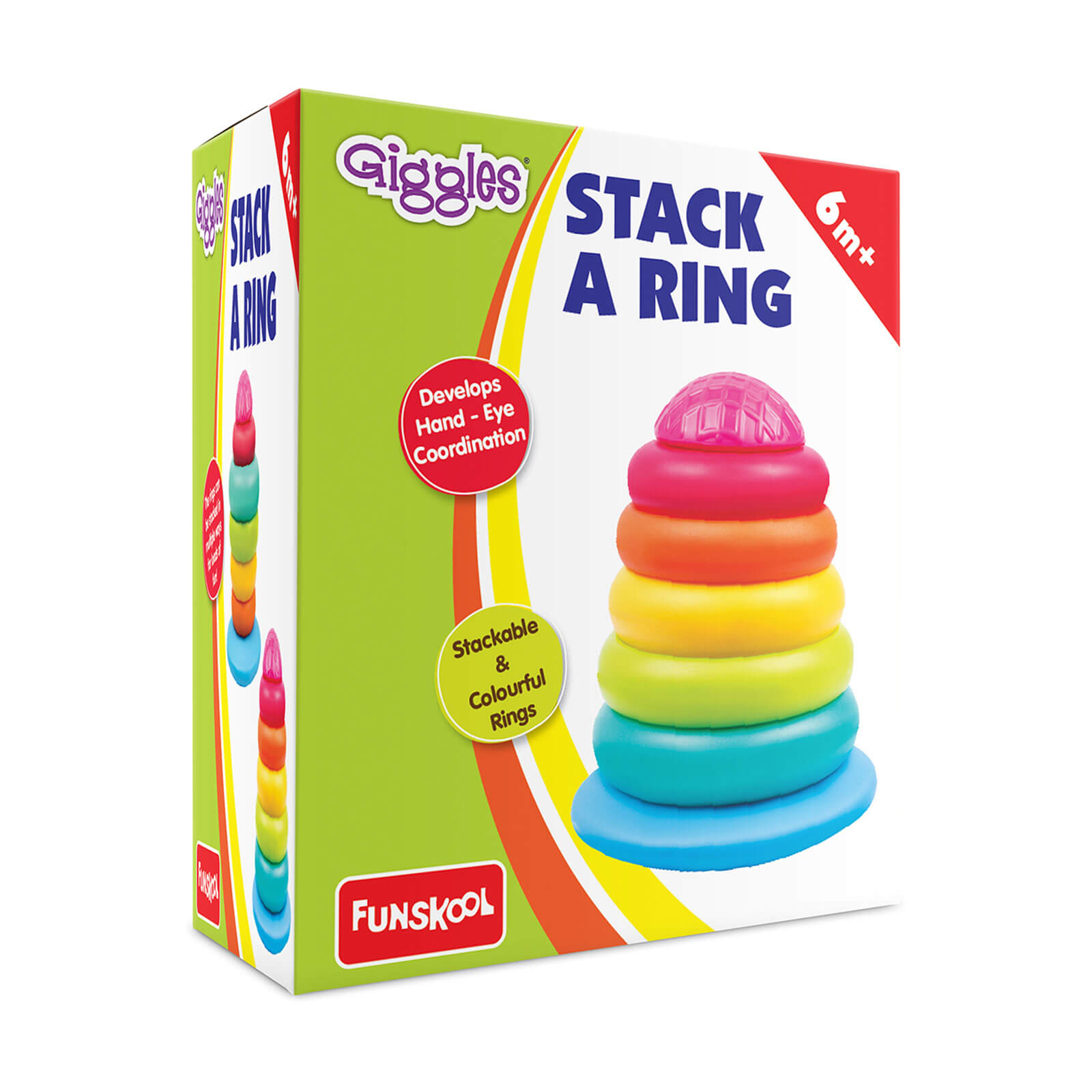
Funskool 5-Ring Stacker with Base
- ✓ Five chunky plastic rings
- ✓ Sturdy rod base
- ✓ Bright, non-toxic colours
* We earn a small commission — at no extra cost to you.
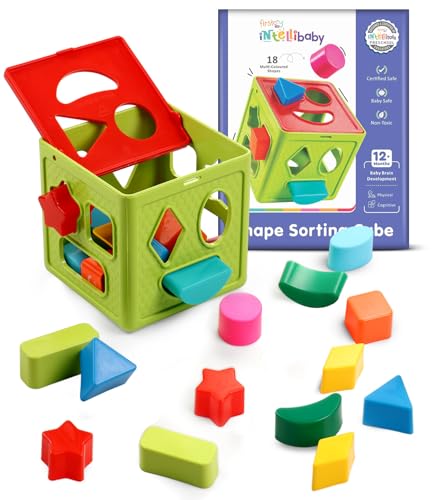
Ratna's Shape Sorting Box with 6 Shapes
- ✓ Six different shapes included
- ✓ Hinged roof design
- ✓ Plastic construction, easy to clean
* We earn a small commission — at no extra cost to you.

Giggles Soft Fabric Ball (Non-Toxic)
- ✓ Soft fabric exterior, washable
- ✓ Lightweight for easy throwing
- ✓ No small parts, safe indoors
* We earn a small commission — at no extra cost to you.

Dreamland First 100 Words Board Book
- ✓ 100 common everyday words
- ✓ Thick, durable board pages
- ✓ Simple, colourful illustrations
* We earn a small commission — at no extra cost to you.