
Silicone vs Glass vs Steel Baby Bottles India: Material Comparison for First-Time Parents
Glass bottles are safest and cleanest but break easily; silicone is durable and flexible but stains; steel is lightweight for travel and won't break but develops hard water marks faster. For Indian households with hard water, steel edges ahead for longevity. First-time parents often pick one material and wish they'd started with another—know the tradeoffs before you buy.
Picking a baby bottle sounds simple until you're staring at 47 options online and three mothers-in-law telling you three different things. The real decision isn't the brand—it's the material. Silicone, glass, and stainless steel each live differently in an Indian home: in hard water, through steam sterilizers, across a parent's travel bag, and through 18 months of daily washing. This guide walks you through what actually matters.
Key Factors to Decide Your Bottle Material
- Breakage risk and durability. Glass is heavy and shatters; steel is nearly unbreakable but dents; silicone flexes and survives drops but can tear. For parents with older toddlers in the house or frequent travel, breakage matters.
- Hard water staining and mineral buildup. Steel discolours fastest in Indian hard water; glass stays clear longest; silicone resists staining but holds odour. If you refill bottles daily without letting them dry, material choice affects how clean they look after six months.
- Microwave and sterilizer compatibility. All three work in boiling water. Glass and steel handle high heat safely; some silicone bottles are listed as not microwave-safe by makers—check the label. Milton or electric sterilizers work fine with all three, but glass heats fastest and can crack from thermal shock if you're careless.
- Weight for travel and daily carry. Steel is lightest (120–150g full), glass heaviest (250–300g), silicone medium (180–200g). For parents who alternate between office bottles and home bottles, weight adds up through a day.
- Sterilization tolerance and lifespan. Glass lasts longest if not dropped; steel withstands 100+ Milton cycles without wear; silicone starts to cloud and soften after 2–3 years of frequent boiling. In Indian households that sterilize daily for 18 months, material longevity is real.
- Cost per bottle and replacement frequency. Steel and glass bottles cost ₹250–600; silicone ₹450–800. But if you replace a broken glass bottle every 6 months and a steel bottle lasts 3 years, the math shifts. Silicone doesn't break, so if you buy four, you keep four.
Each factor pushes you toward a different choice. Most parents end up using two materials—one for home and one for travel.
Silicone Bottles: Best for Durability and Travel
Silicone bottles are flexible, non-toxic, and nearly indestructible. They're the lightest choice besides collapsible bottles, and they don't retain heat—a dropped silicone bottle won't burn a baby's mouth if the milk inside stays warm. Parents often switch to silicone specifically because a glass bottle broke in their diaper bag.
Comotomo Soft Baby Bottle (₹650–750 per bottle on Amazon.in, 150ml and 250ml) and Hevea Silicone Baby Bottle (₹550–680, 150ml and 240ml) are the two silicone picks in this guide. Both are listed as BPA-free and phthalate-free on their product pages. Comotomo's bottles have a wide neck and are marketed as more similar to breastfeeding; Hevea bottles are slightly narrower. Both accept standard bottle teats.
The honest downside: silicone stains. Milk proteins and tannins leave white or tan marks that don't affect safety or cleanliness but are visible after 8–12 weeks of use. Many parents don't mind; others find it annoying. Silicone also softens gradually after repeated boiling (60–80 cycles), so after 18 months in a household sterilizing daily, the bottle may feel slightly less firm. It still works—it just feels different. Silicone holds odour longer too; washing with baking soda paste once a month keeps smell down.
Silicone wins if you travel frequently, have toddlers in the house, or want a bottle that won't break inside a hospital bag.
Glass Bottles: Safest for Clarity and Hygiene
Glass bottles stay visibly clean longer than any other material. You can see exactly where the milk ends, spot any sediment, and watch during sterilization. Glass is chemically inert—no leaching, no degradation, no softening over time. For parents worried about chemical safety (especially those avoiding plastics entirely), glass is the answer.
Dr Brown's Natural Flow Glass Bottle (₹400–500, 120ml and 240ml on Amazon.in) and Pigeon Borosilicate Glass Bottle (₹280–350, 120ml and 240ml) are the two glass picks. Pigeon bottles are made from borosilicate glass, which is stronger than standard soda glass and handles temperature changes better—useful in Indian kitchens where you move bottles from a hot sterilizer to a cold fridge. Dr Brown's glass bottles come with an anti-colic vent system that some parents find helps reduce gas.
The problem with glass in Indian homes is threefold: weight (a 240ml bottle weighs about 280g full), breakage risk, and hard water residue. Once a glass bottle breaks—and in three years, one usually does—you replace it at full price. Hard water deposits on glass look like thin white film; they don't affect the bottle but do catch the eye. A vinegar soak monthly keeps glass clear.
Glass is ideal if you stay home mostly, sterilize in a water bath (not a pressure cooker, which can crack it), and want the peace of mind of seeing inside the bottle at all times.
Stainless Steel Bottles: Best for Longevity and Value
Steel bottles are robust, lightweight, and last longest in Indian households. They don't break from drops, don't cloud over time, and can survive 200+ boiling and sterilization cycles without degradation. Steel also stays cooler in your hand than glass—useful if you're rushing to feed a baby at 3 a.m. and your hands are sensitive to heat.
Nuk Stainless Steel Bottle (₹300–400, 120ml and 240ml on Amazon.in) and Milton Stainless Steel Feeding Bottle (₹250–350, 120ml and 240ml) are the two steel picks. Both are listed as BPA-free. Milton bottles are often included in Milton sterilizer combo packs, so many Indian parents already own them. Nuk bottles have a slightly wider nipple base and a more ergonomic shape for smaller hands.
The honest issue: steel discolours quickly in hard water. After 3–4 months of daily use in Indian tap water, the inside of a steel bottle develops a grey or brownish film that doesn't come off easily. It's purely cosmetic and doesn't mean the bottle is unclean, but it looks less pristine than glass. Parents who refill bottles and don't let them dry between uses see this happen faster. A lemon juice or vinegar soak removes most marks, but they return within weeks if you're using hard water.
Steel is the practical choice if you care more about a bottle lasting three years than about it looking mirror-clean. Cost-per-use, steel wins—a ₹300 bottle that never breaks is cheaper than replacing a ₹400 glass bottle once.
How to Choose: Decision Framework
Choose silicone if: You travel frequently, have other children in the house, or want zero breakage risk. Accept that staining is normal and odour control takes effort.
Choose glass if: You're at home mostly, you sterilize carefully (boiling water, not pressure cooker), and you want the bottle to look and feel clean for 18 months. Budget for one replacement.
Choose steel if: You want one bottle to last your entire baby journey and don't mind a discoloured inside. Hard water staining doesn't bother you, or you're willing to do a monthly vinegar soak.
The hybrid approach: Many parents buy two glass bottles for home (safe, clear, no breakage if careful) and two steel bottles for travel or care centre (light, unbreakable, quick to replace if needed). This spreads cost and risk.
What IAP and WHO Guidance Says
- IAP (Indian Academy of Pediatrics) recommends bottle feeding only after 6 months if breastfeeding isn't possible, and emphasizes clean sterilization over material choice. All three materials are safe if properly sterilized.
- WHO guidance stresses that feeding bottles must be thoroughly cleaned and sterilized before each use, especially in the first 6 months. Material matters less than hygiene practice.
Care and Sterilization: Material-Specific Tips
Glass: Never place a hot glass bottle directly into cold water (thermal shock cracks it). Cool it first at room temperature, then rinse. Boiling water baths and electric sterilizers are safe. Hand-wash with soft brushes; dishwashers risk clouding.
Steel: Oven sterilizers (over 100°C for 15+ minutes) may discolour steel faster. Boiling and Milton cycles are fine. Use lemon or vinegar monthly to manage mineral deposits. Dishwasher-safe but hand-washing preserves shine longer.
Silicone: Check the bottle's label—some silicone is microwave-safe, others aren't. Boiling is always safe. Avoid bleach-based sterilants; Milton and vinegar solutions are fine. Air-dry to prevent odour. Replace after 2.5–3 years of daily use, even if not visibly damaged.
When to See a Doctor
Bottle material doesn't cause feeding problems on its own. If your baby refuses all bottles regardless of material, or shows signs of milk allergy (rash, vomiting, blood in stool), this is general information, not medical advice—consult a paediatrician. Hard water minerals in bottles don't harm babies; discoloured bottles are clean if sterilized properly.
Our Top Picks
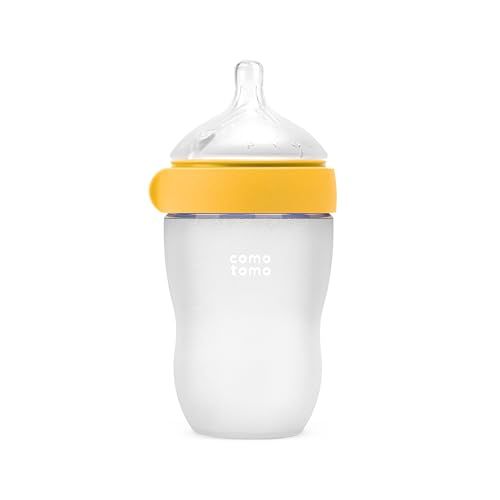
Comotomo Soft Baby Bottle
- ✓ Silicone construction, BPA-free and phthalate-free
- ✓ Available in 150ml and 240ml
- ✓ Wide-neck design, flexible squeeze
* We earn a small commission — at no extra cost to you.

Hevea Silicone Baby Bottle
- ✓ 100% silicone, BPA-free and phthalate-free
- ✓ 150ml and 240ml sizes
- ✓ Natural rubber option available
* We earn a small commission — at no extra cost to you.
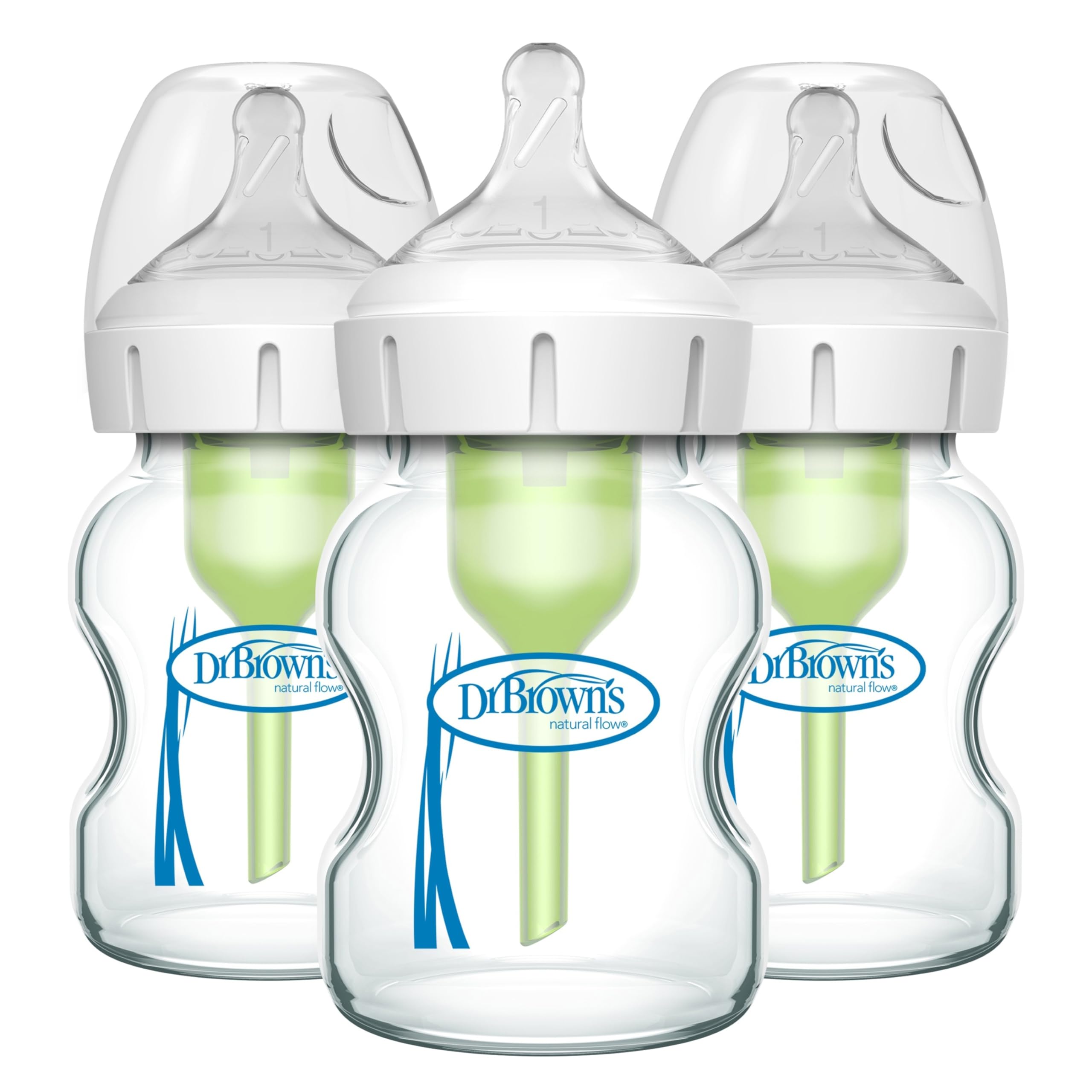
Dr Brown's Natural Flow Glass Bottle
- ✓ Glass construction with anti-colic vent system
- ✓ 120ml and 240ml available
- ✓ Borosilicate glass for thermal resistance
* We earn a small commission — at no extra cost to you.

Pigeon Borosilicate Glass Bottle
- ✓ Borosilicate glass, handles temperature change well
- ✓ 120ml and 240ml sizes
- ✓ Standard bottle teat compatible
* We earn a small commission — at no extra cost to you.

Nuk Stainless Steel Bottle
- ✓ Food-grade stainless steel, BPA-free
- ✓ 120ml and 240ml
- ✓ Ergonomic shape, stays cool in hand
* We earn a small commission — at no extra cost to you.

Milton Stainless Steel Feeding Bottle
- ✓ Stainless steel 18/8, BPA-free
- ✓ 120ml and 240ml
- ✓ Compatible with Milton sterilizer sets
* We earn a small commission — at no extra cost to you.