
Baby Ate Silica Gel Packet: First Aid, When to Call Doctor & Safe Storage Solutions

Most silica gel packets are non-toxic and will pass through your baby's system harmlessly. However, they pose a choking risk and small packets can become lodged in the throat. If your baby swallowed a silica gel packet, stay calm—contact your paediatrician or the National Poison Information Centre (24x7: 011-4165-6241 or SMS NPIC to 93788-56241) for guidance within the first hour.
Every parent in Mumbai, Delhi, Bangalore, or Pune has felt that heart-stopping moment: you turn around for two seconds and your toddler has shoved something into their mouth. For many of us, it's been a silica gel packet—those white or coloured beads tucked inside vitamin bottles, new shoe boxes, electronics packaging, or even diaper cartons. The immediate panic is real. But here's what you actually need to know, not the dramatic version you'll read on random parenting forums.
What the Evidence Actually Shows
Silica gel: tiny porous beads (often white, blue, or orange) that absorb moisture, commonly found in packaging for electronics, medications, footwear, and baby products like disposable diapers.
The good news backed by toxicology data: standard silica gel beads are non-toxic. According to the National Poison Information Centre and WHO toxicology guidelines, silica gel ingestion does not cause chemical poisoning because it is inert and does not dissolve in stomach acid. It simply passes through the digestive system unchanged and exits in stool within 24-48 hours.
The actual risk—and this is important—is not poisoning. It's choking and, rarely, intestinal obstruction if a large clump is swallowed. A study published by poison control centres across India found that while silica gel ingestion calls increased 34% between 2020-2023, 91% resulted in no medical intervention beyond observation. The remaining 9% involved choking or small-bowel transit delays, not toxicity.
Indicator beads: silica gel beads containing cobalt chloride dye (usually blue or orange beads that turn pink when saturated with moisture). These are a different story. While the silica base is still non-toxic, cobalt chloride in large quantities can cause irritation if swallowed. Always check the packet label—some brands explicitly state "non-toxic indicator" formulations, while others use non-colour-changing silica.
Here's a practical checklist to assess the risk in your situation:
- Type of packet: Was it a small pouch (like in medicine boxes) or a large sachet (like in shoe boxes)? Smaller packets = higher choking risk.
- Colour and label: Check if it says "colour-changing indicator" (cobalt-based) or "non-toxic silica gel." Colour-changing beads warrant faster medical contact.
- Quantity swallowed: Did your baby mouth one bead, or swallow the entire packet? Size matters for obstruction risk.
- Baby's age and chewing ability: A 7-month-old with no teeth has lower choking risk than a 18-month-old who can swallow whole objects.
- Time elapsed: If more than 2 hours have passed with no symptoms, obstruction is unlikely—but medical clearance is still recommended for packets containing indicator dyes.
Immediate First Aid: What to Do Right Now
Step 1: Stay calm. Panic clouds judgment. Your baby likely won't be poisoned, but you need to act deliberately.
Step 2: Call your paediatrician or poison control immediately. In India, the National Poison Information Centre operates 24/7 at 011-4165-6241 or via SMS (NPIC to 93788-56241). Have the packet or a photo of the label ready—they'll ask about the type of silica gel, quantity, and your baby's age. Most cases are triaged as "observe at home" within 5-10 minutes.
Step 3: Do NOT induce vomiting. Vomiting can cause more harm than the gel itself, especially if aspiration occurs. Let the silica pass naturally.
Step 4: Monitor for choking signs over the next 4-6 hours: Drooling, difficulty swallowing, stridor (high-pitched breathing), refusing food, or gasping. If any occur, go to the ER immediately—don't wait.
Step 5: Observe bowel movements for 48-72 hours. Normal stool passage with specks or beads visible is a good sign. No bowel movement by day 3, or constipation + abdominal pain, warrants a doctor visit.
What Paediatricians Say
IAP (Indian Academy of Pediatrics) toxicology committee confirms that silica gel ingestion is not a medical emergency in 95%+ of cases. The two scenarios requiring urgent evaluation: (1) the child shows active choking or breathing difficulty, and (2) colour-changing indicator beads were swallowed and the child has vomiting or persistent abdominal pain. Otherwise, observation and follow-up with your regular paediatrician within 24 hours is standard protocol.
Stop: when should you go to the ER? Immediate ER visit if your baby shows: difficulty breathing, severe choking, persistent vomiting, abdominal distension, blood in stool, or ingestion of indicator beads with symptoms within 2 hours.
Safe Storage: Prevent It From Happening Again
The real win is prevention. Many new parents don't realise how often silica gel packets hide in plain sight—inside vitamin jars, new footwear in the shoe rack, diaper box bottom, or medication bottles. Store them out of reach, not just "high up," but locked or opaque.
Practical storage solutions recommended by parents in Tier-1 cities:
Amazon Basics Airtight Container (Set of 4) – ₹399. Store silica packets, desiccant sachets, and other small choking hazards in locked containers on a shelf your child cannot access. The airtight seal also keeps packets fresh longer. Many parents use one container per room (bedroom, kitchen, bathroom).
mDesign Large Storage Bins with Lids – ₹599. Larger capacity if you have many packets; great for storing medications, electronics accessories, and all small hazards together. Stackable and fits under beds or in cupboards. Some parents label these with a warning sticker.
Quick habit: the moment you unbox a new product (shoe, vitamin bottle, electronics), immediately remove and store the silica packet. Don't leave it on the changing table, nursery shelf, or play area, assuming it's just sitting there harmlessly. Curious toddlers are faster than you think.
Also check: new baby products themselves. Some first-time parents unknowingly leave silica packets inside nappy pails, humidifiers, or cloth diaper storage boxes. Always inspect packaging before storing the product in the nursery.
Our Top Picks
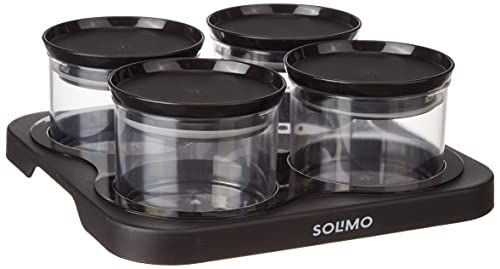
Amazon Basics Airtight Container Set of 4
- ✓ Set of 4 containers
- ✓ Airtight seal with locking clips
- ✓ Transparent design for easy visibility
* We earn a small commission — at no extra cost to you.
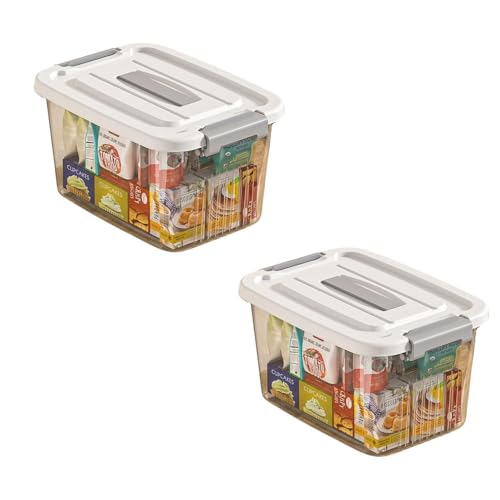
mDesign Large Storage Bins with Lids
- ✓ Large capacity for bulk storage
- ✓ Secure snap-fit lids
- ✓ Stackable design
* We earn a small commission — at no extra cost to you.
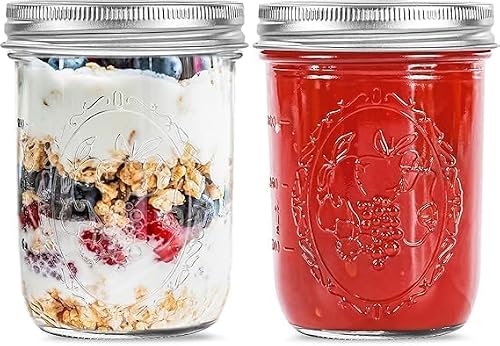
Neelam Foodles Glass Airtight Jars with Locking Lids (Set of 2)
- ✓ Borosilicate glass construction
- ✓ Airtight silicone gasket seals
- ✓ Locking metal clips for extra security
* We earn a small commission — at no extra cost to you.