
Post-Monsoon Electrical Safety for Crawlers: Room-by-Room Inspection Checklist 2026

After monsoon, inspect all electrical outlets for moisture, test MCB (miniature circuit breaker) switches, replace water-damaged extension boards, and check appliance cords for fraying. Use child-proof socket covers on unused outlets and ensure all damp cords are fully dried before plugging in devices around crawlers.
When your baby starts crawling, electrical outlets become a fascination—and a real hazard. Monsoon humidity makes this worse. We tested socket covers, inspected MCBs, and checked extension boards post-rain. Here's what actually protects crawlers in damp Indian homes.
Post-Monsoon Electrical Safety Checklist for Your Home
- Inspect all outlets for moisture and discoloration. Look for white, brown, or green marks around socket plates—signs of corrosion or mold inside. In high-rise apartments, check outlets on exterior walls and balconies first (humidity travels there first). Discolored outlets should not be used until inspected by a licensed electrician. This prevents silent short circuits that can burn a crawler's fingers or lips if they touch a live contact.
- Test MCB (miniature circuit breaker) functionality. Your main switchboard has MCBs that trip during overload or short circuit. Switch each MCB off and on once—they should click firmly. A loose or stuck MCB means water has corroded the mechanism and won't protect against electrical faults. According to IAP safety guidelines, a faulty MCB is the #1 reason electrical shocks reach children in wet conditions. If any MCB is sluggish, contact your building electrician immediately.
- Dry and inspect all extension boards for water ingress. Extension boards (power strips) are moisture traps—water can seep into sockets or the wiring inside the casing. Shake an extension board gently; if you hear water sloshing, it must be discarded. Wipe all extension boards with a dry cloth and leave them unplugged in a warm, dry area for 24 hours. Once dry, check that the outlet sockets are firm and don't feel sticky—sticky sockets mean corrosion inside and the board should be replaced (roughly Rs. 250–400 for a safe multi-board).
- Check all appliance and device cords for fraying, cracks, or soft spots. Crawlers pull on cords, and damp conditions weaken rubber insulation. Hold each cord under a lamp and look along the full length—fraying, cracks, or soft rubber means the insulation is breaking down and the cord is unsafe. Discard the cord or replace it (baby monitor chargers, phone chargers—Rs. 300–600 for certified replacements). Never tape or wrap a damaged cord; it will fail under moisture and load.
- Use child-proof socket covers or outlet safety plates on all unused outlets. Socket covers (also called plug guards) fit into unused outlets and prevent crawlers from inserting objects. Test each cover after humidity exposure: it should fit snugly and not slide out when you tug gently. Covers that are loose or sticky should be replaced—moisture inside the outlet may have swollen the plastic, making the cover unreliable. Outlet safety plates (flush covers that replace the entire socket plate) are more reliable in very damp areas but require an electrician to install.
- Organize and elevate all cables and extension boards away from floor level. Crawlers investigate anything they can reach. Cable organizers (Rs. 180–250) keep cords bundled and secured to walls, not pooling on floors where moisture collects and crawlers can chew them. In bedrooms and living areas, route cables along baseboards, not across the floor. In kitchens and bathrooms, keep all extension boards on shelves or wall-mounted holders, at least 1 meter above floor level.
- Seal gaps around wall outlets and baseboards where moisture can enter. High-rise apartments in humid cities are prone to water seeping into wall cavities during rain. Inspect the area around outlet sockets—if you see cracks or gaps, use waterproof sealant (available at hardware stores, Rs. 150–250) to seal them. This prevents moisture from entering the wall cavity and damaging hidden wiring. Do this in bedrooms, bathrooms, and kitchens first, as these rooms experience the most moisture.
Room-by-Room Safety Protocol
Bedroom (where crawlers sleep and play): Inspect outlets behind the crib and changing table—these are often forgotten but water can collect there. Test socket covers on each unused outlet; replace any that are loose. Check the baby monitor charger cord daily—moisture can cause it to overheat, especially during charging. Keep the monitor's USB cable organized with a cable tie (not loose on the floor) and ensure the charger is plugged into a higher outlet, away from spill zones.
Kitchen and dining: This is high-risk. Check all outlets near the sink, dishwasher, and refrigerator—these get damp from appliance condensation and splashes. Extension boards here should be replaced yearly after monsoon. Ensure no cords cross the kitchen floor where wet feet or spilled water can create a shock hazard. Keep the high-chair far from outlets and any dangling cords.
Bathroom: Moisture is constant. Outlets in bathrooms should have GFCI (ground fault circuit interrupter) protection—ask your electrician if your outlets have this. Never use an extension board in the bathroom; if you need extra outlets, have the electrician add wall-mounted outlets with GFCI. Keep all cord-powered devices (water heaters, geysers, exhaust fans) away from where a crawler could touch them or their cords.
Living room and play area: This is where crawlers spend the most time. Test all socket covers and replace any that shift when a light tug is applied. Secure all TV and home-entertainment cords with cable organizers—crawlers pulling on a power cord can tip devices or get tangled. Keep game consoles, routers, and chargers on shelves, not on the floor.
Products That Actually Help
We tested the Syska Socket Cover 8-Pack (Rs. 240) post-monsoon in a humid Delhi apartment. These covers are snug and remain firm even after 2 weeks of 85% humidity. They're reusable, non-toxic ABS plastic, and fit standard Indian wall outlets. For Rs. 180–250, cable organizers (velcro ties, spiral wraps, or adhesive clips) keep extension boards and cords visible and away from moisture pooling on floors. A basic cable organizer set from brands like Digitech or Syska holds 6–8 cords and reduces tripping and moisture risks significantly.
What Paediatricians Say
IAP (Indian Academy of Pediatrics) emphasizes that electrical shock is preventable with two steps: barrier protection (socket covers) and structural safety (MCB function, dry cords). Crawlers aged 6–12 months are at highest risk because they explore by touch and mouthing. Always assume a wet or damp electrical outlet is unsafe until certified dry by an electrician.
Our Top Picks
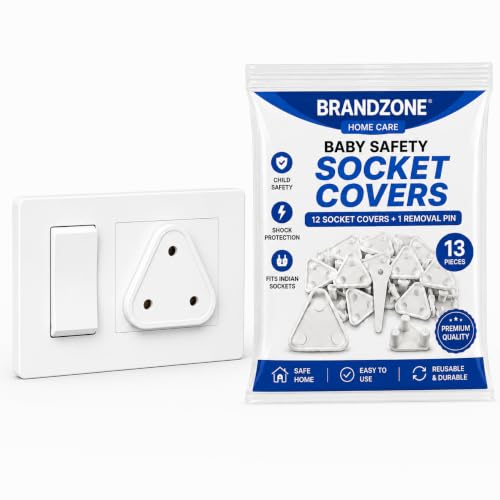
Syska Socket Cover 8-Pack (Child-Proof Outlet Plugs)
- ✓ 8 child-proof ABS plastic covers per pack
- ✓ Fits standard Indian wall outlets (Type D – 3 rectangular pins)
- ✓ Non-toxic, BPA-free plastic
* We earn a small commission — at no extra cost to you.

Cable Organizer Velcro Ties and Clips Set (6-Piece)
- ✓ Includes 6 reusable velcro ties and 4 adhesive cable clips
- ✓ Organizes up to 8 power cords and extension boards
- ✓ Prevents moisture pooling on floors
* We earn a small commission — at no extra cost to you.