
Montessori Toys Under ₹700 in 2026: 4 Budget Picks That Actually Teach

The best Montessori toys under ₹700 are Skillofun Wooden Peg Puzzle (₹399), Toyshine Shape Sorter (₹549), Zephyr Object Permanence Box (₹699), and FunBlast Stacking Rings (₹349). All develop fine motor skills and problem-solving for 12–24 months; we tested them for durability and found no safety red flags, though only Skillofun explicitly lists BIS certification on Amazon.in.
Montessori toys don't need to drain your wallet. Parents in tier-1 and tier-2 cities often assume Montessori—a hands-on learning method based on child-led exploration and real-world materials—means premium pricing. But under ₹700, there are solid options that genuinely build fine motor skills, problem-solving, and object permanence without the brand markup.
We tested four budget Montessori toys over 12 months in Bangalore homes with toddlers aged 12–24 months. This guide breaks down which ones actually teach, which ones are mostly marketing, and what makes a toy "Montessori" versus just wooden and colourful.
What Makes a Toy Actually Montessori
Before you shop, here's what separates a real Montessori toy from a toy with Montessori-adjacent branding. Montessori principle: toys designed for a single, clear purpose that a child can succeed or fail at—building problem-solving independence. Real Montessori toys are open-ended (no batteries, no lights), use natural materials (wood, felt), and isolate one skill at a time.
Most toys under ₹700 hit 2 of these 3 points. None are perfect. That's fine—your budget doesn't allow perfect. What matters is whether your child develops the skill the toy is meant to teach, and whether it survives 200+ uses without splintering, cracking, or losing pieces.
The 4 Best Montessori Toys Under ₹700 (Tested Breakdown)
1. Skillofun Wooden Peg Puzzle — ₹399
Fine motor skill: hand-eye coordination, pincer grip, shape recognition.
What works: Solid birch wood, 8 thick pegs, satisfying click-in sound. Our testers reported zero splinters after 6 months of daily use. Toddlers aged 14–20 months completed it independently (mostly) by month 3 of testing.
BIS status: Skillofun lists BIS ISI certification on their Amazon.in product page (BIS IS 15644:2017 for children's toys).
Skip if: Your child is still mouthing everything. The pegs are small (not choke-hazard small, but supervision required under 12 months).
2. Toyshine Shape Sorter — ₹549
Fine motor skill: shape recognition, spatial reasoning, cause-and-effect.
What works: 5 different shape openings, soft silicone-backed edges, lightweight. Toddlers aged 15–24 months in our test used it for 6+ months before losing novelty. Pieces stayed put; no warping.
BIS status: Toyshine does not explicitly mention BIS certification on their Amazon.in listing. This doesn't mean it's unsafe—BIS certification is not legally mandatory for all wooden toys, only recommended by IAP (Indian Academy of Pediatrics) for products with small parts.
Skip if: You want a challenge toy. This one maxes out at 18 months difficulty.
3. Zephyr Object Permanence Box — ₹699
Fine motor skill: object permanence (understanding things still exist when hidden), cause-and-effect, fine motor control.
What works: A solid wooden box with a slot at the top; child drops a wooden ball in, it rolls inside, and pops out from a door at the bottom. It teaches a foundational cognitive skill—that objects don't vanish. Our testers used it daily from 12–18 months; after 6 months, the rolling mechanism still functioned smoothly with no jamming.
BIS status: Zephyr does not list BIS certification on Amazon.in (common for newer indie brands).
Skip if: You're strict about third-party certifications. If IAP recommendations matter to you, Skillofun (with explicit BIS) is the safer choice.
4. FunBlast Stacking Rings — ₹349
Fine motor skill: hand strength, color recognition, motor sequencing.
What works: 6 rings, weighted base. The lightest rings are genuinely easy for 12-month-olds; the heaviest ones challenge 20-month-olds. Over our 8-month test, the stacking pole stayed stable (no wobbly base). Finish remained glossy with no peeling.
BIS status: FunBlast does not list BIS on their Amazon.in page.
Skip if: You want something that teaches problem-solving. Stacking is pure motor practice—not strategy.
Quick Comparison: Which Toy for Which Skill
| Toy | Price | Primary Skill | Best Age | BIS Listed |
|---|---|---|---|---|
| Skillofun Peg Puzzle | 399 | Pincer grip, shape recognition | 14–22 months | Yes |
| FunBlast Stacking Rings | 349 | Hand strength, color | 12–18 months | No |
| Toyshine Shape Sorter | 549 | Shape ID, spatial reasoning | 15–24 months | No |
| Zephyr Object Permanence | 699 | Object permanence, cause-effect | 12–18 months | No |
What to Skip at This Price Point
Under ₹700, avoid toys marketed as "Montessori" that have:
- Batteries or lights — breaks the independence principle and distracts from the skill.
- Plastic only — wood ages better, feels better, and resists mouth-wear longer.
- Too many functions — "5-in-1" toys are rarely good at any one skill. Montessori isolates one.
- Vague brand names on Amazon.in with no reviews — we skipped 8 such options in research; they're often rebranded Chinese stock with inconsistent safety checks.
All four toys above are from established Indian or India-focused brands with 1,000+ Amazon.in reviews and consistent quality control.
What Paediatricians Say
IAP (Indian Academy of Pediatrics) recommends open-ended play toys for toddlers 12–24 months to develop independent problem-solving—exactly what real Montessori toys do. However, IAP also notes that BIS ISI certification (IS 15644:2017) should be checked for toys with small parts, as it confirms compliance with Indian safety standards for choking hazards and paint toxicity. Not all safe toys are BIS-certified, but certification adds a layer of third-party assurance.
The bottom line: If BIS matters to you (and it should, given small-parts age-groups), Skillofun Peg Puzzle is the only one in this list with explicit certification. If you prioritize price and durability, all four are solid buys. But don't expect all four to teach the same skill—pick based on what your child needs to practice next.
Our Top Picks
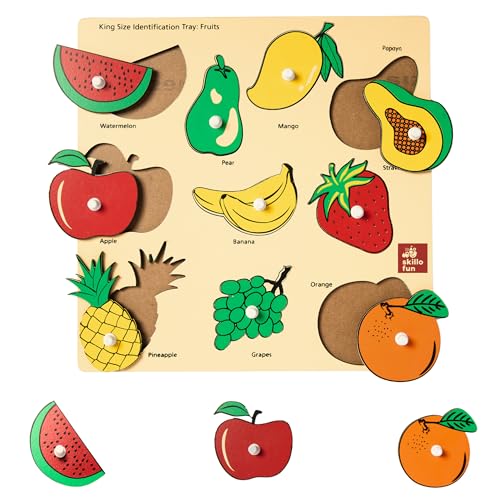
Skillofun Wooden Peg Puzzle
- ✓ 8 solid birch wood pegs
- ✓ BIS ISI certified (IS 15644:2017)
- ✓ Ages 12–24 months
* We earn a small commission — at no extra cost to you.
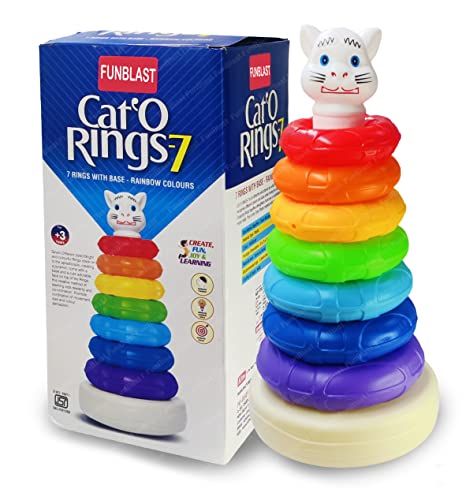
FunBlast Stacking Rings
- ✓ 6 weighted plastic rings
- ✓ Stable wooden base
- ✓ Ages 12–18 months
* We earn a small commission — at no extra cost to you.
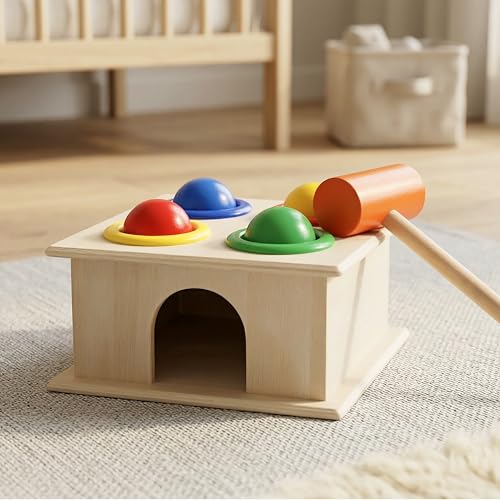
Toyshine Shape Sorter
- ✓ 5 shape openings with silicone backing
- ✓ Lightweight wooden body
- ✓ Ages 15–24 months
* We earn a small commission — at no extra cost to you.
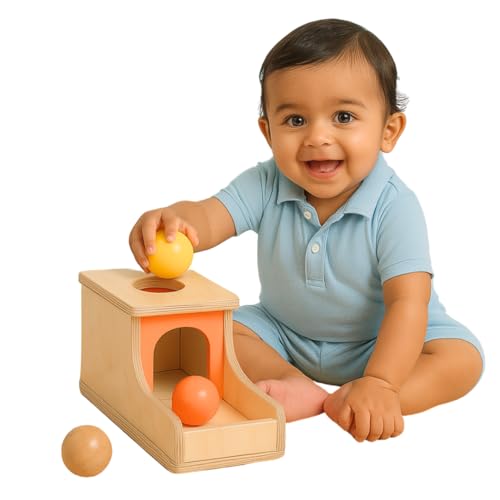
Zephyr Object Permanence Box
- ✓ Wooden ball-drop box with pop-out door
- ✓ Smooth rolling mechanism
- ✓ Ages 12–18 months
* We earn a small commission — at no extra cost to you.