
Montessori Toy Kit Under ₹1,200: 5-Piece Setup for 6-12 Months
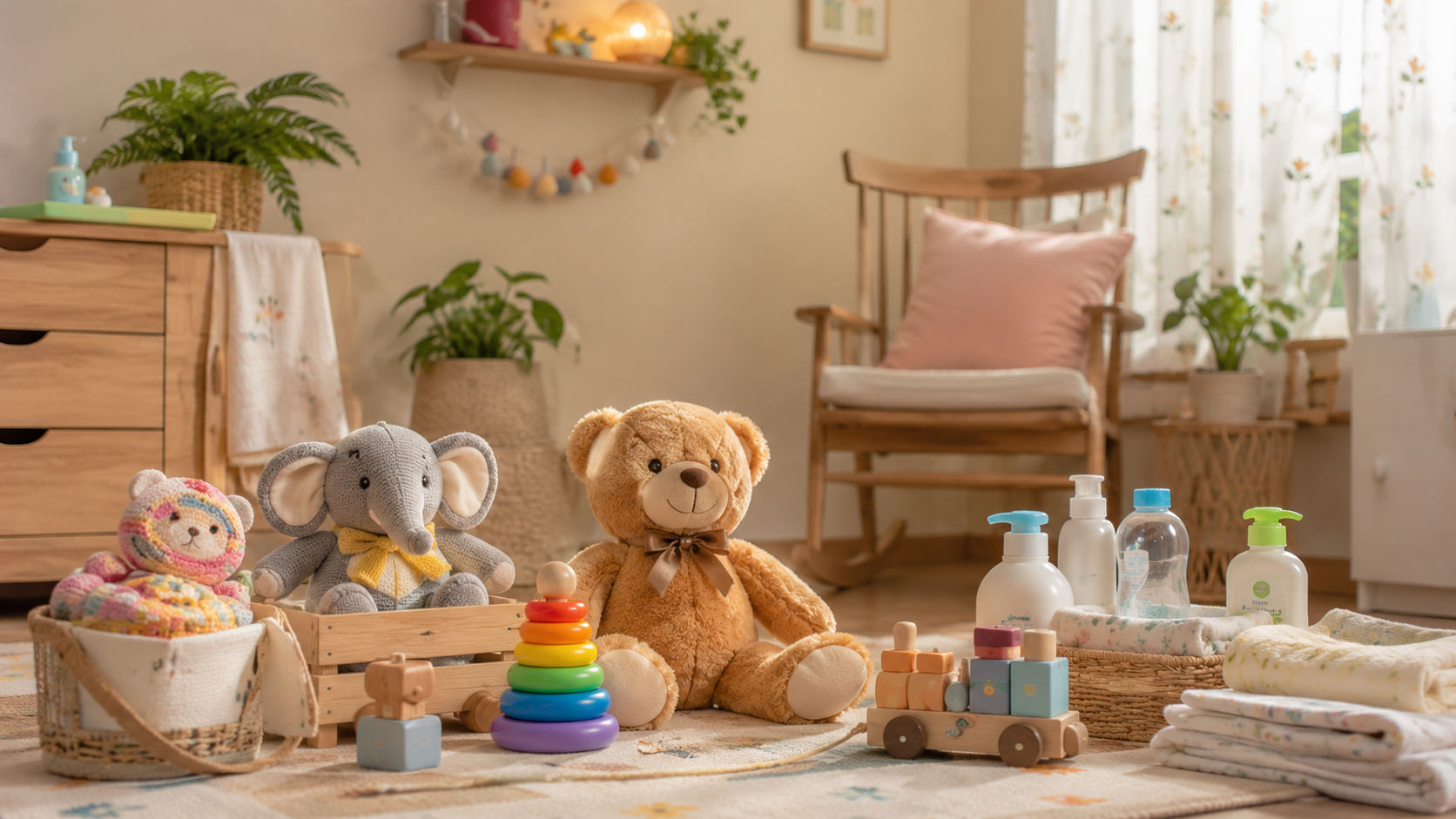
A complete 5-piece Montessori toy setup costs ₹1,180: object permanence box (₹350), stacking rings (₹180), sensory balls (₹220), push toy (₹280), and nesting cups (₹150). BIS-certified brands like Shumee, Skola, and Ariro Toys offer all five in this price range. Rotate toys monthly to support gross motor skills (6-8 months), fine motor development (8-10 months), and cause-effect learning (10-12 months).
If you've heard the term "Montessori toys" but felt overwhelmed by the price tags, this guide is for you. The good news: genuine developmental toys don't need to cost ₹3,000 or more. A thoughtfully curated 5-piece set under ₹1,200 covers the critical learning phases between 6 and 12 months—exactly when your baby's brain is wiring cause-and-effect, spatial awareness, and motor control. We've broken down which toys to buy, when to introduce them, and how to rotate them as your baby grows.
Montessori toys: play materials designed to encourage independent exploration, problem-solving, and self-directed learning—typically featuring natural materials, clear cause-effect relationships, and minimal distractions.
The 5-Piece Montessori Setup Checklist
- Object Permanence Box (₹350) — Wooden box with a slot where baby drops a ball and watches it reappear in a hidden compartment.
Why it matters: Introduces the concept that objects exist even when hidden—a cognitive milestone around 6-7 months. Builds sustained focus and problem-solving curiosity. - Stacking Rings (₹180) — Wooden rings that slide onto a central post, typically 5-7 rings in graduating sizes.
Why it matters: Fine motor coordination, hand-eye coordination, and size sequencing. Babies begin grasping and releasing intentionally around 7-8 months, making this the ideal entry point to this toy. - Fabric Sensory Balls Set (₹220) — Soft, fabric-covered balls in different textures (bumpy, smooth, crinkly), usually 4-6 balls per set.
Why it matters: Tactile exploration and grip strength. Easier to grab than hard wood for 6-month-olds still developing pincer grip. Introduces texture discrimination and cause-effect play (squeeze a crinkly ball, hear the sound). - Wooden Push Toy (₹280) — Simple wheeled toy baby pushes while crawling or cruising along furniture.
Why it matters: Supports gross motor milestones—crawling (8-10 months) and standing/cruising (9-12 months). The visual reward of wheels moving motivates movement and builds lower-body strength. - Nesting Cups (₹150) — Graduated plastic or wooden cups that stack or nest inside each other, typically 5-6 cups.
Why it matters: Spatial reasoning, size ordering, and stacking skills. Lightweight enough for 6-month-olds to handle, yet complex enough to hold interest through 12 months as stacking attempts improve.
Month-by-Month Rotation Plan: What to Introduce When
Months 6-7: Foundation Focus (Sensory + Grip)
Start with sensory balls and nesting cups. Both are soft-textured or lightweight, safe for mouthing, and don't require advanced pincer grip. Baby's brain is linking cause-and-effect (squeeze ball → sound), and these toys deliver instant feedback. Rotate the balls weekly to maintain novelty. Nesting cups are safe for independent play while supervised.
Months 8-9: Fine Motor Acceleration (Stacking + Permanence)
Introduce stacking rings and the object permanence box. By now, baby has developed stronger grasp and intentional release. Stacking rings challenge hand-eye coordination daily; the permanence box builds cognitive understanding through repetition. Keep sensory balls in rotation but reduce frequency. Nesting cups remain a staple for floor play.
Months 10-12: Gross Motor + Complex Play (Push + All Above)
Introduce the push toy. Baby is likely crawling or cruising by 10 months, and the push toy becomes a motivator for movement and independence. Continue rotating stacking rings, permanence box, and nesting cups. Sensory balls can stay available but often lose novelty by 11 months unless texture variety is high.
Why BIS-Certified Brands Matter
BIS (Bureau of Indian Standards) certification ensures the toy meets safety standards for non-toxic paint, choking hazards, and structural durability. Shumee, Skola, and Ariro Toys all carry BIS marks on their wooden toy lines sold on Amazon.in. Check the Amazon product page for the BIS label—it's usually listed under safety certifications.
Brands like Shumee specialize in natural wood with water-based finishes; Skola offers mid-range wooden toys with solid construction; Ariro Toys focuses on eco-friendly wooden play. All three are available at these price points on Amazon.in, and all ship within 3-5 days to tier-1 cities.
Practical Storage and Rotation Tips
A 5-piece setup works best when toys are rotated weekly. Store out-of-rotation toys in a low shelf or basket your baby can eventually explore—this builds anticipation. Wash sensory balls and nesting cups in warm water monthly; wooden toys need only a dry cloth to avoid water damage. Push toys may leave marks on light flooring, so designate a play zone on tile or mat.
Expect peak engagement when a toy is newly introduced (3-4 weeks), then renewed interest if you rotate it out and back in after 2-3 weeks of absence.
What IAP and WHO Guidance Says
Gross motor development: IAP recommends floor play on safe, uncluttered surfaces and supervised cruising along furniture from 9 months onward to build leg strength and balance. Fine motor milestones: WHO developmental tracking notes that intentional grasping and releasing emerge around 7-8 months, making stacking and dropping games ideal for this window.
Budget Breakdown and Where to Buy
| Toy | Budget | Recommended Brands | Amazon.in Price Range |
|---|---|---|---|
| Object Permanence Box | ₹350 | Shumee, Ariro | ₹299–₹450 |
| Stacking Rings | ₹180 | Skola, Shumee | ₹149–₹249 |
| Sensory Balls (4-6 pack) | ₹220 | Mothercare, Babies Bloom | ₹180–₹299 |
| Push Toy | ₹280 | Ariro, Shumee | ₹250–₹399 |
| Nesting Cups | ₹150 | Skola, Ariro | ₹99–₹199 |
| Total | ₹1,180 | — | — |
All five toys are available on Amazon.in with next-day delivery in Delhi, Mumbai, Bengaluru, Pune, and Hyderabad. Check individual product pages for "FBA" (Fulfilled by Amazon) status to confirm Prime eligibility. Compare prices across the three brands listed—often one toy from Brand A and another from Brand B will hit your budget sweet spot.
Is This Setup Enough for 6-12 Months?
Yes, if you rotate consistently. A small set used intentionally beats a toy box stuffed with 20 toys your baby ignores. These five pieces address three core developmental domains: fine motor (stacking rings, sensory balls, nesting cups), gross motor (push toy), and cognitive play (object permanence box, cause-effect with all toys). Supplement with household items—wooden spoons, safe containers, fabric scarves—to extend play without spending more.
This is general parenting information, not medical advice. If your baby shows developmental delays or isn't reaching motor milestones by the ages listed, speak to your pediatrician.
Our Top Picks
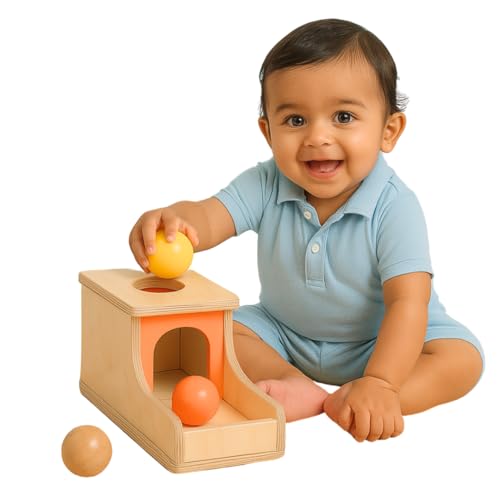
Shumee Wooden Object Permanence Box with Ball
- ✓ BIS-certified wood
- ✓ Non-toxic water-based paint
- ✓ Includes 1 wooden ball
* We earn a small commission — at no extra cost to you.

Skola Wooden Stacking Rings Toy
- ✓ 6 graduated wooden rings
- ✓ Sturdy wooden post
- ✓ Safe for 7+ months
* We earn a small commission — at no extra cost to you.
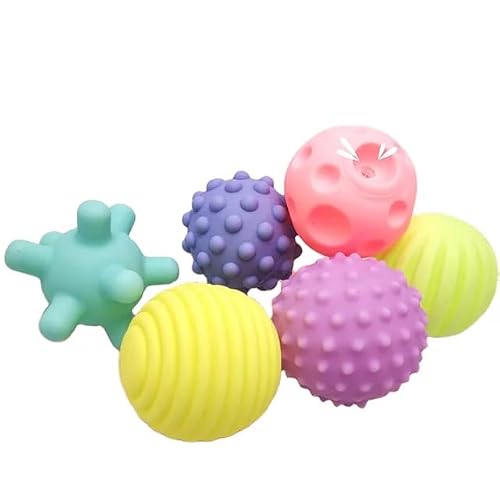
Babies Bloom Soft Sensory Ball Set (6-Pack)
- ✓ 6 textured fabric balls
- ✓ Crinkly, bumpy, smooth textures
- ✓ Machine washable
* We earn a small commission — at no extra cost to you.
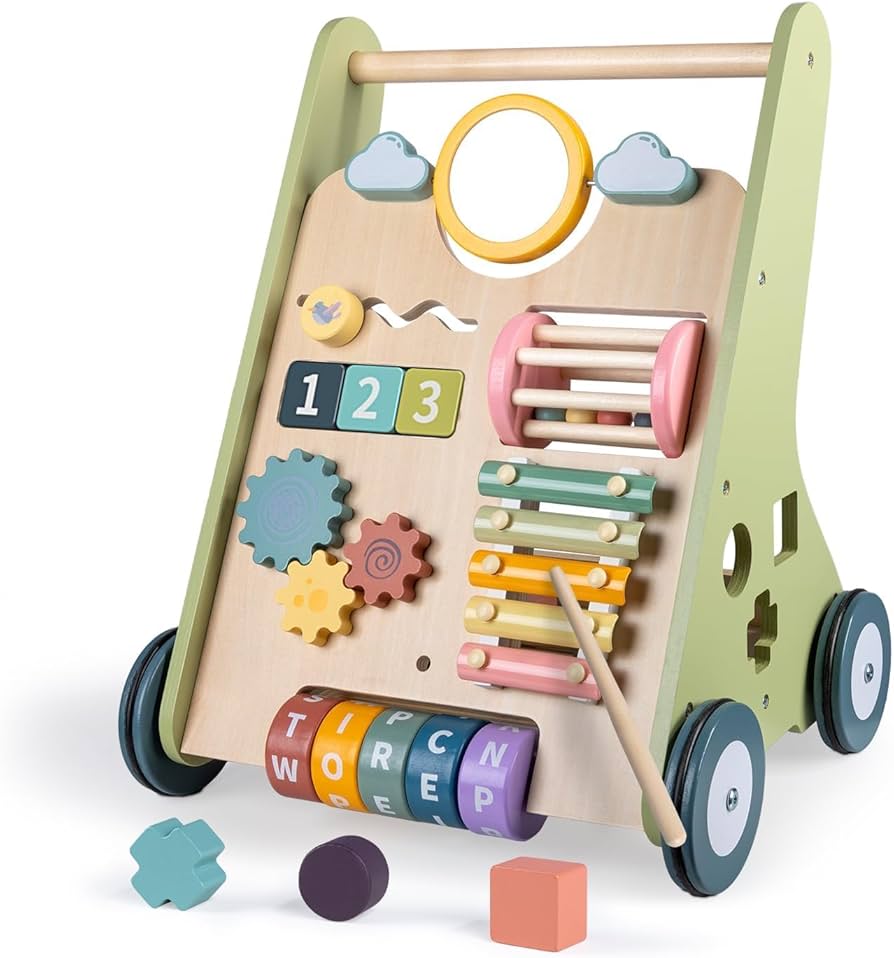
Ariro Wooden Push Toy with Wheels
- ✓ BIS-certified hardwood
- ✓ Smooth rolling wheels
- ✓ Lightweight design
* We earn a small commission — at no extra cost to you.
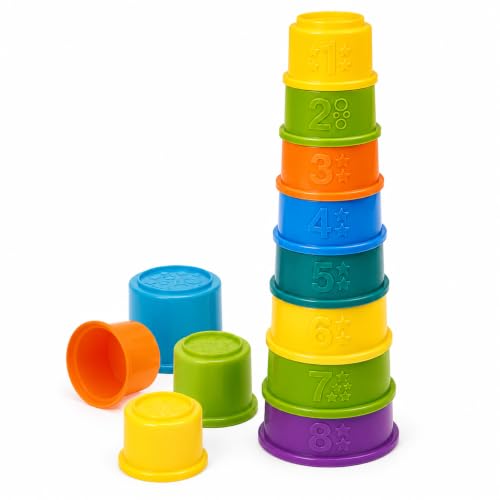
Skola Nesting Cups (6-Piece Set)
- ✓ 6 graduated nesting cups
- ✓ Durable plastic construction
- ✓ Stackable and nestable
* We earn a small commission — at no extra cost to you.