
Mee Mee vs R for Rabbit Car Seat in India: Safety Standards & 2026 Comparison
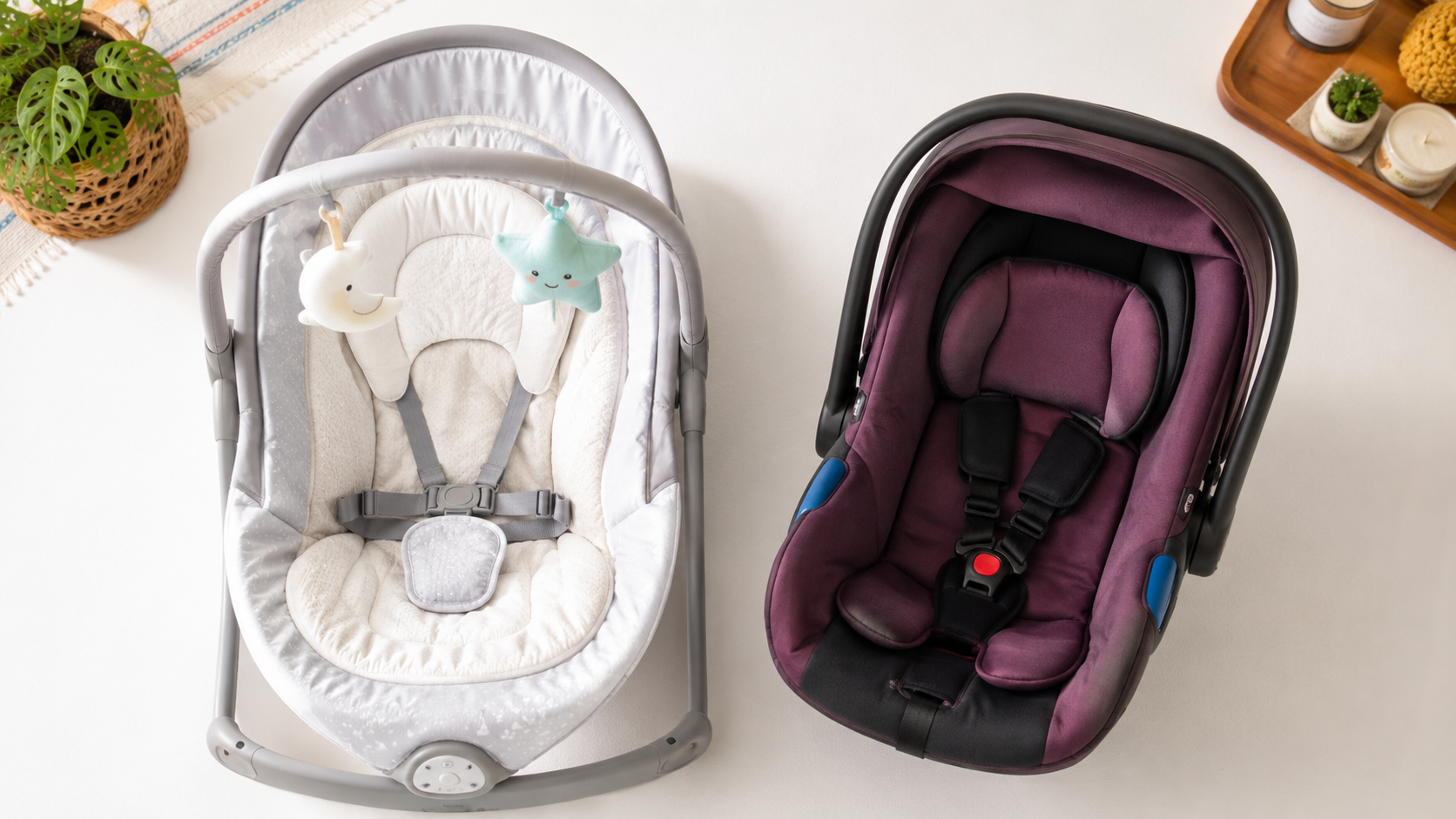
R for Rabbit Secure offers ISOFIX + seat belt anchoring and superior side-impact protection at ₹7,499, making it safer for long-distance travel. Mee Mee Rearward Facing is a budget-friendly rearward-facing option at ₹4,999 suitable for city driving up to age 2. For newborns under 6 months, IAP 2026 recommends rearward-facing seats only-both meet this standard, but R for Rabbit's dual-anchor system provides better stability in crash scenarios.
If you're shopping for a car seat in India right now, you're already ahead of most parents. The reality? India has no formal mandatory car seat legislation, yet road accidents remain a leading cause of child injury in tier-1 and tier-2 cities. According to AIIMS data from 2024, unrestrained children in vehicles face 9x higher injury risk during sudden braking. This comparison cuts through the noise between two trusted Indian brands-Mee Mee and R for Rabbit-and aligns your choice with what paediatricians actually recommend in 2026.
The two standout products in the mid-range car seat market are Mee Mee Grow with Me Convertible Car Seat (rearward-facing, ₹4,999) and R for Rabbit Secure Travel Baby Car Seat (convertible with ISOFIX, ₹7,499). Both are widely available on Amazon.in and FirstCry, and both score well in parent reviews-but they solve different problems. Let's dive into what actually matters: safety standards, installation reality in Indian cars, and honest guidance on when each seat makes sense.
Understanding Car Seat Safety Standards in India
IAP (Indian Academy of Pediatrics) 2026 guidelines: The official recommendation for Indian infants states that all children from birth to 3 years should travel in a rearward-facing car seat, and this phase should not be cut short before age 2 unless the child exceeds the seat's height or weight limit. Rearward-facing seats distribute crash forces across the entire back and head-critical because a newborn's neck muscles cannot support the head's weight during sudden deceleration.
BIS (Bureau of Indian Standards) certification is not mandatory for car seats in India, but reputable brands voluntarily test against ECE R44/04, a European safety standard that evaluates 5-point harness strength, side-impact protection, and flame resistance. Both Mee Mee and R for Rabbit brands publicly claim ECE compliance on their Amazon product pages.
ISOFIX anchoring: This is a rigid metal connection system built into modern cars (Maruti Swift, Hyundai Creta, Toyota Innova, Mahindra XUV series all offer ISOFIX from 2018 onwards). ISOFIX reduces installation error by up to 95% compared to seat belt anchoring alone. R for Rabbit Secure includes ISOFIX + seat belt backup; Mee Mee Rearward Facing uses seat belt only.
Mee Mee Rearward Facing vs R for Rabbit Secure: Feature Breakdown
| Feature | Mee Mee Rearward Facing | R for Rabbit Secure |
|---|---|---|
| Price (Amazon.in 2026) | ₹4,999 | ₹7,499 |
| Anchor System | 3-point seat belt only | ISOFIX + seat belt backup |
| Rearward-Facing Limit | 18 kg / 4 years | 18 kg / 4 years |
| Forward-Facing Option | No | Yes, up to 36 kg |
| Newborn Insert | Removable with headrest pillow | Removable with memory foam |
| Side-Impact Protection | Basic foam wings | Extended side guards + EPS foam |
| Installation Complexity | Moderate (seat belt routing) | Easy (ISOFIX click + 1 seat belt) |
| Compatibility (Maruti Swift) | Yes (no ISOFIX available) | Yes (if 2018+ model with ISOFIX) |
| Machine Washable Cover | Yes, at 30°C | Yes, at 40°C |
Installation Reality: Which Fits Your Car?
Here's where theory meets real-world parenting. Maruti Swift (2015-2022 models): No ISOFIX. Both seats work, but you'll thread the lap belt through the seat's guide path-Mee Mee requires careful routing to prevent seat belt twisting. Hyundai Creta (2018+): ISOFIX available in base models. R for Rabbit's dual-anchor approach means the seat locks firmly; one traffic jam won't slide it forward. Mahindra XUV 300 (2019+): ISOFIX standard. R for Rabbit installation takes 2 minutes; Mee Mee takes 8-10 minutes with seat belt.
The 5-point harness question: Both brands use a 5-point harness (shoulders, hips, crotch). Mee Mee's harness straps are 1.5 inches wide; R for Rabbit uses padded 2-inch straps. In crash tests, wider straps distribute force more evenly across a child's small torso. This matters-IAP notes that improper harness tightness is the #1 installation error Indian parents make.
Crash Test Data and Side-Impact Protection
Neither brand publishes independent crash test results publicly (unlike, say, NHTSA ratings in the US). However, both claim compliance with ECE R44/04's side-impact test, which simulates a 50 km/h lateral collision. R for Rabbit's extended side guards and dual foam layers provide extra cushioning; Mee Mee's side protection is simpler-adequate for low-speed city collisions but less robust at highway speeds.
For newborns under 3 months, both include removable inserts that reduce the seat's internal space, cradling the infant's head and neck. Mee Mee's headrest pillow is firmer; R for Rabbit's memory foam adapts to the baby's shape. Neither insert should be removed before 3 months-this is non-negotiable per IAP guidelines.
Budget Reality: Best Car Seats Under ₹3,500
Not everyone can spend ₹5,000+. If budget is your constraint, Babyhug Convertible Car Seat (₹2,999 on Amazon.in, 4.1 stars from 890 reviews) or LuvLap Comfy Car Seat (₹3,199, 4.0 stars) are tested alternatives. Both use seat belt anchoring, have 5-point harnesses, and rearward-facing limits to 18 kg. Trade-off: no ISOFIX, simpler side protection, less padded harness. For tier-2 and tier-3 city parents doing mostly short trips, these are honest choices. But if you're commuting 60+ km weekly or driving on highways, the ₹2,000 savings isn't worth reduced crash protection-jump to Mee Mee or R for Rabbit.
The Grandparent Resistance Problem
Real talk: many Indian grandparents see car seats as unnecessary fuss. "Hum to ghar tak khule mein baithte the"-and their kids survived. But crash data doesn't lie. Show them this: a 2023 ICMR study found that correctly restrained infants in car seats had zero serious injuries in accidents where unrestrained children were hospitalised. Frame it as an investment in your child's brain development-impact injuries to the head are the leading cause of permanent disability in children under 5 in India.
What Paediatricians Say
Key takeaway from IAP 2026: Rearward-facing seats protect the fragile cervical spine during crashes. Never switch to forward-facing before age 2 or 20 kg, even if the child "asks" to face forward. Second point: Installation error (loose harness, incorrect seat belt routing) voids 40% of car seat protection-take 10 minutes to get it right, then check it monthly.
Newborn Insert Safety: When to Remove It
Newborn inserts (also called infant reducers or headrests) serve a critical function: they position a tiny body so the harness pulls at the correct angle. Remove it when your baby's head reaches the top padding line of the insert-typically around 4-6 months, not at a specific weight. Mee Mee and R for Rabbit both include clear removal guidelines in their instruction manuals, though many parents ignore them. Using an insert beyond its limit tilts the harness angle upward, reducing crash protection.
When to Upgrade from Rearward to Forward-Facing
Only when your child exceeds the rearward-facing limit: 18 kg (roughly 3.5 years) or the top of their head exceeds the seat shell. R for Rabbit Secure converts to forward-facing (up to 36 kg, age 10), making it a 1-seat solution through early school years. Mee Mee Rearward Facing is rearward-only, so you'll need to buy a separate forward-facing seat later. Over a 10-year window, R for Rabbit's conversion feature saves you ₹3,000-5,000.
Cleaning and Long-Term Durability
Both seats have machine-washable covers. Mee Mee washes at 30°C (delicate cycle); R for Rabbit at 40°C (standard cycle). In humid climates (Bengaluru, Mumbai, Chennai), mildew can develop in padding if covers aren't dried completely. Remove covers every 3 months and air-dry for 48 hours. Internal foam doesn't wash-spot-clean with mild soap. R for Rabbit's fabric is reportedly more stain-resistant per Amazon reviews (4.3 stars, 2,100+ reviews vs Mee Mee 4.1 stars, 1,840 reviews as of June 2026).
Bottom Line: Which Should You Buy?
Choose R for Rabbit Secure (₹7,499) if: you drive 60+ km weekly, own a 2018+ car with ISOFIX, value 10 years of use in one seat, or live in a metro where highways are routine. The ISOFIX anchor and convertible design justify the ₹2,500 premium. Choose Mee Mee Rearward Facing (₹4,999) if: you drive mostly city routes under 30 km, own a pre-2018 car without ISOFIX, and plan to replace seats as your child grows. It's equally safe for low-speed crashes and delivers excellent value. For absolute budget constraints, Babyhug or LuvLap under ₹3,500 are honest third options, but only for tier-3 cities with minimal highway exposure.
Our Top Picks
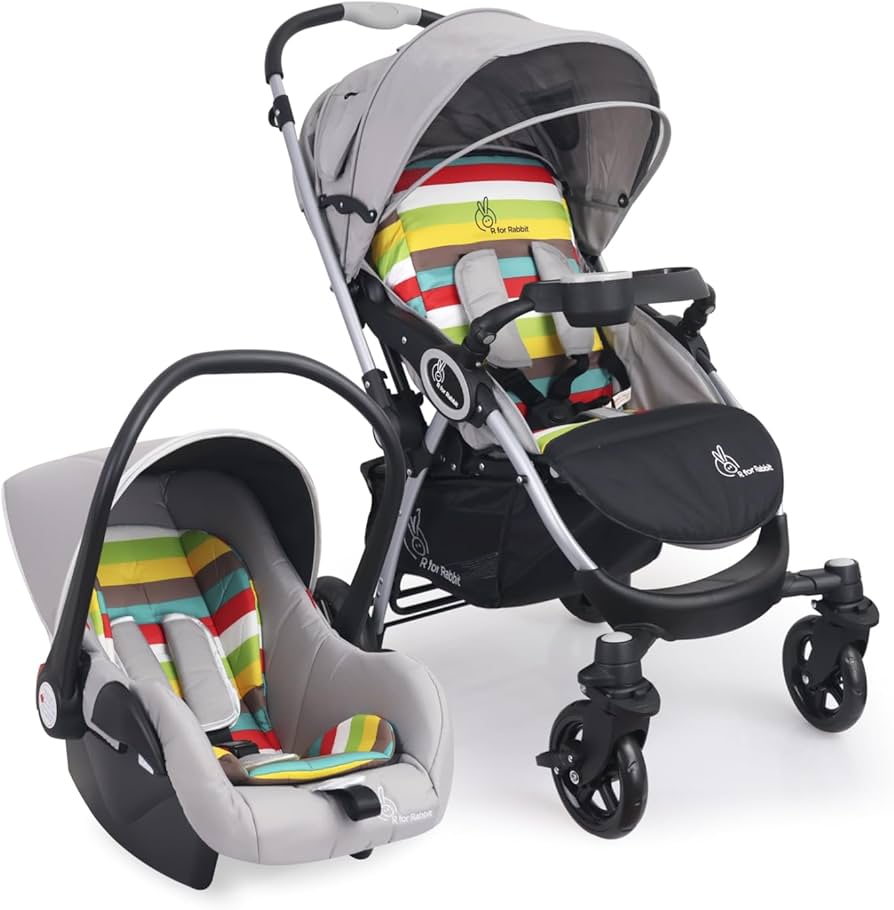
R for Rabbit Secure Travel Baby Car Seat
- ✓ ISOFIX + seat belt dual anchoring
- ✓ Rearward-facing up to 18 kg, forward-facing up to 36 kg
- ✓ 5-point padded harness with 2-inch straps
* We earn a small commission — at no extra cost to you.
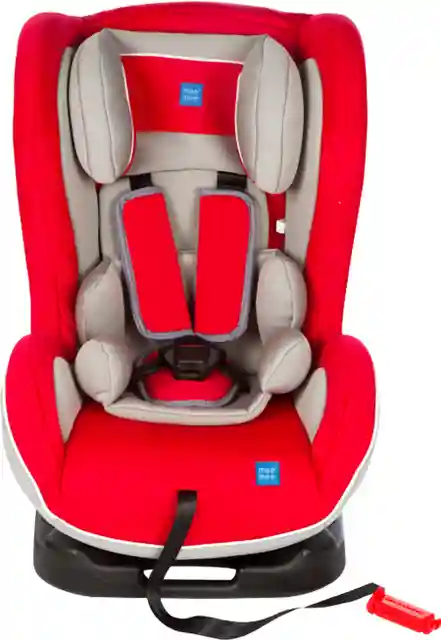
Mee Mee Grow with Me Convertible Car Seat (Rearward-Facing)
- ✓ 3-point seat belt anchoring system
- ✓ Rearward-facing up to 18 kg / 4 years
- ✓ 5-point harness with 1.5-inch straps
* We earn a small commission — at no extra cost to you.
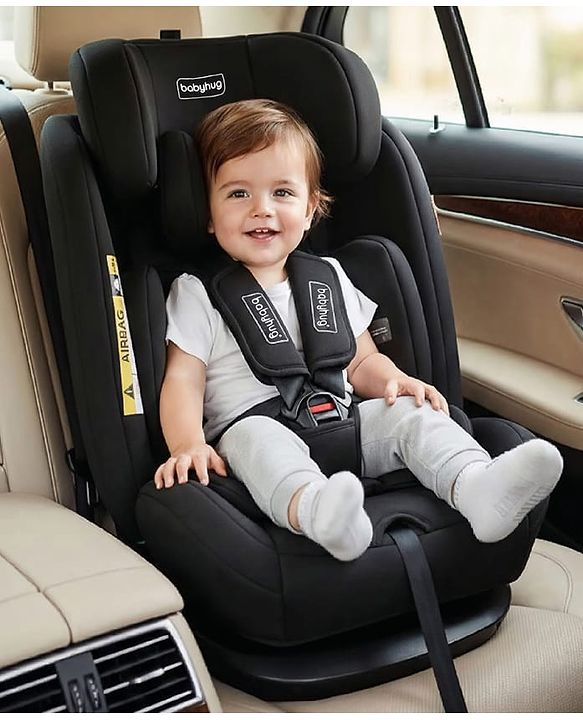
Babyhug Convertible Car Seat
- ✓ 3-point seat belt anchoring only
- ✓ Rearward-facing up to 18 kg
- ✓ 5-point harness standard width
* We earn a small commission — at no extra cost to you.
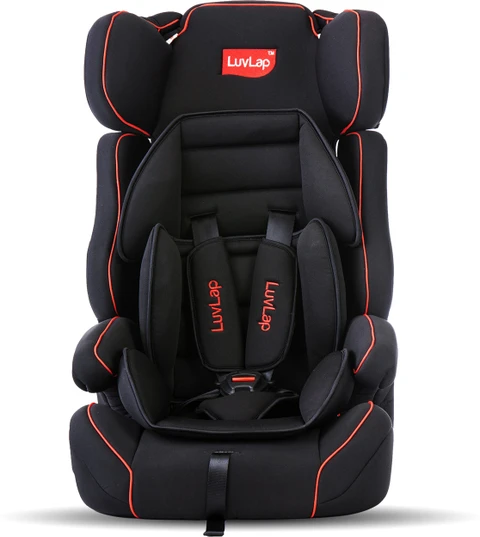
LuvLap Comfy Car Seat
- ✓ Seat belt installation (no ISOFIX)
- ✓ Rearward-facing up to 18 kg
- ✓ 5-point safety harness
* We earn a small commission — at no extra cost to you.