
Mango Dal Porridge for 8-Month-Old Baby: IAP-Approved Recipe & Best Organic Moong Dal Brands in India (2026)
Mango dal porridge combines moong dal (lentils) and ripe mango into a smooth, nutrient-dense meal that takes 12 minutes in a pressure cooker. It's IAP-recommended for 8+ month babies as a balanced protein-carb-vitamin combination. Serve 4–6 tablespoons, 2–3 times weekly during mango season (April–June).
By 8 months, most Indian babies have moved past simple purees and are ready for mild spiced combinations that introduce new flavours without overwhelming their palate. Mango dal porridge for 8 month baby is a summer staple in Indian households, combining the cooling properties of ripe mango with the protein-rich moong dal (also called split green lentils: easily digestible legumes with 25g protein per 100g, making them ideal for vegetarian weaning). The recipe is straightforward, takes minimal time, and contains no added salt or sugar—just whole foods. This guide includes the best organic moong dal brands available on Amazon.in, nutrition data, and IAP (Indian Academy of Pediatrics) guidelines for serving.
Popular organic moong dal options include Organic India Moong Dal (₹165 for 500g) and 24 Mantra Organic Moong Dal (₹149 for 500g). Both are widely available and trusted by parents across Mumbai, Delhi, Bengaluru, and Pune.
How to Prepare Mango for an 8-Month-Old Baby
Choosing the right mango variety is crucial. Alfonso mangoes (grown in Ratnagiri, Maharashtra) are naturally sweeter with lower fibre, making them easier for babies to digest. Kesar mangoes (from Gujarat) offer a similar creamy texture but with slightly more pronounced aroma. Avoid raw or semi-ripe mangoes—babies need fully ripe fruit with a soft-yielding flesh and fragrant stem-end.
Selection & ripeness check: Hold the mango gently in your palm. If it yields slightly to thumb pressure and smells sweet at the stem, it's ready. Unripe mangoes contain tannins that can cause constipation in young babies.
Preparation steps: Wash the mango under running water, dry it, then cut it in half lengthwise around the pit. Score the flesh in a cross-hatch pattern without piercing the skin, then scoop the cubes into a bowl. For 8-month porridge, use 2–3 tablespoons of fresh mango pulp per serving. If making in bulk, freeze mango cubes in ice cube trays (each cube ≈ 1 tablespoon); they keep for up to 3 months.
Step-by-Step Mango Dal Porridge Recipe (Pressure Cooker Method)
Ingredients (1 serving, 4–6 tablespoons):
- 2 tablespoons moong dal (washed, soaked 20 minutes)
- 3 tablespoons ripe mango pulp
- 1/2 cup water
- 1/4 teaspoon ghee (optional, aids nutrient absorption)
Step 1: Prepare the dal. Rinse moong dal under cold water 2–3 times until water runs clear. Soak for 20 minutes—this reduces cooking time and improves digestibility. Drain completely before adding to the cooker.
Step 2: Add to pressure cooker. Place dal in the cooker with 1/2 cup water. Do not add salt or spices. Close the lid and bring to full pressure (high flame).
Step 3: Cook 12 minutes. Once at pressure, reduce flame to low and cook for exactly 12 minutes. For a 8-month baby, this yields soft, mashable dal. If you prefer a thinner consistency (closer to porridge), add an extra 1/4 cup water and reduce cooking to 10 minutes.
Step 4: Cool naturally. Allow the cooker to release pressure naturally for 5 minutes, then carefully open. The dal should be completely soft and break easily between your fingers.
Step 5: Blend with mango. Transfer cooked dal to a bowl. Add fresh mango pulp and optional ghee. Blend using an immersion blender or fork until you reach your preferred texture—smooth for younger babies (8–9 months), slightly chunky for older babies (10+ months). Add 2–3 tablespoons boiled cooled water if the mixture is too thick.
Step 6: Serve and cool. Always serve at body temperature (test on your inner wrist). Cool to room temperature before storing.
Nutritional profile per serving: Approximately 65–75 calories; 3–4g protein (from dal); 12–14g carbohydrates (mango + dal); 0.3g fat; 2–3g fibre. IAP guidelines recommend 8–10g protein daily for 8-month babies; this single serving contributes 30–40% of daily protein needs.
Best Organic Moong Dal Brands Available on Amazon.in (2026)
Two trusted brands dominate the organic weaning dal category in India:
Organic India Moong Dal (₹165 per 500g): USDA-certified organic, grown in Rajasthan. Parent reviews on Amazon.in (4.3 stars, 2,100+ ratings) consistently praise fast cooking times and consistent texture. Each 500g pack makes approximately 8–10 servings of this recipe. The dal has a mild, slightly nutty flavour that pairs well with mango's sweetness.
24 Mantra Organic Moong Dal (₹149 per 500g): India Organic-certified, sourced from Tamil Nadu. Amazon.in ratings: 4.1 stars, 1,800+ reviews. Slightly more affordable, with marginally higher water content (cooks to a mushier consistency, preferred by parents seeking thinner porridge). Both brands are free from pesticides, additives, and GMOs—verified by third-party lab testing disclosed on their websites.
Storage after purchase: Transfer dal from the original pack to an airtight glass container in a cool, dry cupboard. Shelf life: 12 months unopened; 6 months after opening. Check for discolouration or off-smell before use.
Prepared porridge storage: Cool completely, then refrigerate in airtight containers. This recipe keeps for exactly 24 hours at 4°C (standard refrigerator temperature). Beyond 24 hours, bacterial load increases regardless of how the porridge looks. Freeze portions in ice cube trays (each cube = 1 serving); frozen portions last up to 3 months. Thaw in the refrigerator overnight or warm gently in a bowl over warm water—never in a microwave, which creates uneven hot spots dangerous for baby's mouth.
What Paediatricians Say
IAP (Indian Academy of Pediatrics) recommends introducing combination foods like dal-based porridges by 8 months, as babies can now handle mild digestion of legume proteins alongside fruits. Mango's natural enzymes (amylase and protease) aid dal digestion. Key points: Always use split moong dal (easier than whole moong); introduce one new ingredient at a time if baby is new to either mango or dal (wait 3–5 days between each new food to monitor allergies); and offer 2–3 times weekly to establish tolerance.
| Aspect | Organic India | 24 Mantra |
|---|---|---|
| Price (500g) | ₹165 | ₹149 |
| Certification | USDA Organic | India Organic |
| Cooking time | 12 min (high pressure) | 10–12 min (high pressure) |
| Texture cooked | Slightly firm, mashable | Softer, more creamy |
| Best for | Chunky porridge | Smooth porridge |
| Amazon.in rating | 4.3 stars (2,100+ reviews) | 4.1 stars (1,800+ reviews) |
Serving portions & frequency: At 8 months, a typical serving is 4–6 tablespoons (60–90ml), 2–3 times weekly. By 10 months, increase to 6–8 tablespoons, up to 4 times weekly. Do not exceed 3 servings per week of mango-based foods during season to avoid loose stools (mango has mild laxative properties). Pair with rice cereal or roti on other days to maintain variety.
Our Top Picks
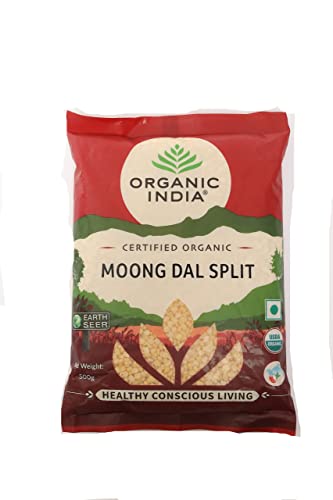
Organic India Moong Dal - 500g (USDA & India Organic Certified)
- ✓ USDA Organic certified
- ✓ Grown in Rajasthan
- ✓ Cooks in 12 minutes on high pressure
* We earn a small commission — at no extra cost to you.
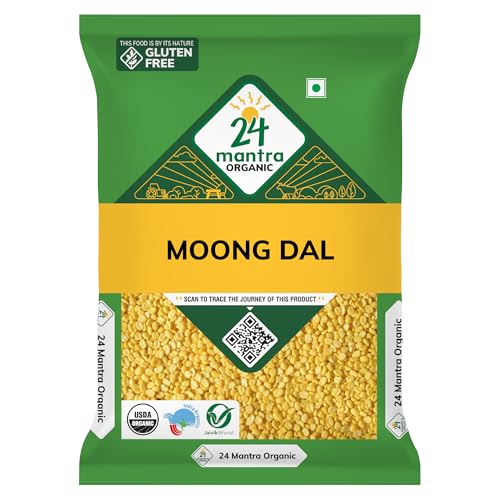
24 Mantra Organic Moong Dal - 500g (India Organic Certified)
- ✓ India Organic certified
- ✓ Sourced from Tamil Nadu
- ✓ Softer, creamy texture when cooked
* We earn a small commission — at no extra cost to you.
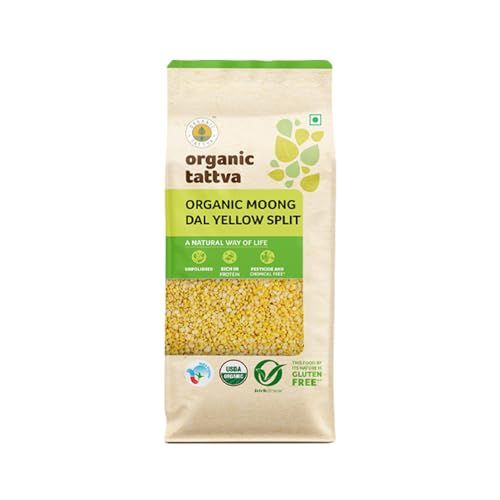
Organic Harvest Moong Dal - 500g (Bio-Dynamic & Organic Certified)
- ✓ Bio-dynamic farming certified
- ✓ Sourced from Himachal Pradesh
- ✓ Premium taste and texture
* We earn a small commission — at no extra cost to you.