
Kitchen Safety for Crawling Babies in India: 6 ER Hazards + Prevention Checklist Under ₹1,500

The six most common kitchen emergencies paediatricians see in crawling babies are: hot oil splatter, accidental gas-knob turns, detergent pod ingestion, drawer and cabinet slams, glass-door collisions, and access to plug points or toxic substances. Prevent these with cabinet locks (₹280), gas-knob covers (₹120), corner guards (₹180), and a baby gate—total outlay under ₹1,500 if you prioritise the top three first.
If you have a baby who's started crawling or is about to—usually between 6 and 12 months—the kitchen transforms overnight from a familiar room into a minefield. I realised this when my daughter started pulling herself up on the pantry door at 7 months, and suddenly I was imagining every hazard a paediatrician might see in the ER. That's when I looked up what actually happens. The stories are real, and they're preventable. Kitchen safety for crawling babies in India is not just about baby gates; it's about understanding which hazards happen fastest and which products actually stop them.
What the Evidence Actually Shows
Paediatric emergency departments in India (and globally) report consistent patterns of kitchen injuries in babies aged 6–18 months. The hazards cluster into six categories, each with a specific window of danger and a specific prevention tool. None of these are theoretical. They happen because kitchens are designed for adults, and crawling babies are exactly waist-height to the things that burn, crush, or poison.
According to guidance from the Indian Academy of Pediatrics (IAP), the majority of preventable injuries in infants aged 6–24 months occur in the kitchen and bedroom, with kitchen injuries accounting for thermal burns, chemical ingestion, and crush injuries. The good news: each hazard has a low-cost, widely available fix.
Hazard 1: Hot Oil and Steam Splatter (Thermal Burns)
This is the fastest and most severe. A baby pulling upright on a chair leg while you're frying can trigger a grab of the pot handle or a lean into the stove edge. Hot oil doesn't cool as fast as boiling water—it clings and burns deeper. IAP guidelines emphasise that thermal burns to the face, chest, or hands are among the most common kitchen injuries in this age group. Prevention: a lockable oven guard and a stove-edge protector. Cost: ₹500–₹800 for both. This is your first buy.
Hazard 2: Gas Knob Turns (Accidental Ignition or Gas Leak)
A baby eight months old has enough finger strength and curiosity to turn a gas knob. They see you do it, and they copy. Silicone knob covers that slide over each knob cost ₹100–₹150 per set and take 30 seconds to fit. If your stove has a safety feature (auto-shutoff), you still need these covers because a toddler's repeated knob-turning is an emergency waiting to happen. Many Indian kitchens use manual-ignition stoves, so this is non-negotiable.
Hazard 3: Detergent Pods, Dishwasher Liquids, and Under-Sink Toxins
Detergent pods are brightly coloured and resemble candy to a crawler. A single pod ingestion can cause severe respiratory distress, seizures, or coma. This is not an exaggeration—poison control centres across India report this. The fix is simple: a magnetic child-lock on the under-sink cabinet (₹200–₹300). Ensure pesticides, cleaning agents, and any rat poison are moved entirely out of the kitchen or stored in a high, lockable cabinet. Under-sink storage is the default toxic zone in most homes.
Hazard 4: Drawer and Cabinet Slams (Finger Crush Injuries)
A baby pulls open a drawer, leans in to explore, and another family member closes it not seeing the child. Finger crush injuries cause fractures, nail avulsion, and tissue damage. Soft-close hinges or drawer stops cost ₹150–₹250 per drawer. For lower cabinets, angle guards (₹180 for a multi-pack) catch and dampen door swings. This is why high-safety kitchens also remove or lock lower drawers entirely until age 18 months.
Hazard 5: Glass-Door Appliance Collisions (Lacerations and Fractures)
Refrigerators with glass fronts, glass-door microwave ovens, and glass-front dishwashers are at eye-level to a standing baby. A loss of balance or a tumble means the face or head contacts the glass. Safety film (₹200–₹400 per roll) applied to glass fronts will not prevent impact but will hold shards together and significantly reduce deep lacerations. This is a legal requirement in some workplaces and an essential buy for kitchens with glass appliances.
Hazard 6: Floor-Level Electrical Outlets and Exposed Wiring (Electrocution)
A wet baby or one who has been playing near a spill can contact a floor-level outlet. Outlet covers or plug inserts (₹120–₹200 for a multi-pack) are a baseline. However, if outlets are visibly damaged, corroded, or in reach of standing water, relocate major appliances or have an electrician install ground-fault circuit interrupter (GFCI) protection. This is non-negotiable in kitchens where water use is frequent.
Kitchen Baby-Proofing Checklist: What to Buy and When
| Hazard | Prevention Product | Typical Price (₹) | Priority |
|---|---|---|---|
| Hot oil / steam burns | Stove guard + oven edge protector | 500–800 | 1 (Highest) |
| Gas knob turns | Silicone knob covers (4-pack) | 100–150 | 1 (Highest) |
| Detergent pod / toxin ingestion | Magnetic cabinet lock + relocation | 200–300 | 1 (Highest) |
| Drawer / cabinet slams | Soft-close hinges or angle guards | 150–250 | 2 (High) |
| Glass-door collisions | Safety film | 200–400 | 2 (High, if glass appliances present) |
| Outlet contact | Outlet covers / plug inserts | 120–200 | 2 (High) |
Total minimum spend for essential items: ₹1,270–₹1,900. If your kitchen has glass appliances or extra outlets, add ₹200–₹400. Most Indian parents I've spoken to buy in waves: the stove and toxin locks first (within a week of crawling), then drawers and outlets within the next fortnight.
Room-by-Room Application: The Kitchen Specific to Indian Homes
Most Indian kitchens are smaller and more densely packed than Western counterparts. A single baby gate at the entrance is a starting point, but it's not enough because older siblings or adults need to move in and out frequently. What works better: secure the three highest-risk zones first—the stove, the under-sink area, and the refrigerator—then use a gate as a backup when you step away. If your kitchen has a traditional chulha or LPG cylinder, prioritise the knob covers and a stove barrier before anything else.
How Much Does This Baby-Proofing Actually Cost?
For a full kitchen: ₹1,200–₹1,500 if you buy the core six items. If you have two kitchens (main + pantry), add 30–40%. The costliest items are stove guards (₹500–₹800) and safety film (₹200–₹400), but they're one-time buys. Most families spend this in two phases: phase one (₹700–₹900) covers stove, gas knobs, and toxin locks; phase two (₹400–₹600) covers drawers, outlets, and glass safety.
What IAP and WHO Guidance Says
The Indian Academy of Pediatrics (IAP) recommends that parents secure all heat sources and chemical storage before a baby begins crawling—not after. WHO guidance on injury prevention emphasises that the kitchen is a high-risk zone and that passive safety devices (locks, guards, covers) are more effective than supervision alone for this age group.
When to See a Doctor
If your baby has ingested a detergent pod, pesticide, or any unknown substance, contact your paediatrician or the National Poisons Information Centre immediately—do not wait. If there is a thermal burn (even a small one), blistering, or deep reddening, seek medical care within the hour. If there is any electrical shock symptom (unconsciousness, irregular breathing, burns near the mouth), call 112. This is general information, not medical advice.
Our Top Picks

Babyin Stove Guard Safety Protector for Gas Stove (Stainless Steel)
- ✓ Folds up when not in use
- ✓ Fits most standard Indian gas stoves
- ✓ Prevents access to knobs and pot handles
* We earn a small commission — at no extra cost to you.

Mummify Silicone Gas Knob Safety Covers (Set of 4)
- ✓ Universal fit for most stove knobs
- ✓ Soft silicone, no sharp edges
- ✓ Easy to remove for adult use
* We earn a small commission — at no extra cost to you.

Babyin Magnetic Cabinet Lock (3-Pack with Adhesive Key)
- ✓ Fits inside cabinet doors, invisible when closed
- ✓ Magnetic key for adult use
- ✓ Install in under 5 minutes, no screws needed
* We earn a small commission — at no extra cost to you.
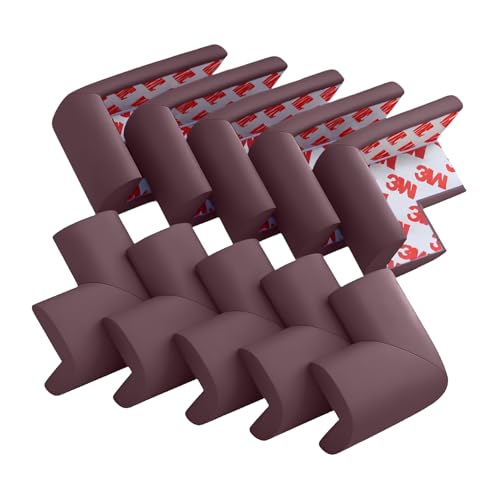
Superbaby Corner and Edge Guard Foam Bumper (12-Pack)
- ✓ Adhesive-backed, fits table edges and cabinet corners
- ✓ Cushions impact from falls and collisions
- ✓ 12 pieces, covers multiple kitchen hazards
* We earn a small commission — at no extra cost to you.

Mummify Outlet Safety Covers (10-Pack)
- ✓ Fits standard 3-pin and 2-pin Indian outlets
- ✓ 10 pieces for full kitchen coverage
- ✓ Pop-out design, no choking hazard
* We earn a small commission — at no extra cost to you.

3M Safety Window Film Clear (1 metre roll)
- ✓ Applies to glass appliance doors without adhesive damage
- ✓ Holds glass shards together if impact occurs
- ✓ Clear finish, does not obstruct view
* We earn a small commission — at no extra cost to you.