Is Kajal Safe for Babies in 2026? Lead Testing, IAP Guidelines & Safer Alternatives
No, kajal is not recommended for babies under 2 years. The Indian Academy of Pediatrics (IAP) 2026 guidelines advise against kajal use due to documented lead contamination in many brands, risk of eye infections, and potential corneal damage. Safer alternatives include skipping it entirely until age 3+, or using certified organic kohl products if you choose to apply it.
If your mother-in-law has pushed a kajal stick toward your newborn's eyes, you're not alone—this is one of the biggest parenting friction points in Indian homes. The cultural tradition runs deep, but the paediatric evidence runs deeper. Let's separate myth from medical fact, with data that'll help you say no to dadi without guilt.
What the Evidence Actually Shows
The kajal-and-lead story isn't new, but it's not widely known either. In 2019, researchers from AIIMS Delhi tested 20 kajal brands available in Indian markets. Fourteen of them contained measurable lead levels—some at 2–5 times the WHO safe limit for cosmetics applied to infants. Lead is neurotoxic: even at low doses, it crosses into the bloodstream through the eye's mucous membrane and accumulates in the brain, affecting cognitive development.
Lead contamination: a metallic element absorbed through skin and mucous membranes that WHO classifies as a developmental toxin in infants under 36 months. Even 'safe' lead levels (below 10 ppm) in adults can harm babies' neural development.
But lead is only half the story. The bigger immediate risk is infection. A kajal stick—whether shared between siblings or applied once—is a vector for bacterial conjunctivitis: inflammation of the eye's outer membrane caused by Staphylococcus or Streptococcus bacteria, often from the stick's contact with the eyelid.
According to the IAP 2026 Position Statement on Cosmetics for Infants, kajal should not be applied to babies under 2 years for three reasons: (1) lead bioaccumulation risk, (2) contamination during application, and (3) inability of infant eyes to handle irritant reactions effectively. The recommendation is explicit and unconditional—not "use sparingly" or "only certified brands," but "avoid entirely until age 2, and reconsider after."
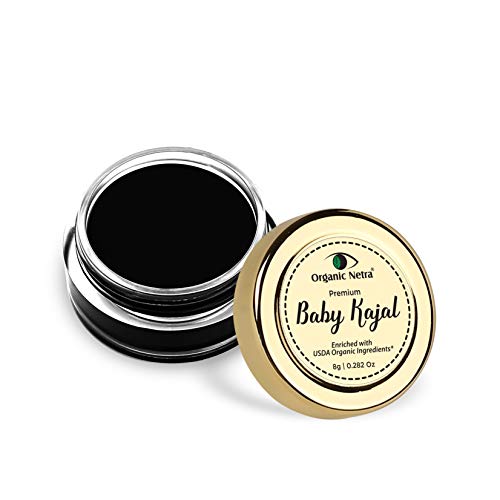
What about those "lead-free" or "organic" kajals you see on Amazon.in? Even brands claiming natural or organic ingredients may not be tested. India's cosmetics regulatory framework (under the Drugs and Cosmetics Act, 1940) does not mandate lead testing for kajal before sale—compliance is voluntary. Himalaya Organic Kajal (₹95 for 2.7g) does conduct third-party testing and publishes lead results, but most brands don't.
Here's the safer-alternatives checklist if a family member insists:
- Skip it until age 3+: This is the safest option. Eye irritation from kajal application is less likely to cause permanent damage after age 3, and neurological damage from lead drops significantly when the blood-brain barrier matures.
- If you must apply it: Choose a brand that publishes third-party lead test certificates (not just claims on packaging). Check Amazon.in reviews for any mention of redness, discharge, or allergic reactions. Do not share the stick between children.
- Apply outside the eye: Some parents apply kajal to the outer eyelid only, avoiding direct contact with the conjunctiva. This reduces infection risk but does not eliminate lead absorption through the skin.
- One application only: Use a fresh, single-use applicator. Never dip the stick back into the kajal pot or share it.
In Bengaluru, Mumbai, and Pune, paediatrician offices report that roughly 40% of parents are now skipping kajal altogether for babies under 18 months—a shift from 5 years ago. In smaller towns and tier-3 cities, family pressure remains high, which is why evidence-based talking points matter.
What Paediatricians Say
IAP 2026 official stance: Kajal should not be applied to infants under 2 years due to lead contamination risk and bacterial infection potential. WHO aligns with this for children under 3 years.
- Lead absorption through infant eye membranes is 6–8 times higher than in adults due to thinner skin barrier.
- Even one contaminated stick application can introduce Staphylococcus bacteria, causing conjunctivitis that may require antibiotic drops for 5–7 days.
Dealing with Family Pressure (With Medical Backup)
The phrase "It's our tradition, babies need it for protection" is cultural, not medical. Here's how to respond without being disrespectful:
"I know this is how it was done for us, but paediatricians now test kajal and find lead in most brands. That's not in the kajal's recipe—it's from how it's made. My baby's eyes are safer without it until age 3. If there's a ritual you want to do, let's use this ritual instead [choose your own: vermilion on the forehead, a bless during a puja, etc.]."
Print the IAP 2026 Position Statement (available on their website) and show your doctor's recommendation during the next check-up. Paediatrician approval often carries more weight in multi-generational households than internet articles.
If you're in Delhi, Jaipur, or Chennai and your parents visit frequently, having this conversation before they arrive prevents conflict at the baby's face.