
How to Read a Baby-Food Label: What "No Added Sugar" Really Means
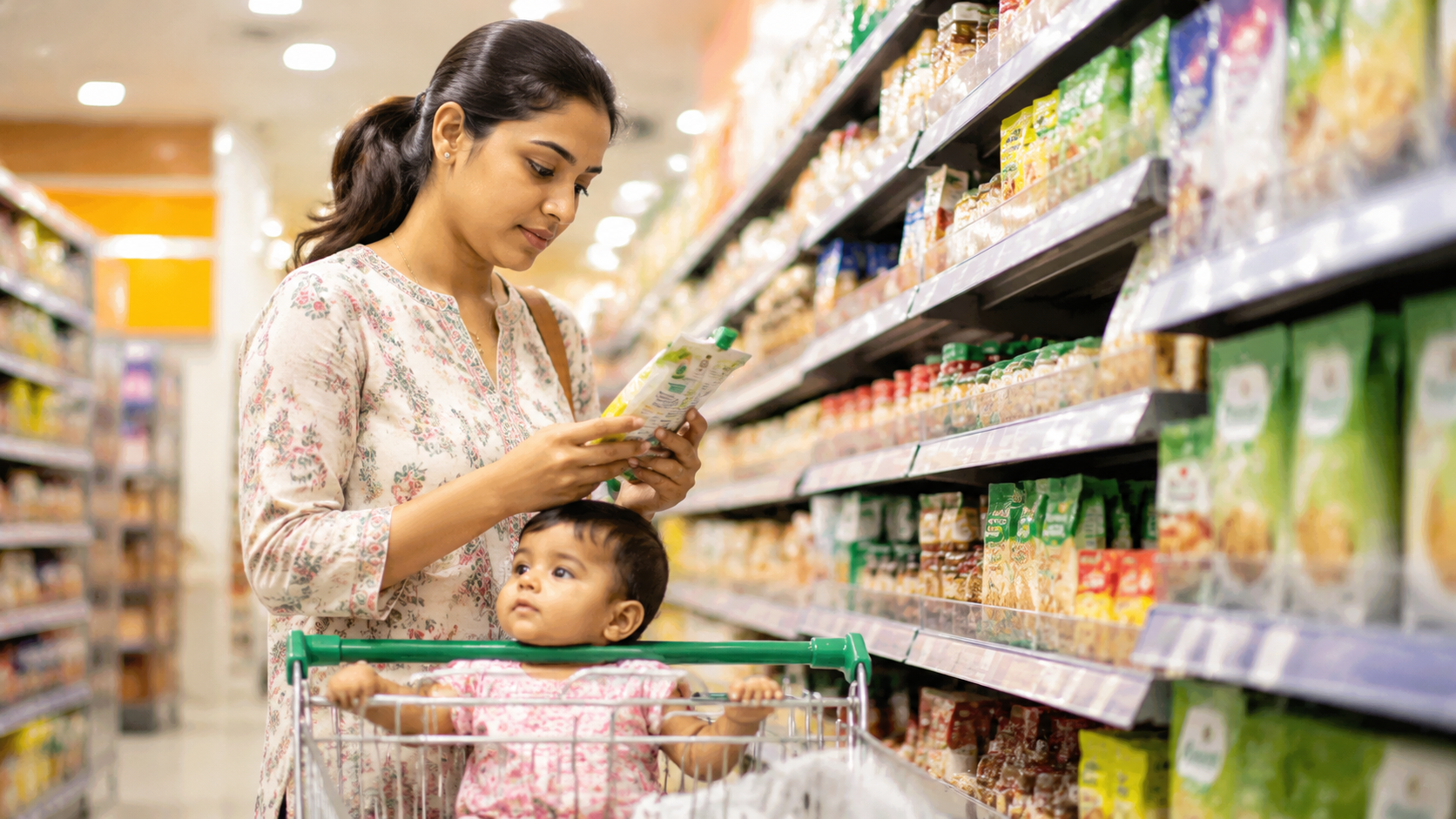
Short answer: a good baby-food label is short and boring. The fewer ingredients, and the more of them you recognise as actual food, the better. Almost everything else on the pack is marketing. Once you know how to read the back of the pack, choosing a good baby food takes about thirty seconds.
Read the ingredient list first, not the front
The front of the pack is designed to sell. The ingredient list on the back is where the truth is, and there is a simple rule behind why it works: ingredients are listed in descending order by weight, meaning whatever makes up the largest share of the food, by law, has to appear first. So if real grains, fruit or vegetables sit at the top and the list is short, that is a genuinely reliable sign, not a guess. If the first two or three items are hard to pronounce or read like a chemistry set, that tells you something real about how little of the actual food is inside.
The specific words that mean added sugar
Added sugar does not always appear as the word "sugar" on a label, and this is where many otherwise careful parents get caught out. Watch for fruit juice concentrate, which sounds healthy but functions as a concentrated sweetener once processed this way. Watch for syrups of any kind, corn syrup, glucose syrup, or similar terms. And remember that under Indian and most international guidance, honey should never be given to a baby under one year regardless of how it is labelled, both because of the small botulism risk in infants and because it is, in practice, another form of added sugar. A label that genuinely has no added sugar will simply not need any of these words anywhere in the ingredient list, which makes this an easy thing to scan for once you know what you are looking for.
Understanding serving size, and why it can be misleading
Nutrition panels list values per serving, but the defined serving size on a baby-food pack is not always the amount your baby actually eats in one sitting. A pack might state a serving size that is larger or smaller than what you realistically serve, which changes how meaningful the percentage figures on the panel really are for your baby's actual portion. Rather than relying on the percentages alone, it is more useful to look at the ingredient list itself and the per-100-gram figures, which let you compare packs on equal footing regardless of how each brand has chosen to define its own serving size.
| What to check | Good sign | Red flag |
|---|---|---|
| First two or three ingredients | Real grains, fruit or vegetables named directly | Sugar, syrup or an unfamiliar chemical name near the top |
| Added sugar | None listed, no syrups or concentrates | "Contains added sugar" or a hidden sweetener further down the list |
| Preservatives | None, with shelf life explained by the process (such as retort) | A long, unfamiliar chemical preservative name |
| Overall list length | Short, mostly ingredients you recognise | A long list of unfamiliar additives |
Marketing words that mean little
Words like "natural", "goodness", "wholesome" and "immunity" are not regulated the way you might hope. They are not proof of anything. The ingredient list is. A pack that quietly lists a few real ingredients and clearly states no added sugar, salt or preservatives is telling you more than a front cover full of buzzwords. Claims about immunity in particular are worth treating with extra scepticism on a food label, since a food supporting general nutrition is very different from a food making a specific health claim, and the latter deserves a conversation with your pediatrician rather than trust based on packaging alone.
A 30-second label test
Flip the pack over, read the first three ingredients, scan for added sugar or preservatives, and check the length of the list. That is the whole test. As an example of what a clean label looks like, the Rorosaur Grain Puree Combo keeps to real grains with no added sugar, colours or preservatives, and leans on retort packing for shelf life. When in doubt, pick the one with the shortest, cleanest list. That single habit will steer you right almost every time, no matter how many new brands appear on the shelf.
Our Top Picks

Rorosaur Grain Puree Combo
- ✓ No added sugar, salt or preservatives
- ✓ Multiple ingredients, thoroughly cooked
- ✓ Retort-packed - long shelf life, no fridge
* We earn a small commission — at no extra cost to you.