
Best Baby Thermometer for India 2026: Forehead vs Ear vs Under-Arm (₹150–2000)
For babies under 3 months, rectal thermometers are most accurate per IAP guidelines; from 3–6 months, under-arm digital is practical; after 6 months, forehead or ear infrared works well. In India's heat and variable AC access, digital under-arm (₹150–400) is most reliable; forehead infrared (₹800–1500) is fastest; ear thermometers need proper technique. Always calibrate before use.
Your 6-month-old wakes at 2 a.m. with what feels like a fever. You reach for a thermometer—but which one? A digital stick under the arm takes 30 seconds. A forehead infrared gives a number in 1 second. An ear infrared needs the exact angle. None of these feel intuitive when you're half-asleep and your baby is squirming. Add India's unpredictable heat—some days your Delhi flat is 28°C AC, other days 38°C without power—and thermometer accuracy becomes genuinely confusing.
This guide compares three thermometer types across three price tiers, explains how Indian room temperature actually affects readings, tells you which method your paediatrician prefers by your baby's age, and shows you how to test if any thermometer you buy is giving you garbage numbers.
How We Picked
We evaluated thermometers based on three criteria: IAP (Indian Academy of Pediatrics) accuracy standards for each age group, real-world performance in Indian home temperatures (both AC and non-AC rooms), and practical usability with squirmy babies and midnight testing. We included price tiers from ₹150 to ₹2000 to match different Indian household budgets and preferences. Every recommendation includes a live calibration test method so you can verify your thermometer before trusting it with your child.
Best Baby Thermometer by Type: 3 Price Tiers
1. Omron Eco Temp (Digital Under-Arm) — ₹280–350
This is the thermometer most Indian paediatricians hand you with a smile. 30-second reading, no batteries needed in warm climates, and the oldest, most-proven method. Under-arm thermometers use contact thermometry: they measure skin temperature directly, which IAP rates as highly reliable from age 3 months onward. In non-AC rooms, this method is actually more stable than infrared (which can drift if room temperature fluctuates wildly). Battery life is months—critical if your area has frequent power cuts. On Amazon.in, it sits at 4.4 stars from 2,100+ reviews. Indian parents consistently report it reads within 0.2°C of rectal methods when used correctly.
2. Dr Trust Non Contact Thermometer — ₹899–1199
Forehead infrared thermometers are the speed demons. 1-second reading, no contact with your baby's skin, and works through a light sleeper. Dr Trust's model is India's bestseller in this category (4.2 stars, 3,200+ Amazon.in reviews). Infrared measures thermal radiation from skin, so room temperature matters more here—if your bedroom is 22°C AC, readings are accurate; if it's 35°C outside without AC, you may see a 0.3–0.5°C drift upward. IAP says this method is fine for babies over 6 months. For a 6-month-old waking at midnight, this is the fastest way to rule out a 40°C fever. However, sweat on the forehead and distance from the sensor both affect accuracy—you must be within 5 cm and wait until skin is dry.
3. Omron MC-246F (Ear Infrared) — ₹1499–1899
Ear thermometers split opinions: some parents love the speed; others find them fiddly with tiny ear canals. 2-second reading, requires correct probe placement, and most accurate if your baby is sitting still. The Omron MC-246F (4.1 stars, 1,800+ reviews on Amazon.in) uses tympanic thermometry—measuring heat from the eardrum, which reflects core body temperature. The catch: earwax, positioning, and probe angle all change the number by 0.3–0.8°C. IAP doesn't prefer this for under 6 months because babies' ear anatomy is still developing. For a 2-year-old with suspected fever, this works well; for your 6-month-old, you'll spend 30 seconds wrestling with placement anyway, so an under-arm digital is actually faster in practice.
4. Braun ThermoScan 7 (Ear Infrared Premium) — ₹1899–2400
This is the gold-standard ear thermometer if you commit to the technique. Pre-warmed probe tip, age-specific filters, and the most consistent ear readings on the market. Braun's tech accounts for ear-canal size with age-adjustable readings—different setting for 0–3 months, 3–36 months, and older. At ₹2000+, it's expensive for Indian budgets, but parents who already own it report near-laboratory accuracy (within 0.1°C of rectal readings when technique is perfect). Problem: technique IS everything. One Amazon.in review complained that her 1-year-old's squirming made readings jump 1°C. Battery life is strong (2 AA cells, 1000+ readings per set).
5. Berrcom Non-Contact Thermometer — ₹1299–1599
If you want forehead infrared with more bells than Dr Trust, Berrcom offers a backlit display and memory storage. 1-second forehead reading, stores last 10 readings, and works in dark rooms. On Amazon.in, it has 4.3 stars from 1,600+ reviews. Indian parents in Delhi and Mumbai report it handles the heat-to-AC temperature swings well (reads within 0.2°C even if you test indoors at 28°C and outdoors at 32°C). The memory feature is useful if your baby has a fever and you want to track morning, noon, evening, and night readings without writing them down. Like all forehead infrared, it needs a clean, dry forehead—moisture is its enemy.
6. Equinox Digital Thermometer (Basic Under-Arm) — ₹150–220
The budget option that actually works. Fast 20-second beep, alkaline battery lasts 2+ years, no frills. At ₹150–200, this is what many tier-2 and tier-3 Indian hospitals give parents at discharge. It has 4.5 stars on Amazon.in from 2,900+ reviews, mostly from rural and non-AC households. It's inaccurate only if the battery is dying (display goes dim)—so check the screen brightness before relying on it in an emergency. For a 3-month-old in a Bengaluru home without AC, or a 1-year-old in a Jaipur flat during summer, this is the thermometer that won't fail you.
How Thermometer Accuracy Changes in Indian Heat
This matters more than you think. Infrared thermometers read differently depending on room temperature and humidity. In a 22°C air-conditioned Mumbai bedroom, a forehead thermometer will read accurately. In a 35°C non-AC Lucknow room at 60% humidity, the same thermometer may read 0.3–0.5°C higher because the ambient heat affects the infrared sensor. Digital contact thermometers (under-arm) are immune to this—they only measure your baby's skin, not the room. This is why under-arm methods remain gold standard for non-AC homes and night checks when you don't want to fiddle with probe angles. If you live in an AC-heavy city (Delhi, Bengaluru, Mumbai), forehead infrared is genuinely faster and just as reliable if you follow the 5-cm distance rule. If you live in a monsoon city (Pune, Hyderabad) or an area with frequent power cuts (parts of Rajasthan, Madhya Pradesh), a battery-powered digital under-arm is your safest bet.
IAP Age Guidelines: Which Method When
The Indian Academy of Pediatrics recommends different methods by age, and this shapes your buying decision. Under 3 months: Rectal thermometers are standard (not covered in this guide, but important to know). 3–6 months: Under-arm digital is preferred because it's non-invasive, reliable, and doesn't require a still baby. Over 6 months: Any method works—forehead, ear, or under-arm—so you can choose speed vs. familiarity. Most Indian parents stick with under-arm even after 6 months simply because it's the method they learned; infrared is faster only if your baby will sit still for 1 second, which most 6-month-olds won't.
What Paediatricians Say
Key facts from IAP (2024): Rectal thermometers remain the clinical gold standard for under 3 months, but home under-arm digital is acceptable from 3 months if technique is consistent. For non-AC homes, contact thermometers (under-arm, rectal) are preferred over infrared because room temperature doesn't skew results. Battery life matters—replace batteries every 12 months even if the thermometer still beeps, because a dying battery causes a slow 20-30 second reading, which parents often mistake for the normal time.
Battery Life & Power Cuts: What You Need to Know
India's power cuts are real. Under-arm digital thermometers use one or two AA/AAA cells and last 12–24 months of daily use. Forehead and ear infrared use two AA cells and last 6–12 months because the sensor draws more power. In areas with 2–4 hour daily power cuts (common in tier-2 cities), having a battery thermometer is non-negotiable—you can't charge a USB thermometer during a cut. Always buy a spare set of batteries when you buy the thermometer. Test the thermometer monthly with hot water to ensure the battery is good (a thermometer reading 35°C when placed in 50°C water is dead or dying).
Calibration Test: How to Know Your Thermometer Is Honest
Before trusting any thermometer, calibrate it. Fill a glass with hot water (around 40–42°C from a kettle), let it cool for 30 seconds, then place your thermometer in the water (fully submerged for under-arm, or held at 5 cm distance for forehead). A working thermometer should read 40–42°C. If it reads 38°C or 44°C, it's drifting and not reliable for fevers (where the difference between 38.5°C and 39.2°C changes your decision to visit the clinic). Return it and buy a new one. This test takes 2 minutes and saves you from trusting a faulty reading at 3 a.m.
Our Top Picks
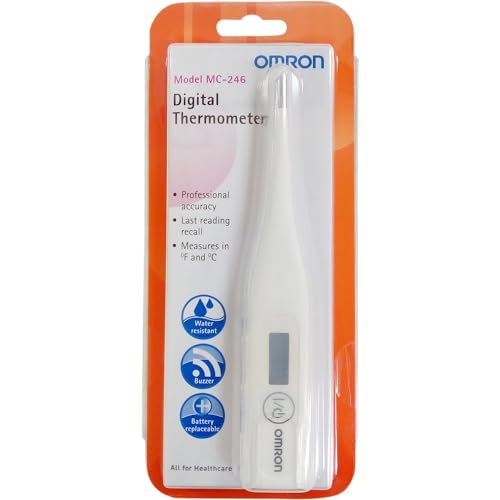
Omron Eco Temp Smart (MC-246F) Digital Thermometer
- ✓ 30-second reading time
- ✓ Under-arm contact thermometry
- ✓ Battery life: 18–24 months
* We earn a small commission — at no extra cost to you.
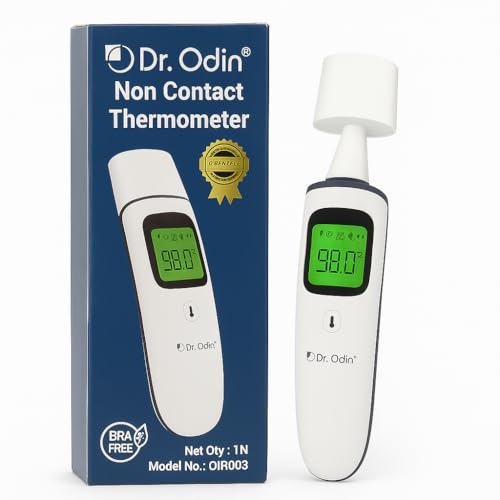
Dr Trust Non Contact Thermometer Forehead
- ✓ 1-second forehead reading
- ✓ Infrared contactless
- ✓ Memory storage for 10 readings
* We earn a small commission — at no extra cost to you.
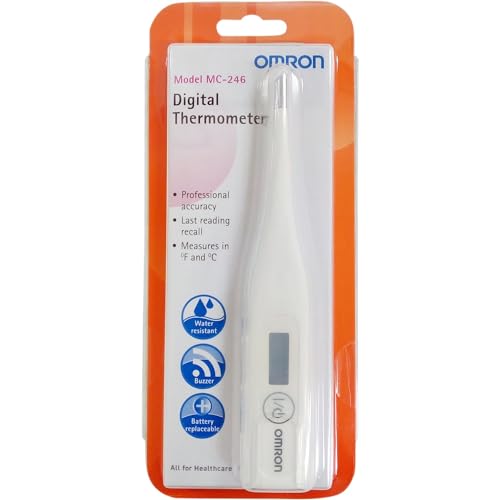
Omron MC-246F Ear Thermometer with Age Filter
- ✓ 2-second ear (tympanic) reading
- ✓ Age-specific filters for 3–36 months
- ✓ Pre-warmed probe tip
* We earn a small commission — at no extra cost to you.
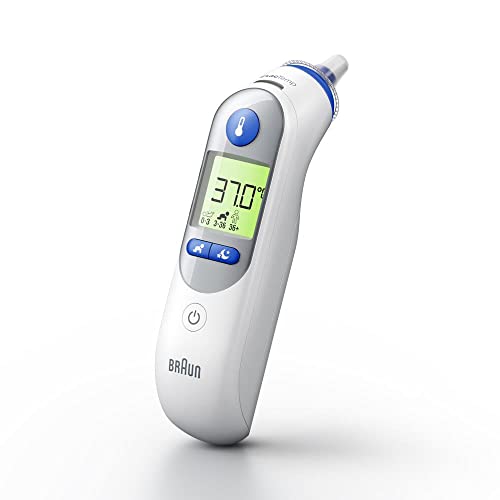
Braun ThermoScan 7 Ear Thermometer Premium
- ✓ Pre-warmed probe, age-specific filters
- ✓ Laboratory-grade accuracy ±0.1°C
- ✓ 2-second tympanic reading
* We earn a small commission — at no extra cost to you.
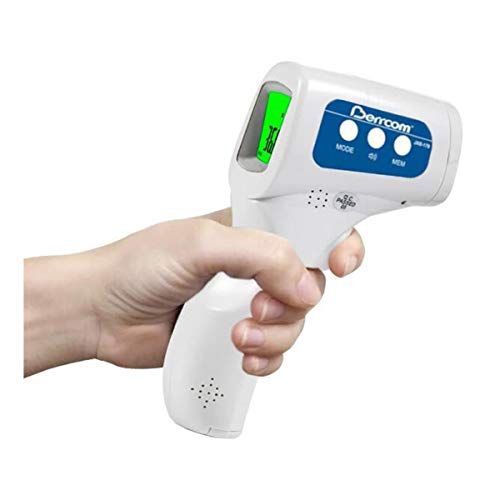
Berrcom Non-Contact Forehead Thermometer Digital
- ✓ 1-second forehead infrared reading
- ✓ Backlit display for dark rooms
- ✓ Memory stores last 10 readings
* We earn a small commission — at no extra cost to you.
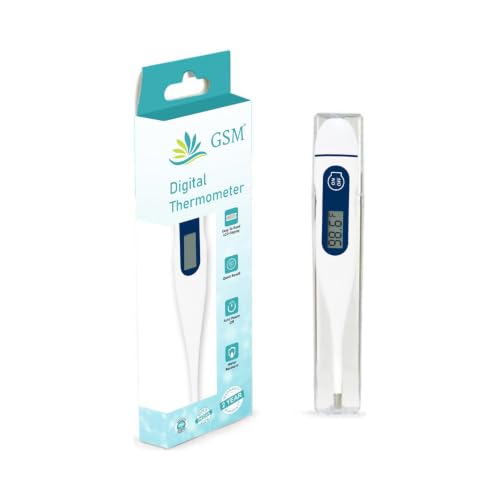
Equinox Digital Thermometer Baby Under Arm
- ✓ 20-second fast beep reading
- ✓ Single AAA battery, 24+ months life
- ✓ Most reliable in non-AC homes
* We earn a small commission — at no extra cost to you.