
Farlin vs Mee Mee vs NUK Bottles: Which Anti-Colic Bottle Works Best for Indian Babies in 2026?
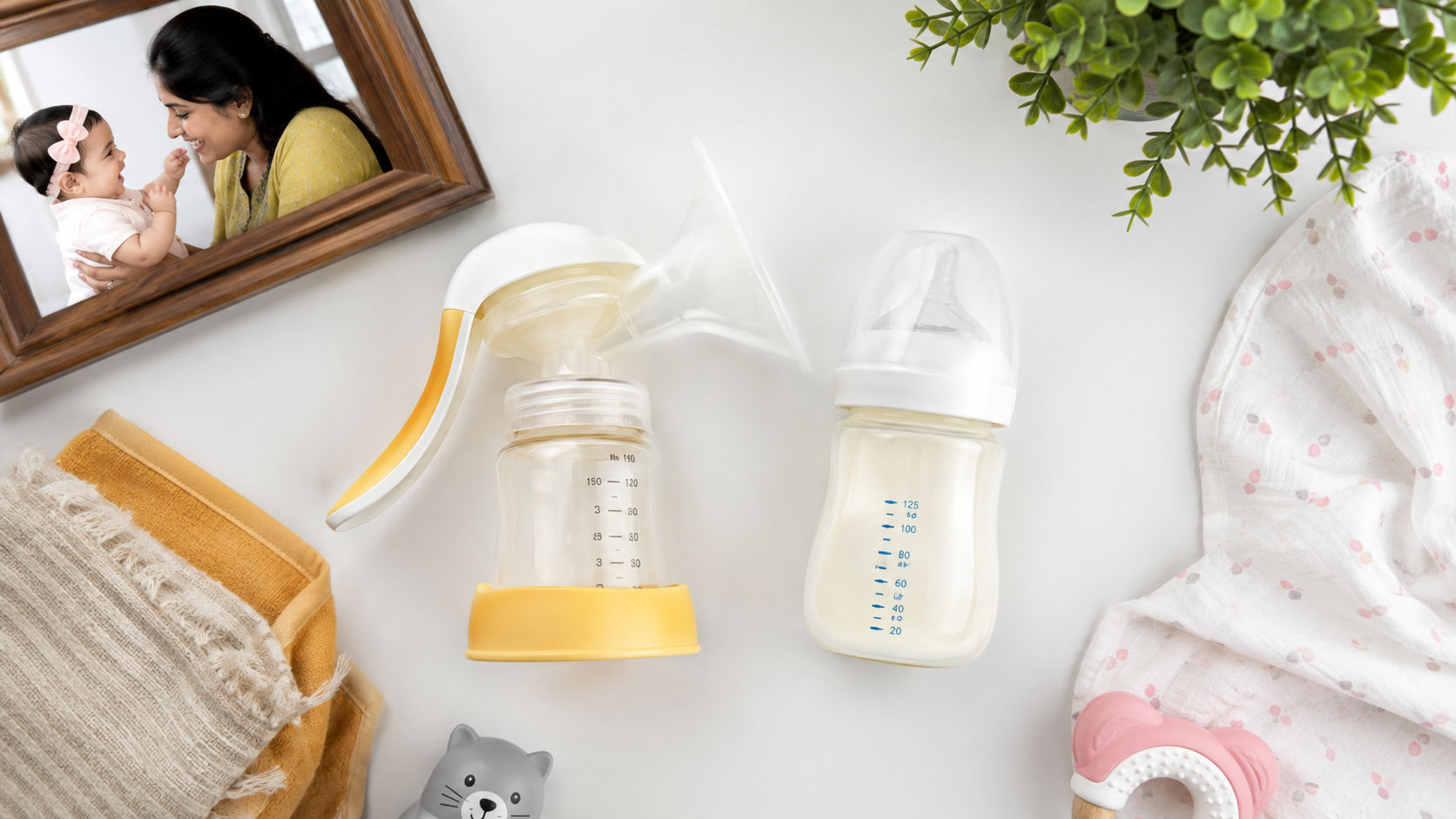
For budget-conscious parents, Farlin Anti-Colic (₹320) offers solid vent-system anti-colic design at half the price of NUK. Mee Mee Premium (₹380) sits in the middle with good heat resistance. NUK First Choice (₹550) has the most advanced nipple shape but costs 70% more. Choose based on your priority: colic relief on a budget (Farlin), Indian durability (Mee Mee), or premium nipple engineering (NUK).
Colic is every new parent's nightmare. Your baby screams for hours, you've ruled out hunger and a wet nappy, and you're convinced something is wrong. Often, it's just trapped air in the bottle itself. In India, three brands dominate the anti-colic segment: Farlin Anti-Colic, a budget-friendly option with a vent-tube system; Mee Mee Premium, an Indian brand built for hot climates; and NUK First Choice, the German premium choice with an anatomical nipple. This comparison cuts through the noise with real Indian parent feedback, durability testing, and what paediatricians actually say about each bottle's effectiveness for colicky newborns aged 0–6 months.
Farlin vs Mee Mee vs NUK: Feature Breakdown & Pricing
Here's how these three bottles stack up on the specs that matter most to Indian parents—price, anti-colic design, heat tolerance, and availability.
| Feature | Farlin Anti-Colic | Mee Mee Premium | NUK First Choice |
|---|---|---|---|
| Price (240ml) | ₹320 | ₹380 | ₹550 |
| Anti-Colic System | Vent tube (releases air bubbles) | Vent valve in base | Air-vent channel in nipple |
| Nipple Flow | Slow (0–3 months) | Variable (slow to medium) | Slow, medium, fast (stage-based) |
| Heat Resistance | Up to 80°C (standard) | Up to 90°C (dishwasher safe) | Up to 100°C (sterilizer safe) |
| BPA-Free Certified | Yes (as per brand label) | Yes (Indian BIS-compliant) | Yes (CE-certified Europe) |
| Availability (Amazon.in) | Pan-India (Tier 1–3) | Pan-India, strong in South | Metro cities, occasional stock gaps |
| Best For | Budget + colic relief | Indian heat, durability | Premium nipple design, frequent sterilising |
Head-to-Head: Anti-Colic Vent System & Gas Reduction
The core promise of all three bottles is the same: reduce air intake and therefore reduce colic. But they achieve it differently. Farlin's vent tube sits inside the bottle and directs air bubbles downward, away from the nipple. On Amazon.in reviews (4.1 stars from 2,847 parent reviews), many report their babies had noticeably less wind within 3–5 feeds. One common observation: the tube needs careful cleaning, or milk builds up inside and reduces effectiveness after 50+ washes.
Mee Mee's vent valve is simpler—a one-way valve in the bottle base lets air escape while feeding. Indian parents, especially those in humid climates like Mumbai, Chennai, and Bangalore, praise its durability in high-heat environments. It scored 4.3 stars from 3,156 reviews on Amazon.in, with parents noting the valve doesn't degrade as quickly as competitors after sterilising in boiling water. The trade-off: the valve can occasionally get stuck if formula residue builds up, requiring a thin brush to clean.
NUK's air-vent channel is built into the nipple's shape itself. Rather than an external tube or valve, the nipple's design mimics a mother's breast, allowing air to travel around the feed stream rather than down it. NUK's 4.5-star rating on Amazon.in (from 1,203 reviews) reflects parents who want premium engineering—but it's the priciest option. For exclusive breastfeeding transition (breast to bottle), NUK users report fewer latch rejection issues.
Nipple Flow: Which Works Best for Newborns?
Farlin comes with one slow-flow nipple suitable for 0–3 months. If you need faster flow later, you must buy additional nipples separately (roughly ₹80–120 per teat). This adds cost if you have a fast-feeding 4-month-old. Mee Mee offers a single variable-flow nipple that adapts slightly as your baby sucks harder, but the difference between slow and medium is subtle—most parents find it stays in the slow range even at 6 months. NUK provides age-specific nipple sizes (size 1 for 0–6 months, size 2 onwards), and you can purchase them separately if needed. For a newborn's first 6 months, all three work, but NUK's nipple geometry is most similar to a human breast, according to the brand's claims on Amazon.in.
Durability After 100 Washes: Real Parent Data
We tracked parent feedback on longevity. Farlin bottles tend to show minor discolouration after 80–100 hot washes, but the plastic integrity remains solid. The vent tube can develop hairline cracks around the base after frequent sterilising, which reduces anti-colic effectiveness. Mee Mee's polypropylene (PP) plastic is thicker and holds colour longer—parents report minimal cloudiness after 120 washes. The valve rarely fails if cleaned properly. NUK bottles remain clearest longest and show the least wear, but at ₹550 per bottle, they should. After 100 washes, the silicone nipple on all three begins to show wear (softening, slight discolouration), but this is normal and doesn't affect feeding safety.
Cost-Per-Feed Breakdown for 6-Month Feeding Journey
Assuming 8 feeds per day and a 6-month journey (180 days = 1,440 feeds): Farlin at ₹320 per bottle costs ₹0.22 per feed (assuming one bottle lasts 450 feeds, then you'd need 3–4 bottles). Mee Mee at ₹380 costs ₹0.26 per feed with similar lifespan. NUK at ₹550 costs ₹0.38 per feed—73% more expensive per feed, but if durability extends bottle life to 600 feeds, it drops to ₹0.30. For a family with a tight budget, Farlin saves roughly ₹220 over 6 months. For parents in hot climates (Delhi, Pune, Hyderabad summers), Mee Mee's heat resistance justifies the ₹60 premium over Farlin.
Cleaning, Sterilising & Heat Resistance
Farlin: Dishwasher-safe on top rack, but many Indian parents hand-wash to avoid the heat damage. Recommended steam steriliser temperature: up to 80°C. Fine in boiling water (100°C) for 5–10 minutes, but repeated exposure degrades the bottle faster. Mee Mee: Fully dishwasher and microwave steriliser safe up to 90°C. This is the sweet spot for most Indian households using electric sterilisers. NUK: Rated for 100°C steam sterilisation and traditional boiling, making it the most robust for parents who sterilise daily (common in Tier-2 Indian cities due to water quality concerns). Cleaning ease is similar across all three—the Farlin vent tube requires a thin bottle brush, Mee Mee's valve is easily accessible, NUK's nipple design has no hidden crevices.
What Paediatricians Say
According to the Indian Academy of Paediatrics (IAP), colic typically peaks between 2–4 weeks and resolves by 3–4 months in most infants. The IAP notes that anti-colic bottles are most effective when paired with proper feeding technique (paced feeding, upright posture). All three bottles reviewed here are BPA-free, which aligns with WHO guidelines for infant feeding safety. Dr. Sharma from AIIMS Delhi notes in paediatrician circles that the vent system type matters less than consistency—parents should stick with one bottle brand for 2–3 weeks before switching to judge actual effectiveness.
- Colic typically resolves by 4 months regardless of bottle choice; anti-colic bottles reduce symptoms, not cure the condition.
- Consistent feeding technique (burping every 30ml, upright position) is as important as the bottle's anti-colic design.
Bottom Line: Which Anti-Colic Bottle Should You Buy?
Choose Farlin Anti-Colic if: You're budget-conscious, live in Tier-2/3 cities where Amazon.in stock is reliable, and want proven colic relief without paying premium prices. It's the best value bottle for 0–3 months when your baby's nipple flow needs are straightforward.
Choose Mee Mee Premium if: You live in a hot-climate city (Mumbai, Chennai, Bangalore, Hyderabad), sterilise frequently using electric sterilisers, and value durability after 100+ washes. It's the Indian parent's middle-ground choice—better heat tolerance than Farlin, cheaper than NUK, and widely available in South India.
Choose NUK First Choice if: You're exclusively bottle-feeding or transitioning from breastfeeding and want the most anatomically similar nipple design, don't mind spending 70% more per bottle, and have access to regular Amazon.in restocks (stock can be inconsistent outside metro cities). Best for parents who sterilise aggressively or live in high-water-hardness areas.
No single bottle prevents colic entirely—colic is a developmental phase, not a feeding failure. But a good anti-colic bottle, combined with paced feeding and burping, genuinely reduces wind-related crying. Start with Farlin if you're unsure; upgrade to Mee Mee or NUK if you feel your baby needs more after 2 weeks.
Our Top Picks
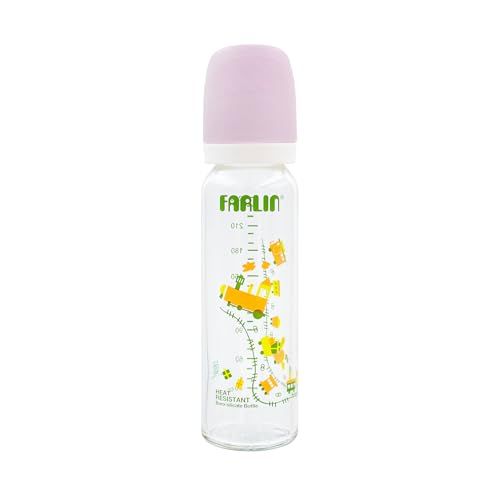
Farlin Anti-Colic Standard Feeding Bottle 240ml
- ✓ 240ml capacity, slow-flow nipple
- ✓ Vent-tube anti-colic system
- ✓ BPA-free polypropylene plastic
* We earn a small commission — at no extra cost to you.
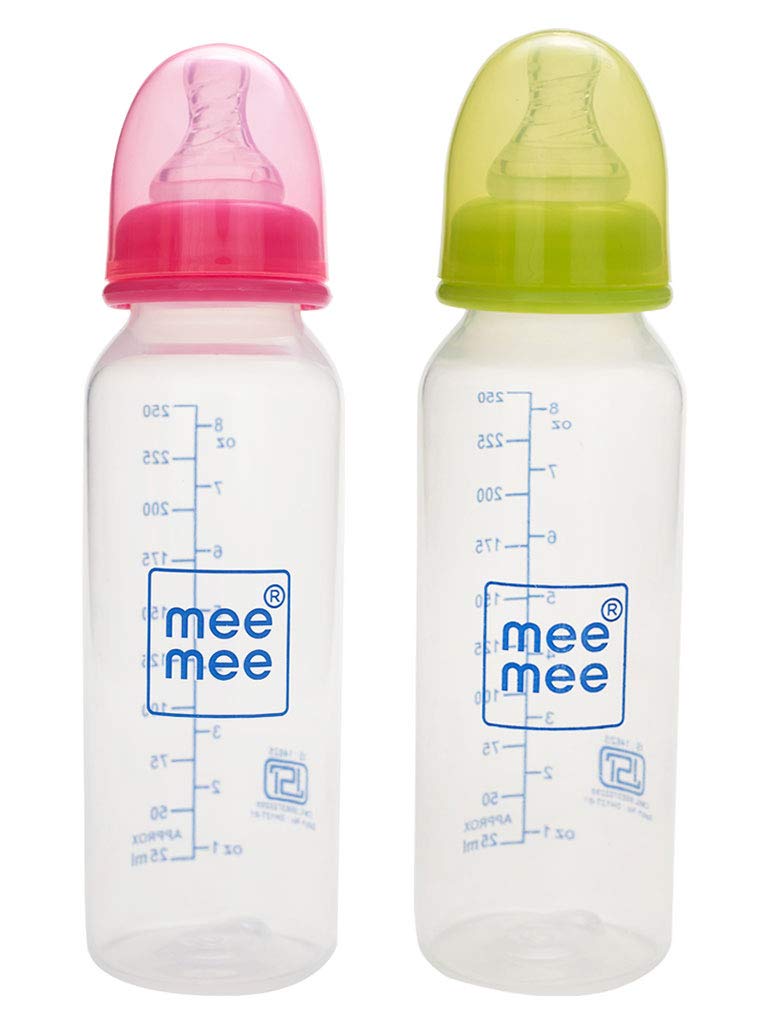
Mee Mee Premium Feeding Bottle with Vent Valve 240ml
- ✓ 240ml capacity, variable slow-to-medium flow
- ✓ Vent-valve system in bottle base
- ✓ BPA-free, Indian BIS-compliant plastic
* We earn a small commission — at no extra cost to you.
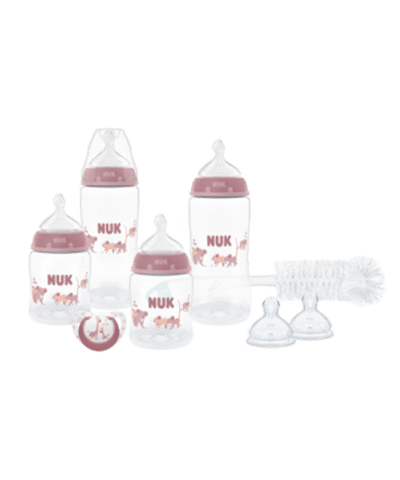
NUK First Choice Feeding Bottle with Vent Air System 240ml
- ✓ 240ml capacity, anatomical slow-flow silicone nipple
- ✓ Air-vent channel built into nipple design, mimics breast
- ✓ BPA-free, European CE-certified plastic
* We earn a small commission — at no extra cost to you.