
Farlin vs Comotomo Baby Bottles: Which Nipple Do Breastfed Babies Accept?
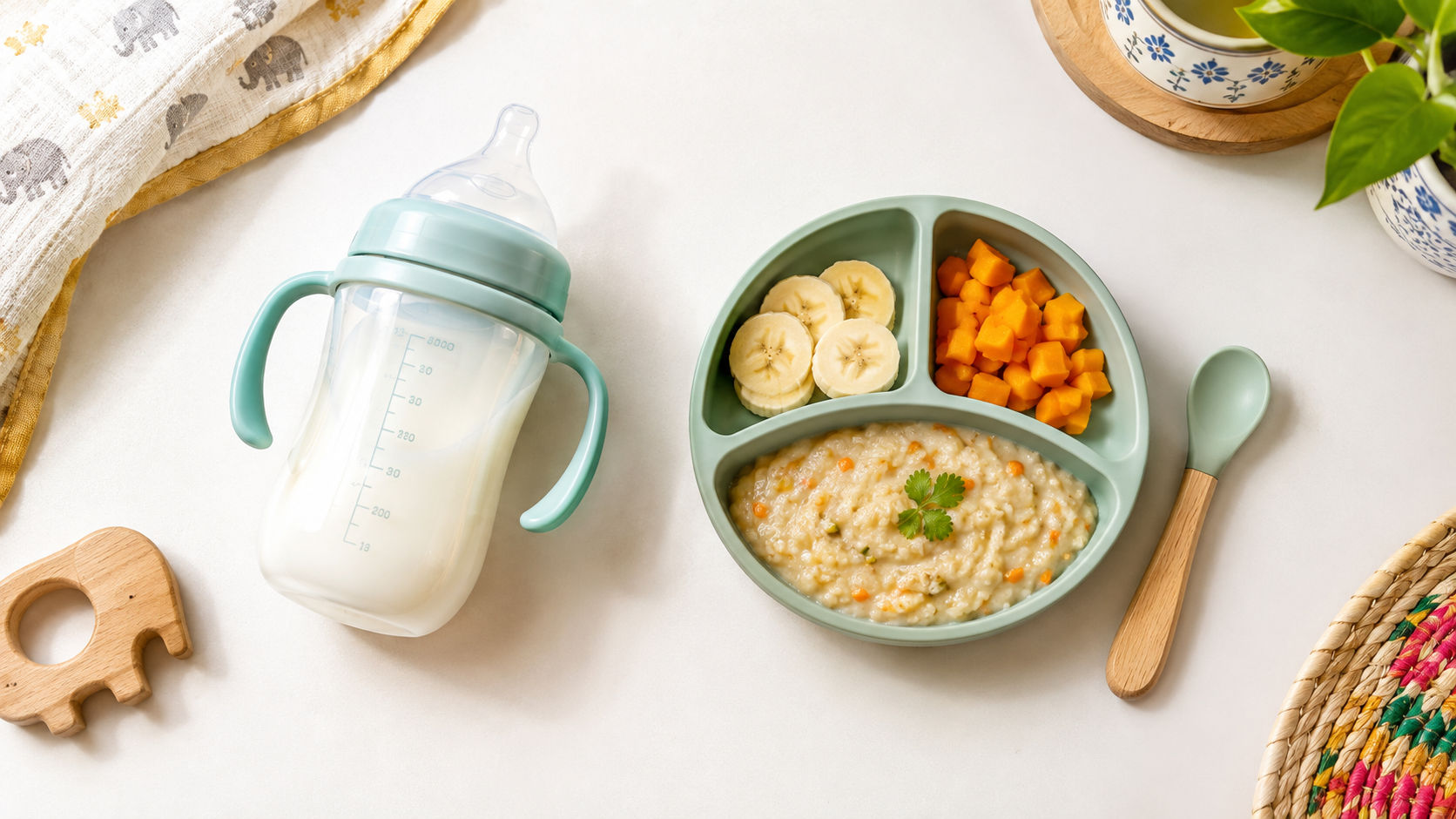
Farlin silicone bottles (₹320 for 3-pack) suit breastfed babies 6+ months who are already eating solids; Comotomo wide-neck (₹850 each) works better for 3–5 month exclusive breastfeeders because the nipple mimics breast shape more closely. In hard water, Farlin bottles clean easier and leave less residue.
Switching a breastfed baby to a bottle ranks high on every parent's stress list. You want a nipple that feels familiar, doesn't cause confusion, and doesn't trigger colic or rejection. Bottle-feeding: giving expressed milk or formula from a bottle instead of direct breastfeeding. Nipple confusion: when a breastfed baby struggles to latch on the breast after using a bottle with a different nipple shape or flow. The choice between Farlin and Comotomo matters because they're priced worlds apart (Farlin ₹320/3, Comotomo ₹850 each) and feel completely different in a baby's mouth.
Two popular bottle options for Indian parents are Farlin silicone bottles and Comotomo wide-neck bottles. Below, we compare them head-to-head across the features that matter most to parents introducing bottles to breastfed babies.
| Feature | Farlin Silicone Bottle | Comotomo Wide-Neck Bottle | Best For |
|---|---|---|---|
| Price (typical) | ₹320 per 3-pack (₹107 each) | ₹850 per bottle | Budget-conscious families |
| Nipple Material | Silicone (firm, tapered) | Silicone (soft, breast-shaped) | Breast-mimicry seekers |
| Nipple Feel | Firmer, requires more suck effort | Softer, requires lighter suck | Babies 6+ months eating solids |
| Bottle Opening | Standard narrow neck | Wide neck (easier to fill & clean) | Parents in hard-water areas |
| Flow Rate | Medium (standard hole) | Medium–slow (depends on teat choice) | Paced feeding |
| Available on Amazon.in | Yes, multiple sellers | Yes, official & resellers | Both widely stocked |
| Recommended Age | 3+ months | 3+ months (especially 3–5 months) | Depends on baby stage |
Head-to-Head: Farlin vs Comotomo Baby Bottles
Nipple Softness and Breast Mimicry
Comotomo bottles are designed specifically to feel like a breast. The nipple is wider, flatter, and noticeably softer than Farlin's tapered, firmer silicone nipple. If your exclusively breastfed baby is 3–5 months old and you're introducing the first bottle, Comotomo's shape reduces the chance of latch rejection because it more closely mimics the breast shape your baby already knows. Farlin's firmer nipple requires the baby to work harder to draw milk, which can feel unfamiliar if they've only breastfed. However, by 6 months, when babies are eating solids and their suck reflex is stronger, this difference matters less.
Cleaning in Hard Water
Delhi, Bengaluru, and Mumbai tap water often leaves mineral deposits inside narrow-necked bottles. Comotomo's wide neck makes it far easier to reach inside with a bottle brush or cloth, and mineral buildup is visible and removable. Farlin's standard narrow neck traps mineral deposits at the base and inside the teat hole, requiring more aggressive scrubbing or soaking in vinegar. Parents in hard-water zones report that Comotomo bottles feel cleaner to the touch even after a quick rinse, while Farlin bottles sometimes need a separate soak cycle each week.
Flow Rate and Colic Risk
Both bottles offer medium flow rates suitable for breastfed babies. Comotomo allows paced feeding (baby controls the pace) because the soft nipple requires deliberate suck, not passive dripping. Farlin's slightly firmer nipple delivers milk faster if the baby sucks aggressively, which some parents report reduces colic incidents when the baby feeds too quickly. Neither bottle is marketed as anti-colic, but the flow difference means Farlin suits quick feeders, while Comotomo suits babies who need gentle, controlled pacing.
Price and Value Over Time
At ₹107 per bottle, Farlin is one-eighth the price of Comotomo. If you need 4–5 bottles for a work-returning parent, Farlin costs ₹430–₹535 for a full set, while Comotomo costs ₹3,400–₹4,250. This gap matters. However, Comotomo bottles last longer—the nipple resists wear better—so some parents buy 2–3 Comotomo bottles and supplement with Farlin bottles for backup, balancing cost and longevity.
Which Bottle for Which Age and Scenario?
Choose Comotomo if: Your baby is 3–5 months, exclusively breastfed, and you want the strongest chance of bottle acceptance without latch confusion. You live in a hard-water area and prefer easier cleaning. You can absorb the ₹850 price per bottle and plan to use the same bottles for 12+ months.
Choose Farlin if: Your baby is 6+ months and already eating solids or semi-solid foods. Nipple shape matters less now because their suck is mature and variable. You need 4–5 bottles on a budget (₹320/3-pack is unbeatable). You're buying backup bottles for day care or grandparents' homes.
What IAP and WHO Guidance Says
The Indian Academy of Pediatrics recommends exclusive breastfeeding until 6 months. If bottle-feeding is introduced before 6 months (e.g., due to maternal work return), a bottle with a nipple that mimics breast anatomy reduces nipple confusion risk. From 6 months onward, when complementary feeding begins, the choice of bottle nipple becomes less critical to breastfeeding success.
Common Concerns About These Bottles
Are These Bottles BPA-Free?
Both Farlin and Comotomo bottles sold on Amazon.in are listed as BPA-free silicone. Always check the product label on Amazon before purchase, as formulation can vary by batch. Silicone itself is not known to leach hormone-disrupting chemicals like BPA, though some parents prefer glass or stainless-steel bottles for extra peace of mind.
Do These Bottles Cause Colic?
Neither bottle is marketed as anti-colic. Colic risk depends more on feeding pace (fast feeding increases gas) and baby's individual sensitivity. Comotomo's slow-flow design suits paced feeding better, while Farlin's medium flow suits babies who feed faster naturally. If your baby has colic, experiment with one bottle type for 3–5 days before switching, because many colic cases resolve naturally by 3–4 months regardless of bottle type.
When to See a Doctor
If your baby refuses all bottles despite trying multiple nipple shapes over 2 weeks, or shows signs of tongue tie (difficulty latching on bottle or breast), consult a lactation consultant or pediatrician. If bottle-feeding causes excessive gas, vomiting, or rash around the mouth, stop that bottle and try a different material (switch from silicone to latex or glass). This is general information, not medical advice.
Our Top Picks

Farlin Wide Neck Silicone Baby Bottle 240ml (Pack of 3)
- ✓ Silicone nipple, tapered shape
- ✓ 240ml capacity per bottle
- ✓ Standard-width neck
* We earn a small commission — at no extra cost to you.

Comotomo Baby Bottle Single Pack 250ml (Silicone)
- ✓ Soft, breast-shaped silicone nipple
- ✓ 250ml capacity
- ✓ Wide-neck opening
* We earn a small commission — at no extra cost to you.