
5 Creativity Activities for 2-3 Year Olds at Home (Open-Ended Art, No Setup)
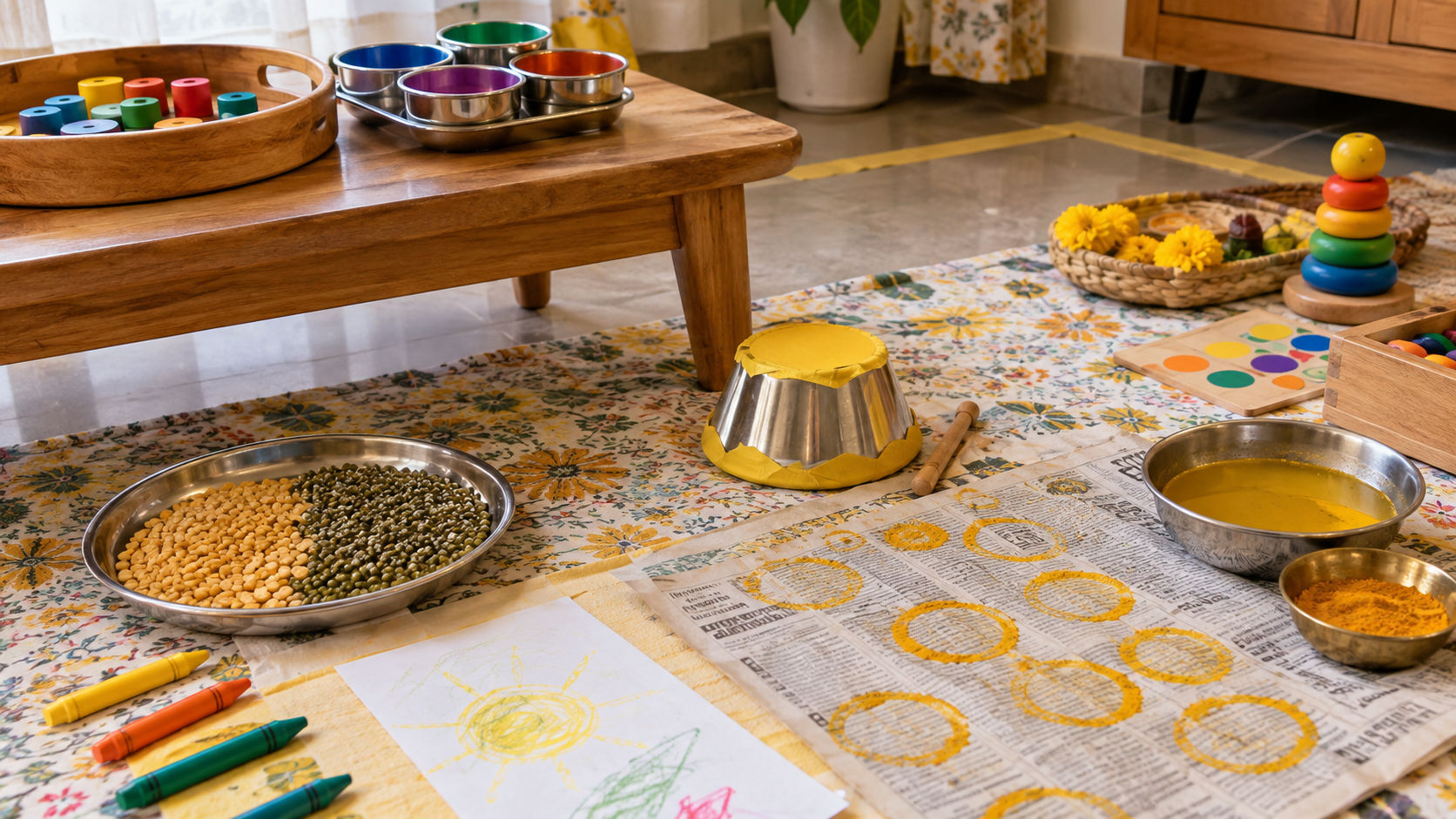
The best creativity activities for 2-3 year olds are open-ended, process-focused art tasks using household items: water painting on walls, newspaper tearing for collage, finger painting with besan paste, cotton-swab dabbing, and free scribbling on cardboard. None require templates, mess-cleaning skills, or expensive supplies—and all build fine motor control and self-expression.
Around 24 months, something shifts. Your toddler stops mouthing objects and starts meaning something with their hands. A mark becomes intentional. A scribble becomes a story, at least in their mind. This is the age when creativity activities for 2-3 year olds become less about sensory exploration and more about mark-making and symbol-making—the foundation of writing, drawing, and thinking itself.
The trap most parents fall into is buying a "toddler art set" or pulling out colouring books with dotted lines to trace. Wrong move. At this age, your child doesn't need more toys. They need permission to make a mess, materials that won't hurt if they eat them (because they will), and an adult who watches without correcting. That's it.
This guide covers five creativity activities for 2-3 year olds that work in any Indian home—no craft store, no YouTube tutorial, no Pinterest pressure. Just water, paper, paint from your kitchen, and a dupatta.
What's Happening at This Age
Between 24 and 36 months, your toddler's brain is wired to move from doing (sensory play) to representing (symbolic play). The National Education Policy 2020 (NEP 2020) emphasises the Foundational Stage (3–8 years) as the critical window for self-expression through art, music, and movement—and that window begins at 24 months.
Physically, their grip is tightening. At 24 months, most toddlers can hold a crayon with fingers (not a fist). By 30 months, they can scribble vertically and horizontally. By 36 months, some attempt circular scribbles and even simple lines. But speed doesn't matter here—the intention does.
What matters more: they're learning that they can make something, change something, create something. That's power. That's confidence. That's the seed of all future learning.
Try This at Home
Water Painting on Walls (or Paper)
You need: A paintbrush (old toothbrush works), a steel katori or bowl of plain water, and a wall or large cardboard.
How: Dip the brush in water and let your child "paint" the wall or cardboard. Watch the dark patch appear, then fade as it dries. Repeat for 15 minutes. That's it.
What it builds: Cause-and-effect reasoning ("I made the wall wet"), brush control, arm and wrist strength, and the joy of making a visible change with no permanent mess.
Easier: Use a larger wall or cardboard—less precision needed. Harder: Introduce two bowls (water and diluted turmeric water for colour), or let them paint a dry sheet and watch the water darken the paper.
Newspaper Tearing for Collage
You need: Old newspapers, magazines, or old cloth scraps; a shallow bowl of diluted starch paste or just water; a large sheet of paper or cardboard.
How: Tear or crumple newspaper into small pieces. Let your child stick them onto paper with paste (or water, which works fine on cardboard). No pattern needed. Cover the whole sheet or leave it sparse—both are "done."
What it builds: Hand strength (tearing), understanding of texture, and freedom to fill space without rules. The process of destruction (tearing) followed by creation (sticking) is deeply satisfying at this age.
Easier: Pre-tear the paper into strips; they just stick. Harder: Offer two different papers (smooth, textured) and let them choose where each goes.
Finger Painting with Besan-Water Paste
You need: Besan (chickpea flour) from your kitchen, water, and turmeric or food colouring (optional), a large sheet of paper or cardboard, and old clothes.
How: Mix besan with water to make a thick paste. If you like, add a pinch of turmeric for pale yellow, or a drop of food colouring. Let your child dip their fingers (or whole hand) and press onto paper. Swirl, dot, drag—no instructions. Let them lead.
What it builds: Sensory feedback (the paste is cool and gritty), full-hand control, and the confidence that their body is the tool, not a brush or crayon.
Easier: Just water on paper—less mess, same effect. Harder: Introduce two or three paste colours and let them mix them on the paper.
Cotton-Swab Dabbing with Natural Dyes
You need: Cotton buds (ear sticks), diluted turmeric water or juice from boiled spinach leaves in small bowls, and white or light paper.
How: Dip the swab in coloured water and let your child dab it onto paper. The dabbing motion is different from dragging or swirling—it teaches precision without pressure. They can cover the sheet or make a few marks. Both are complete.
What it builds: Precision in finger control, the understanding that different tools make different marks, and colour awareness (though naming colours is not the goal yet).
Easier: Just plain water on dark paper—watch the patch appear. Harder: Offer two colours side-by-side and let them notice the difference.
Free Scribbling on Cardboard Boxes
You need: Old dry-erase pens, ballpoint pens, or pencils (check they still work); cardboard boxes, cereal boxes, or old packaging; a flat surface.
How: Tape down a sheet of cardboard or a flattened box on the floor or table. Hand over the pen. Let them scribble. Vertical, horizontal, circular, scratchy—all are correct. Do not say "what is it?" If they tell you, listen. If not, that's okay too.
What it builds: Mark control, arm strength, the freedom to make without meaning, and the understanding that intentional marks are theirs.
Easier: Use a chunky pen or old crayon that's easier to grip. Harder: Offer multiple colours and let them choose or switch.
What 'Getting It' Looks Like
You'll know your child is developing creativity skills when they start choosing. They pick up the paintbrush. They decide to tear the paper. They dab instead of drag. They reach for a colour. Around 30 months, some toddlers begin naming what they've made: "Dada!" or "Moon!"—even if it looks nothing like either. That's symbolic thinking. That's the real milestone. Not neatness, not recognizable shapes, but intention and naming.
When to Move On, and When to Ask
By 36 months, most toddlers can hold a crayon with thumb and fingers (not a fist), make circular scribbles intentionally, and point to marks they've made with pride. If your child shows little interest in mark-making by 32-34 months, or if they can't hold a crayon by 36 months, chat with your paediatrician—not because something is "wrong," but because they might benefit from a little extra fine-motor play or screening. Most children catch up quickly once they realise they can make something happen.
If You're Homeschooling
Weave one creativity activity into your morning routine 3–4 times a week, not daily. Monday water painting, Wednesday newspaper tearing, Friday finger painting. Each session is 10–15 minutes. The consistency matters more than the duration. Keep a folder of their work (even the scribbles)—in six months, you'll see the shift from random marks to intentional lines. That progression is the curriculum.
What Helps at Home (Optional)
Every activity above works with zero purchases. But if your home setup is tight or you want to reduce daily mess prep, a few simple items can help. Washable crayons (chunky, easy to grip), finger-paint sets designed for toddlers, a large drawing pad, and child-safe scissors for more advanced hand strength are all optional—nice to have, never necessary.
What Paediatricians Say
- The Indian Academy of Pediatrics (IAP) recognises fine-motor development through art as foundational for later writing and self-regulation. Open-ended creative play reduces screen time and builds confidence.
- According to WHO guidelines on early childhood development, toddlers aged 2–3 years need at least 60 minutes of structured play daily—and art activities count fully toward this target.
Our Top Picks

Cra-Z-Art Timeless Creations Washable Crayons, 24 Count
- ✓ Why it fits: Chunky barrel grip perfect for 2-3 year olds learning intentional mark-making; completely washable from walls, skin, and fabric after water-painting activities
- ✓ Non-toxic and BIS certified for toddler safety
- ✓ Smooth application with bright, vibrant colours for free scribbling on cardboard and paper
* We earn a small commission — at no extra cost to you.

Faber-Castell Chubbie Chunky Crayons, 12 Count (for ages 2+)
- ✓ Why it fits: Oversized triangular barrel designed for toddler hand grip development; ideal for intentional scribbling activities on cardboard boxes and large drawing pads
- ✓ Break-resistant and non-toxic with safety certification
- ✓ Rich, vibrant colours encourage colour-choice decision-making during free-play art sessions
* We earn a small commission — at no extra cost to you.

Giggles Finger Painting Water Based Paint, 6 Colours (washable, toddler-safe)
- ✓ Why it fits: Thick, creamy formula perfect for besan paste alternative; washable from skin, clothing, and surfaces after finger-painting sessions and dabbing activities
- ✓ Odour-free and phthalate-free—safe for toddlers who may taste it during exploration
- ✓ Six vibrant colours encourage open-ended sensory mixing during collage and hand-painting activities
* We earn a small commission — at no extra cost to you.

Epigamia Natural White A3 Drawing Pad, 50 Sheets (for ages 2+)
- ✓ Why it fits: Large A3 format provides ample space for free scribbling, water painting, and newspaper-collage projects without constraining toddler hand movement
- ✓ Thick, absorbent paper holds water-painting without buckling; ideal for paste and finger-painting activities
- ✓ Acid-free and eco-friendly—safe for toddler use and easy to store artwork for developmental tracking
* We earn a small commission — at no extra cost to you.