
How to Clean Silicone Baby Bottles: Hand-Wash, Steam & Boiling Guide for 2026

Hand-wash silicone bottles in warm soapy water with a bottle brush, rinse thoroughly, then air-dry or sterilise by boiling (5–10 minutes), steam sterilising (8–12 minutes) or microwave (follow steriliser instructions). Sterilise daily for babies under 6 months; twice weekly after 6 months unless the bottle touches soil or contaminated surfaces. Keep water temperature below 70°C to protect silicone integrity.
Silicone baby bottles are soft, squeezable, durable and free from BPA and phthalates—but they need careful cleaning to avoid harbouring bacteria and to prevent heat damage. Unlike glass or plastic, silicone can warp or crack if exposed to very hot water repeatedly, so knowing the right method matters. This guide walks you through every cleaning and sterilising technique, how often to do it by your baby's age, and how to tackle stubborn hard water stains—all with products you can find on Amazon.in.
Top silicone bottles for this process include Comotomo (soft, squeezable, ₹890), NUK Nature Sense (ergonomic, slow-flow, ₹750), plus a dedicated silicone bottle brush (₹120) and electric steriliser (₹1800) to make the routine faster.
How to Clean Silicone Baby Bottles: 4 Methods
Here's your step-by-step cleaning checklist for each method, tailored to silicone's unique needs.
- Hand-Washing (Daily, After Every Feed)
- Empty any leftover milk or formula immediately after feeding.
- Rinse the bottle, teat and cap under warm running water.
- Fill the bottle halfway with warm water and add a few drops of liquid dish soap.
- Use a silicone-friendly bottle brush (soft bristles, not abrasive) to scrub inside, paying attention to the neck and base where milk residue settles.
- Brush the teat gently from outside and inside; teats get blocked by dried milk, which bacteria love.
- Rinse all parts thoroughly under running water until no soap bubbles remain.
- Shake off excess water and place upright on a clean, lint-free cloth or drying rack to air-dry.
Why this matters: Hand-washing removes visible milk, formula and bacteria buildup. Silicone absorbs odours and stains easily, so daily hand-washing with a proper brush prevents discolouration and keeps the bottle smelling fresh.
- Boiling (Weekly Sterilisation)
- Fill a large pot with water and bring to a rolling boil.
- Place cleaned bottles, teats and caps in the boiling water—ensure they are fully submerged.
- Boil for 5–10 minutes (follow your bottle's care label; some brands recommend 5, others 10).
- Remove with sterilised tongs and place on a clean cloth or sterilised rack to cool.
- Do not boil silicone above 100°C or for longer than 10 minutes, as prolonged high heat can weaken the material.
Why this matters: Boiling kills bacteria and viruses without chemicals. It's reliable and free, but requires careful handling to avoid burns. Water temperature at boiling point (100°C) is safe for silicone for short durations.
- Steam Sterilising (Fastest Method for Multiple Bottles)
- Place cleaned bottles, teats and caps into your steam steriliser (electric models like those under ₹1800 on Amazon.in hold 4–8 bottles).
- Fill the water reservoir as per the steriliser manual.
- Close the lid and press start. Most steam sterilisers run for 8–12 minutes.
- Allow bottles to cool inside the steriliser for 5 minutes before opening—steam is very hot and can cause scalding.
- Remove bottles with tongs and place on a drying rack.
- Store sterilised bottles in a clean cupboard if used within a few hours, or re-sterilise if they sit longer than 24 hours.
Why this matters: Steam sterilisers are faster than boiling and can handle many bottles at once. They're ideal for busy parents and are gentler on silicone than prolonged boiling because the cycle is precise and controlled.
- Microwave Sterilising (For Microwave-Safe Bottles Only)
- Check your bottle's label—not all silicone bottles are microwave-safe. If they are, place cleaned bottles and teats upright (not stacked) in a microwave-safe container filled with 100 ml of water.
- Microwave on high for 5–8 minutes (timing depends on your microwave wattage and bottle size—follow the bottle maker's instructions if provided).
- Let steam escape carefully by opening the container slightly; do not remove the lid suddenly.
- Remove bottles with tongs after cooling for 2–3 minutes.
- Do not leave sterilised bottles in the microwave for more than 1 hour, as they will lose sterility.
Why this matters: Microwave sterilising is quick and uses no extra equipment, but it only works for microwave-safe silicone and requires careful attention to avoid overheating, which can damage the bottle or cause burns.
Sterilising Schedule: How Often by Your Baby's Age
0–6 Months (Newborn & Early Infancy): Sterilise all bottles, teats and caps after every wash. Your baby's immune system is developing, so bacteria and viruses pose a higher risk. Use one of the four methods above daily—most parents combine hand-washing with either boiling or steam sterilising in the evening, then re-sterilise morning bottles before use.
6–12 Months (Weaning & Building Immunity): Sterilise at least twice weekly, or once weekly if your water supply is treated and bottles are kept in a clean cupboard. By 6 months, most babies have stronger immunity, and rigorous sterilisation becomes less critical—but if a bottle drops on the floor or is contaminated, re-sterilise before use.
After 12 Months: Daily hand-washing in hot water is usually enough; sterilisation can drop to once a week or as needed. Always check with your paediatrician if your baby has diarrhoea, a fever or has been unwell—temporary daily sterilisation helps during recovery.
How to Remove Hard Water Stains & Cloudiness
Silicone and teats often develop white, cloudy or stubborn stains from hard water minerals (calcium and magnesium salts). These are harmless but unattractive and can make bottles look grimy. Here's how to remove them:
- White Vinegar Soak: Fill a clean bowl with equal parts white vinegar and water. Place bottles and teats in the solution for 30 minutes to 1 hour. Scrub gently with a soft brush and rinse thoroughly with fresh water. Vinegar's acidity dissolves mineral deposits.
- Lemon Juice (Indian Alternative): Squeeze fresh lemon juice into water (same ratio as vinegar) and soak bottles for 20–30 minutes. Rinse well—your bottles will smell fresher than vinegar-soaked ones.
- Boiling with Vinegar: For stubborn stains, fill your pot with water, add 2–3 tablespoons of white vinegar, bring to a boil, place bottles inside for 5–7 minutes, then cool and scrub. Repeat if needed.
- Avoid Abrasive Scrubbing: Do not use scouring pads or rough brushes, as these can scratch silicone and create crevices where bacteria hide.
Heat Limits & Safety for Silicone Bottles
Silicone is heat-resistant but not indestructible. Most baby silicone bottles are rated safe up to 70°C (160°F) for storage and feeding, and up to 100°C (212°F) for sterilisation—but only for short periods (5–10 minutes during boiling). Check your bottle's label for exact limits.
- Do not use boiling water hotter than 100°C or for longer than 10 minutes.
- Do not store hot liquid in silicone bottles for extended periods—let milk or formula cool slightly before pouring.
- Do not leave sterilised bottles in a steam steriliser or on a heated surface for hours, as repeated high heat weakens the silicone over time.
What IAP and WHO Guidance Says
- IAP (Indian Academy of Pediatrics): Exclusive bottle-feeding requires sterilisation of all bottles and teats daily for babies under 6 months, then twice weekly until 12 months, or more frequently if the bottle is contaminated.
- WHO: Safe water and sterilisation are critical in the first 6 months; after 6 months, clean, boiled water and careful hand hygiene reduce the need for daily sterilisation in resource-secure settings.
When to Replace Silicone Bottles & Teats
Inspect bottles and teats regularly for signs of wear: discolouration that won't wash out, small cracks, a sticky or tacky feel, or mould inside the teat (visible as black spots). Replace teats every 3–4 months or sooner if damaged; replace bottles once every 12–18 months or if they lose their shape, develop cracks or smell unpleasant even after cleaning. Comotomo bottles typically last 18+ months with proper care; NUK Nature Sense teats should be swapped every 3–4 months depending on use.
Our Top Picks
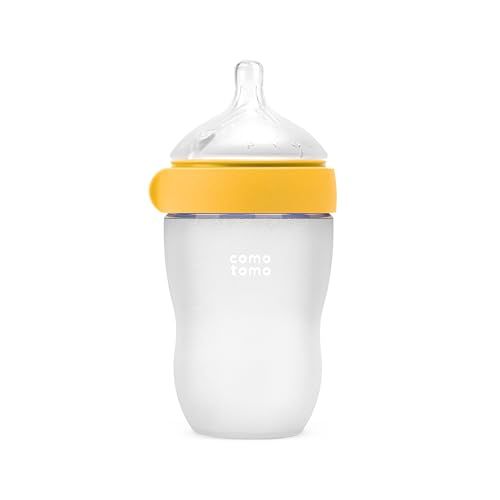
Comotomo Silicone Baby Bottle
- ✓ Soft, squeezable silicone
- ✓ 250 ml & 150 ml sizes
- ✓ BPA-free, phthalate-free
* We earn a small commission — at no extra cost to you.

NUK Nature Sense Silicone Baby Bottle
- ✓ Ergonomic, easy-grip shape
- ✓ Anti-colic slow-flow teat
- ✓ 240 ml capacity
* We earn a small commission — at no extra cost to you.

Silicone Baby Bottle Cleaning Brush
- ✓ Soft synthetic bristles
- ✓ Long handle for easy reach
- ✓ Also cleans teats and bottle necks
* We earn a small commission — at no extra cost to you.

Electric Bottle Steriliser
- ✓ Holds 4-8 bottles depending on size
- ✓ 8-12 minute sterilisation cycle
- ✓ Auto shut-off after cycle complete
* We earn a small commission — at no extra cost to you.