
Best Toys for 30-Month-Old Toddlers: Language Development & Pretend Play Guide 2026
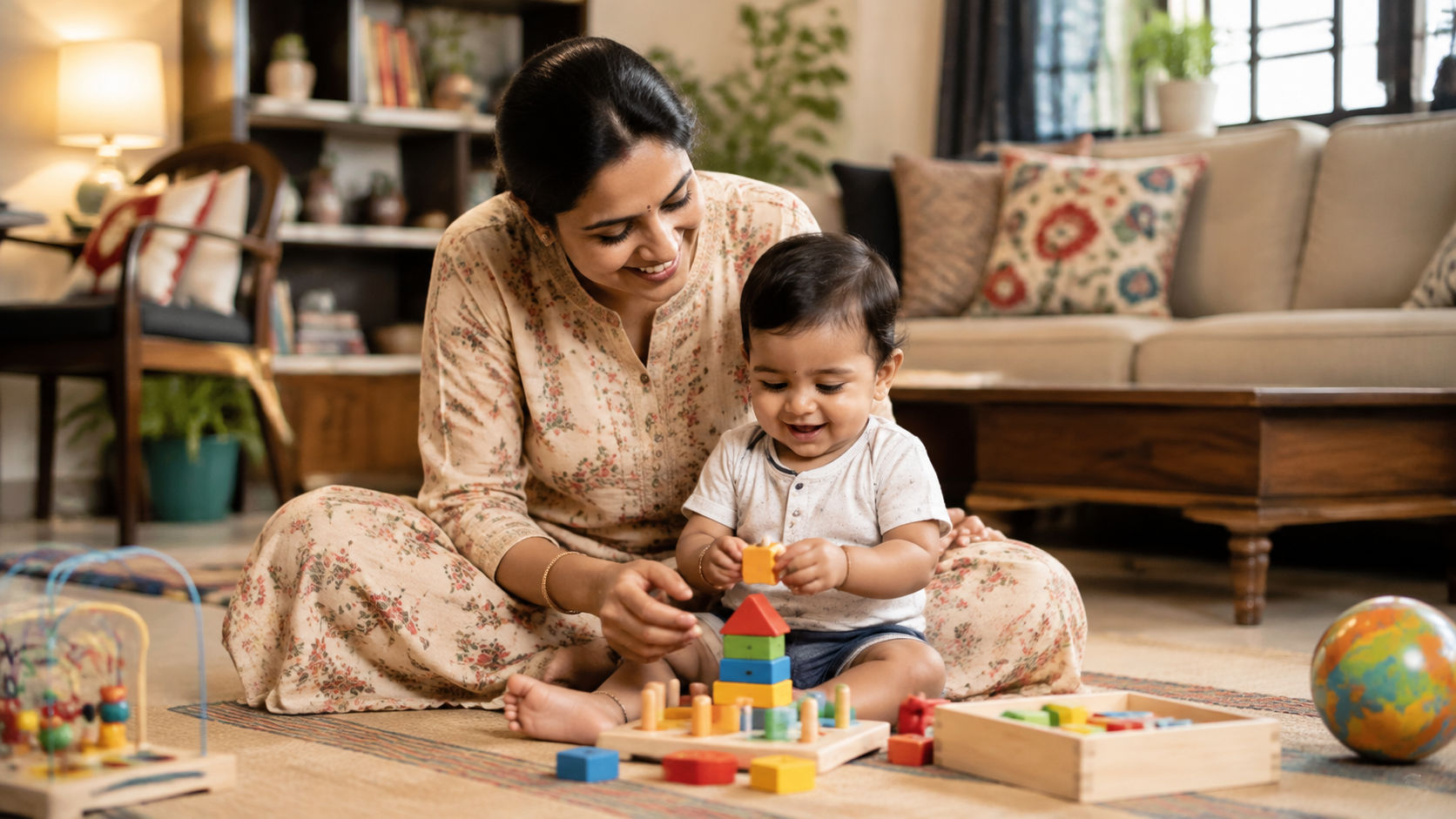
At 30 months, toddlers are in the vocabulary explosion phase—the best toys for this age combine pretend play, picture books, and interactive props. Pretend-play kitchens (FunBlast, Rs. 699), doctor kits (Toyshine, Rs. 449), animal figurines (Safari Ltd, Rs. 850), and bilingual Hindi-English flashcards (StonKraft, Rs. 245) all fuel speech development without screens. Choose toys that encourage naming, role-play, and joint attention with a parent—these are the golden tools for language growth.
Your 30-month-old is likely talking in short phrases now, asking 'why' repeatedly, and treating stuffed animals like real friends. This is the vocabulary explosion phase—somewhere between 18 and 36 months, children typically jump from 50 words to 500+ words. But not every toy helps this leap. Plastic light-up gadgets and passive viewers don't. The toys that actually work are the ones that let your child narrate a story: a kitchen where she serves you food, a doctor kit where he checks your pulse, a picture book where you both point and name things together.
This guide covers screen-free toys specifically chosen for the 30-month window, with real prices from Amazon.in, BIS safety standards, and honest advice for homes with multiple generations—because many Indian families live in joint households where noise and shared space matter.
The Checklist: What Your 30-Month-Old Actually Needs
- One pretend-play kitchen or food-set toy
Why this matters: Pretend play is where toddlers practice language. Every cup, plate, and spoon becomes a named object. A kitchen isn't a luxury—it's a speech-building tool. The repetition of 'cooking', 'eating', 'hot', 'yummy' happens naturally when the play is self-directed. - A role-play kit (doctor, shopkeeper, or similar)
Why this matters: Role-play forces your child to use language functionally—'Where does it hurt?', 'Open your mouth', 'Take medicine.' These aren't random words; they're language tied to social interaction, which sticks faster. - Picture books with 2-3 word captions or simple sentences
Why this matters: At 30 months, board books with 1-2 words per page feel too babyish. But dense chapter books are overwhelming. The sweet spot is picture-heavy books where you can point and say 'cat sits' or 'baby sleeps.' This builds grammatical understanding, not just vocabulary. - Bilingual flashcards (Hindi-English, if your home is bilingual)
Why this matters: Many Indian homes code-switch—kids hear Hindi from grandparents, English from parents or preschools. Bilingual flashcards normalize this without forcing him to 'choose' a language. Research shows bilingual toddlers often have slower vocabulary in each language individually, but equal or superior total vocabulary. Flashcards speed the process for both languages together. - Animal or character figurines (not dolls yet)
Why this matters: Small figurines (1-4 inches tall) are easier for toddler hands to manipulate than large dolls. They spark imaginative play—'Lion roars', 'Elephant trumpets'—where sounds and words merge. This phase bridges pure sound-play and narrative play. - A toy that produces cause-and-effect with words (not electronic beeping)
Why this matters: Pop-up books, shape-sorters with labeled shapes, or a toy xylophone where you tap and hear the note—these teach that actions produce language-rich responses. Avoid toys that beep random sounds; they teach noise, not language.
Top Products for 30-Month-Old Language & Play Development
FunBlast Pretend Play Kitchen Set (Rs. 699) is the entry-level champion for Indian homes. It fits in a corner, doesn't require assembly beyond clicking pieces together, and includes basic cookware. It's not a massive wooden play kitchen (which can cost Rs. 8,000–15,000), but it does the job: your toddler plays 'cook,' you narrate and extend the play. Over 2,000 Amazon.in reviews give it 4.1 stars—parents note that durability is okay for 2-3 years of daily use.
Toyshine Doctor Kit (Rs. 449) includes a stethoscope, thermometer, syringe, and small bottles. The advantage: each piece is independently named and used in sequence. 'Listen to your heart', 'Take temperature', 'Drink medicine'—language flows naturally. This is ideal for toddlers who watch adults and want to imitate professional behavior. Around 1,800 reviews on Amazon.in, 4.0 stars. Parents in Delhi and Mumbai report it's sturdy enough for rougher play.
Safari Ltd Wild Animals Figurine Set (Rs. 850 for a multi-pack) offers realistic but safe animal models—no small choking parts because these are typically 2-4 inches. The benefit: each animal has distinctive sounds and movements your child will naturally mimic and name. A lion 'roars', an elephant 'trumpets', a duck 'quacks.' This bridges the sound-play phase with genuine vocabulary.
BPI Picture Books for 30-Month-Olds (Rs. 199–349 per book) are Indian-published board books with bright illustrations and minimal text—often just 1-3 words per page in both Hindi and English. Titles like 'Mera Ghar' (My Home) or 'Mere Dost' (My Friends) use repetition and cultural familiarity. They're designed for exactly this age and the joint-family setup where grandparents read too.
StonKraft Bilingual Hindi-English Flashcards (Rs. 245 for a 50-card pack) use the Montessori approach: picture on one side, word in both languages on the back. No audio, no batteries. Parents in Bengaluru, Pune, and Jaipur report these work well for homes where grandparents speak Hindi and parents speak English. The cards are thick cardboard, not flimsy paper.
What Paediatricians Say About Language Play at 30 Months
What Paediatricians Say
The Indian Academy of Pediatrics (IAP) emphasizes that pretend play and joint attention—where parent and child focus on the same toy together—are the strongest drivers of vocabulary growth from 18-36 months. Screen-free interactive play produces faster language gains than educational apps. At 30 months specifically, toddlers should be combining 2-4 words ('Mama cook food', 'Where baby go?'), following 2-step instructions, and using language to request, not just repeat.
- Joint attention beats solo play: Toys where a parent and child play together—kitchen, doctor kit, picture books—activate language areas in both of you, creating stronger memory traces.
- Bilingual exposure ≠ delay: Children in bilingual homes may have smaller vocabulary in each language at 30 months, but IAP data shows they catch up by age 4 and develop cognitive advantages in executive function.
Noise & Joint-Family Considerations
Many Indian homes have grandparents, aunts, or multiple children. Pretend-play kitchens and doctor kits involve sound—pots clinking, your child narrating, you responding. If noise is a real constraint (thin walls, shared apartments), consider noise-reducing strategies: play in the afternoon when neighbors are less sensitive, use foam mats to dampen sound, and choose toys over musical instruments. Picture books and figurines are naturally quieter alternatives if your flat is noise-sensitive.
BIS Safety Standard: All toys sold on Amazon.in for children under 36 months should carry a BIS (Bureau of Indian Standards) mark or be CE-certified if imported. Check the product description; reputable sellers list this. FunBlast, Toyshine, Safari Ltd, and StonKraft all meet these standards. Avoid unbranded kitchen or doctor kits from sellers with no reviews or warranty.
The vocabulary explosion phase is real and brief. At 30 months, your child is primed to absorb language at an almost impossible rate—but only if toys give her something to name, narrate, and share with you. Choose toys that invite dialogue, not passive consumption, and you'll see language bloom in the next 6 months.
Our Top Picks
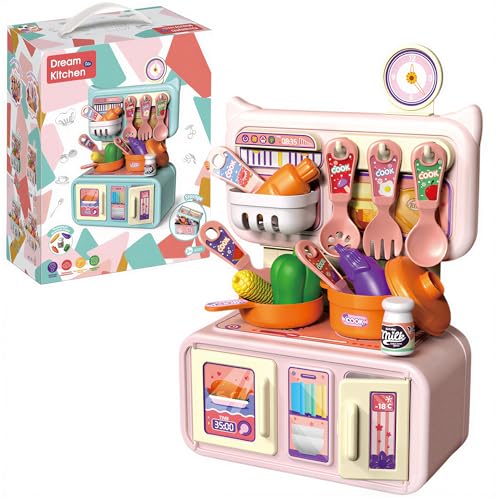
FunBlast Pretend Play Kitchen Set with Accessories
- ✓ Compact design fits small spaces
- ✓ Includes cookware, utensils, play food pieces
- ✓ Bright colored plastic, lightweight assembly
* We earn a small commission — at no extra cost to you.
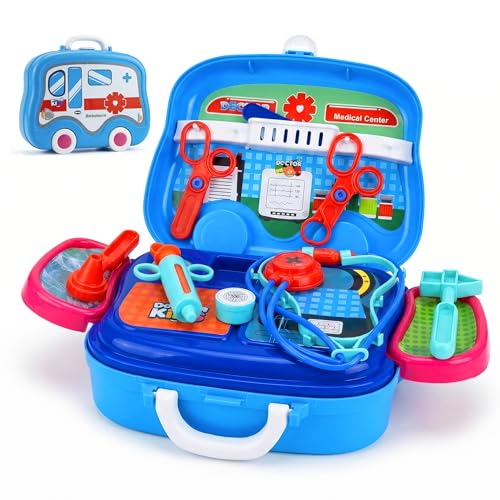
Toyshine Doctor Kit Medical Play Set
- ✓ Includes stethoscope, thermometer, syringe, medicine bottles
- ✓ Safe for 24+ months (no small loose parts)
- ✓ Fits in backpack for portable play
* We earn a small commission — at no extra cost to you.
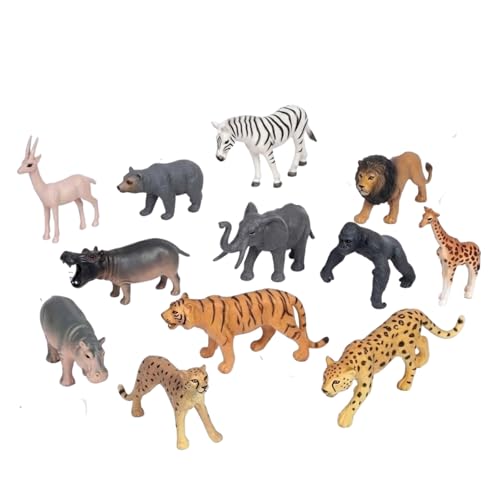
Safari Ltd Wild Animals Figurine Set (12-piece)
- ✓ Realistic animal designs (lion, elephant, giraffe, zebra, etc.)
- ✓ 2-4 inches per figurine, safe for toddler hands
- ✓ Non-toxic plastic, no small choking parts
* We earn a small commission — at no extra cost to you.
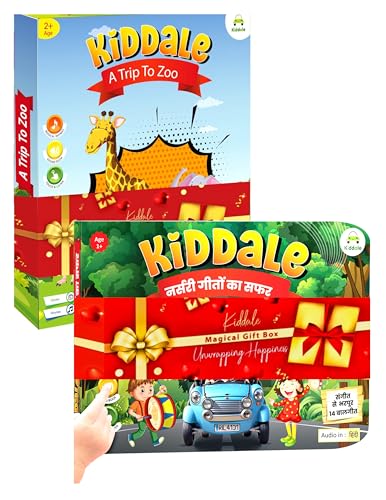
BPI Picture Books for Toddlers (Hindi-English, Pack of 2)
- ✓ Bilingual Hindi and English text
- ✓ Board book format, durable for teething phase
- ✓ Simple 1-3 word captions per page
* We earn a small commission — at no extra cost to you.
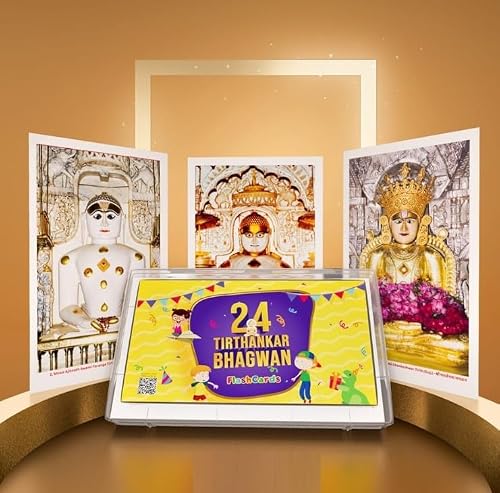
StonKraft Bilingual Flashcards Hindi-English (50-card pack)
- ✓ 50 laminated cards, thick cardboard construction
- ✓ Picture on front, word in Hindi and English on back
- ✓ Montessori-based learning approach
* We earn a small commission — at no extra cost to you.