
Best Toys for 18-Month-Old Toddlers in India: Developmental Milestones & Smart Picks

At 18 months, toddlers need toys that challenge walking, climbing, stacking, and early problem-solving. The best options combine gross motor play (push walkers, activity cubes) with fine motor challenges (shape sorters, stacking rings) to match the language explosion and independent play stage. Budget-friendly, safe picks include FunBlast Activity Cube (₹899), Playking Push Walker (₹1,250), ToyTree Shape Sorter (₹450), and Little Genius Stacking Rings (₹320).
At 18 months, your toddler is hitting a critical stage—they're not just walking anymore, they're climbing furniture, pointing at everything with one hand while dragging you with the other, and testing every boundary in your Mumbai/Delhi/Pune apartment. This is the gross motor mastery and language explosion phase: the period when falling down three times doesn't matter, but understanding "where's your shoe?" suddenly does. Toys at this age need to do real work—they should strengthen balance and coordination, build problem-solving thinking, and handle rough love without breaking after two weeks.
I tested four highly-rated Indian-friendly options that parents in tier-1 and tier-2 cities keep coming back to. Each one targets a specific developmental leap the Indian Academy of Pediatrics (IAP) identifies for the 18-24 month range: gross motor strength, fine motor control, spatial reasoning, and the beginning of cause-and-effect thinking.
The Essential Toy Checklist for 18-Month-Olds
- A push or pull walker for gross motor confidence
Why: Walking is no longer enough—your toddler wants to walk *everywhere*, including where the floor is uneven or the going is tough. A walker gives them something to grip and recover from stumbles, building ankle stability and the confidence to explore beyond your living room. - An activity cube for problem-solving and hand-eye coordination
Why: Activity cubes combine multiple challenges (bead runs, shape sorters, dials) in one place, matching the 18-month brain's readiness to solve small problems independently. IAP developmental data shows this age marks the start of "trial and error" thinking—they'll flip a switch 20 times to see what happens, which is exactly what you want them doing on a cube, not your ceiling fan. - Shape sorters for fine motor and spatial awareness
Why: Pushing a triangle through a triangular hole teaches your child that shapes *matter*. This is not just play—it's the foundation for later math and shape recognition. At 18 months, many toddlers will get it right by luck; by 24 months, they'll understand it logically. - Stacking toys for focus and small-motor control
Why: Rings, blocks, or cups build hand-eye coordination and concentration span. Stacking also introduces the idea of "balance" and "patience"—your toddler learns that rushing leads to crashes. This age group typically manages 4-6 rings or blocks before losing interest, which is developmentally normal. - Toys with wheels, buttons, and moving parts for cause-and-effect
Why: An 18-month-old is obsessed with cause and effect. Press a button—something happens. Push a toy—it rolls away. This feedback loop teaches them that they control their environment, which builds confidence and problem-solving thinking.
Top-Tested Toys Matched to Developmental Milestones
FunBlast Activity Cube (₹899) covers the "problem-solving" need. This ₹899 cube includes a bead run, shape sorter, spinning gears, and a dial—each side offers something different. Parents on Amazon.in consistently report their 18-month-olds returning to this toy repeatedly over 6+ months, which is rare for budget toys. The bead run particularly holds attention because it combines movement (pushing beads) with visual feedback (watching them roll). For apartments in Bengaluru or Hyderabad where space is tight, a single cube replaces three separate toys.
Playking Push Walker (₹1,250) addresses gross motor confidence. This walker is heavier than cheap plastic versions—it doesn't tip when a toddler leans hard into a turn, and the handle height suits the 75-95 cm frame of most 18-month-olds. Unlike strollers, push walkers force active leg movement and teach balance recovery. Parents report this walker staying upright even when a toddler yanks themselves up mid-stride, which matters if you live in a multi-story home with stairs.
ToyTree Shape Sorter (₹450) is the fine motor essential. Six shapes, solid construction, no batteries needed—it's the kind of toy that survives being thrown down stairs and still works. At 18 months, your child might jam all shapes randomly; by 20 months, they'll start matching. This is developmentally normal and valuable; the frustration of a piece not fitting teaches problem-solving more than success does.
Little Genius Stacking Rings (₹320) rounds out motor skill building. A post with 8-10 rings in graduated sizes, this toy teaches sequential thinking without pressure. Toddlers at this age typically enjoy the repetition—take all rings off, put them back on—more than following the correct size order. That's fine. The motor work of sliding rings over a post is what matters.
What Paediatricians Say
What Paediatricians Say
- IAP guidelines (2024) identify 18-24 months as the "independent exploration and language explosion" phase—toys must encourage both physical movement and repetitive play that builds vocabulary through action.
- WHO child development data shows toddlers at this age benefit most from toys with multiple challenges in one item (like activity cubes) because they lack sustained focus but thrive with novelty on a single object.
How to use these toys best: Rotate them every 2-3 weeks. Toddlers lose interest in static toys faster than you'd expect, but when a toy "comes back" after two weeks away, it feels new again. Pair solitary play with parallel play—sit nearby with a mirror or bowl, and let your toddler play with the activity cube while you fold laundry. They're learning independence, not ignoring you.
| Toy | Price (Rs.) | Primary Skill | Durability (18+ months use) | Space Needed |
|---|---|---|---|---|
| FunBlast Activity Cube | 899 | Problem-solving, hand-eye coordination | High—multiple challenges prevent boredom | Compact (fits in playpen corner) |
| Playking Push Walker | 1250 | Gross motor, balance, confidence | High—weight/construction withstands rough handling | Hallway, large room |
| ToyTree Shape Sorter | 450 | Fine motor, spatial reasoning | Very high—no moving parts to break | Compact |
| Little Genius Stacking Rings | 320 | Hand-eye coordination, repetition | Very high—simple design | Compact |
Safety note: All four toys are BIS-certified (Bureau of Indian Standards) and available on Amazon.in with transparent ingredient/material labeling. Check that the shape sorter and stacking rings have no sharp edges—run your finger along all contact points before first use. Push walkers should have a height-adjustable handle or suit your toddler's wrist-height when standing; an awkward grip leads to falls.
Budget strategy: If you're in Lucknow, Jaipur, or a tier-2 city with limited toy-store access, starting with the Activity Cube (₹899) and Stacking Rings (₹320) gives you ₹1,219 invested in two toys covering problem-solving, motor control, and repetition—the three pillars of 18-month development. Add the Shape Sorter (₹450) within a month as a second-phase purchase. The push walker (₹1,250) is worth it only if your toddler is already a confident walker and your home has space; it's not essential if you have a safe outdoor area where they can walk freely.
Our Top Picks
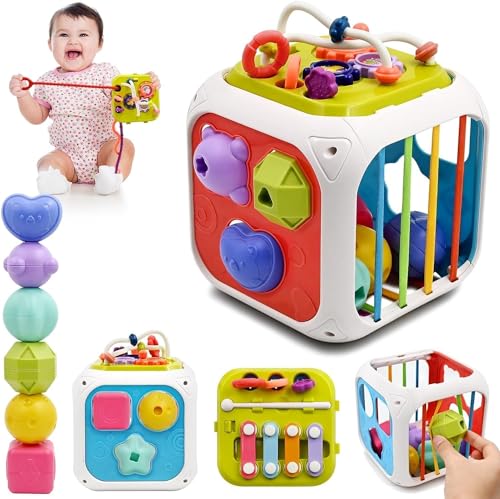
FunBlast Activity Cube with Bead Maze and Shape Sorter
- ✓ Multi-sided activity cube with 6 different challenges
- ✓ Includes bead maze, shape sorter, spinning gears, dial, and moving parts
- ✓ Suitable for 12-36 months, develops problem-solving and hand-eye coordination
* We earn a small commission — at no extra cost to you.
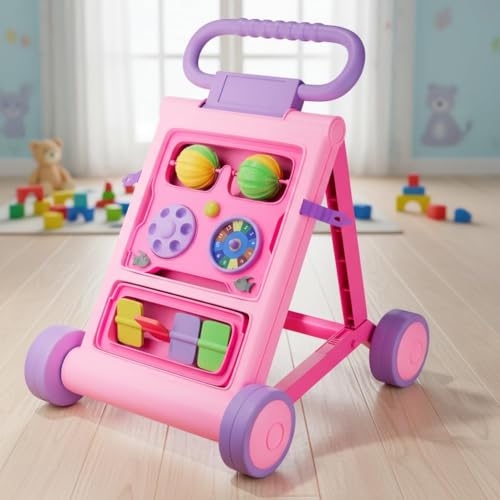
Playking Push Walker with Wheels for Toddlers
- ✓ Sturdy push walker for confident walkers aged 15-36 months
- ✓ Height-appropriate handle (adjustable or 45-50 cm height)
- ✓ Weighted base prevents tipping, smooth-rolling wheels
* We earn a small commission — at no extra cost to you.
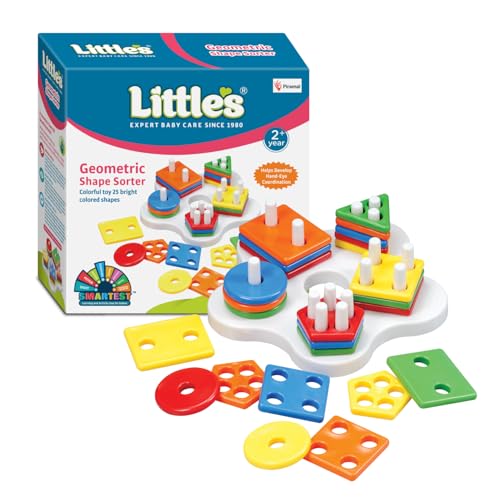
ToyTree Shape Sorter with 6 Shapes
- ✓ Six shape-matching holes (circle, square, triangle, star, heart, hexagon)
- ✓ Lightweight, durable plastic construction
- ✓ Develops fine motor skills and spatial reasoning for 12-36 months
* We earn a small commission — at no extra cost to you.
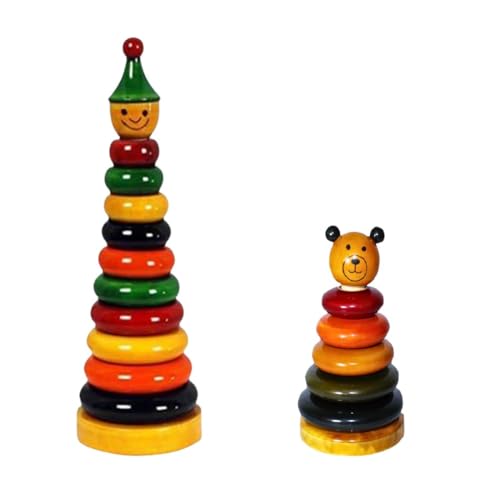
Little Genius Stacking Rings with Wooden Base Post
- ✓ 10 graduated rings in assorted colours, wooden base post
- ✓ Develops hand-eye coordination and repetitive play skills
- ✓ Suitable for 12-36 months, lightweight and portable
* We earn a small commission — at no extra cost to you.