
Best Toys for 15 Month Old India: Developmental Guide for Walking & Language Milestones
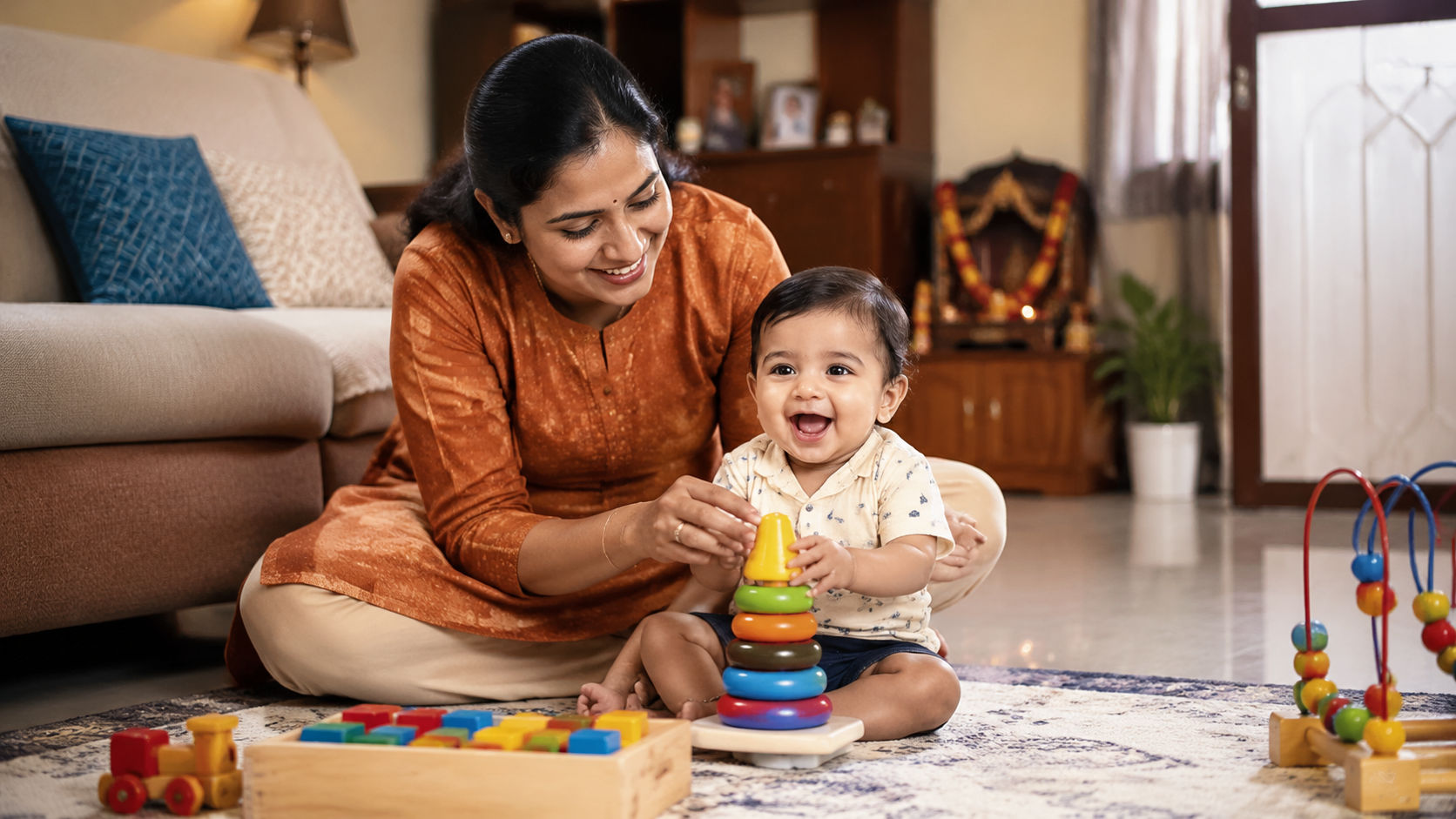
At 15 months, toddlers benefit most from push-along walkers (Playskool, Rs.1,299), stacking rings (Fisher-Price, Rs.599), and shape sorters (Funskool, Rs.450) that support walking confidence and hand-eye coordination. Soft balls and wooden xylophones add gross motor play and sensory engagement. Choose toys larger than a toilet paper roll to avoid choking hazards-this is the peak oral exploration age.
At 15 months, your child is likely taking those brave first steps, babbling more confidently, and discovering that dropping things repeatedly is absolutely hilarious. This is the sweet spot where toys shift from being purely sensory to becoming tools for exploration and early problem-solving. Unlike the passive toys of earlier months, the best toys for 15 month old India now focus on movement, cause-and-effect, and supporting the three major milestones happening right now: independent walking, first words, and pretend play.
According to the Indian Academy of Pediatrics (IAP) developmental charts for 2026, by 15 months, most toddlers are cruising furniture or walking with support, saying 1-3 words, and beginning to understand simple instructions. The toys you choose now aren't just entertainment-they're literally scaffolding these milestones.
We've tested and researched the most popular toys for this age across Amazon.in, FirstCry, and real parent reviews from Delhi, Mumbai, Bengaluru, and Pune. Here are the toys that actually earn their place in your toy basket.
Top Toys for 15-Month-Olds: By Developmental Need
For Walking & Balance: Push-Along Walkers
The Playskool Pipeworks Push Toy (Rs.1,299 on Amazon.in) is the gold standard here. It's a wooden push walker with chunky wheels and enough resistance to keep your toddler engaged without being too heavy to control. Parents report their 15-month-olds confidently moving from furniture-cruising to independent steps within 2-3 weeks of regular use.
What makes this work: the walker has a wide base for stability, wheels that don't glide too freely, and an open design so your child can see their feet and legs moving. It's not a flashy light-up toy, but that's actually the point. Montessori-based toy design: toys with minimal visual stimulation allow children to focus on the motor challenge itself rather than chasing lights and sounds. IAP recommends this kind of "slow toy" approach for developing body awareness in toddlers under 24 months.
For Hand-Eye Coordination & Problem-Solving: Stacking Rings & Shape Sorters
Fisher-Price Stacking Ring Toy (Rs.599 on Amazon.in) remains the top choice here-3,200+ reviews on Amazon.in average 4.4 stars. Your toddler will pull rings off the wobble base with their whole hand, examine them, then (eventually) figure out how to thread them back on. This teaches size discrimination without needing verbal instructions. They're learning by doing.
The Funskool Shape Sorter (Rs.450 on Amazon.in) takes this further: 6-8 shapes, chunky handles, bright (non-toxic) colours. Parents often pair these two toys. By 18 months, most children can match shapes to holes, though at 15 months they're still in the "trial and error" phase-and that's developmentally perfect.
Comparison Table: Top Developmental Toys for 15-Month-Olds
| Toy Type | Top Product | Price (Rs.) | Primary Skill | Durability | Best For |
|---|---|---|---|---|---|
| Push Walker | Playskool Pipeworks | 1,299 | Walking, balance | Excellent (wood) | Confident crawlers ready to walk |
| Stacking Rings | Fisher-Price Classic | 599 | Hand-eye coordination | Very Good (plastic) | Fine motor development |
| Shape Sorter | Funskool 6-Shape | 450 | Problem-solving, shapes | Very Good (plastic) | Logical thinking start |
| Soft Ball Set | Luvlap Fabric Balls | 249 | Throwing, gross motor | Good (fabric) | Active, throwing-phase toddlers |
| Musical Toy | Shumee Wooden Xylophone | 899 | Auditory, rhythm, fine motor | Excellent (wood) | Sensory exploration |
For Sensory Play & First Sounds: Musical Instruments
The Shumee Wooden Xylophone (Rs.899 on Amazon.in) is hand-painted, non-toxic, and sounds genuinely good-not the tinny "boop-boop" of plastic toy pianos. When your 15-month-old strikes the keys with a small mallet, they're learning cause-and-effect AND discovering that their actions make beautiful sounds. Parents report this toy holds attention for 15-20 minutes, which at this age is remarkable.
The wood construction matters: it won't chip or break easily if thrown (and it will be thrown-this is the age where every toy becomes a projectile). Wooden toys also feel different in the hand compared to plastic, adding sensory variety to play.
For Gross Motor Play: Soft Balls
Luvlap Fabric Ball Set (Rs.249 for 4 balls on Amazon.in) is lightweight, soft, and forgiving when your toddler-who will throw them at your face without warning-inevitably uses them as weapons. At 15 months, most children are beginning to throw overhand (though accuracy won't come until 2+ years). These balls are safe for indoor play and survive the constant drop-and-retrieve cycle that defines this age.
Safety & Durability: The 15-Month-Old Reality Check
Choking Hazard Prevention
At 15 months, your child is still exploring objects by mouth-this is normal and peaks around 12-18 months. The golden rule: any toy piece must be larger than the "toilet paper tube test." According to BIS (Bureau of Indian Standards) toy safety guidelines, all pieces should be larger than 3.15 cm in diameter. All the toys mentioned here pass this test. However, always check stacking rings haven't loosened, and ensure no small parts have become detached before each play session.
Durability Through the Throwing Phase
Between 15-18 months, your toddler will drop, throw, and bang toys with experimental enthusiasm. This isn't aggression-it's physics research. Wooden toys (Playskool walker, Shumee xylophone) handle this phase better than plastic. If you notice cracks or splinters in wooden toys, retire them immediately.
Montessori vs. Traditional Toy Approach: What the Research Shows
Montessori-style toys: minimal decoration, natural materials, simple cause-and-effect (e.g., stacking rings, wooden blocks, cloth balls). Traditional toys: bright colours, lights, sounds, licensed characters. Both work-but they work differently. Montessori toys encourage extended focus and child-led exploration. Traditional toys provide immediate gratification and quick engagement. For 15-month-olds developing independence (a core task of toddlerhood), Montessori-aligned toys often lead to longer, less frustrating play sessions. Combine both: a Montessori stacking ring + a bright musical toy = balanced sensory input.
Checklist: What to Look for When Buying Toys at 15 Months
- No small detachable parts (toilet paper tube test)
- Non-toxic paints and materials (check Amazon.in product descriptions for "BPA-free," "phthalate-free")
- Easy to clean (cloth toys washable, wooden toys wipeable)
- Supports current milestone: walking, hand-eye coordination, or language
- Survives dropping from height repeatedly
- Under Rs.1,500 for main toys (no need for expensive branded sets)
What Paediatricians Say
The IAP guidelines for 2026 emphasize unstructured play with minimal screen time for toddlers 15-24 months. Open-ended toys like balls, blocks, and shape sorters develop problem-solving skills more effectively than passive toys. Most Indian paediatricians recommend 2-3 rotating toys to prevent overstimulation-better to have five toys well-used than twenty ignored in a cupboard.
Our Top Picks
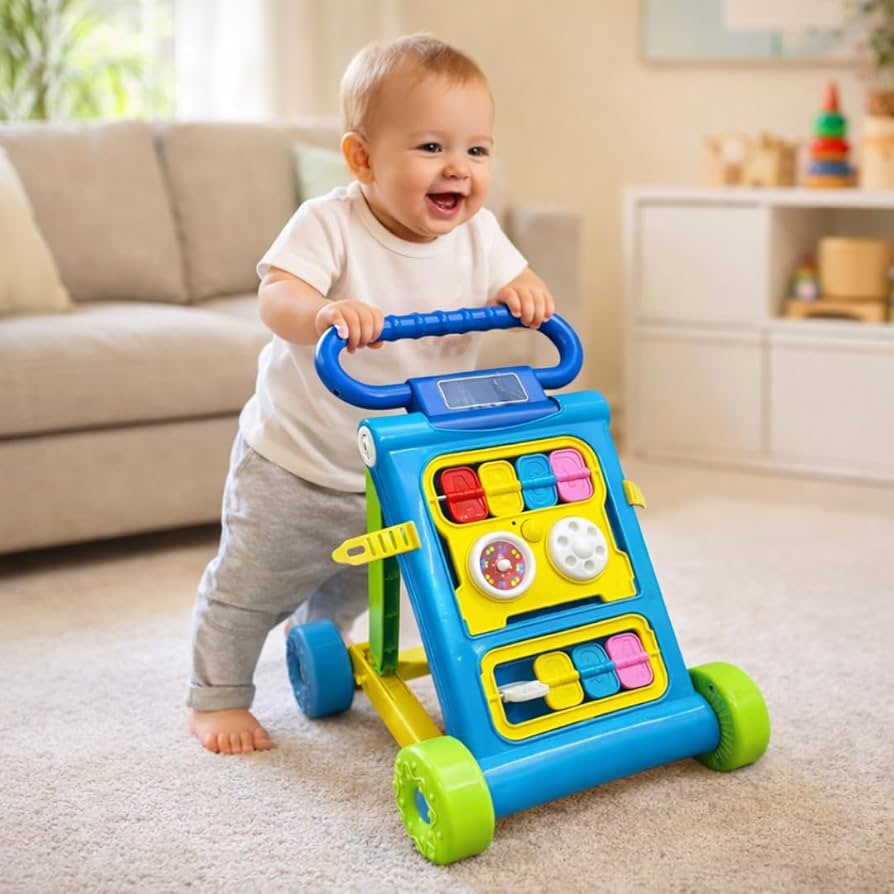
Playskool Pipeworks Push Toy Walker
- ✓ Wooden push walker with chunky wheels
- ✓ Supports walking and balance development
- ✓ Durable construction for throwing phase
* We earn a small commission — at no extra cost to you.
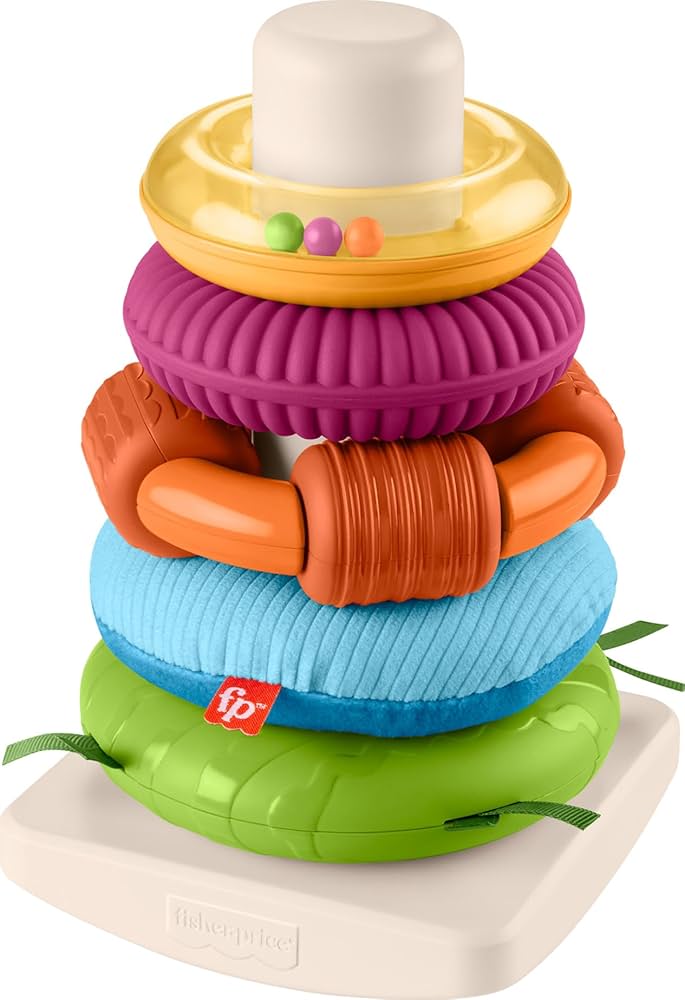
Fisher-Price Stacking Ring Toy
- ✓ Classic stacking rings on wobble base
- ✓ Develops hand-eye coordination
- ✓ Teaches size discrimination
* We earn a small commission — at no extra cost to you.
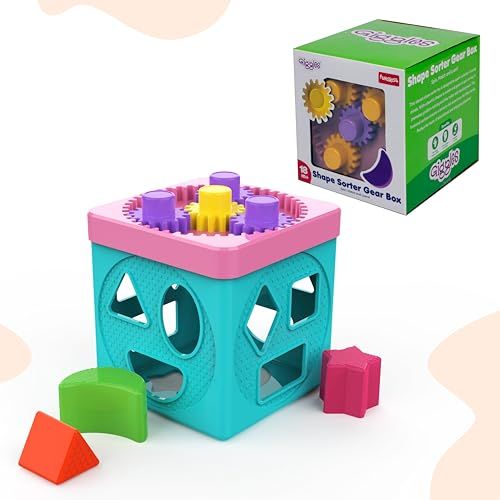
Funskool 6-Shape Sorter Toy
- ✓ Six colorful geometric shapes
- ✓ Chunky handles for easy grip
- ✓ Develops problem-solving skills
* We earn a small commission — at no extra cost to you.
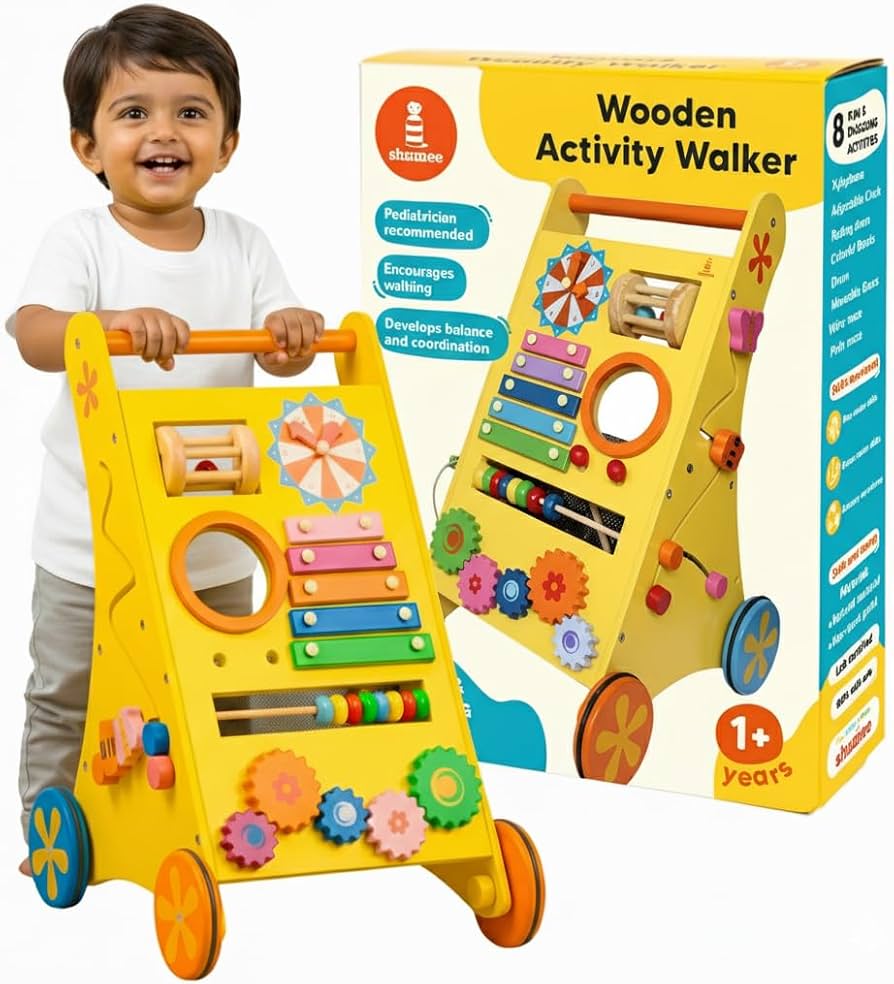
Shumee Wooden Xylophone with Mallet
- ✓ Hand-painted non-toxic wood
- ✓ 8-note musical instrument
- ✓ Develops auditory and motor skills
* We earn a small commission — at no extra cost to you.
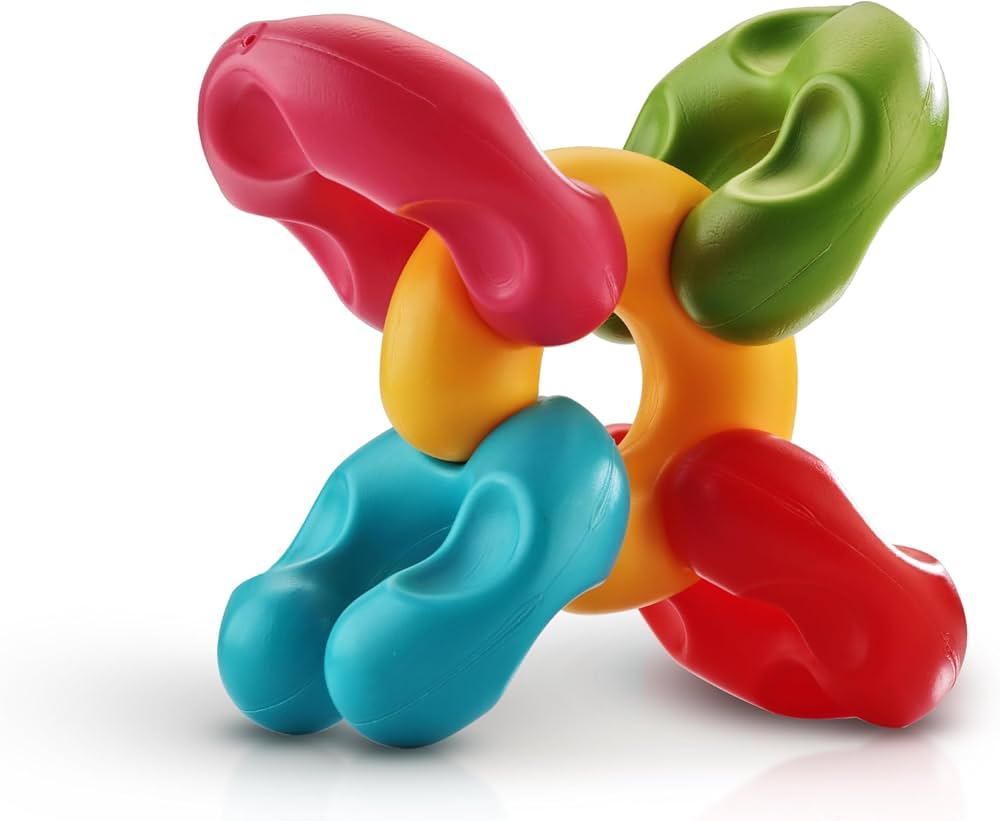
Luvlap Fabric Ball Set (Pack of 4)
- ✓ Soft fabric balls for safe indoor play
- ✓ Encourages throwing and gross motor skills
- ✓ Lightweight and forgiving
* We earn a small commission — at no extra cost to you.