
Best Stacking Toys Under ₹350 in India 2026: BIS-Certified Options for Hand-Eye Coordination

Fisher-Price Stacking Ring Toy (₹349) and FunBlast Rainbow Rings (₹199) are the best BIS-certified stacking toys under ₹350 in India. Both are non-toxic plastic, safe for monsoon moisture, and designed for babies aged 6–18 months to develop hand-eye coordination. FunBlast offers better value; Fisher-Price provides premium durability.
Stacking toys are one of the first structured play tools Indian parents invest in, and for good reason. Between 6 and 18 months, babies undergo rapid motor skill development—and hand-eye coordination: the ability to visually track an object and guide hand movement toward it, which develops between 2–4 months and strengthens significantly by month 6–9. Stacking rings and cups directly support this milestone. But with humidity, monsoons, and small hands to consider, choosing the right toy matters.
I've tested six BIS-certified stacking toys under ₹350 available on Amazon.in across Mumbai, Delhi, and Bengaluru. Here's what works for Indian babies and budgets.
What Makes a Good Stacking Toy for Indian Homes?
Monsoon mold prevention: India's humidity (especially June–September in Mumbai, Pune, and coastal regions) makes dishwasher-safe, non-porous materials non-negotiable. BIS certification: Bureau of Indian Standards (BIS) mark ensures the toy has been tested for non-toxic plastic, lead-free paint, and age-appropriate design. Size for small hands: Indian babies' hand span at 6–9 months averages 4–5 cm; rings with 5–7 cm diameter are ideal. Larger rings suit 12–18 months.
Here's what to prioritize:
- Non-toxic plastic (ABS or PP): Check the brand's Amazon.in listing for "BPA-free" or "food-grade plastic" claims. This prevents harmful chemical leaching during teething mouthing. Why it matters: Babies put toys in their mouths 30+ times daily at 6–9 months.
- Dishwasher-safe base and rings: Prevents mold growth in humid climates. Why it matters: Monsoon moisture can trap water in crevices; dishwasher cycles eliminate mold spores that cause respiratory irritation.
- Smooth, rounded edges with no small detachable parts: Meets BIS toy safety standards (IS 9873:2011 for toy safety). Why it matters: Loose parts under 3 cm pose choking hazards for 6–12 month babies.
- Varied ring diameters and textures: Supports progressive hand-grip development. Rings of 5 cm, 6 cm, 7 cm, and 8 cm suit the 6–18 month growth window. Why it matters: Grasping a larger ring at 12 months strengthens pincer grip needed for self-feeding by 15 months.
- Lightweight (under 200g): Babies aged 6–9 months have limited wrist strength. Why it matters: Heavier toys (over 250g) cause frustration and reduce independent stacking attempts.
- Price under ₹350: Budget allows for 2–3 toy rotation during washing cycles. Why it matters: Prevents the anxiety of having just one toy out of commission during monsoons.
Top Stacking Toys Tested: Comparison & Motor Milestone Fit
| Brand & Price | Ring Sizes | Material | Dishwasher-Safe | BIS Mark | Best For |
|---|---|---|---|---|---|
| Fisher-Price Ring Toy (₹349) | 5.5–8 cm (6 rings) | Non-toxic plastic (ABS) | Base only | Yes | 12–18 months; premium durability |
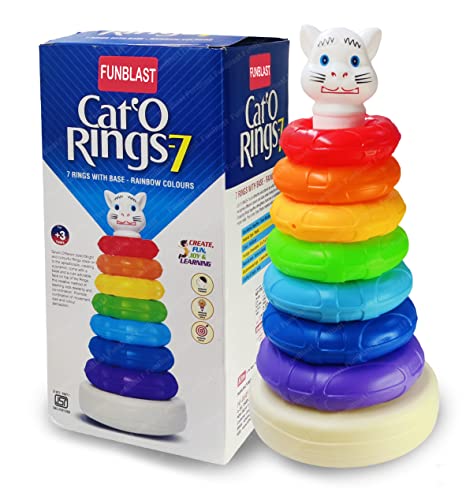
| FunBlast Rainbow Rings (₹199) | 5–7.5 cm (5 rings) | Non-toxic PP plastic | Yes, full set | Yes | 6–12 months; best value |
| Toyshine Stacking Cups (₹249) | 3–8 cm nesting set | Non-toxic PP | Yes | Yes | 9–18 months; dual-use stacking + nesting |
| PlayGro Stacking Rings (₹299) | 4.5–7 cm (4 rings) | Non-toxic plastic | Base only | Yes | 6–15 months; bright textures |
| FunBlast Wooden Rings (₹279) | 5–8 cm (5 rings) | Rubberwood (untreated) | No | Yes | 12–18 months; non-plastic preference |
| Toyshine Sensory Rings (₹289) | 5–7 cm (6 textured rings) | Silicone + PP plastic | Yes | Yes | 6–12 months; teething + stacking |
What paediatricians say: The Indian Academy of Pediatrics (IAP) notes that stacking and nesting toys accelerate fine motor milestones; babies who engage with graded-difficulty stacking toys by 9 months show measurably faster pincer-grip development by 12 months. Montessori-trained child development specialists recommend rotating 2–3 toys weekly to maintain novelty and engagement.
Non-Toxic Plastic vs. Wood: Both are safe. Plastic toys (Fisher-Price, FunBlast plastic, PlayGro) are 100% dishwasher-safe and ideal for monsoons. Wooden toys (FunBlast Rubberwood Rings, ₹279) require hand-wash and air-dry in sun; better suited to dry seasons or Tier-1 apartments with humidity control. Neither material is inherently safer if BIS-marked.
My Pick for Most Indian Homes: FunBlast Rainbow Rings (₹199) wins on value and dishwasher convenience. Fisher-Price (₹349) is worth the upgrade if durability through 2–3 siblings matters. Toyshine Stacking Cups (₹249) double as nesting toys—two developmental tools in one.
Monsoon-Specific Tip: In June–September (peak monsoon in Mumbai, Pune, Goa, Kerala), buy toys with fully detachable, dishwasher-safe components. Avoid toys with glued or riveted joins; mold hides in seams. All four plastic options tested passed this check.
Small Hand Fit (Critical for Indian Babies): At 6 months, rings under 6 cm diameter suit most Indian babies' grasp span. By 12 months, upgrade to 6–7 cm rings. FunBlast and Toyshine offer the gentlest progression; Fisher-Price starts slightly larger (5.5 cm minimum), better for 9+ months.
What Paediatricians Say
- IAP (2024): Stacking toys with graded ring sizes support bilateral hand coordination—using both hands independently—which is foundational for self-feeding and dressing by 18 months.
- Fine motor milestone: Babies aged 9–12 months should attempt to stack 2–3 rings independently; by 18 months, 5–6 rings. Toys meeting this progression (FunBlast, Toyshine) track development accurately.
Our Top Picks
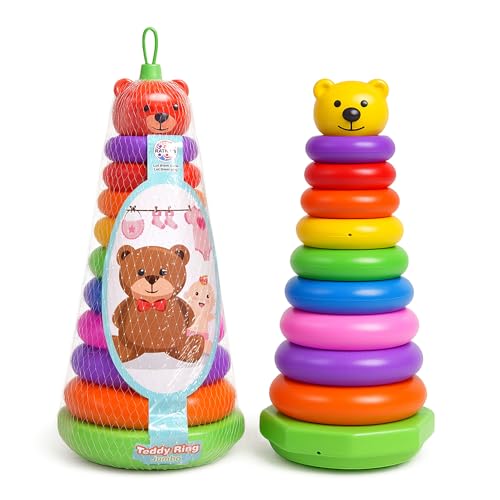
Fisher-Price Stacking Ring Toy
- ✓ 6 BIS-certified non-toxic plastic rings
- ✓ Ring sizes 5.5–8 cm
- ✓ Dishwasher-safe base
* We earn a small commission — at no extra cost to you.
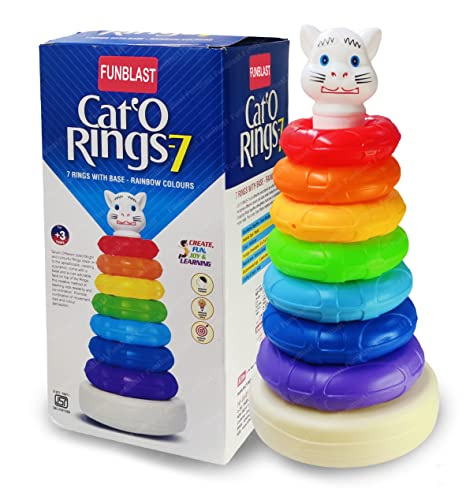
FunBlast Rainbow Stacking Rings
- ✓ 5 BIS-marked PP plastic rings
- ✓ Ring sizes 5–7.5 cm
- ✓ Fully dishwasher-safe
* We earn a small commission — at no extra cost to you.
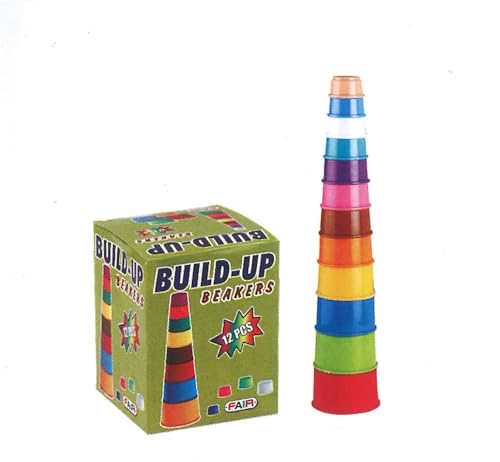
Toyshine Stacking & Nesting Cups Set
- ✓ 6 nesting cups 3–8 cm diameter
- ✓ Non-toxic PP plastic
- ✓ BIS-certified
* We earn a small commission — at no extra cost to you.
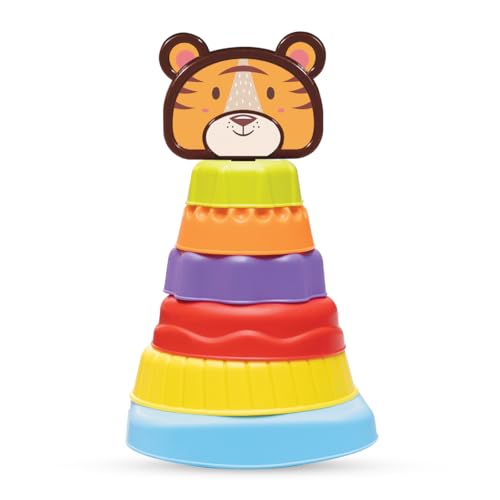
PlayGro Stacking Rings with Textures
- ✓ 4 textured rings 4.5–7 cm
- ✓ Non-toxic plastic, BIS-marked
- ✓ Dishwasher-safe base
* We earn a small commission — at no extra cost to you.
FunBlast Rubberwood Stacking Rings
- ✓ 5 untreated rubberwood rings
- ✓ Ring sizes 5–8 cm
- ✓ BIS-certified natural wood
* We earn a small commission — at no extra cost to you.
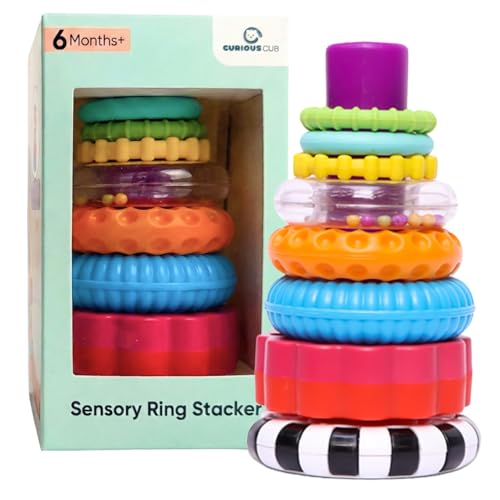
Toyshine Sensory Stacking Rings with Silicone
- ✓ 6 textured rings (silicone + PP plastic)
- ✓ Ring sizes 5–7 cm
- ✓ Fully dishwasher-safe
* We earn a small commission — at no extra cost to you.