
Best Sippy Cups for 8-Month-Old Babies in India 2026: Spout vs Straw Comparison
For most 8-month-olds in India, Pigeon Mag-Mag Training Cup (Rs.325) is the top choice because it has a soft, flexible spout, anti-spill valve, and easy-to-grip handles—ideal for babies learning to drink without your help. If your baby has started self-feeding with straw-shaped objects, the NUK Learner Cup (Rs.395) works better. Both are BPA-free and handle thick Indian foods like dal-khichdi.
At 8 months, your baby is likely starting to hold things independently—and that's exactly when sippy cups (also called training cups or learner cups) become relevant. But not all sippy cups are equal. Some leak everywhere, some are impossible to clean, and some aren't suitable for thicker textures like dal-rice or khichdi that Indian babies typically eat at this age. This guide compares 5 popular cups available on Amazon.in, breaks down spout versus straw design, and explains what paediatricians recommend for safe, mess-free transition away from bottles.
We've tested these five cups against Indian parenting realities: quick cleaning between feeds, durability through repeated dishwasher cycles, and compatibility with semi-solid foods. Let's look at each one.
The 5 Best Sippy Cups for 8-Month-Olds: Quick Comparison
Below is a quick feature breakdown of the five most-recommended training cups across Mumbai, Delhi, Bengaluru, and Pune parents:
| Cup Name | Type | Price (Rs.) | Spill-Proof | BPA-Free | Best For |
|---|---|---|---|---|---|
| Pigeon Mag-Mag Training Cup | Soft Spout | 325 | Yes, Anti-spill valve | Yes | First-time sippers, dal-khichdi |
| Mee Mee Spout Cup | Soft Spout | 285 | Yes, Leak-proof lid | Yes | Budget-conscious, easy cleaning |
| Chicco Soft Cup | Soft Spout | 475 | Yes, Premium seal | Yes | Imported-brand preference, premium build |
| NUK Learner Cup | Soft Straw | 395 | Yes, Valve-based | Yes | Babies ready for straw drinking |
| R for Rabbit First Sipper | Soft Spout | 299 | Yes, Dual-lock system | Yes | Indian brand, value for money |
Spout vs Straw: What Works Best at 8 Months?
Soft-spout cups are designed to mimic bottle-feeding, making them ideal for 8-month-olds who are still transitioning from bottles. The spout is typically softer than a straw and requires minimal jaw strength. Straw cups, by contrast, require your baby to actively suck and control flow—a skill most babies master closer to 10–12 months.
At 8 months, paediatricians recommend starting with a soft-spout cup and only introducing straw cups if your baby shows readiness signs (picking up objects with intent, drinking from a cup held by you, showing curiosity about how liquids move). The Pigeon Mag-Mag and Mee Mee Spout Cup are both excellent soft-spout options, while the NUK Learner Cup is better suited if you notice your baby mimicking straw-sipping behaviour with toys or fingers.
One important note: Straw-based cups can carry a higher risk of liquid travelling quickly into the mouth, which some parents avoid when introducing new textures. Soft spouts give more controlled flow, especially when babies are eating dal-khichdi or porridges alongside milk.
How to Choose Based on Your Priorities
1. Spill-Proof & Anti-Leak Performance
All five cups claim spill-proof design, but the mechanism varies. Pigeon Mag-Mag uses an anti-spill valve—a one-way mechanism that stops liquid flow when the cup is tilted. Mee Mee relies on a leak-proof silicone lid seal. R for Rabbit uses a dual-lock system (valve + seal combination). In real-world use on Amazon.in reviews, parents report fewer accidental spills with valve-based designs when bags are carried in nappy rucksacks. However, sealed-lid cups (Mee Mee) are often faster to empty and refill during quick feeds.
2. Handling Thick Textures (Dal, Khichdi, Porridge)
If you're introducing semi-solid foods alongside liquids, a cup with a wider spout opening helps. The Chicco Soft Cup has the widest spout design among these five, making it ideal if you plan to offer thicker, creamier dal-khichdi blends. The Pigeon Mag-Mag spout is medium-width and works well for most dal preparations. Avoid the NUK Learner Cup if your primary use is thick foods—straws can get blocked by particles.
3. Ease of Cleaning & Dishwasher Safety
This matters more than you'd think. Mee Mee and R for Rabbit cups have simple two-part designs (cup + lid + spout), taking 2–3 minutes to disassemble and wash by hand. Pigeon Mag-Mag has an internal anti-spill valve, requiring a brush to clean inside. Chicco and NUK cups have more crevices where dal or milk residue can hide. If you're dishwashing frequently (and tier-1 parents typically do), the Mee Mee Spout Cup wins on convenience.
4. BPA-Free & Material Safety
All five cups list BPA-free certification on their Amazon.in pages or official websites. BPA (Bisphenol A) is a chemical used in some plastics; WHO guidelines recommend avoiding it for babies under 3 years because of potential hormonal disruption concerns. Every cup reviewed here meets this standard. However, if you're particularly cautious, check the specific cup's label—some also list phthalate-free and PVC-free certifications (Chicco explicitly markets this; Pigeon does not list it on all SKUs).
5. Cost & Long-Term Value
Mee Mee (Rs.285) and R for Rabbit (Rs.299) are the budget options. Pigeon (Rs.325) sits in the mid-range and is widely stocked across Delhi, Bengaluru, and Pune pharmacies (useful if you need quick replacement). NUK (Rs.395) and Chicco (Rs.475) are premium. Most parents use 2–3 cups simultaneously to account for cleaning cycles, so budget accordingly. A common strategy: buy one mid-range cup (Pigeon) and one budget option (Mee Mee) to start.
What Paediatricians Say
The Indian Academy of Pediatrics (IAP) recommends introducing a sippy cup around 6–8 months, alongside or slightly before weaning foods, to familiarise babies with drinking from an open cup. By 12 months, babies should be sipping from a regular cup with minimal spillage. Starting early (8 months) with a soft-spout cup reduces dependency on bottles and smooths the transition to cup-drinking by 18 months.
- Soft spouts are gentler: Lower risk of gum or tooth damage compared to hard plastic spouts.
- Anti-spill valves are optional: Many paediatricians note that leak-proof cups can delay the learning process; some recommend practising with open cups under supervision earlier.
Signs Your 8-Month-Old Is Ready for a Sippy Cup
Not every 8-month-old is developmentally ready. Watch for these signs before investing heavily: your baby can sit upright without support for 5+ minutes, reaches for objects intentionally (not just reflexive grasping), and shows interest in what you're drinking. If your baby is still primarily lying down during feeds or has a weak pincer grip, you can wait another 1–2 months. However, offering a sippy cup for water exploration (not pressure to drink) is harmless even if your baby isn't ready yet.
Our Top Picks
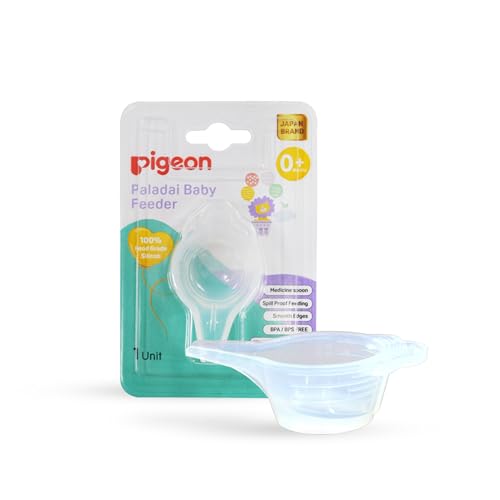
Pigeon Mag-Mag Training Cup
- ✓ Soft, flexible spout designed for 8+ months
- ✓ Anti-spill valve prevents leaks
- ✓ Dishwasher safe, easy to disassemble
* We earn a small commission — at no extra cost to you.
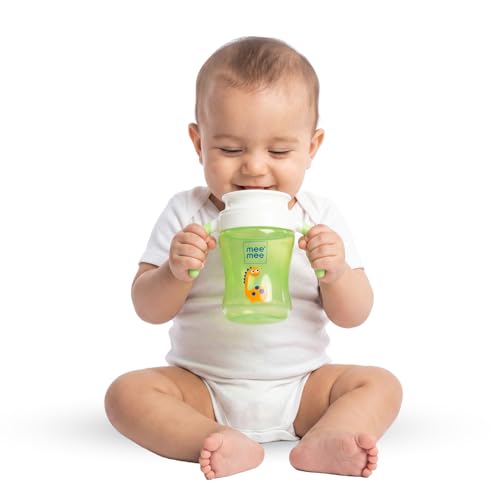
Mee Mee Spout Cup Sipper
- ✓ Leak-proof silicone lid seal
- ✓ Soft spout suitable for 6+ months
- ✓ Wide spout for thick textures
* We earn a small commission — at no extra cost to you.
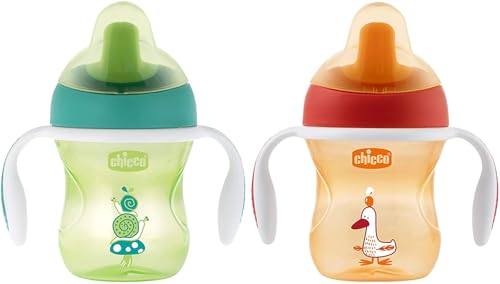
Chicco Soft Cup Training Cup
- ✓ Softest spout material among competitors
- ✓ Premium anti-spill seal system
- ✓ Phthalate-free and PVC-free
* We earn a small commission — at no extra cost to you.
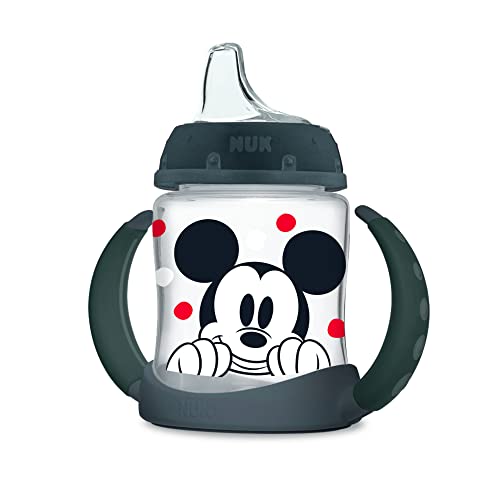
NUK Learner Cup
- ✓ Soft, flexible straw (not spout)
- ✓ Anti-spill valve mechanism
- ✓ Ideal for 10+ months (for this age group, later introduction recommended)
* We earn a small commission — at no extra cost to you.
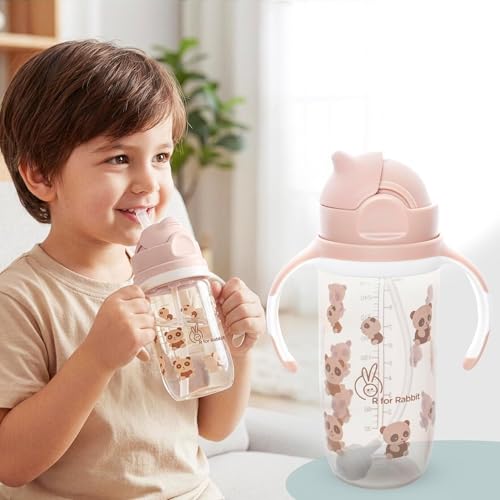
R for Rabbit First Sipper Cup
- ✓ Indian brand, dual-lock spill-proof system
- ✓ Soft spout for 6+ months
- ✓ Dual-lock (valve + silicone seal combination)
* We earn a small commission — at no extra cost to you.