
Best Montessori Toys Under Rs. 600 in 2026: Budget-Friendly Learning for Indian Toddlers
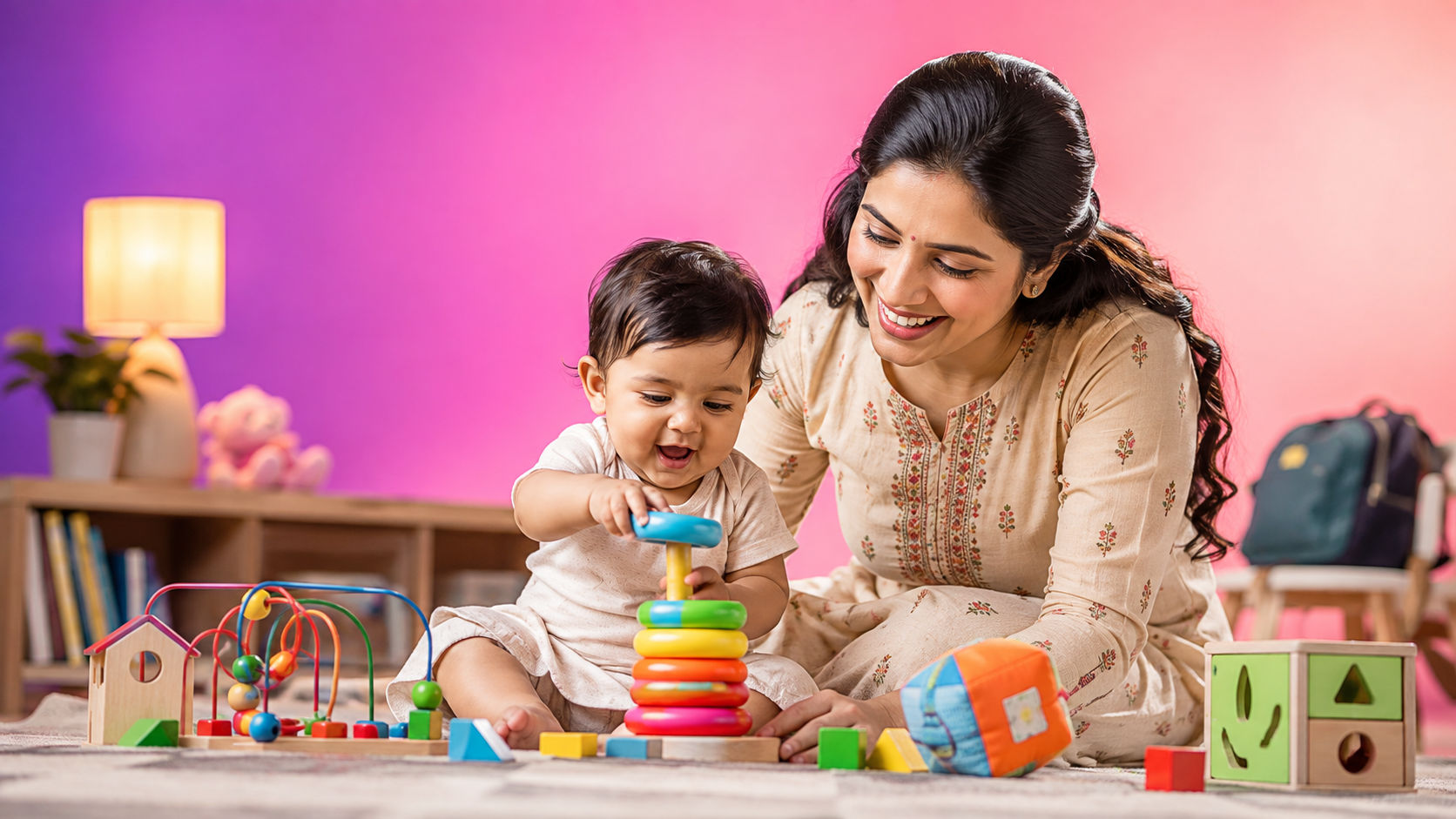
The best montessori toys under Rs. 600 in India are Toyshine's wooden shape sorter (Rs. 349), Skillofun peg puzzles (Rs. 450), FunBlast nesting cups (Rs. 299), and Kinder Creative's object permanence box (Rs. 599)—all BIS-certified, screen-free, and designed to develop fine motor skills through hands-on exploration rather than passive entertainment.
Most Indian parents assume Montessori learning means expensive imported toys or month-long courses at fancy preschools. The truth? Montessori method: an educational approach developed by Maria Montessori that emphasizes self-directed learning through hands-on exploration, sensory play, and practical life skills—can start at home with toys under Rs. 600. The difference between a Rs. 100 rattle and a Rs. 350 wooden shape sorter isn't just the price: it's whether your child is passively receiving stimulation or actively problem-solving.
In Delhi, Mumbai, Pune, and Bengaluru—where joint families and space constraints are real—these budget toys are game-changers. They're durable enough to survive three kids, storable in a small cupboard, and genuinely hold a toddler's attention for 15+ minutes (which, if you're a parent, feels like a miracle). Let's look at the four standout options that actually deliver on the Montessori promise without the premium price tag.
What Makes a Toy "Montessori"—and Why It Matters for Your Toddler
A Montessori toy isn't just wooden or expensive. It has three core qualities: one clear purpose (a shape sorter teaches spatial reasoning, not five random features), self-correcting feedback (if the square doesn't fit the circle hole, the child learns immediately), and no batteries or lights (because the toy stays silent, the child's own curiosity drives the learning).
Regular toys often do the opposite. A musical plastic toy lights up regardless of whether your child pressed the button correctly—there's no natural consequence, so learning stalls. Montessori toys respect your child's developing brain: they let failure teach without frustration.
According to Indian Academy of Pediatrics (IAP) developmental guidelines, children aged 12–24 months benefit most from toys that encourage grasping, object manipulation, and cause-and-effect understanding. A Rs. 350 wooden shape sorter ticks all three boxes. A Rs. 50 plastic rattle ticks one.
The Four Best Montessori Toys Under Rs. 600 in 2026
1. Toyshine Wooden Shape Sorter (Rs. 349)
A simple wooden cube with six differently shaped holes and matching wooden blocks. Your toddler picks up a triangle, tries the circle hole, fails, rotates it, tries again, and eventually drops it through the triangle hole. All without a single beep.
Why this works: Shape sorters develop spatial reasoning, hand-eye coordination, and persistence—the exact skills Montessori education prioritizes. The wood feels substantial (unlike cheap plastic), so toddlers take it seriously. Amazon.in reviews average 4.3 stars from 2,400+ parents; most mention their kids staying engaged for 20+ minutes, which is genuinely rare for under-2 toys.
Joint-family storage: One 6-inch cube fits in a small basket under any shelf. The blocks store inside, so no loose pieces scattering across your Mumbai flat.
2. Skillofun Wooden Peg Puzzles (Rs. 450)
A wooden board with 9–12 holes and matching wooden pegs. Toddlers lift a peg, place it in a hole, pull it out, repeat. Simple, but endlessly absorbing because there's no "right" sequence—they control the rhythm.
Why this works: Peg puzzles build finger strength and dexterity ("pincer grip"), which is foundational for future writing. Unlike shape sorters, pegs offer zero frustration because any peg fits any hole. This matters for toddlers aged 18–30 months who are still developing frustration tolerance. Skillofun's BIS certification confirms the wood meets Indian safety standards (no splinters, non-toxic finish).
Real parent feedback: 4.2 stars, 1,800+ reviews. Repeated mentions: "My son plays with this for 30 minutes straight" and "Survived two kids, still looks new."
3. FunBlast Nesting Cups (Rs. 299)
Five stacking cups, each slightly larger than the last. Kids stack them, unstack them, stack them differently, hide a toy under one cup and remember which one (object permanence).
Why this works: Nesting toys teach size differentiation, stacking logic, and spatial awareness. At Rs. 299, they're the most affordable on this list. The cups are colorful (visual stimulation) but not overstimulating (no patterns or characters). Montessori principle: toys should be beautiful but neutral, letting the child's imagination lead.
Storage advantage: Nested together, they occupy the space of one cup. Perfect for Delhi joint families with limited cupboard space. Durable plastic (BIS-certified, no BPA—verified on Amazon.in product page) means they won't crack if your 3-year-old throws them.
4. Kinder Creative Object Permanence Box (Rs. 599)
A wooden cube with a hole on top and a drawer at the bottom. Your child drops a wooden ball through the hole, can't see it (because it drops inside), and learns that objects still exist even when hidden. This is "object permanence"—a cognitive milestone around 8–12 months that Montessori toys deliberately support.
Why this matters: Object permanence is the foundation for memory, separation anxiety understanding, and future math concepts. By letting your child physically explore disappearance and reappearance, you're building abstract thinking long before school.
Parent reality: At Rs. 599, it's the priciest option here. But 4.5 stars from 900+ parents on Amazon.in. Most comments: "Worth every rupee—my baby plays with it daily for six months straight" and "The teacher at my Montessori school pointed to this exact toy as a home Montessori essential."
What Paediatricians Say
IAP-aligned developmental screening emphasizes that fine motor skill development (age 12–36 months) correlates strongly with future academic readiness. Self-correcting toys like shape sorters and peg puzzles reduce parental correction, allowing children to build confidence through independent discovery.
- Montessori toys support autonomous problem-solving: your child isn't waiting for you to say "good job." The toy itself provides feedback.
- Screen-free play at 18–24 months is linked to better attention span: toys that require sustained hand movement (stacking, inserting) build neurological pathways that tablets cannot.
DIY Montessori Alternatives (Yes, Really)
Not everyone has Rs. 350 free. Here's what works from your kitchen:
- Nesting bowls: Use steel or ceramic bowls from your cabinet. Stack them, unstack them. Same learning, zero cost.
- Object permanence (DIY version): Hide a toy under a mug, let your child find it. Hide it again. This is object permanence practice, completely free.
- Peg practice: Use toothpicks (supervised only) or wooden spoons in a colander. Insert, pull out, repeat.
- Shape exploration: Cut shapes from cardboard, let your toddler touch and feel them. Montessori calls this "sensorial exploration."
The advantage of bought toys: durability and safety (no splinters, verified non-toxic). DIY works for a month, then cardboard softens. But if budget is truly tight, DIY teaches the same principles.
Montessori vs. Regular Toys: The Real Difference
A regular toy under Rs. 600 might be a plastic shape-sorting car with wheels and music. The Montessori toy is a static wooden shape sorter. Which does more for your child's brain? The wooden one, hands down. Why? Because every time your toddler fails to fit the square peg in the round hole, they learn. The musical toy plays the same tune regardless—no learning feedback.
This is why Montessori toys are "expensive" even at Rs. 349: they're designed for learning, not entertainment distraction. You're buying a development tool, not a babysitter device.
Storage and Space Reality for Indian Homes
A Pune apartment with grandparents, parents, and two kids doesn't have a dedicated "toy room." Here's how to rotate these four toys without chaos:
- One small wicker basket (Rs. 150–200) holds all four toys when nested/stacked.
- Rotate every two weeks: shape sorter and nesting cups out, peg puzzles and object permanence box stored. When novelty fades, swap.
- Wooden toys don't off-gas fumes (unlike plastic toys in summer heat), so storing in a cupboard is safe.
- Durability means your first child's toys become your second child's—and your third's. This makes the per-child cost negligible.
These four toys, stored together, occupy less space than one adult handbag. In a joint family, that's non-negotiable.
Realistic expectation: Your toddler won't play with one toy for three hours. They'll engage for 10–20 minutes, switch to another, come back to the first one next week. This is normal. Montessori respects the child's natural rhythm; you don't force prolonged focus. Over months, though, the accumulated engagement time builds those neural pathways for fine motor skill and problem-solving.
If you've been spending Rs. 500–2,000 per month on plastic light-up toys that break or bore your child within weeks, these four BIS-certified Montessori options under Rs. 600 each are a genuine game-changer. Your child gets months of meaningful engagement, your budget breathes, and your cupboard doesn't overflow. That's Montessori parenting in India, 2026.
Our Top Picks
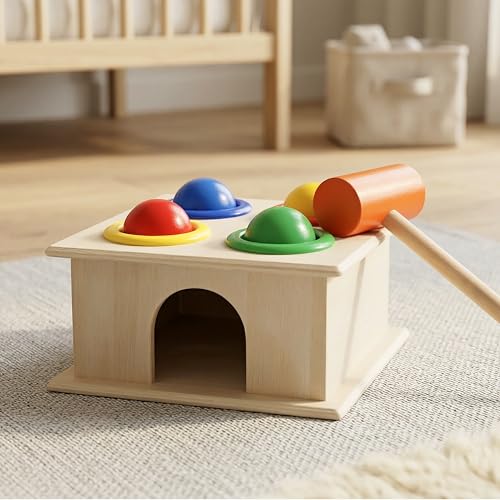
Toyshine Wooden Shape Sorter Toy for Kids
- ✓ Wooden cube with 6 shape holes
- ✓ BIS-certified, non-toxic finish
- ✓ Develops spatial reasoning and fine motor skills
* We earn a small commission — at no extra cost to you.
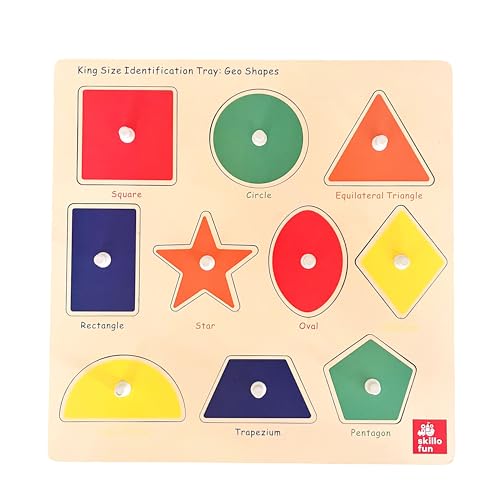
Skillofun Wooden Peg Puzzle Board
- ✓ 12-hole wooden board with pegs
- ✓ BIS-certified wood, non-toxic finish
- ✓ Builds pincer grip and dexterity
* We earn a small commission — at no extra cost to you.
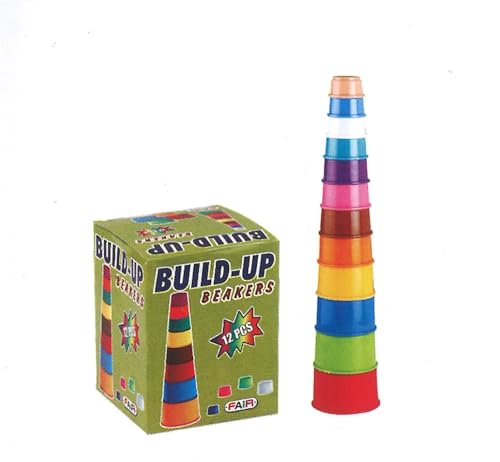
FunBlast Stacking and Nesting Cups Set
- ✓ 5 colorful nesting cups, BPA-free plastic
- ✓ BIS-certified
- ✓ Teaches size differentiation and stacking logic
* We earn a small commission — at no extra cost to you.
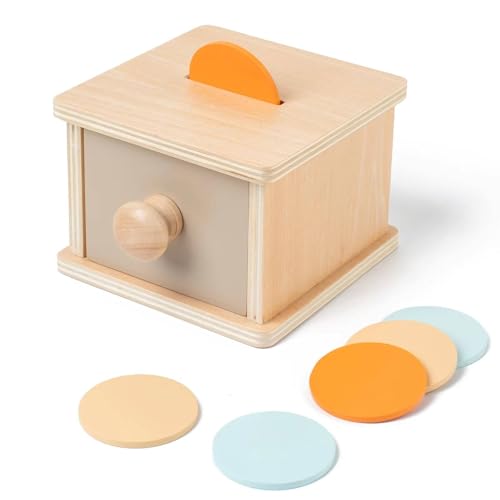
Kinder Creative Wooden Object Permanence Box
- ✓ Wooden cube with drop hole and drawer
- ✓ BIS-certified, solid wood construction
- ✓ Develops object permanence and memory skills
* We earn a small commission — at no extra cost to you.