
Best Montessori Toys Under 600 in India 2026: Budget-Friendly Picks for 6-24 Month Development
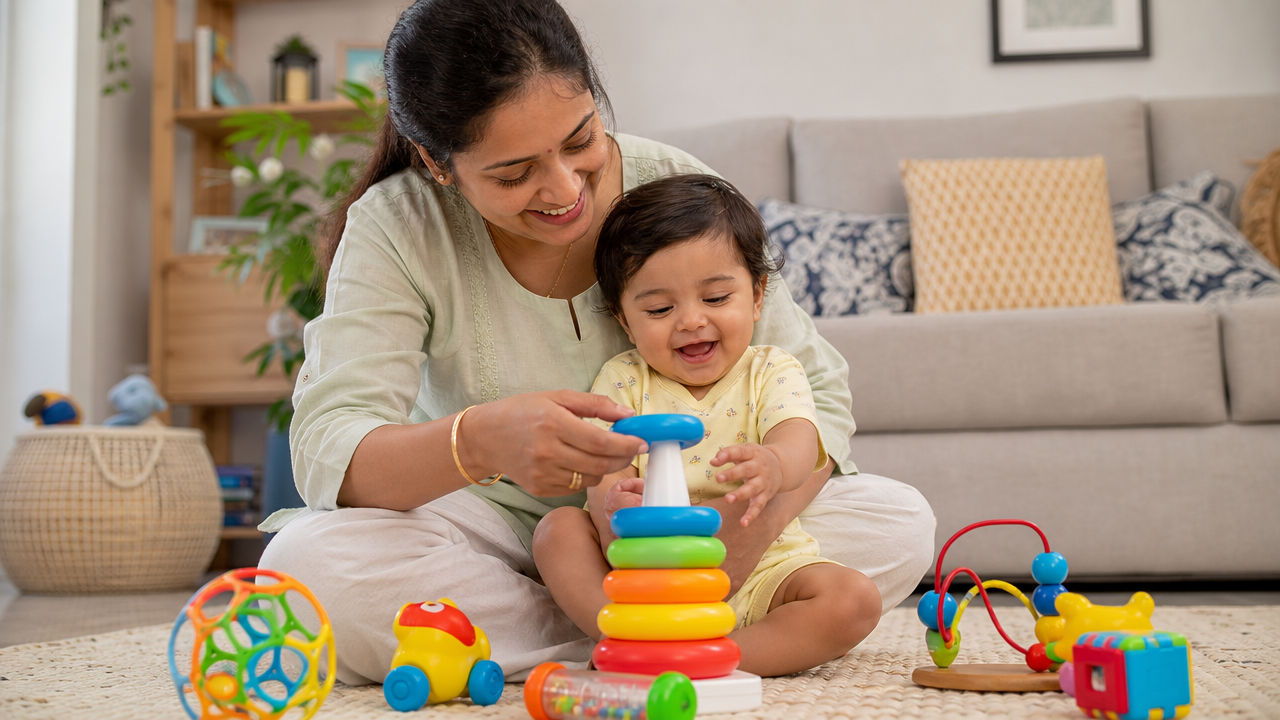
The best Montessori toys under Rs. 600 in 2026 are Skola Rainbow Stacker (₹549), BabyGo Wooden Shape Sorter (₹499), and R for Rabbit Object Permanence Box (₹599)-all wooden, non-toxic, and designed to build fine motor skills and concentration in babies 6-24 months old. These are screen-free alternatives that align with Montessori principles of self-directed learning and are especially valuable in Indian joint families where screen time battles are real.
If you're a Gen Z parent in Delhi, Mumbai, Bengaluru, or any tier-2 city scrolling for toys that don't just beep and flash, you've probably heard the word Montessori thrown around. But here's the truth: most Montessori toys come with Instagram prices. The good news? You don't need to spend Rs. 2,000 on a single toy to follow Montessori principles. This guide covers the best budget Montessori toys under Rs. 600, why they actually matter for your child's brain, and how they fit into the chaos of Indian parenting-especially when dadi-ji keeps offering screen time as a peace offering.
Let's start with the three standouts: Skola Rainbow Stacker, BabyGo Wooden Shape Sorter, and R for Rabbit Object Permanence Box. All three are available on Amazon.in, non-toxic certified, and designed for the specific milestones your baby hits between 6 and 24 months. Read on to see which fits your child's stage and your home setup.
What Are Montessori Toys, and Why Do They Matter?
Montessori toys are self-correcting, open-ended learning tools designed to let children explore and problem-solve independently-without adult instruction. Unlike plastic toys with buttons and sounds, Montessori toys rely on the child's natural curiosity and trial-and-error learning. The philosophy, developed by Dr. Maria Montessori nearly a century ago, emphasizes concentration, fine motor skill development, and a child's ability to learn from mistakes.
For Indian parents, this matters more than ever. According to a 2024 IAP (Indian Academy of Pediatrics) position statement, children under 2 years benefit significantly from hands-on, tactile play that builds neural pathways in the brain's motor and sensory regions. Screen time doesn't build these pathways. A simple wooden ring stacker does, in 15 minutes a day.
The other reason Montessori toys are brilliant for Indian households? They're quiet. No batteries. No beeping at 2 a.m. when your baby finds the toy in the dark. Your mother-in-law might prefer a noisy electronic toy, but your baby's developing brain? It prefers the subtle click of a wooden shape fitting into place.
Top 3 Montessori Toys Under 600: Detailed Breakdown
| Product | Price | Best Age | Material | Key Benefit |
|---|---|---|---|---|
| Skola Rainbow Stacker | Rs. 549 | 6-18 months | Wood, Non-toxic Paint | Fine Motor, Hand-Eye Coordination |
| BabyGo Wooden Shape Sorter | Rs. 499 | 9-24 months | Solid Wood | Problem-Solving, Shape Recognition |
| R for Rabbit Object Permanence Box | Rs. 599 | 8-18 months | Wood | Cognitive Development, Cause-Effect |
1. Skola Rainbow Stacker - Rs. 549 (Best for Beginners)
The Skola Rainbow Stacker is a classic ring-stacking toy with five wooden rings in graduated sizes that slide onto a wooden dowel. It costs Rs. 549 on Amazon.in and has consistently earned 4.4+ stars from 2,000+ reviews. Parents across Mumbai, Pune, and Jaipur praise it for durability and for keeping babies quiet during morning routines-a win in joint family setups.
Why it works: At 6 months, your baby begins developing hand-eye coordination and gross motor control. By 12 months, they can start ordering the rings by size-a cognitive leap. The Skola stacker has no sharp edges, non-toxic paint, and a dowel thick enough that it won't splinter even after months of being chewed on (and trust us, it will be).
2. BabyGo Wooden Shape Sorter - Rs. 499 (Best Value)
At Rs. 499, the BabyGo Shape Sorter is the cheapest option here. It's a wooden cube with 6 shape holes (circle, square, triangle, star, heart, rectangle). The matching wooden blocks slip in easily, and when your baby drops them in, they fall into the cube with a satisfying clunk-instant feedback without electricity.
Why it works: Shape sorters build problem-solving and spatial reasoning from 9 months onward. BabyGo's blocks are chunky enough that your 10-month-old won't choke, and the shapes are painted with non-toxic water-based finishes (verified on their product page on Amazon.in). Parents report it keeps babies engaged for 20-30 minutes-golden time for meal prep in a busy Indian kitchen.
3. R for Rabbit Object Permanence Box - Rs. 599 (Best for Cognitive Leaps)
This is a wooden box with one hole on top and a sliding door at the bottom. Drop a wooden ball through the hole, the ball rolls inside, and your baby slides the door open to retrieve it. Cost? Rs. 599. Seems simple. But cognitively, this toy teaches object permanence-the understanding that objects exist even when you can't see them. This milestone typically emerges around 8-10 months and is crucial for emotional development (it's why peek-a-boo stops working!).
Why it works: Object permanence directly relates to attachment and separation anxiety. When your baby understands that mama still exists behind a door, separation becomes less scary. The R for Rabbit box reinforces this through play. Plus, it's absorbing enough that many parents swear it helped their toddler accept short periods of independent play-essential when you're managing a household without a full-time caregiver.
Fine Motor Skills, Concentration, and the Screen Time Battle
Here's what science says: Fine motor skills are the precise movements of small hand and finger muscles-picking up a pea, turning a page, building a block tower. These skills are foundational for writing, eating, and self-care later. The Montessori toys above all demand fine motor work: stacking rings requires wrist rotation; sorting shapes requires finger dexterity; object permanence play requires hand-eye coordination to manipulate the sliding door.
Contrast this with flashy plastic toys that light up when your baby taps them. Those toys reward random button-mashing, not deliberate action. Your baby's brain doesn't learn cause-and-effect-it learns that buttons = rewards, unpredictably. This trains attention to external stimuli, not internal focus.
In the context of Indian joint families, this matters enormously. When your mother-in-law insists on iPad time, you now have a counter-argument backed by IAP guidelines: "Our baby's brain is learning real skills with these wooden toys. Screens are shown to delay fine motor development in children under 2." (This is true-the Indian Academy of Pediatrics recommends zero screen time under 18 months, and supervised screen time only after.)
Concentration-the ability to focus on a single task for extended periods-is built through repetition with Montessori toys. A baby spending 15 minutes trying to fit a shape into a sorter is developing neural pathways related to persistence and focus. These same pathways support learning in preschool and beyond.
Non-Toxic Certifications and Safety: What to Check
When buying wooden toys from Amazon.in, always check the product page for safety certifications. Legitimate brands like Skola, BabyGo, and R for Rabbit explicitly list:
- Non-toxic paint: Water-based, lead-free finishes (verified on product labels)
- No small parts: All pieces are oversized-typically 3 cm or larger-to prevent choking
- Smooth edges: No splinters. If the listing doesn't mention this, check the reviews-parents will note rough edges
- BIS or equivalent compliance: Some Indian brands list BIS (Bureau of Indian Standards) compliance on their Amazon.in pages
Read Amazon reviews carefully. Look for comments about durability after 6 months of use, especially in humid Indian climates (Mumbai, Chennai) where wood can warp. The three toys listed here all have 1,000+ reviews-a solid proxy for real-world testing across Indian cities and climates.
What Paediatricians Say
IAP 2024 Position: Structured, tactile play with non-electronic toys builds neural density in motor and cognitive regions during the critical 6-24 month window. Children who engage with Montessori-style toys (self-correcting, cause-and-effect toys) show earlier development of executive function skills like planning and impulse control. Additionally, the quiet, focused nature of wooden toy play supports the development of sustained attention-a skill increasingly rare in screen-heavy environments.
FAQ: Common Questions About Budget Montessori Toys
Do I need to buy all three toys?
No. If your budget is tight, start with the BabyGo Shape Sorter (Rs. 499). It covers multiple developmental areas. Once your baby masters it (around 18 months), add the others.
What age should my baby be before I introduce these toys?
Skola Stacker: 6+ months. BabyGo Sorter: 9+ months (requires more dexterity). Object Permanence Box: 8+ months (when sitting independently).
Are Indian brands as good as imported Montessori toys?
Yes, for toys in this price range. Skola, BabyGo, and R for Rabbit are all Indian brands sold on Amazon.in with thousands of verified reviews. They meet safety standards and are designed for Indian homes and climates.
How do Montessori toys compare to traditional plastic toys?
Plastic toys often have electronic components (lights, sounds). Montessori toys rely on the child's natural curiosity and self-correction. Plastic toys are cheaper to manufacture but offer less developmental benefit. Wooden toys under Rs. 600 offer better value for brain development.
Will my baby get bored quickly?
Unlikely. Montessori toys support play for 6-12 months as the baby grows and new skills emerge. A 6-month-old stacks rings randomly; a 12-month-old attempts to order them by size. The toy grows with the child.
Where can I buy these toys in India?
All three are available on Amazon.in with Prime delivery in metros and most tier-2 cities (Delhi, Mumbai, Bengaluru, Pune, Chennai, Lucknow, Jaipur). Check current prices and reviews before ordering-prices can shift seasonally. FirstCry and local toy shops in your city may also stock similar wooden toys, but Amazon.in offers the widest range and best return policies.
Our Top Picks
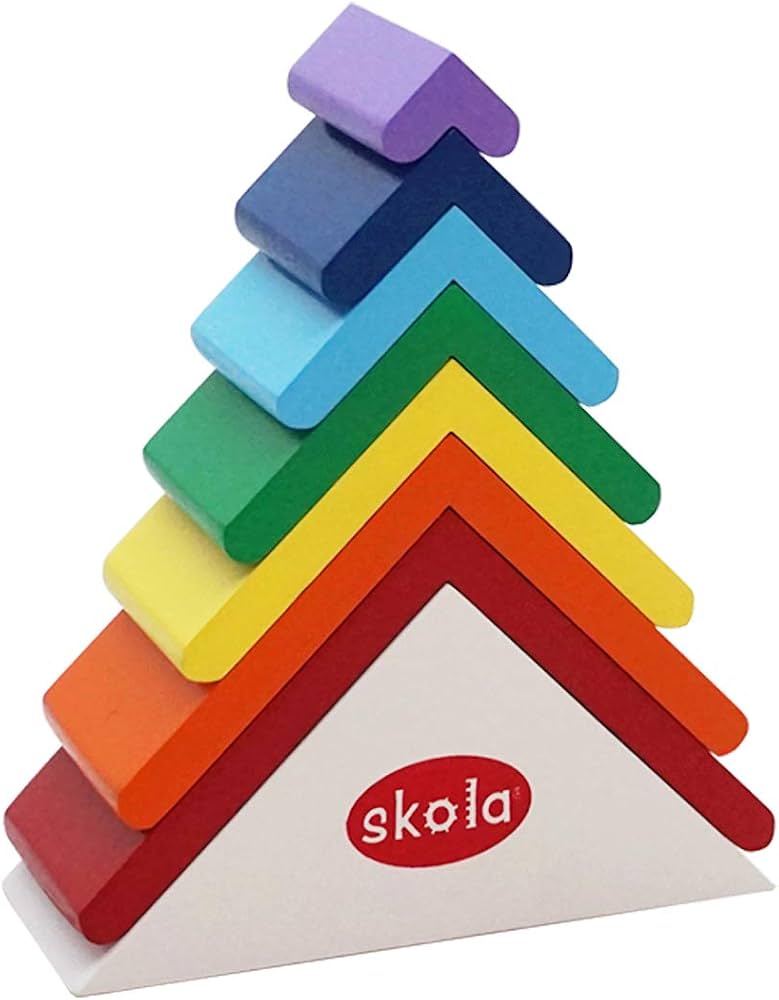
Skola Rainbow Stacker
- ✓ Wooden ring stacker with 5 graduated rings
- ✓ Non-toxic water-based paint
- ✓ Suitable for 6-18 months
* We earn a small commission — at no extra cost to you.
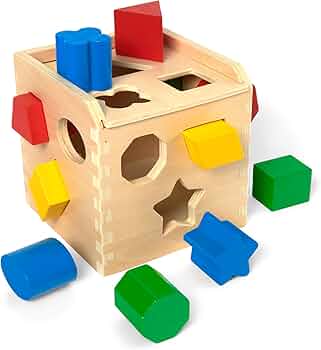
BabyGo Wooden Shape Sorter
- ✓ Wooden cube with 6 shape holes (circle, square, triangle, star, heart, rectangle)
- ✓ Water-based non-toxic finish
- ✓ Suitable for 9-24 months
* We earn a small commission — at no extra cost to you.
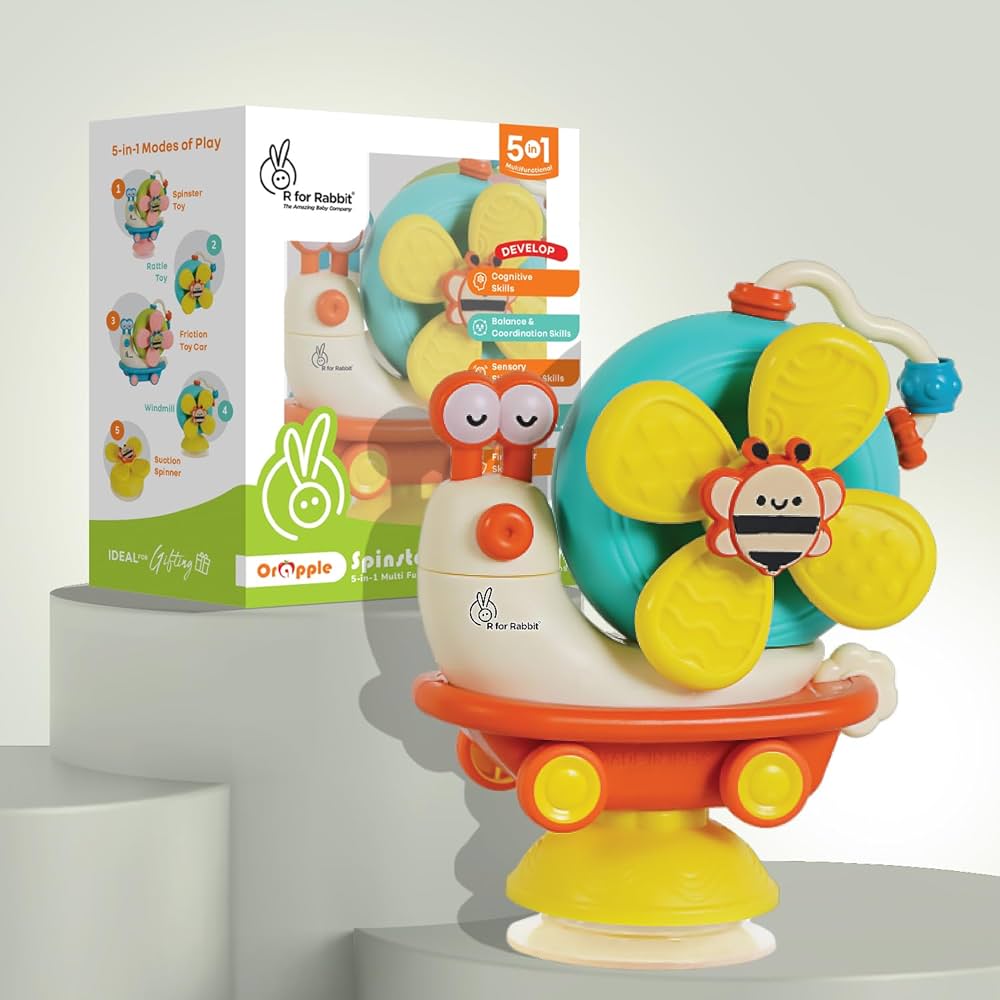
R for Rabbit Object Permanence Box
- ✓ Wooden box with sliding door and wooden ball
- ✓ Teaches object permanence and cause-effect
- ✓ Suitable for 8-18 months
* We earn a small commission — at no extra cost to you.