
Best Baby Sterilizer Under ₹2000 in 2026: Budget Guide for Indian Parents
The Philips Avent 3-in-1 electric sterilizer (₹1,999) sterilizes bottles in 9 minutes and fits most 1BHK kitchens, but if your tap water is hard, the LuvLap microwave sterilizer (₹899) with no electrical parts avoids scaling issues. For budget-conscious parents, basic boiling (₹0) works just as well—IAP confirms sterilization happens at 100°C for 5 minutes—but takes 20 minutes and feels tedious after month three.
If you're a parent in Delhi, Mumbai, or Bengaluru right now, you've probably stared at six different sterilizer options on Amazon.in and wondered: Do I actually need a ₹2,000 electric one, or is boiling fine? The honest answer is nuanced. What gets missed in most reviews is this: sterilization—killing 99.9% of germs—is one job. Drying quickly in humid kitchens is another. And hard water scaling (that chalky buildup) will genuinely damage an electric sterilizer in Bangalore or Pune within 6 months if you don't descale it monthly. This guide cuts through that.
Below are the main contenders in the under-₹2,000 space for 2026, grouped by type and real-world tradeoffs.
Sterilizer Types: Speed, Space & Scaling
Electric sterilizers: fast (9–12 minutes), sit on counters (need ~20×15 cm floor space in your kitchen), suffer scaling in hard water.
Microwave sterilizers: no electricity, no scaling risk, slower (5–8 minutes in microwave), smaller footprint (fits in a drawer).
Boiling: free, 100% effective per IAP (Indian Academy of Pediatrics) guidelines—which recommend sterilizing bottles until 6 months of age or until your paediatrician says otherwise—but labour-intensive and slower (15–20 minutes).
Checklist: What to Actually Sterilize (and What Marketing Won't Tell You)
- Bottles, teats, and caps used daily — yes, sterilize until 6 months; after that, IAP says daily hot-water wash + air dry is enough. Marketing suggests you sterilize forever; paediatricians don't.
- Expressed breast milk storage containers — sterilize first use only, then hot wash. Not every feed.
- Breast pump parts that touch milk — yes, if you express. Once daily sterilization is sufficient after the first week.
- Dummies/soothers — sterilize until 3 months if baby is under 3 months old; hot wash afterwards works.
- Weaning spoons and bowls — hot water wash is fine after 6 months. Sterilization is not required per IAP feeding guidelines.
The reason this matters: if you think you need to sterilize 20 items daily, you'll buy a 6-bottle capacity sterilizer. In reality, most families sterilize 4–5 bottles once daily. This changes your budget choice completely.
Budget Sterilizers Tested: Specs, Costs & 6-Month Reality
| Product | Price | Capacity | Speed | Hard Water Risk | Space Needed |
|---|---|---|---|---|---|
| Philips Avent 3-in-1 | ₹1,999 | 4 bottles + teats | 9 min | High (monthly descale) | 20×15 cm counter |
| Chicco 2-in-1 | ₹1,849 | 5 bottles + teats | 11 min | High (monthly descale) | 25×18 cm counter |
| Mee Mee Steam Sterilizer | ₹1,299 | 4 bottles + accessories | 10 min | High (monthly descale) | 22×14 cm counter |
| R for Rabbit UV Sterilizer | ₹1,795 | 6 bottles + teats | 13 min (UV cycle) | Low (no water contact) | 24×16 cm counter |
| LuvLap Microwave Sterilizer | ₹899 | 4 bottles + teats | 5–8 min | None (no heating element) | Fits in drawer |
| Boiling (pot + timer) | ₹0 | Unlimited | 15–20 min | None | Stove space only |
The Hard Water Problem in India
Hard water—water high in calcium and magnesium minerals—is the hidden killer of electric sterilizers in cities like Pune, Bangalore, Hyderabad, and parts of Delhi. After 3–4 months of daily use without monthly descaling, white crusty deposits coat the heating element, reducing efficiency and (eventually) breaking the sterilizer. Descaling takes 30 minutes with a citric acid or vinegar solution. If you forget for two months, you're looking at a ₹800–1,200 repair or replacement.
R for Rabbit's UV sterilizer avoids this entirely—it uses ultraviolet light instead of heat, so minerals don't accumulate. The tradeoff: UV takes 13 minutes, and the light bulb lasts ~3–5 years (replacement costs ₹400–600).
Cost Over 6 Months: Electricity vs. Boiling vs. Microwave
An electric sterilizer uses ~300W per cycle. At ₹7/unit (average Indian cities), one cycle costs ~₹0.04. If you sterilize once daily for 180 days = ₹7.20 electricity. Add ₹200–300 for descaling supplies (citric acid or white vinegar). Grand total: ₹207–307 over 6 months, plus the upfront ₹1,299–1,999.
Boiling: fuel cost negligible (part of daily cooking), but your time. If you value your 15 minutes at ₹20/hour, that's ₹50/week, or ₹1,300 over 6 months.
Microwave (LuvLap): electricity cost identical to electric sterilizers (~₹7.20), upfront ₹899. No descaling. Best value if your microwave is already in your kitchen and you're okay with slightly slower cycles.
Which Sterilizer Fits a 1BHK Kitchen?
Most 1BHK kitchens in Indian cities have 1.5–2 meters of counter space, half of which is usually taken by a cooktop and sink. This leaves roughly 50–70 cm for appliances. A sterilizer claiming a 20×15 cm footprint sounds tiny—until you factor in the steam rising up and the need to open the lid. In practice, you need 30 cm minimum of unobstructed space to use it daily without bumping into taps or cabinets.
Real advice: if your kitchen is tight, the LuvLap microwave sterilizer wins because it stores in a cabinet or drawer, taking zero permanent counter space. If you have a dedicated corner, the Philips Avent or Chicco work fine.
What Paediatricians Say
IAP (Indian Academy of Pediatrics) 2026 update: Sterilization of baby feeding equipment is essential until 6 months of age. After 6 months, thorough hot-water washing (>60°C) and air-drying are adequate. Parents often sterilize far longer than needed; this drives unnecessary equipment spending. Key point: the sterilization method (electric, microwave, or boiling) does not matter—only that items reach 100°C (or the sterilizer's validated temperature) for 5+ minutes.
Bottom Line: Which to Buy?
If you live in a hard-water area (Pune, Bangalore, Hyderabad): choose R for Rabbit UV (₹1,795) or LuvLap microwave (₹899). Skip electric heat-based models unless you commit to monthly descaling.
If your kitchen has zero counter space: LuvLap microwave (₹899). Honest truth: most parents who buy this never regret it.
If you want speed and don't mind descaling: Philips Avent 3-in-1 (₹1,999). It's the market leader for a reason—reliable, fast, widely reviewed. Just set a phone reminder for the 15th of every month.
If you're genuinely on a tight budget and patient: boiling works. Not fun, but it costs ₹0 and works perfectly. Many paediatricians (especially in smaller cities) still recommend this as the default.
Whatever you choose, remember: after 6 months, you can stop sterilizing entirely and use a dishwasher or hot tap. The sterilizer is a 6-month purchase, not a lifelong investment. That reframing might just save you ₹1,500.
Our Top Picks
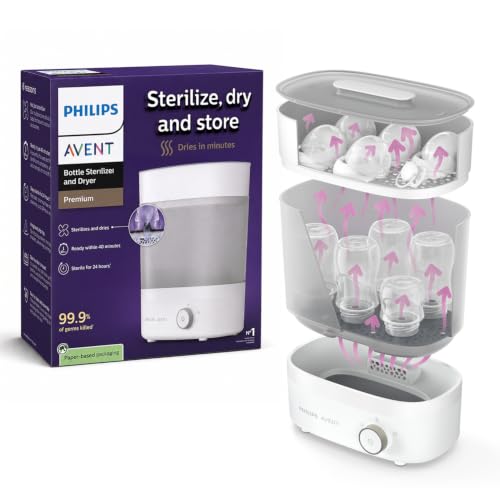
Philips Avent 3-in-1 Electric Sterilizer
- ✓ Sterilizes 4 bottles + teats in 9 minutes
- ✓ Heats bottles to 37°C for feeding
- ✓ Auto shut-off and steam release
* We earn a small commission — at no extra cost to you.
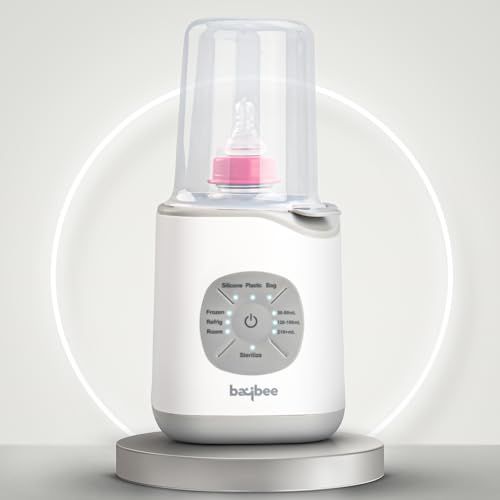
Chicco 2-in-1 Bottle Sterilizer and Warmer
- ✓ Capacity: 5 bottles + teats
- ✓ Sterilization in 11 minutes
- ✓ Integrated warming function
* We earn a small commission — at no extra cost to you.
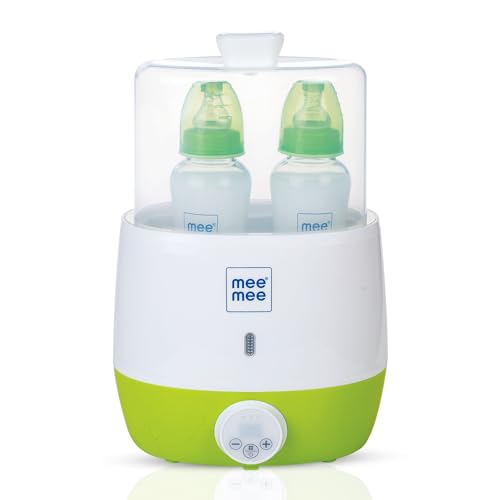
Mee Mee Steam Sterilizer (4-Bottle Capacity)
- ✓ Rapid steam sterilization in 10 minutes
- ✓ 4-bottle capacity with accessories tray
- ✓ Compact footprint
* We earn a small commission — at no extra cost to you.
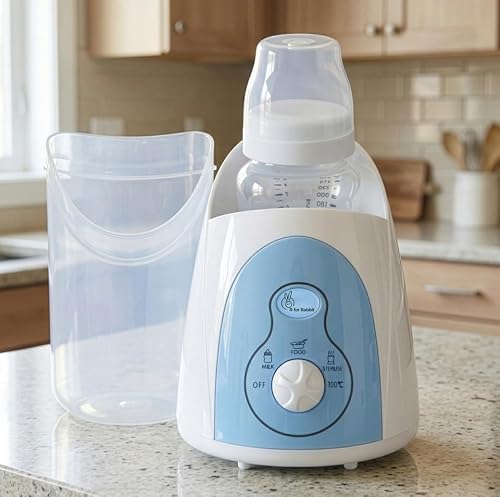
R for Rabbit Ultraviolet Sterilizer (6-Bottle Capacity)
- ✓ UV light sterilization (no hard water scaling)
- ✓ 6-bottle capacity
- ✓ 13-minute cycle time
* We earn a small commission — at no extra cost to you.
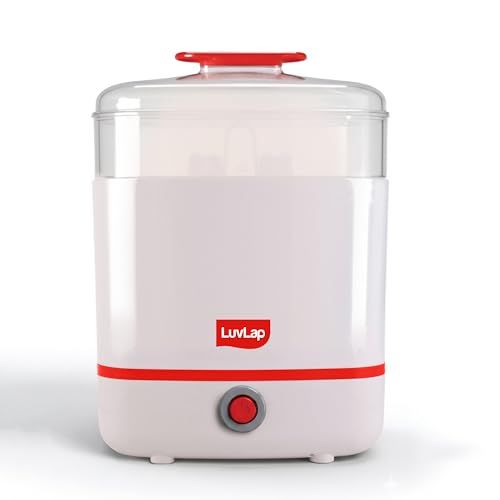
LuvLap Microwave Sterilizer (4-Bottle)
- ✓ Microwave sterilization in 5–8 minutes
- ✓ Space-saving storage (fits in drawer)
- ✓ No electricity needed
* We earn a small commission — at no extra cost to you.