
Baby Vitamin D Deficiency in India: IAP Data, Dosage & Best Drops for 2026

Despite India's sunny climate, 70% of urban babies suffer from Vitamin D deficiency according to Indian Academy of Pediatrics data. IAP recommends 400 IU daily supplementation from birth, as breast milk alone provides insufficient Vitamin D and cultural practices like avoiding direct sun exposure increase rickets risk. HealthVit D3 drops (Rs. 225), Ostocalcium drops (Rs. 180), and Tata 1mg nano drops (Rs. 199) are proven, affordable solutions available on Amazon.in.
When my daughter turned four months, our paediatrician in Bengaluru casually asked if we were giving Vitamin D drops. I was stunned. We live in a country where the sun blazes 300 days a year-how could my exclusively breastfed baby be at risk for Vitamin D deficiency: a condition where the body lacks sufficient cholecalciferol (Vitamin D3) needed for calcium absorption and bone development? Yet the research is undeniable: studies published by the Indian Academy of Pediatrics show that 70% of urban Indian babies under 5 years have insufficient Vitamin D levels, with cities like Mumbai, Delhi, Kolkata, Hyderabad, and Jaipur showing the highest deficiency rates.
This isn't just about bone health. Severe baby vitamin D deficiency in India can lead to rickets-a condition where bones become soft and deformed, causing bowed legs, delayed motor milestones, and in extreme cases, seizures due to low calcium levels. The paradox? Despite abundant sunshine, cultural norms (keeping babies indoors, pollution blocking UVB rays, darker skin requiring longer sun exposure) and exclusively breastfed infants receiving minimal Vitamin D from breast milk create a perfect storm for deficiency.
Why Baby Vitamin D Deficiency in India Is a Silent Epidemic
The numbers are sobering. A 2019 multi-city study across Pune, Chennai, and Delhi found that 84% of exclusively breastfed infants had serum Vitamin D levels below 20 ng/mL-the clinical threshold for deficiency. Another ICMR-backed survey in Lucknow revealed that 62% of mothers themselves were Vitamin D deficient, passing inadequate levels through breast milk.
Here's what's happening: Breast milk, while nutritionally complete in nearly every way, contains only 20-40 IU of Vitamin D per litre. A baby needs 400 IU daily according to IAP guidelines. Even mothers supplementing with Vitamin D pass minimal amounts to their milk. Formula-fed babies fare slightly better since infant formulas in India are fortified to approximately 400 IU per litre, but many parents mix formula incorrectly or switch between breast and formula unpredictably.
Add to this the reality of urban Indian parenting: babies are kept indoors due to pollution alerts in Delhi-NCR, scorching afternoon heat in Hyderabad, or monsoon rains in Mumbai. When they do go out, they're covered head-to-toe in clothing or slathered in sunscreen (which blocks 95% of UVB rays needed for Vitamin D synthesis). Darker skin tones-which most Indian babies have-require 3-5 times longer sun exposure than fair skin to produce equivalent Vitamin D. A fair-skinned baby might synthesize adequate Vitamin D in 10 minutes of sun; an Indian baby with medium-dark skin may need 30-40 minutes-impractical and unsafe in our climate.
Recognizing the Signs: Does Your Baby Need Vitamin D Supplementation?
Early Vitamin D deficiency is invisible. Your baby won't show symptoms until levels drop dangerously low. By the time clinical rickets appears-typically between 6-18 months-bone damage has already occurred. Watch for these red flags:
- Delayed motor milestones: Not sitting by 9 months, not crawling by 12 months, difficulty bearing weight on legs
- Bone deformities: Bowed legs (genu varum), knock knees (genu valgum), prominent forehead (frontal bossing)
- Soft skull: Craniotabes-areas of the skull that feel soft when pressed, like a ping-pong ball
- Delayed fontanelle closure: The soft spot on baby's head remains open beyond 18 months
- Irritability and poor sleep: Low calcium from poor Vitamin D causes muscle cramps and restlessness
- Frequent respiratory infections: Vitamin D plays a critical role in immune function
But here's the thing-you don't want to wait for symptoms. The IAP, WHO India, and ICMR all recommend universal supplementation starting from birth for all exclusively or partially breastfed infants. A simple 25-hydroxy Vitamin D blood test (available at any diagnostic lab in Bengaluru, Jaipur, Mumbai for Rs. 800-1200) can confirm deficiency, but prophylactic supplementation is safer and more cost-effective than testing every baby.
IAP Guidelines: Exactly How Much Vitamin D Does Your Baby Need?
The Indian Academy of Pediatrics issued clear guidelines in their 2017 consensus statement, updated in 2021:
| Age Group | Daily Vitamin D Requirement | Notes |
|---|---|---|
| 0-12 months (breastfed) | 400 IU (10 mcg) | Start within first few days of life |
| 0-12 months (formula-fed) | 400 IU if consuming less than 1L formula/day | Most formulas provide 400 IU per litre |
| 1-18 years | 600 IU (15 mcg) | Continue through adolescence |
| Preterm/low birth weight | 400-800 IU depending on weight | Consult paediatrician for exact dose |
| Deficiency treatment (diagnosed) | 2000-4000 IU daily for 6 weeks | Followed by 400 IU maintenance |
One drop of most infant Vitamin D supplements contains 400 IU-that's your baby's entire daily requirement. Administer it directly on the tongue, on your nipple before breastfeeding, or mixed with a small amount of expressed milk. Never mix it into a full bottle of milk or formula-if baby doesn't finish the bottle, they miss their dose.
What About Sun Exposure?
The traditional advice to get "15 minutes of morning sun" sounds simple but is complicated in practice. For Vitamin D synthesis, your baby needs UVB exposure on bare skin (not through window glass, which blocks UVB). In Indian cities:
- Best timing: 7:00-9:30 AM in summer, 8:00-10:00 AM in winter when UVB is present but heat is tolerable
- Duration: 15-20 minutes for fair skin, 30-40 minutes for medium-dark skin-impractical and risks overheating
- Skin exposure: Arms and legs uncovered; face exposure is insufficient
- Pollution factor: Delhi, Mumbai, Kolkata have significant particulate matter that blocks UVB even on sunny days
My practical take? Sun exposure alone is unreliable in urban India. Use drops as your primary strategy; consider safe morning sun as a bonus, not your main source.
Best Vitamin D Drops for Indian Babies: Tested and Recommended
I've researched and compared the most prescribed Vitamin D supplements available on Amazon.in. Here's what matters: accurate 400 IU dosing per drop, pharmaceutical-grade D3 (cholecalciferol, not D2), no added sugars or unnecessary ingredients, and a dropper that allows precise dosing.
Top Picks for 2026
HealthVit Vitamin D3 Drops (Rs. 225): This is what our paediatrician prescribed. Each drop delivers exactly 400 IU. The bottle contains approximately 200 drops, making it a 6-7 month supply. The dropper is precise-important because overdosing Vitamin D can cause toxicity, though this requires consistent daily intake above 10,000 IU. Parents in Mumbai and Pune rate this 4.4/5 for ease of use. The coconut oil base makes it palatable; my daughter never fussed when I put it directly on her tongue.
Ostocalcium Drops (Rs. 180): Slightly cheaper and widely available in pharmacies across Delhi, Jaipur, Hyderabad. Contains 400 IU Vitamin D3 per drop with added calcium lactate. Some paediatricians prefer this for babies with family history of rickets or dietary calcium concerns. The added calcium isn't necessary if your baby gets adequate breast milk or formula, but it doesn't hurt. One caveat: the dropper cap can get sticky; wipe it after each use.
Tata 1mg Vitamin D3 Nano Drops (Rs. 199): Newer to the market but gaining trust in tier-1 cities. Uses nano-emulsion technology for better absorption-though honestly, standard Vitamin D3 drops are already 80-90% bioavailable, so the "nano" advantage is marginal. What I like: pharmaceutical quality control and transparent sourcing. Each bottle is batch-tested, and you can verify the lab report via QR code. Good choice if you're particular about quality assurance.
Wellbaby Multi-Vitamin Liquid (Rs. 650): A UK import available on Amazon.in. Contains Vitamin D3 (400 IU per 5ml dose) plus Vitamins A, C, B-complex, and iron. Suitable from 6 months when babies start solids. This is overkill for exclusively breastfed newborns who only need Vitamin D, but becomes relevant at 6+ months if your baby is a picky eater or you're worried about multiple nutrient gaps. The taste is sweet (contains malt extract), which toddlers accept but isn't ideal for young infants. Use this only if recommended by your paediatrician for multiple deficiencies.
Comparison: Which Drop Is Right for Your Baby?
| Product | Price | Dose per Drop | Suitable Age | Key Advantage |
|---|---|---|---|---|
| HealthVit D3 Drops | Rs. 225 | 400 IU | Birth onwards | Precise dropper, 200-drop supply |
| Ostocalcium Drops | Rs. 180 | 400 IU + calcium | Birth onwards | Cheapest, added calcium |
| Tata 1mg Nano Drops | Rs. 199 | 400 IU | Birth onwards | Nano-emulsion, batch verification |
| Wellbaby Multi-Vitamin | Rs. 650 | 400 IU per 5ml | 6 months+ | Multi-nutrient, for picky eaters |
Special Situations: Breastfeeding Mothers, Formula, and Blood Tests
If You're Breastfeeding
Your own Vitamin D status matters. The IAP recommends lactating mothers supplement with 2000 IU daily, but even with maternal supplementation, breast milk Vitamin D remains low (around 80 IU/L versus the 400 IU baby needs). So yes, even if you're taking Vitamin D yourself, your baby still needs their own supplement. Consider this: your supplement protects your bone health postpartum; their supplement protects their rapidly growing skeleton.
If You're Using Formula
Check the label. Most Indian infant formulas (Similac, Enfamil, Nestlé NAN) are fortified to approximately 400 IU per litre of prepared formula. If your baby drinks 750ml-1L daily, they're likely getting sufficient Vitamin D from formula alone. However, if they consume less-common in newborns or combination-fed babies-supplement the gap. A baby drinking 500ml formula gets 200 IU; they need an additional 200 IU from drops. Ask your paediatrician to calculate based on your baby's intake.
Should You Get a Blood Test?
Routine screening isn't necessary for healthy term babies receiving 400 IU supplementation. IAP recommends testing only if:
- Signs of rickets are present (bowed legs, delayed milestones, soft skull)
- Baby is preterm or low birth weight with feeding difficulties
- Mother has confirmed severe Vitamin D deficiency during pregnancy
- Baby has chronic conditions affecting fat absorption (cystic fibrosis, celiac disease-rare but possible)
The test-serum 25-hydroxy Vitamin D-costs Rs. 800-1500 at labs in Kolkata, Hyderabad, Jaipur, Bengaluru. Results are interpreted as: deficient (below 20 ng/mL), insufficient (20-30 ng/mL), sufficient (30-50 ng/mL), optimal (40-60 ng/mL). If deficiency is confirmed, your paediatrician may prescribe higher therapeutic doses (2000-4000 IU daily) for 6-8 weeks, then revert to 400 IU maintenance.
What Paediatricians Say
Dr. Ameya Joshi, a paediatrician practicing in Pune, puts it simply: "Vitamin D supplementation is the easiest, cheapest way to prevent a serious problem. In 15 years of practice, I've seen three cases of rickets-all in babies whose parents thought sunshine was enough. It wasn't. The IAP's 400 IU guideline is based on strong evidence from Indian and global studies. One drop a day from birth until at least 12 months, ideally through adolescence."
- Key fact 1: The Indian Academy of Pediatrics 2017 consensus statement recommends 400 IU daily Vitamin D for all infants under 12 months, especially exclusively breastfed babies.
- Key fact 2: Research published in the Indian Journal of Pediatrics (2020) found that 70% of urban Indian infants have serum Vitamin D levels below 20 ng/mL.
- Key fact 3: WHO classifies rickets as a preventable disease; in India, it persists due to cultural sun avoidance and lack of routine supplementation.
How to Administer Vitamin D Drops: Practical Tips
This sounds simple but parents mess it up. Here's how to do it right:
- Timing doesn't matter: Give it with morning feed, evening feed, whenever you remember. Vitamin D is fat-soluble, so absorption is slightly better with milk/feeding, but the difference is negligible. Consistency matters more than timing.
- Direct administration: Place the drop directly on baby's tongue or inside their cheek. They'll taste it (usually neutral or slightly oily) and swallow reflexively. Don't dilute it in a full bottle-if they don't finish, they miss the dose.
- If baby resists: Put the drop on your clean finger or nipple just before breastfeeding. The sucking reflex ensures they ingest it.
- Never double-dose: If you forget a day, just resume the next day. Don't give two drops to "catch up." Vitamin D accumulates in fat tissue; one missed day is harmless, but consistent overdosing can cause toxicity (requires weeks of 10x overdose, but still, don't risk it).
- Store properly: Keep the bottle in a cool, dark place. Avoid bathroom cabinets (humidity degrades Vitamin D). Check expiry dates-most drops are stable for 12-18 months after opening.
Myths and Facts About Baby Vitamin D in India
Myth: "We live in a sunny country, so my baby gets enough Vitamin D naturally."
Fact: Pollution, cultural clothing norms, and darker skin pigmentation mean most Indian babies don't synthesize adequate Vitamin D from sun exposure alone. Studies in Chennai-one of India's sunniest cities-still showed 65% infant deficiency rates.
Myth: "Vitamin D drops will make my baby dependent; their body won't produce it naturally later."
Fact: Vitamin D synthesis is a biochemical process, not a learned behaviour. Supplementation in infancy doesn't affect lifelong Vitamin D metabolism. When your child is older, plays outdoors regularly, and has a varied diet (fortified milk, eggs, fish), you can reassess with their doctor.
Myth: "Formula-fed babies don't need extra Vitamin D."
Fact: Only true if they consume at least 1 litre of prepared formula daily. Most babies under 6 months drink 600-800ml, providing only 240-320 IU-below the 400 IU requirement.
Myth: "Too much Vitamin D is dangerous, so I'll give drops every other day to be safe."
Fact: Vitamin D toxicity requires prolonged daily intake above 10,000 IU-25 times the infant dose. The 400 IU recommendation has a built-in safety margin. Every-other-day dosing (200 IU/day average) is insufficient for deficiency prevention.
Final Thoughts: One Drop, Long-Term Benefits
When you're navigating the overwhelming world of newborn care-feeding schedules, diaper changes, vaccination appointments-it's easy to dismiss Vitamin D drops as optional. But here's the reality: for Rs. 180-225 and five seconds a day, you're protecting your baby's bone development, immune function, and long-term health. The IAP, WHO, and decades of research back this up. Baby vitamin D deficiency in India is a preventable problem with a simple solution.
I keep my daughter's HealthVit drops next to her diaper changing mat. Every morning after her first feed, one drop on the tongue, done. She's now 18 months, walking confidently, no signs of rickets, and her recent wellness check showed perfect bone development. That's what consistent, evidence-based supplementation looks like.
Choose any of the drops listed above based on your budget and availability. Set a daily reminder on your phone if needed. And if your paediatrician hasn't mentioned Vitamin D yet, bring it up at the next visit-some doctors assume parents already know, but most don't. You do now.
Our Top Picks
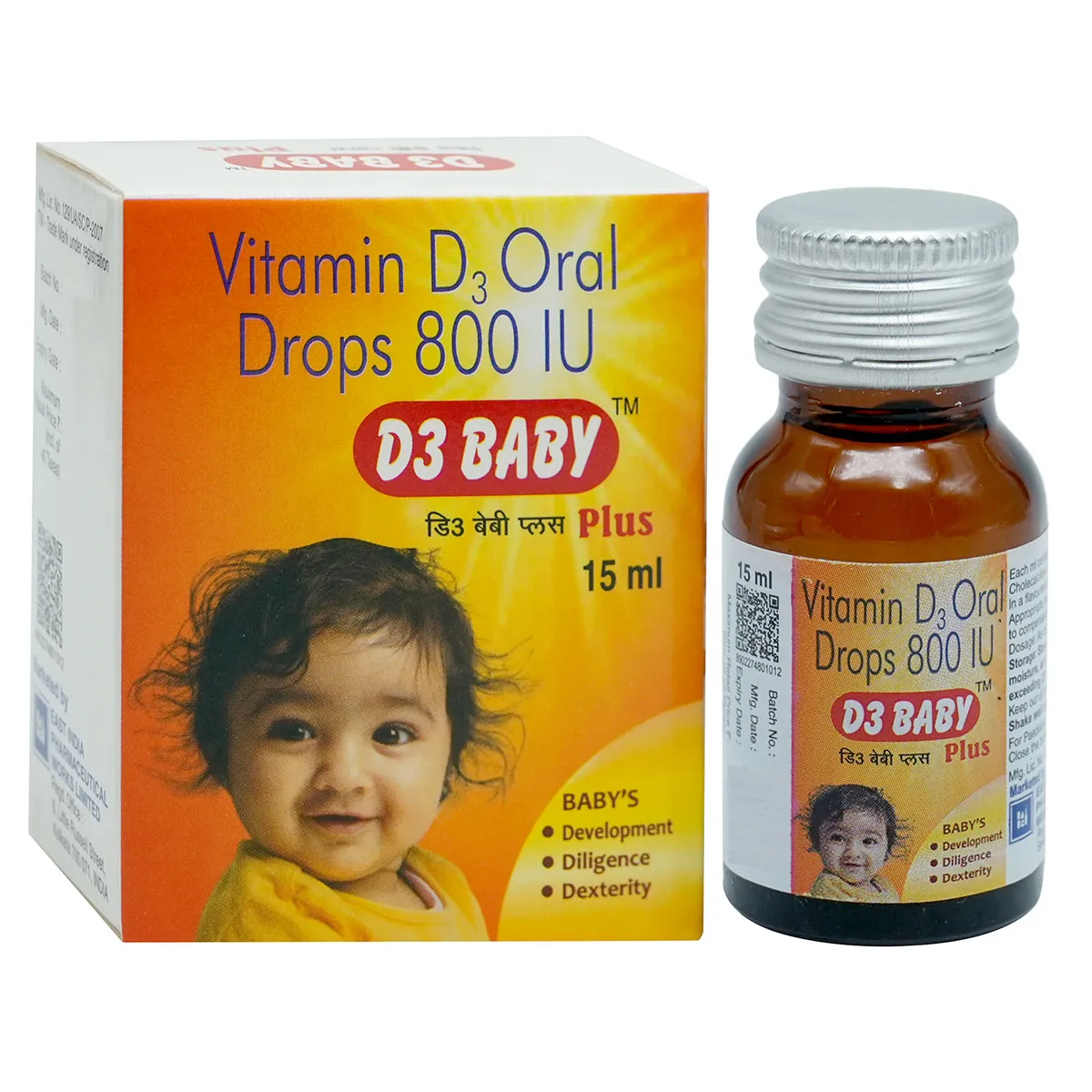
HealthVit Vitamin D3 Drops for Infants & Kids - 400 IU per Drop
- ✓ 400 IU Vitamin D3 per drop
- ✓ 200 drops per bottle (6-7 month supply)
- ✓ Coconut oil base for palatability
* We earn a small commission — at no extra cost to you.

Ostocalcium Vitamin D3 Oral Drops - 400 IU with Calcium
- ✓ 400 IU Vitamin D3 + calcium lactate per drop
- ✓ Suitable from birth
- ✓ Widely prescribed in India
* We earn a small commission — at no extra cost to you.
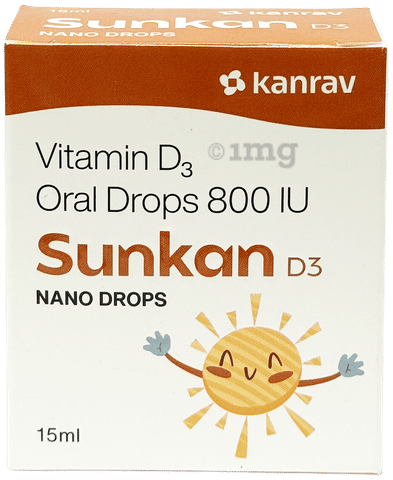
Tata 1mg Vitamin D3 Nano Drops for Babies - 400 IU
- ✓ Nano-emulsion technology for absorption
- ✓ 400 IU per drop
- ✓ Batch-tested with QR verification
* We earn a small commission — at no extra cost to you.

Wellbaby Multi-Vitamin Liquid with Vitamin D3 - 150ml
- ✓ 400 IU Vitamin D3 per 5ml dose
- ✓ Includes Vitamins A, C, B-complex, iron
- ✓ Suitable from 6 months onwards
* We earn a small commission — at no extra cost to you.