
Baby Ate Silica Gel Packet: What Parents Should Know About Toxicity and First Aid

Silica gel is non-toxic and won't poison your baby, but it's a choking and blockage hazard. If the packet was swallowed whole and your baby is breathing normally with no signs of distress, call poison control; if there's difficulty breathing, drooling, or blue lips, go to the ER immediately. Most packets pass within 24–48 hours.
That moment when you realize your baby got into a silica gel packet is properly terrifying. I remember my nephew grabbing one from a new shoe box, and his mom panicked for hours. The good news: silica gel isn't poisonous. The harder part is knowing what actually matters and when to act.
What the Evidence Actually Shows
Silica gel: tiny porous beads used to absorb moisture in packaging for shoes, vitamins, electronics, and dry goods. It's chemically inert—meaning it doesn't break down or release harmful compounds in the stomach or intestines.
According to the National Poison Information Centre, which runs India's 24x7 poison control hotline, silica gel ingestion in children is classified as non-toxic. It doesn't dissolve in stomach acid, doesn't get absorbed into the bloodstream, and passes through the digestive system largely unchanged. This is why you won't see silica gel packets labeled with skull-and-crossbones warnings.
However—and this is the real concern—silica gel presents a choking hazard and a potential blockage risk, especially for babies under 18 months. If your baby swallowed the entire packet (not just a few loose beads), the packet itself can lodge in the throat or oesophagus, or, in rare cases, cause intestinal obstruction.
Coloured silica gel (usually indicating moisture level or type—blue, orange, or pink) is still non-toxic but may contain a dye or colour indicator. The indicator itself is also non-toxic at the quantities used, but coloured packets warrant slightly more careful observation because you can sometimes see whether it's passed through the system via the baby's stool.
When to Check and What to Look For Immediately
The first 30 minutes matter most:
- Is your baby drooling excessively, gagging, or struggling to swallow? This suggests the packet or beads are stuck in the throat. Call 112 or go to the nearest ER—this is a potential airway issue.
- Is your baby's breathing normal, colour normal, and behaviour normal? No laboured breathing, no blue lips, no extreme distress? Proceed to the next step.
- Did you see the packet swallowed whole, or only suspect it? If you're sure it went down and your baby isn't showing distress, call poison control or your paediatrician before doing anything else. Do not induce vomiting.
Why not vomiting? Inducing vomiting actually increases the risk of the packet lodging in the throat or causing oesophageal injury on the way back up. This is universal guidance from poison centres and paediatricians—silica gel packets should never be forced back up.
How Long Does Silica Gel Stay in Your Baby's System?
Most silica gel packets pass through the digestive system in 24–48 hours. The packet will move through the stomach, into the small intestine, and out via stool. If your baby swallowed only a few loose beads (rather than an intact packet), passage is usually faster—12–24 hours.
If you know the gel was coloured, you may actually see it in the nappy within this window—harmless, just a sign it's on its way out. Clear gel packets are harder to track visually but follow the same timeline.
Blockage risk is rare but real: Blockage typically happens only if the packet was very large, your baby is very young (under 12 months), or swallowing issues exist. Signs of blockage (appearing 12–48 hours after ingestion) include persistent vomiting, severe abdominal pain, absence of bowel movements, or lethargy. If these appear, go to the ER.
Red Flags: When to Rush to the Emergency Room
Go immediately if your baby shows any of these:
- Difficulty breathing, wheezing, or stridor (high-pitched breathing sound)
- Blue lips or blue-tinged fingernails
- Severe drooling or inability to swallow saliva
- Persistent vomiting or refusal to eat/drink for more than 2–3 hours
- Severe abdominal pain or distension (belly looks swollen)
- No bowel movement 48+ hours after ingestion, combined with vomiting
- Lethargy or unresponsiveness
If your baby is alert, breathing normally, and acting like themselves—even if they're a bit fussy—call your paediatrician or poison control first. They can guide you on whether observation at home is safe or if in-person evaluation is needed.
What Poison Control and Doctors Actually Do
When you call, here's what they ask: When did ingestion happen? How old is the baby? Did you see it swallowed whole or just beads? Is the baby showing any distress? Based on this, they typically recommend one of three paths:
Observation at home: If ingestion happened fewer than 2 hours ago, the baby is breathing normally, swallowing normally, and acting well, doctors often recommend watching for 24–48 hours and bringing the baby in only if symptoms develop.
In-person evaluation: If there's any uncertainty about airway involvement, if the packet was very large, or if your baby is unusually young or has swallowing difficulties, an ER visit for imaging (X-ray or ultrasound) may be recommended to confirm the packet has passed the throat.
Admission for monitoring: Rare, reserved for cases where blockage is suspected or airway involvement cannot be ruled out.
When to See a Doctor
Contact your paediatrician or call poison control (India's 24x7 number: 011-4760-7060 or your state's poison centre) immediately if ingestion occurred. Go to the ER if breathing is difficult, lips are blue, the baby cannot swallow, vomiting persists, or abdominal distension appears. This is general information, not medical advice—always defer to your doctor's assessment of your baby's specific situation.
What IAP and WHO Guidance Says
IAP (Indian Academy of Paediatrics) classifies silica gel as a non-toxic foreign body in paediatric ingestion cases, emphasizing that toxicity is not the primary concern—airway patency and intestinal passage are. WHO affirms that silica gel does not produce systemic toxicity in children and recommends observation and watchful waiting as the standard approach for intact packet ingestion in stable children.
Our Top Picks

Mee Mee Wooden Teether with Silicone Grip
- ✓ BPA-free silicone grip
- ✓ Smooth wooden teething surface
- ✓ Sized for babies 3+ months
* We earn a small commission — at no extra cost to you.

Babyhug Silicone Teether with Rattle
- ✓ Food-grade silicone
- ✓ Textured teething surfaces
- ✓ Built-in rattle for engagement
* We earn a small commission — at no extra cost to you.
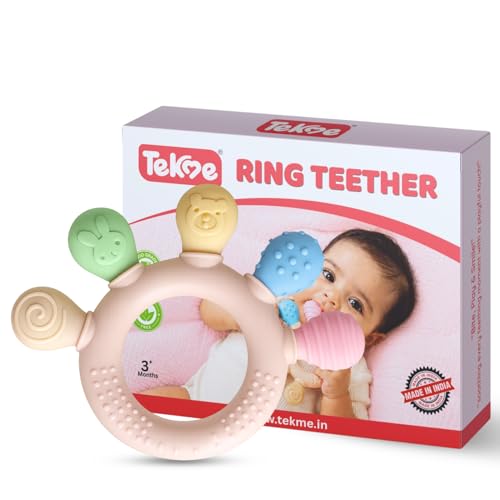
Mothercare Gentle Teether Ring
- ✓ Soft silicone, BPA and phthalate-free
- ✓ Easy-grip ring design
- ✓ Suitable from 3 months
* We earn a small commission — at no extra cost to you.