
Baby-Proof Balcony Doors: Why Auto-Locks Fail & What Works in 2026
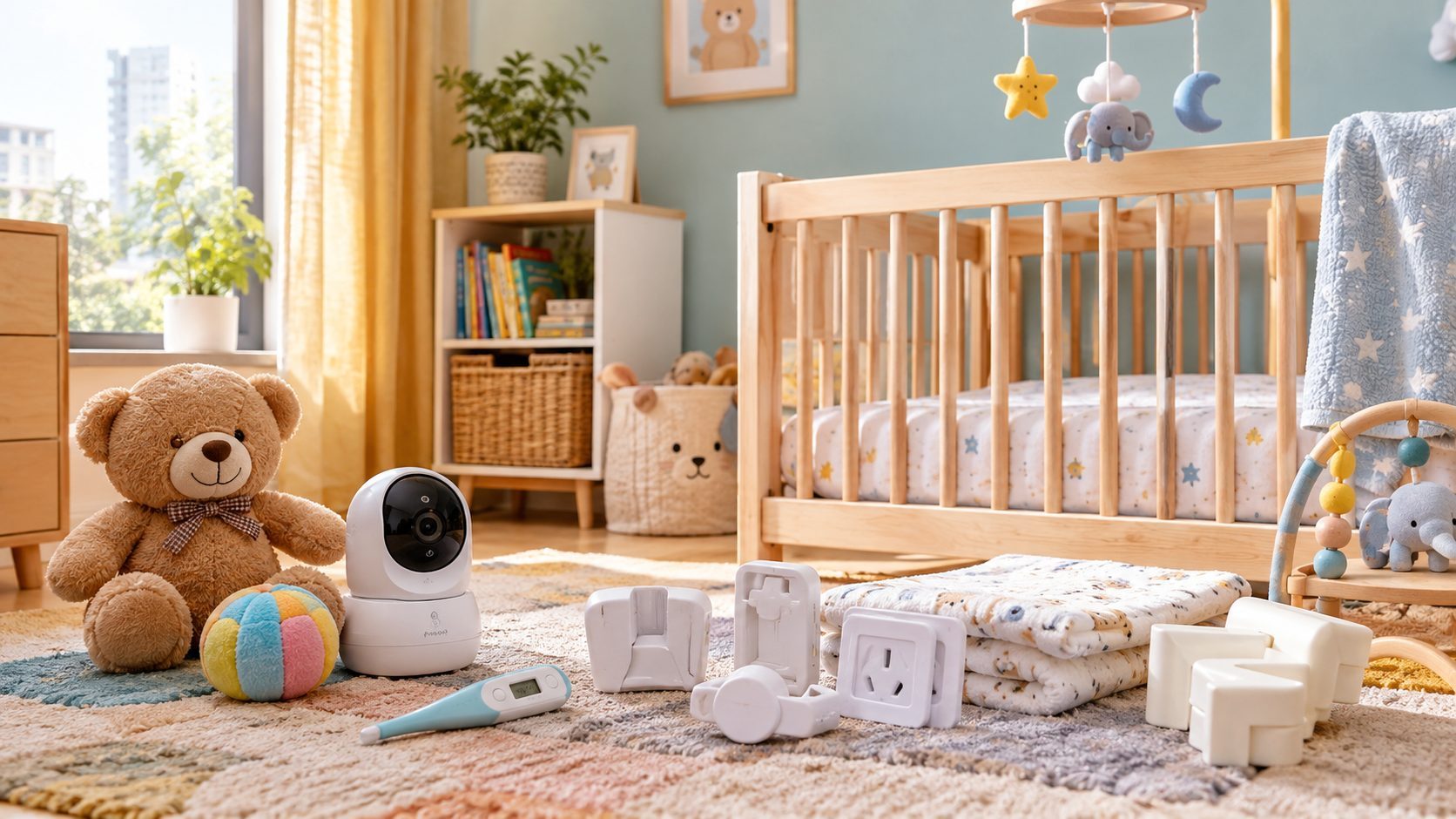
Adhesive stoppers fail on metal-framed balcony doors, especially in high humidity. Lever locks (Safety 1st, ₹650) and magnetic child locks (₹420) work reliably; add a secondary safety net if your balcony has railing gaps where a toddler's head could pass through.
If you live in a tier-1 apartment with a sliding balcony door and a child between 10–18 months, you've probably discovered that auto-locking mechanisms are useless—curious climbers push, pull, and slide their way outside before you realise they've moved. The risk is real: according to data from the Indian Academy of Pediatrics, unintended falls from height are among the leading causes of injury in this age group, and balcony access is a common entry point. This article walks you through why standard products fail, what actually works, and how to install them in apartments across Mumbai, Bengaluru, Delhi, and Pune.
The most popular baby-proof balcony door solutions include the Mee Mee adhesive door stopper, Safety 1st lever lock system, magnetic child locks, and DIY reinforcements using pool noodles or wooden wedges. We'll compare each by price, durability on Indian metal frames, humidity resistance, and real-parent installation experience.
What the Evidence Actually Shows
Fall safety for young children is a documented priority: the Indian Academy of Pediatrics recommends that caregivers treat any unsupervised access to balconies, windows, or height as a serious hazard zone. The WHO's injury prevention guidelines note that falls remain preventable if the environment is modified before the child reaches climbing age (typically 10–14 months).
Here's the core problem with common solutions: adhesive-based stoppers rely on surface contact. On metal frames—standard in Indian high-rises—humidity, temperature fluctuation, and the metal's non-porous surface cause adhesive to weep within 6–12 weeks. The stopper then peels away silently, often while you're home but inattentive.
Lever locks and mechanical catches work because they don't depend on adhesive; they lock the door track directly. Magnetic child locks use the same principle—a key-activated magnet holds the door firm. Both bypass adhesive failure entirely.
Secondary safety nets are not aesthetic—they're functional. If your balcony railing has gaps (common in older Mumbai and Delhi builds), a toddler's head or torso can slip between rails. A properly secured mesh net (like Kiddale safety nets, ₹800–1200 for 5-pack) closes that gap and is now almost standard in tier-1 apartments with young children.
Why Adhesive Stoppers Fail on Metal Frames
The Mee Mee adhesive door stopper (₹180, available on Amazon.in) is affordable and requires no tools. But the physics work against it. Metal frames in Indian homes are often powder-coated steel or aluminium, neither of which holds adhesive long-term in humid climates. Within weeks, the seal breaks. Parents report on Amazon.in that the stopper peels up, re-sticks, and eventually fails to hold the door open more than a crack.
Adhesive stoppers work better on uPVC or wooden frames, but if your building uses metal, they're not a reliable primary lock.
Lever Locks: The Gold Standard for Sliding Doors
The Safety 1st lever lock (₹650–750) is a mechanical child safety lock designed for sliding glass doors. You install it on the upper track of the door frame—outside your child's natural reach. When activated, the lever slides into the track and blocks the door completely. When you need to open the door, you press a button with your thumb and slide the lever out. No adhesive, no batteries.
Real parents in Mumbai apartments report it works on both metal and uPVC frames. Installation takes 10 minutes with a screwdriver. The only downside: it's visible, and you have to remember to lock it every time. But that's a feature, not a bug—you're actively securing the door, not trusting a passive stopper.
Magnetic Child Locks: Invisible, Effective, Key-Dependent
Magnetic locks (₹400–500, brands like BabyGo or Munchkin) attach a small magnet unit to the inside of the door frame and a latch to the door itself. When the door is pulled, the magnet holds it in place. To open, you use a key (small magnetic wand) that deactivates the lock.
Advantage: invisible, doesn't spoil the room's look, and works on all frame types. Disadvantage: you must keep the key somewhere accessible to adults but unreachable to toddlers—easier said do in a busy household. Some parents lose the key within months.
For balcony doors, magnetic locks are popular in Bengaluru and Pune apartments, where aesthetic minimalism is prized. On Amazon.in, brands like Chicco and Munchkin offer dedicated balcony-door magnetic lock kits (₹420–600) with two locks and two keys per pack.
DIY Pool-Noodle Jamb: Low-Cost, Temporary, Parent-Tested
A foam pool noodle (₹150–200 from sports retailers or Amazon.in) wedged into the door's edge gap stops the door from opening more than a hand's width. It's not a lock—it's a simple blocker. Real parents in Mumbai high-rises report using this as a secondary safety measure alongside a mechanical lock, because it prevents panicked pushing. A toddler cannot force the noodle out.
Downside: it's temporary and looks makeshift. But it's genuinely effective and reversible (remove it when you need full door access).
Secondary Safety Nets: Close Gaps in Balcony Railings
If your balcony railing has vertical bar gaps wider than 10 cm, a safety net is mandatory—not optional. Kiddale's 5-pack safety net mesh (₹800–1200) is specifically designed for balconies. Installation requires cable ties or velcro strips; most parents spend 30–45 minutes securing it around the perimeter.
The net is transparent, UV-resistant (lasts 2–3 years in direct sun), and complies with Indian toy safety standards for gaps. Once installed, a toddler cannot squeeze through or get their head stuck.
What IAP and WHO Guidance Says
Fall prevention: The Indian Academy of Pediatrics recommends treating balconies and height-access areas as restricted zones for children under 3 years, with physical barriers in place before independent mobility begins. Gap safety: WHO injury prevention guidelines state that gaps in railings wider than 10 cm pose entrapment risk for young children; mesh barriers or solid panels should be used if gaps cannot be closed.
How to Choose the Right Solution for Your Apartment
If your door frame is metal: Avoid adhesive stoppers. Use a lever lock (Safety 1st, ₹650) or magnetic lock (₹420–500). Lever locks are more reliable if you forget to unlock them frequently; magnetic locks suit apartment dwellers who open the balcony door daily but want an invisible solution.
If your railing has gaps: Add a safety net (Kiddale, ₹800–1200 for full balcony coverage). This is not an option if the gap is wider than 10 cm—it's essential.
If you want a temporary or trial solution: Start with a DIY pool-noodle jamb (₹150–200) for 2–3 weeks while you install a permanent lock. This gives you confidence in what works for your apartment layout.
If you live in a high-rise (15+ storeys): Use a lever lock AND a secondary net. The redundancy is worth the investment, because both systems must fail for a fall to occur.
When to See a Doctor
If your child has any unexplained bump, bruise, or fall from height, or if they seem disoriented, unusually drowsy, or vomit after a fall, seek medical attention immediately. This is general information, not medical advice.
| Solution | Price (Rs.) | Frame Type | Permanent? | Ease of Use |
|---|---|---|---|---|
| Mee Mee Adhesive Stopper | 180 | uPVC/Wood only | No (6–12 weeks) | Very easy |
| Safety 1st Lever Lock | 650 | All types | Yes | Easy |
| Magnetic Child Lock | 420–500 | All types | Yes | Medium (key management) |
| Pool-Noodle DIY | 150–200 | All types | No (temporary) | Very easy |
| Kiddale Safety Net (5-pack) | 800–1200 | All railings | Yes (2–3 years) | Medium (installation) |
Our Top Picks

Safety 1st Lever Lock for Sliding Doors
- ✓ Mechanical lock, no batteries required
- ✓ Fits all sliding door frame types
- ✓ Installation time: 10 minutes
* We earn a small commission — at no extra cost to you.
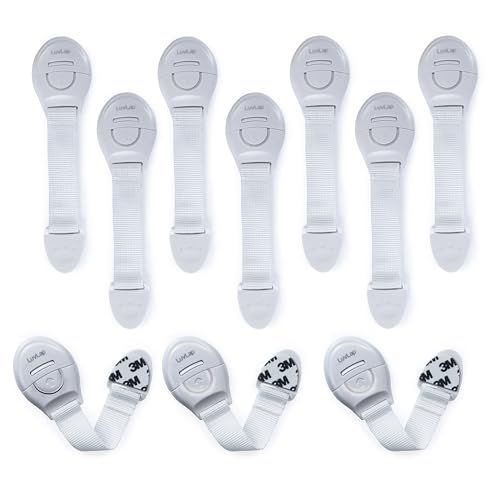
Magnetic Child Safety Lock for Doors
- ✓ Invisible magnetic latch system
- ✓ Includes 2 locks and 2 magnetic keys
- ✓ Works on all frame materials
* We earn a small commission — at no extra cost to you.

Kiddale Baby Safety Net Mesh (5-Pack)
- ✓ UV-resistant, lasts 2–3 years
- ✓ Fits balcony gaps up to 10 cm
- ✓ Installation with cable ties or velcro
* We earn a small commission — at no extra cost to you.

Mee Mee Adhesive Door Stopper
- ✓ Adhesive-based, tool-free installation
- ✓ Best for uPVC and wooden frames
- ✓ 6–12 week durability on metal frames
* We earn a small commission — at no extra cost to you.