
Why Your Baby Gets Bored With Toys Quickly: Developmental Attention Spans & Rotation Fixes
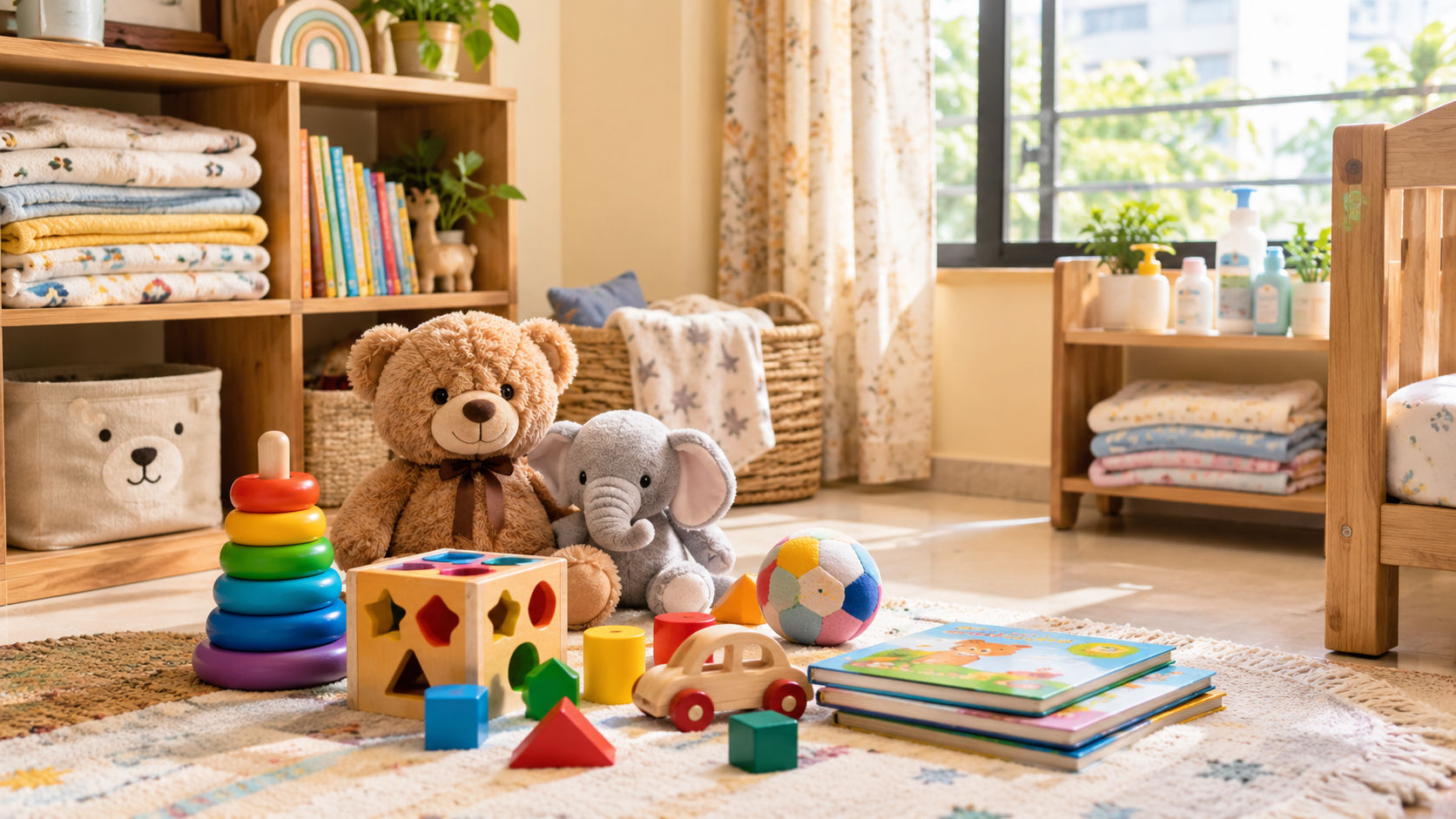
Babies aren't losing interest — they're cycling through attention spans tied to brain development. A 6-month-old focuses for 2 minutes; 12 months = 5 minutes; 18 months = 8 minutes. Rotating toys weekly and cutting visible options from 15 to 5 resets novelty without buying anything new.
Your baby gets bored with toys quickly not because something is wrong, but because their attention span is genuinely short at that age. This is normal development, not a sign you need to spend more money or own more toys. Most parents react by buying new toys — the real fix is understanding why your baby's interest drops and reorganizing what you already own.
How Baby Attention Spans Actually Work (It's Not What You Think)
A newborn cannot track a toy for more than 30 seconds. By 6 months, they can hold attention on one object for roughly 2 minutes before the novelty wears thin. At 12 months, this stretches to 5 minutes. By 18 months, an engaged toddler can stay with one toy or activity for 8 to 10 minutes. This isn't laziness — it's how their prefrontal cortex develops. The IAP (Indian Academy of Pediatrics) notes that rapid shifts in focus at 6–12 months are developmentally normal and signal healthy exploration, not boredom.
The problem most parents face is not that toys are uninteresting — it's that after 2–3 minutes, the toy becomes familiar. Your baby's brain is wired to seek novelty. The moment a toy stops surprising them, the dopamine hit drops and they look elsewhere. This is actually good neurology.
Why Too Many Visible Toys Make It Worse
When 15 toys sit visible in a playpen or basket, your baby sees all of them at once. Each one competes for attention. The brain gets overwhelmed — not stimulated, overwhelmed. Research on toy clutter shows that infants engage longer with individual toys when fewer options are visible. They play more deeply; they stay focused slightly longer. The decision paralysis is real, even for a 9-month-old.
Additionally, overstimulation from too many toys in one space can trigger irritability or withdrawal — which parents misread as boredom. The fix is radical: reduce visible toys from 15 to 5. Store the rest. Your baby will immediately show longer engagement with each toy because there's no competing distraction.
The Rotation System: How to Reuse What You Own
This is the single most effective fix and costs nothing. Keep 5 toys visible for one week. Store 10 others out of sight — in a cupboard, a different room, anywhere out of line of sight. After 7 days, swap 3 toys from the visible set with 3 from storage. Your baby sees them as new again, even though they've owned them for months. Attention resets.
How to rotate for your baby's age:
- 6–9 months: Rotate every 5–7 days. At this age, novelty wears off fastest. Keep textures and rattles visible; hide stacking toys and teethers temporarily.
- 9–12 months: Rotate weekly (every 7 days). Add one or two simple cause-effect toys (like a soft ball that squeaks). Hide complexity — simple is still better.
- 12–18 months: Rotate every 7–10 days. Include push toys, simple puzzles, and blocks. A 15-month-old can handle slightly more visual choice, but 5 items is still optimal.
- 18+ months: Rotate every 10–14 days. Toddlers at this age can manage 6–8 visible toys without overwhelm, but rotation still extends engagement.
Parents who implement this system report that their toddler plays independently 20–30 minutes longer per session, without a single new purchase. The rotation also forces you to observe which toys genuinely hold attention and which are just taking up space.
Open-Ended vs Single-Function Toys: Which Hold Attention Longer
A toy that does one thing — lights up, plays a sound, then stops — holds attention for 1–2 minutes. A toy that your baby can do things with holds attention for 5–8 minutes. This is the open-ended vs single-function divide.
Single-function toys: Press the button, it sings, done. A baby engages, the action repeats, then interest drops. Examples: electronic learning cubes (if they only press-and-play), some musical mats.
Open-ended toys: Wooden blocks, soft balls, stacking rings, teethers with varied textures, cloth books with different crinkles and flaps. Your baby controls what happens next. They stack, bang, chew, drop, throw, retrieve. Each session feels different because your baby makes it different.
Your rotation should lean 70% open-ended, 30% single-function. A baby will stay focused longer with a set of stacking rings than with an electronic toy that plays one song on loop.
Skill Mismatch: When a Toy Is Too Easy or Too Hard
Sometimes your baby abandons a toy not because it's boring, but because it doesn't match their current skill. A 6-month-old cannot grasp a tiny block — frustration sets in, and they move on. An 18-month-old bored by a simple rattle because they've outgrown it. Skill mismatch feels like disinterest but is actually developmental readiness.
Check your toy against these gates:
- 6–9 months: Can your baby grab it? Does it have safe textures to mouth? Does it make a sound or have interesting colours? If yes on two counts, it fits.
- 9–12 months: Can they grasp, bang, and release it? Does it roll or respond to their action? Can they sit and explore it for 4+ minutes without frustration?
- 12–18 months: Can they stack it, push it, or combine it with other toys? Does it require a skill they're close to mastering (like inserting a ball in a slot)?
A toy that is 10% too hard causes frustration and abandonment. A toy that is 10% too easy still works but won't hold attention long. Aim for toys in the just challenging enough zone for your baby's current month.
Play Alongside Your Baby: The Attention Multiplier
A toy your baby plays alone with for 2 minutes can hold attention for 8–10 minutes if you're there playing with them, not directing. This is not about teaching — it's about shared focus. Sit next to your 9-month-old, pick up a soft block, drop it, pick it up again. Your baby will do the same. You're not controlling the play; you're extending it through parallel engagement.
Parents often assume boredom means the toy is the problem. Half the time, the problem is that the toy needs a play partner. Even 10 minutes of side-by-side play daily dramatically shifts how long toys hold attention.
When to See a Doctor
If your baby shows no interest in any toy, has no response to sound or light, or seems disengaged from people as well as objects, mention it to your paediatrician. These could signal hearing or developmental concerns worth checking. This is general information, not medical advice. Occasional disinterest in toys is normal; complete indifference to all stimulation warrants a check.
What IAP and WHO Guidance Says
- IAP: Infant play and toy engagement are linked to motor and cognitive milestones, not to the quantity of toys owned. Structured play observation is more predictive of development than toy variety.
- WHO: Infants 6–12 months develop object permanence and cause-effect reasoning through play. Simple, rotating toys are more developmentally useful than complexity or constant novelty.
Our Top Picks

Tupperware Colorful Nesting & Stacking Cups
- ✓ 7 stackable cups in bright colours
- ✓ BPA-free, food-grade plastic
- ✓ Safe for mouthing from 6 months; grows into nesting games at 12+ months
* We earn a small commission — at no extra cost to you.
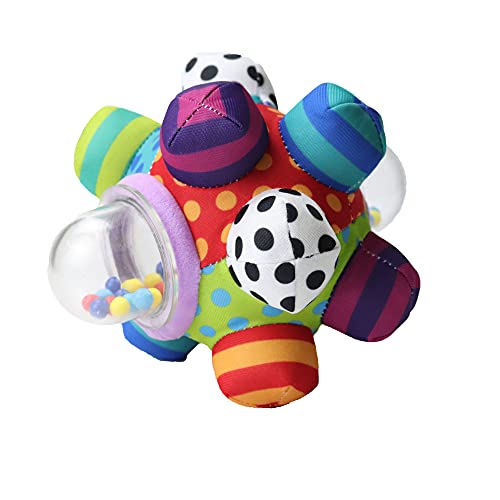
Sassy Developmental Bumpy Ball
- ✓ Textured rubber surface with bumps; easy to grasp
- ✓ Lightweight, safe for 6+ months
- ✓ Encourages gross motor play; holds attention 5+ minutes
* We earn a small commission — at no extra cost to you.
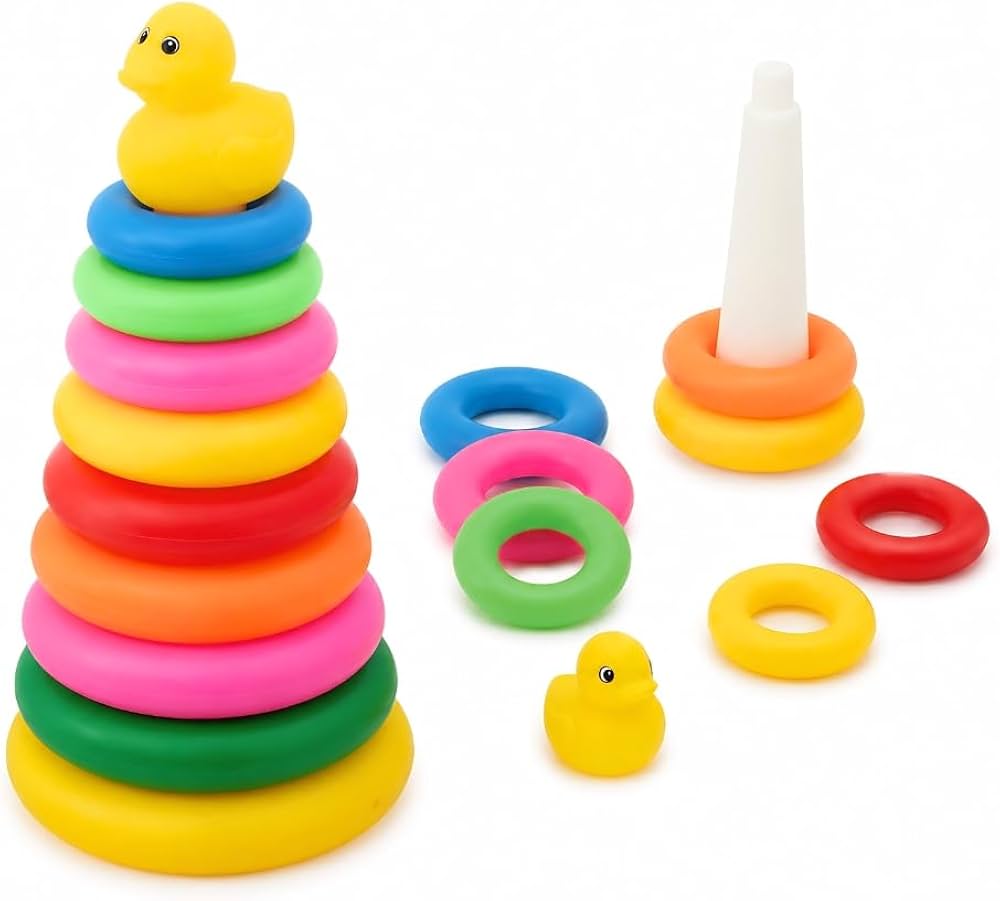
Mastermind Toys Wooden Stacking Ring
- ✓ Solid beech wood with non-toxic finish
- ✓ Develops hand-eye coordination; open-ended play from 9+ months
- ✓ Durable; becomes a puzzle toy at 18+ months
* We earn a small commission — at no extra cost to you.
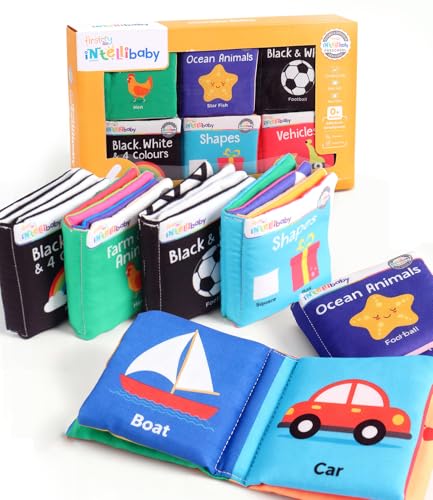
Fisher-Price Soft Crinkle Book
- ✓ Crinkle paper, squeaker, and textured pages
- ✓ Machine washable; safe from 3 months
- ✓ Holds attention 6–8 minutes; grows with baby
* We earn a small commission — at no extra cost to you.

Pigeon Silicone Teether with Handle (Sensory Bites)
- ✓ Food-grade silicone; soft and safe for mouthing
- ✓ Multiple textures; easy for 6+ months to grip and explore
- ✓ Dishwasher safe; open-ended play and teething relief
* We earn a small commission — at no extra cost to you.