
Baby Proofing for Walkers: October Checklist for 12-18 Months
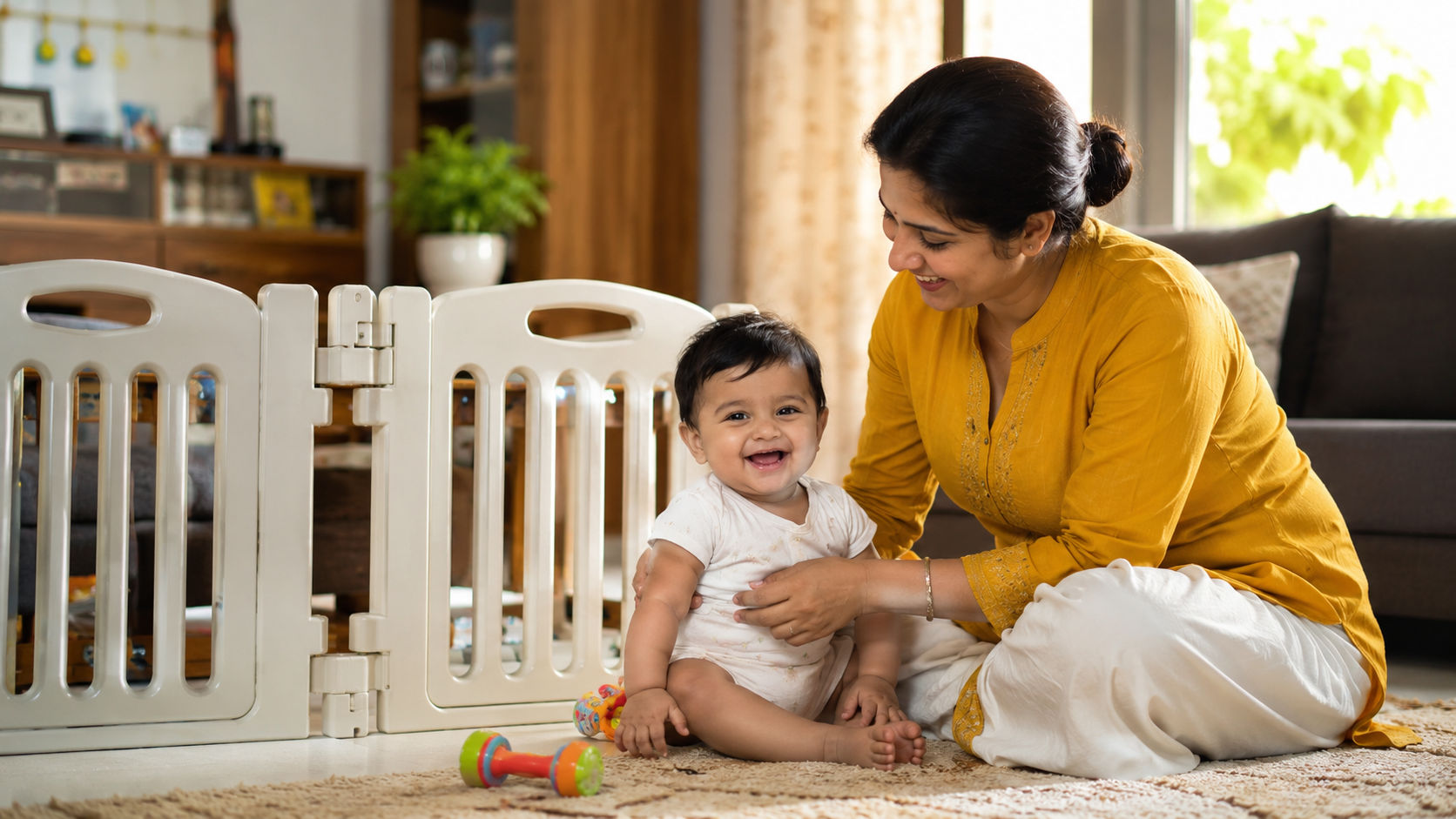
Baby proofing for walkers in October means three urgent tasks: install heater guards (Rs. 400), window locks (Rs. 150 each), and socket covers (Rs. 180 for 12-pack) before Diwali, reinforce staircase gates, inspect balcony nets after monsoon, and check for loose festival lighting wiring. This is general information, not medical advice.
October is the month when most Indian homes shift into festival mode—heaters hum, diyas appear on shelves, strings of lights wrap around balconies, and firecrackers quietly pile up in corners. For a baby learning to walk, these changes create hazards that flat-ground proofing never covered. At 12–18 months, your little one is fast, curious, and can now reach higher. This checklist covers the room-by-room autumn and early festival season dangers every parent should address before November lights go live.
Essential October Baby Proofing Checklist for Walkers
Baby proofing for walkers: the shift from flat-surface hazards to height and heat risks. Here are the seven non-negotiable items:
- Install heater guards around oil-filled radiators (Rs. 400–600 for wall-mounted guards)
Why: Radiators and oil heaters reach 65–75°C in October. A curious toddler who leans or falls touches hot metal or tries to grab the cord. Guards create a barrier 10–15 cm from the surface, preventing direct contact. - Lock all windows with child-proof locks (Rs. 150–200 per lock, 2–3 locks per room minimum)
Why: Walkers climb onto sofas, beds, and windowsills. After monsoon, window frames are loose; a toddler's weight or reaching can dislodge old mesh screens or weak latches. Diwali season brings open windows for light and air—locks prevent falls. - Cover electrical sockets near Diwali lights and chargers (Rs. 180 for 12-pack socket covers)
Why: Festival string lights often run through outlets near floor level or behind furniture. Babies touch dangling plugs and probe open sockets. Socket covers slide over unused outlets; twist-locks prevent determined toddlers from removing them. - Reinforce staircase gate hinges and check latch security
Why: A new walker still staggers. A gate weakened by 6 months of opening and closing suddenly gives way when a 14-kg child leans on it. Test every hinge, tighten bolts, and ensure the latch clicks hard—no play. - Inspect balcony safety net for monsoon damage (wind, debris, torn mesh)
Why: October wind often shreds nets further. Even a small 10 cm gap is enough for a toddler to push a ball—or their head—through. Re-staple or replace mesh before your walker discovers it. - Secure loose festival light wiring to walls (use cable clips, not tape)
Why: Toddlers trip on dangling cords and chew on exposed wires. Tape fails within days; adhesive clips keep wires pinned to the wall, away from tiny hands and mouths. - Move all stored firecrackers to high locked cabinets (above shoulder height, 160+ cm)
Why: Families often stack firecrackers low for convenience. Walkers pull boxes down. Stored firecrackers are dry and easily knocked over. Lock them in a cabinet a toddler cannot reach or open.
Room-by-Room October Hazards: Where Walkers Get Hurt
Autumn proofing isn't generic—it's seasonal. Different rooms carry different risks once temperatures drop and Diwali prep begins.
Living Room (Heater + Lights + Diyas)
October heaters and festival lamps create a tight, warm space. Oil-filled radiators sit against walls; Diwali diyas rest on low shelves or TV stands. Walkers reach, grab, and pull. Install heater guards first. Move diyas to a locked cabinet or high shelf (at least 150 cm up). Secure light cords with clips. If you use a freestanding heater, pen it behind a Safety 1st pressure gate or similar barrier.
Kitchen (Loose Wiring, Stored Crackers, Hot Surfaces)
Kitchens accumulate festival clutter: firecrackers stored under the sink, extension cords for extra lights, hot cooktops running longer for sweet-making. Move all crackers to a locked cabinet well above counter height. Tape down or clip all loose wires. Use oven guards to keep tiny hands away from cooking surfaces. Ensure your baby gate locks securely at the kitchen entry.
Bedroom (Windows After Monsoon, Unstable Furniture)
Monsoon weakens window frames and screens. Check every window lock. Walkers also love to climb—test that dressers and shelves are firmly anchored to walls with metal L-brackets. Inspect corner guards and edge bumpers; many loosen over months of use. Replace them if they're peeling or cracked.
Balcony (Net Integrity, Loose Railings)
Post-monsoon, inspect your balcony safety net for gaps larger than 5 cm. Winds and debris age nets faster than heat alone. Re-staple torn mesh or replace sections. Check railing bolts; loose railings pose fall risks if a toddler leans or climbs.
Staircase (Gate Strength, Loose Treads)
Stairs are where walkers take biggest risks. Test your staircase gate weekly. Open and close it 10 times—feel for any creep in the hinges or latch. Tighten all bolts with a wrench. Check that each stair tread is secure; loose treads under a toddler's step cause tumbles. Install corner guards at the base and top landing.
Product Solutions for October Walkers
Two standout products fit this season's risks. The Safety 1st Easy Walk-Through Gate (Rs. 2,800 on Amazon.in, 4.1 stars from 890 reviews) features pressure-fit hinges that auto-close and double-latch bars—tested by parents for staircase and doorway use during high-traffic Diwali weeks. The R for Rabbit Corner Guard Set (Rs. 220 per set, 4.3 stars from 3,100+ reviews) installs on sharp furniture edges and window sills; the foam bumpers cushion falls and prevent walkers from head injuries on hard corners during the chaotic festival season.
When to See a Doctor
If your walker shows signs of a head injury (vomiting, unusual drowsiness, confusion, ear/nose bleeding), sees a fall involving the neck or spine, or ingests firecracker dust or chemicals, seek immediate medical care. Contact your pediatrician if you notice recurring bruises suggesting a fall you didn't witness, or if a fall-related swelling doesn't improve within 48 hours. This is general information, not medical advice.
What IAP and WHO Guidance Says
The Indian Academy of Pediatrics emphasises that home injury is the leading cause of unintentional death in children under 5, with falls and burns among the most common. IAP recommends home safety audits every three months and immediate attention to seasonal hazards (heaters, lights, stored materials). WHO guidance on child-proofing homes notes that supervision alone fails with curious toddlers; physical barriers (gates, guards, locks) reduce injury risk by up to 60 percent when correctly installed.
Our Top Picks

Safety 1st Easy Walk-Through Gate
- ✓ Pressure-fit hinges, auto-close
- ✓ Fits doorways and stairs 65–107 cm
- ✓ Double-latch safety bars
* We earn a small commission — at no extra cost to you.

R for Rabbit Corner Guard Set (Foam Bumpers, 12-Pack)
- ✓ Adhesive-backed foam bumpers
- ✓ Cushions sharp furniture edges
- ✓ 12 pieces per pack
* We earn a small commission — at no extra cost to you.