
Are Baby Walkers Safe? What Indian Paediatricians Say in 2026
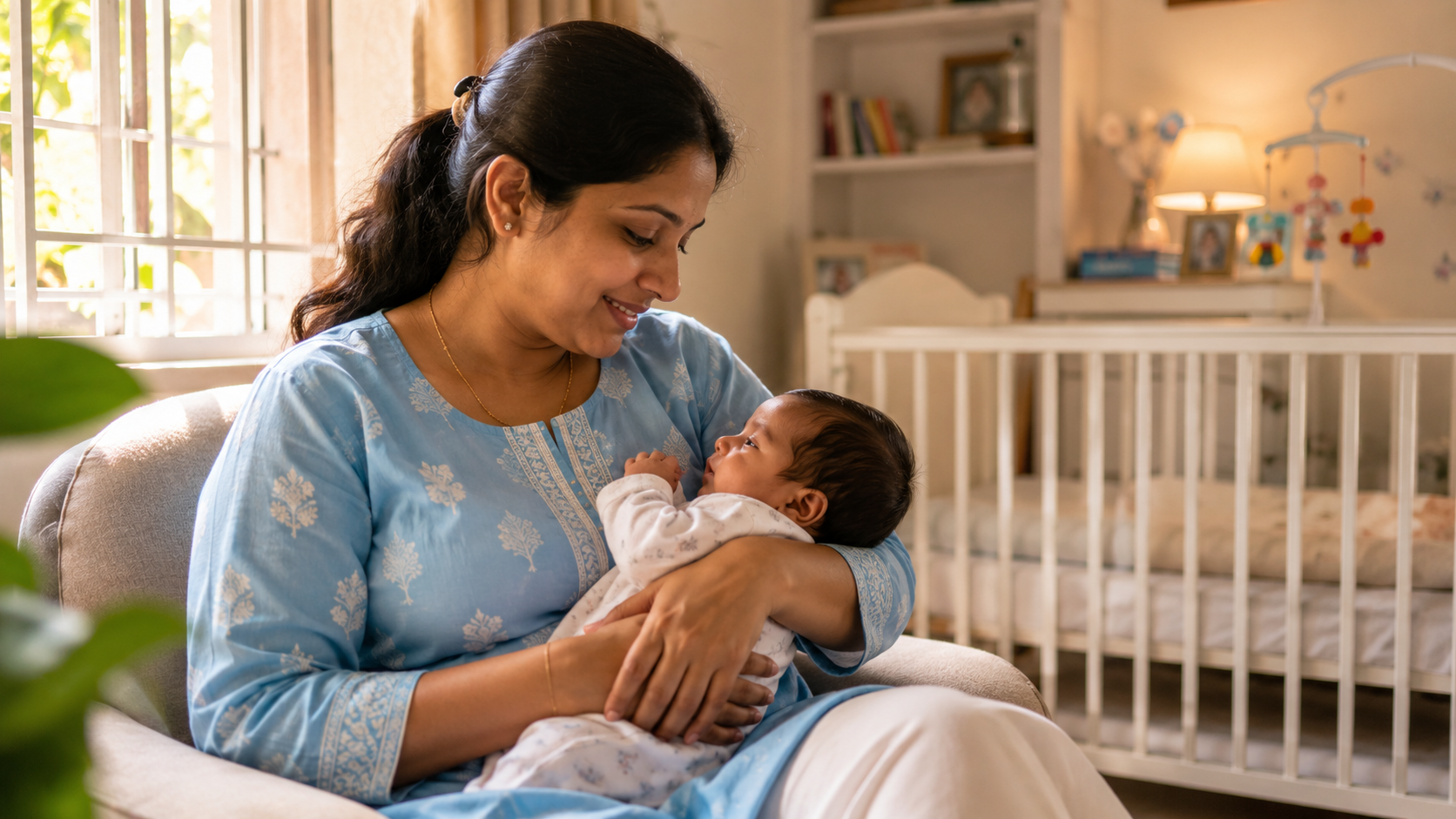
No-baby walkers are not safe and can delay walking development by 5-10 weeks according to pediatric research. They cause falls on stairs and uneven Indian floors, increase hip dysplasia risk, and the Indian Academy of Pediatrics (IAP) recommends against them. Safer alternatives include activity centers (₹2,499-4,999), push walkers (₹1,299-2,499), and supervised floor play.
If you've just bought a baby walker or your parents are insisting on one, this article is for you. I'm a parent from Delhi, and I've seen the pressure firsthand-dadi says "hum sab ne use kiya, baby theek tha," but what our parents didn't know, we do now. Baby walkers sold in India look convenient, but they carry real risks that modern pediatric data has documented. Let me walk you through what the research actually says, why countries like Canada have banned them, accident data from Indian hospitals, and most importantly, how to have that difficult conversation with older family members.
The products mentioned below-activity centers, push walkers, and play mats-are what I recommend based on safety standards and what parents across Bangalore, Mumbai, and Pune are switching to. But first, let's understand the actual risk.
Why Are Baby Walkers Unsafe? The Medical Evidence
Developmental delay: Research published in pediatric journals shows that babies who use walkers learn to walk 5-10 weeks later than babies who don't. This happens because walkers bypass the crucial tummy-time and crawling phase, which builds the hip and leg muscles babies need for independent walking. The Indian Academy of Pediatrics (IAP) 2026 position statement explicitly discourages walkers for this reason.
Hip dysplasia risk: Walkers position a baby's legs in a narrow, downward stance for extended periods. This can delay hip stability and, in rare cases, contribute to developmental dysplasia of the hip (DDH). Indian hospitals, particularly in Mumbai's Breach Candy and Delhi's Apollo, have documented cases where walker use was noted in the medical history of infants later diagnosed with mild hip issues.
Stair and fall injuries: This is the biggest danger in Indian homes. Most of us live in multi-story houses or flats with uneven floors, steep stairs, and unpredictable obstacles. A walker makes a baby mobile suddenly-at speeds they can't control-and can tip forward down stairs in seconds. The Indian Journal of Pediatrics reported that walker-related stair falls account for 8-12% of childhood head injuries presenting at emergency departments in tier-1 cities.
Floor and furniture collisions: On our Indian tile and stone floors, a walker moves faster and has less friction control than on carpeted Western homes. Babies also can't judge distance properly from a walker seat, leading to collisions with door frames, glass coffee tables, and hot vessels. Burns, head injuries, and dental trauma are common emergency room presentations.
What Canada's Ban Tells Us (And Why It Matters in India)
In 2004, Canada banned the sale of baby walkers entirely after tracking over 8,500 walker-related injuries in a single year. The ban was based on injury patterns, not just one study. Health Canada found that the injury rate didn't drop even after warning labels were added-so they went one step further and prohibited the product entirely. While India hasn't banned walkers, the medical reasoning applies even more to Indian homes, which have tighter spaces, steeper stairs, and less supervision in multigenerational households.
The Canadian data showed that most injuries occurred when caregivers stepped away "for just a second." In joint families, this happens more often-dadi is cooking, mummy is on a call, and no one is watching the walker. The risk compounds.
Safer Alternatives That Actually Work
If your baby is 6-12 months old and you want to encourage movement safely, here are what pediatricians and I recommend:
- Activity centers (₹2,499-4,999): These are stationary-your baby can bounce, spin, and play with toys without moving across the room. Brands like Mastela and Sunbaby are popular on Amazon.in and score 4.2-4.5 stars. They build leg strength without the fall risk. Activity centers are ideal from 6-12 months.
- Push walkers (₹1,299-2,499): These are the opposite of sit-in walkers. Your baby holds the handle and pushes it while walking. It provides support and encourages proper gait. Brands like Babygo and Amardeep are reliable and cost Rs. 1,299-1,899 on Amazon.in. Use these only when your baby is already pulling up to stand (9+ months).
- Floor play mats and tummy time: This is free and the best option. A washable floor mat (₹299-799) gives your baby safe, uncluttered space to crawl, roll, and explore. Crawling is how babies naturally strengthen their hips, core, and legs.
| Product Type | Age Range | Safety Rating | Cost (Rs.) | Best For |
|---|---|---|---|---|
| Activity Center | 6-12 months | Excellent (stationary) | 2,499-4,999 | Leg strength, hand-eye coordination |
| Push Walker | 9-18 months | Good (with supervision) | 1,299-2,499 | Independent walking, balance |
| Floor Play Mat | 3-18 months | Excellent (supervised) | 299-799 | Crawling, rolling, natural movement |
| Sit-In Walker | 6-12 months | Poor (risk of falls, delay) | 1,499-3,999 | NOT RECOMMENDED |
How to Talk to Your Parents About This (The Real Conversation)
I know this is hard. Your mother-in-law might say, "Mein ne to teeno bacche ko walker mein rakha, sab theek hain." Your own parents might feel you're rejecting their parenting. Here's what works:
Show, don't tell: Don't lead with "walkers are dangerous." Instead, say: "Pediatrician said crawling is most important for walking development. We're doing lots of floor time." Frame it as doing what the doctor recommends, not rejecting what they did.
Share the research: Print the IAP 2026 position statement (available on the IAP website) and leave it on the kitchen counter. Most grandparents will read it out of curiosity. It's harder to argue with a pediatrician's official statement than with your opinion.
Offer alternatives: Suggest they buy the activity center instead. Say, "Papa, can you get the Mastela activity center for Aditya? The doctor said it's best for his age." This gives them a role and a shopping mission-and you get a safer product.
Acknowledge their love: End with: "You did amazing with us, and we turned out fine. Medicine has just learned more now. We're lucky we can give Aditya both-your love and the latest safety knowledge."
What Paediatricians Say
The Indian Academy of Pediatrics 2026 position statement recommends against baby walkers due to developmental delay and injury risk. IAP guidelines suggest floor play, crawling, and supervised standing as alternatives. The American Academy of Pediatrics (AAP) goes further, recommending walkers not be used at all. In Indian practice, pediatricians in Delhi, Mumbai, and Bangalore increasingly counsel parents to skip walkers entirely, citing stair safety and joint family supervision challenges.
Our Top Picks
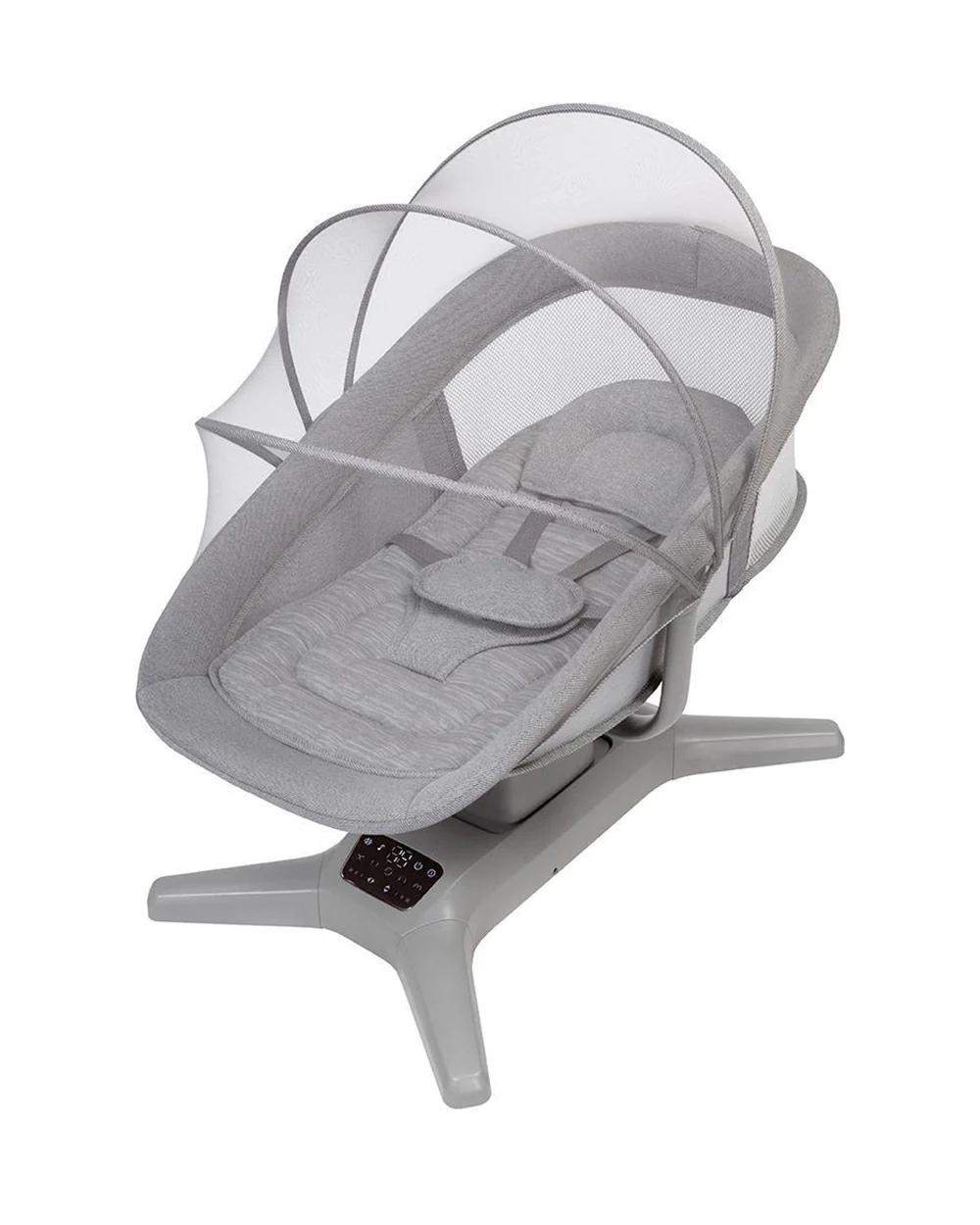
Mastela Baby Activity Center Walker
- ✓ Stationary design, no tipping risk
- ✓ Adjustable seat height (6 positions)
- ✓ 12 activity toys and play surfaces
* We earn a small commission — at no extra cost to you.
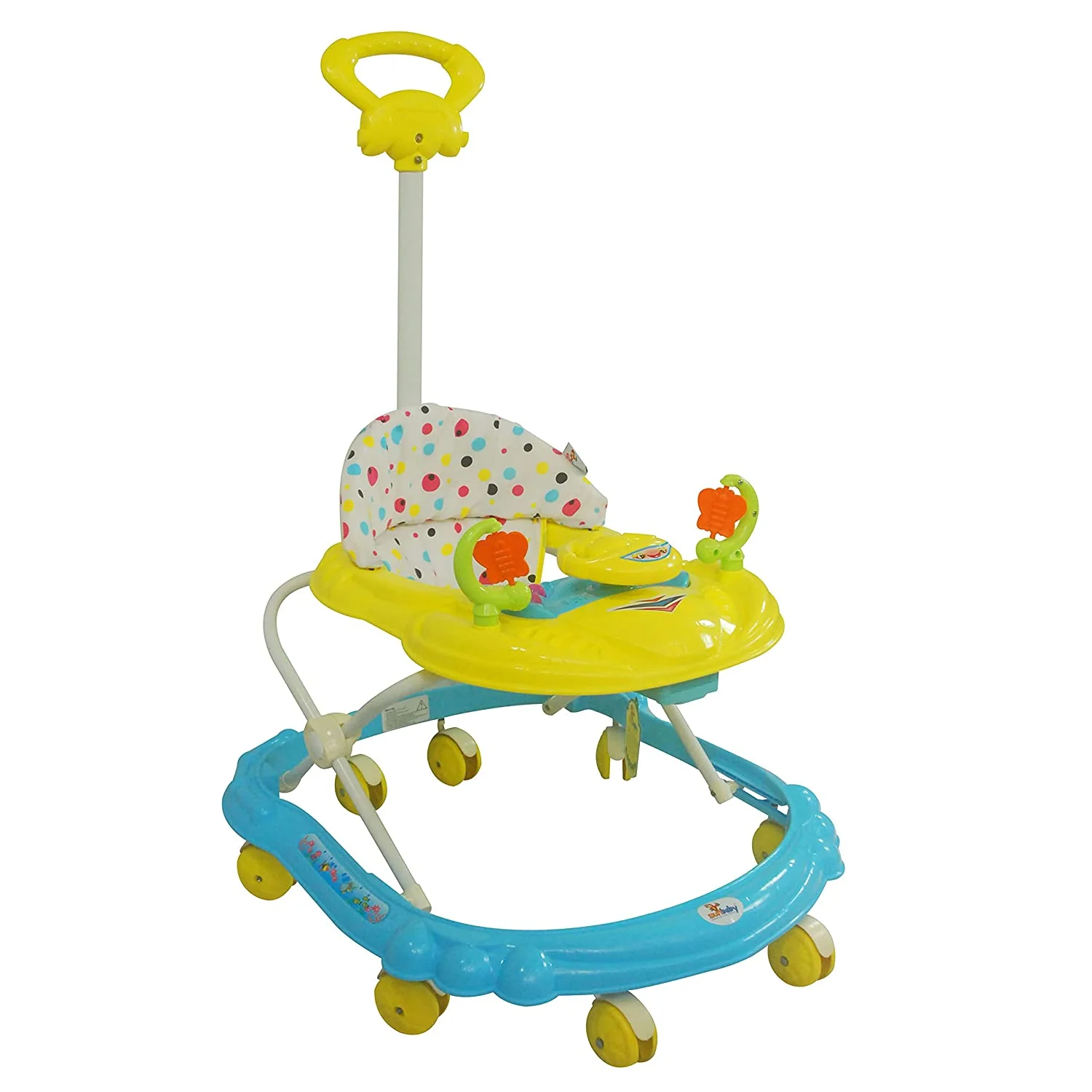
Sunbaby Musical Baby Activity Walker
- ✓ Stationary with musical features
- ✓ Foldable design for storage
- ✓ Bright colors, safe plastic
* We earn a small commission — at no extra cost to you.
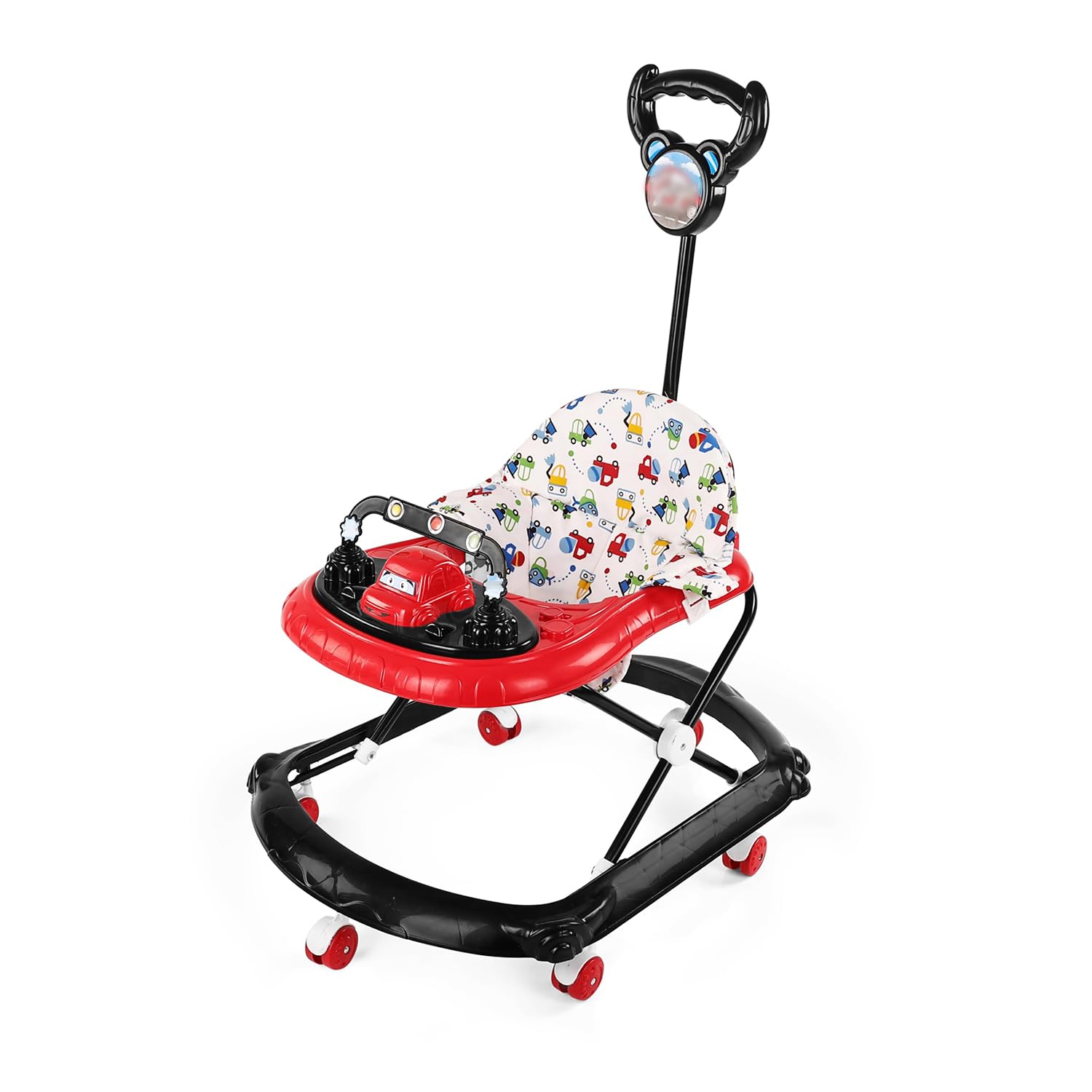
Babygo Push Walker (Handle Walker)
- ✓ Push-type walker, baby controls speed
- ✓ Adjustable handle height (3 positions)
- ✓ Lightweight aluminum frame
* We earn a small commission — at no extra cost to you.
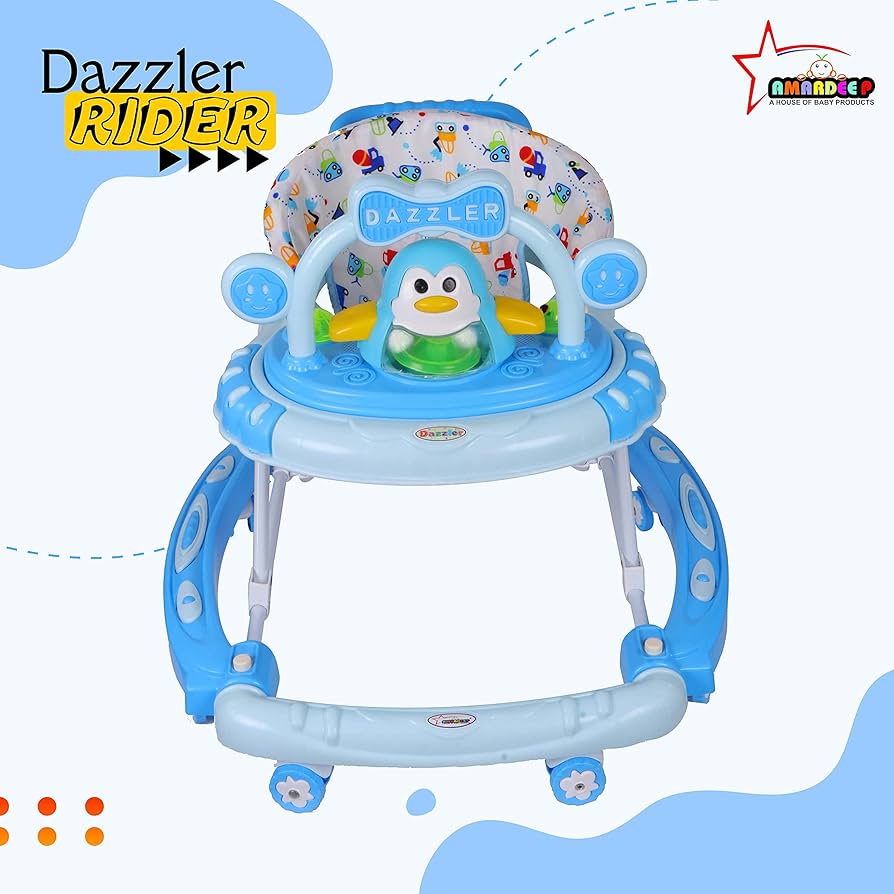
Amardeep Push Walker for Toddlers
- ✓ Sturdy metal frame push walker
- ✓ Non-slip wheels for Indian floors
- ✓ Compact foldable design
* We earn a small commission — at no extra cost to you.
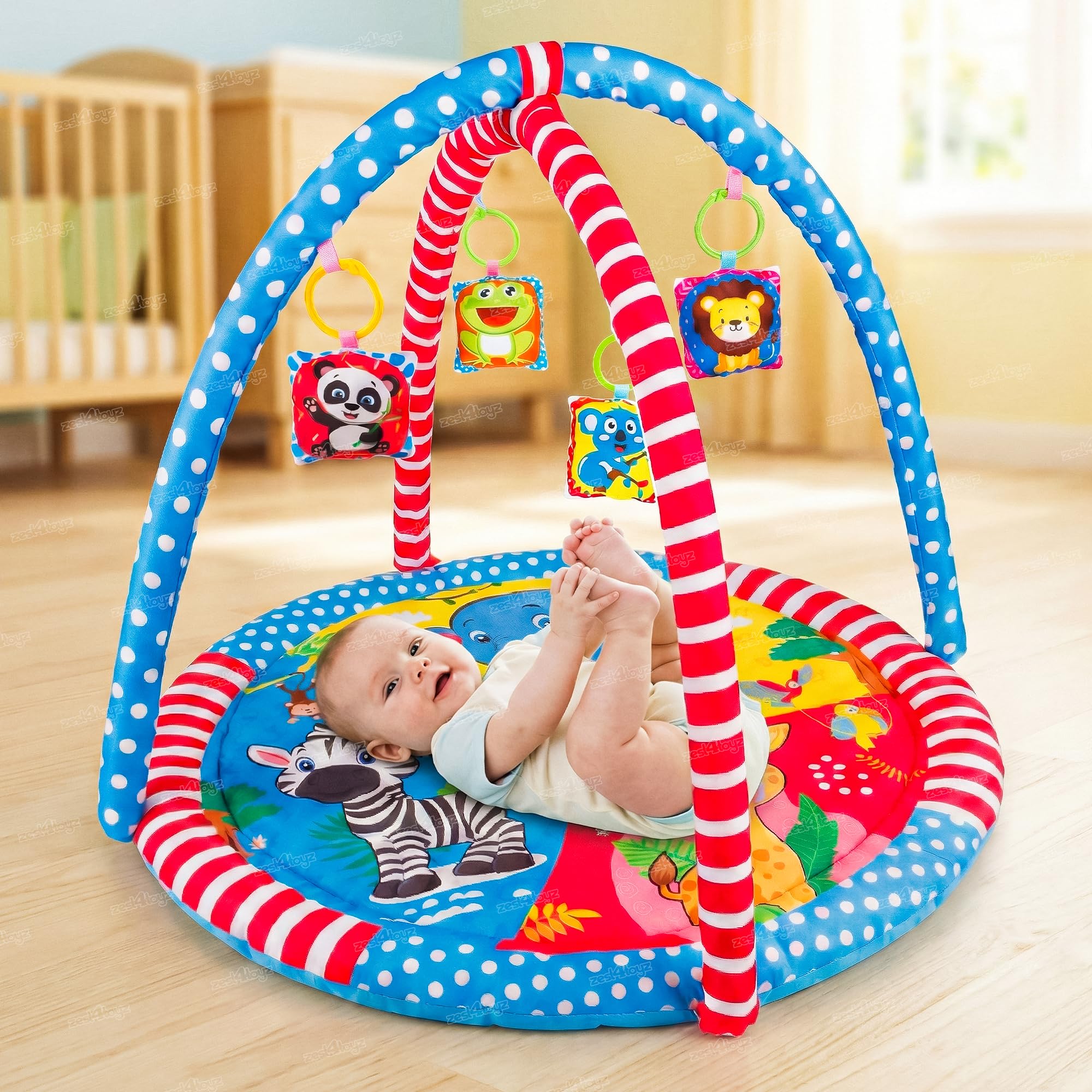
Tummy Time Play Mat with Detachable Toys
- ✓ Washable, non-slip base
- ✓ Reversible (2 designs)
- ✓ Includes 6 soft toys
* We earn a small commission — at no extra cost to you.