
7 Month Baby Food Chart India: IAP Guidelines & Day-Wise Meal Plan (2026)
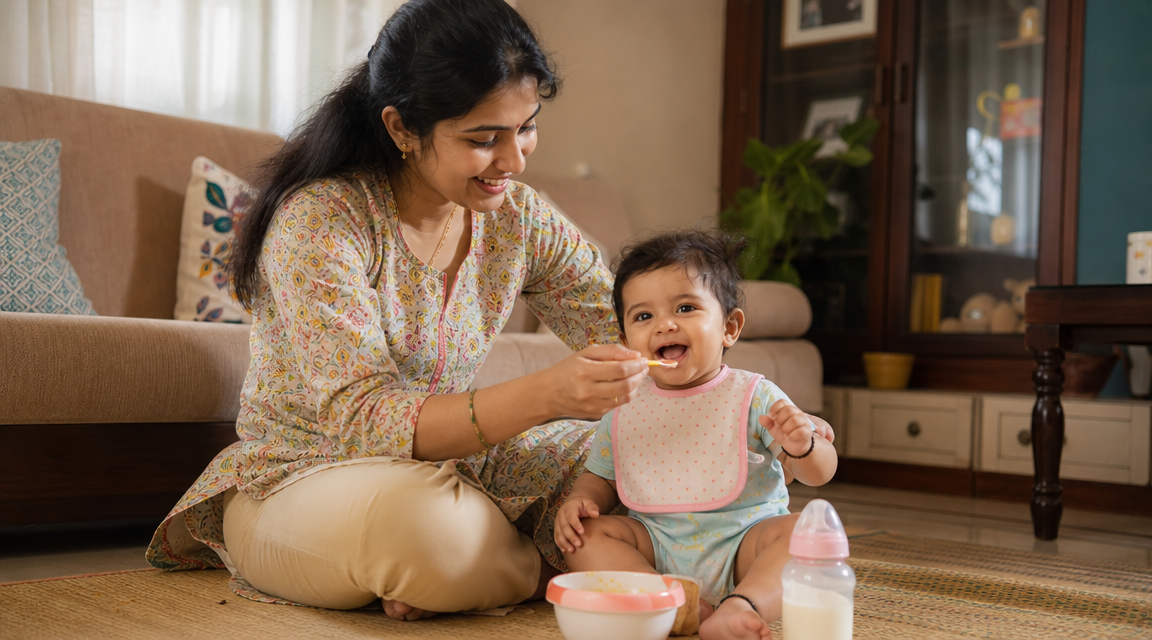
At 7 months, babies need 2-3 solid meals daily alongside breastmilk or formula, progressing from smooth purees to mashed textures. The Indian Academy of Pediatrics recommends introducing single-ingredient foods for 3 days each to monitor allergies, with portion sizes of 3-4 tablespoons (quarter katori) per meal, gradually increasing to half a katori by month-end.
When my daughter turned 7 months in our Mumbai flat last summer, I realized the food chart that worked at 6 months suddenly felt inadequate. She'd push the bowl away after two spoons of the same old apple puree, and I knew we needed more variety and texture. If you're creating a 7 month baby food chart India routine right now, you're probably juggling the same questions: how much thicker should the purees be, how many meals, and what new foods are safe to introduce this month?
This isn't just about adding one or two recipes. Seven months is when babies develop the tongue-thrust reflex reduction and can handle mashed textures, making it a critical month for taste and texture expansion. According to IAP guidelines updated in 2025, this is the window to introduce iron-rich foods like dals and ragi to prevent anaemia, which affects nearly 59% of Indian infants between 6-11 months based on NFHS-5 data.
For parents looking to set up a proper feeding routine with the right tools and storage solutions, several products make the process significantly easier. The Chicco Weaning Set, Pigeon Baby Food Maker, and R for Rabbit First Bite Feeding Bowl Set are popular choices among parents in Bengaluru and Delhi for preparing and storing homemade baby food safely.
Understanding Texture Progression at 7 Months
Mashed consistency: food pressed through a fork or coarsely blended, with small soft lumps that dissolve on the tongue, typically achieved after 3-4 weeks of smooth purees. At 7 months, your baby's oral motor skills are ready for this upgrade. The smooth purees from month 6 should now transition to mashed textures that require minimal chewing effort but aren't completely liquid.
Start your week with foods you introduced at 6 months but in mashed form. If your baby handled apple puree well, now offer steamed apple mashed with a fork so tiny soft pieces remain. This trains the tongue to move food around the mouth rather than just swallowing liquid. Many parents in tier-2 cities like Jaipur and Lucknow ask me whether to continue pureeing everything, but holding back on texture progression can delay oral motor development.
By week three of this month, introduce soft finger foods that dissolve quickly. Steamed pumpkin cubes (1-inch size), banana rounds, and well-cooked ragi dosa pieces work well. These aren't for chewing yet but for exploring texture and self-feeding, which builds hand-eye coordination.
Complete 7-Month Meal Plan: Recipes & Portions
Here's a day-wise breakdown that rotates proteins, grains, fruits, and vegetables. Each meal is 3-4 tablespoons (quarter katori) in week one, progressing to half a katori by week four. Always offer breastmilk or formula first, then solids 30 minutes later.
| Time | Week 1-2 | Week 3-4 | Portion |
|---|---|---|---|
| Morning (9 AM) | Moong dal khichdi (smooth) | Moong dal khichdi (mashed) | Quarter to half katori |
| Afternoon (1 PM) | Apple puree / Mango puree | Mashed banana with curd | 3-4 tbsp |
| Evening (5 PM) | Ragi porridge (thin) | Ragi porridge (thicker) with dates | Quarter katori |
15+ Recipes for Your 7-Month Baby Food Chart
Moong Dal Khichdi: Soak 2 tbsp moong dal and 2 tbsp rice for 30 minutes. Pressure cook with a pinch of ghee and 1 cup water for 3 whistles. Mash well. Week 1: blend smooth. Week 3: mash with fork leaving small lumps.
Ragi Porridge: Dry roast 2 tbsp ragi flour in a pan until aromatic. Boil 1 cup water, add ragi slowly while stirring to avoid lumps. Cook on low flame for 8-10 minutes. Add 1 tsp ghee. For week 3 onwards, add 1 chopped date while cooking for natural sweetness.
Masoor Dal Soup: Pressure cook quarter cup masoor dal with half cup water for 2 whistles. Blend and strain for smooth soup. After week 2, skip straining and mash instead. Mix a pinch of ghee before serving.
Pumpkin Puree: Steam 4-5 cubes of peeled pumpkin until soft. Mash with a fork for mashed texture or puree for smooth. Pumpkin is naturally sweet and rarely causes allergies, making it perfect for early introduction.
Curd Rice: Cook 3 tbsp rice until very soft. Mash with 2 tbsp fresh curd (yoghurt). Ensure the rice is overcooked so it becomes mushy. Curd aids digestion and introduces probiotics gently.
Apple Mash: Steam peeled apple slices until soft. Mash with fork, leaving small lumps. Week 1: puree smooth. Week 3: mash coarsely.
Mango Puree: Use ripe, sweet mango. Scoop flesh and mash or puree. Serve fresh, don't store for more than 2 hours without refrigeration in Indian summer.
Banana Mash: Mash ripe banana with a fork. Add 1 tsp curd for probiotic benefit in week 3.
Papaya Puree: Scoop ripe papaya, mash well. Papaya aids digestion naturally and is gentle on the stomach.
Pear Puree: Steam peeled pear until soft, mash or puree based on week. Naturally hydrating for babies in hot cities like Chennai and Pune.
Lauki (Bottle Gourd) Soup: Pressure cook peeled lauki cubes with water for 1 whistle. Blend smooth, add a pinch of ghee. Light and cooling, perfect for summer months.
Toor Dal Water: Pressure cook toor dal, take the thin liquid (dal ka pani) on top, mix a drop of ghee. Excellent protein source without heaviness.
Chikoo Puree: Mash ripe chikoo after removing seeds. Naturally sweet, no cooking required.
Spinach Khichdi: Add 2-3 finely chopped spinach leaves to moong dal khichdi while cooking. Introduces iron-rich greens gradually.
Suji (Semolina) Porridge: Roast 2 tbsp suji in half tsp ghee, add 1 cup water, cook until thick. After week 2, add mashed banana or dates for variety.
Sabudana Kheer: Soak 2 tbsp sabudana for 2 hours. Cook with half cup water until translucent and soft. Mash well, add a pinch of ghee. Energy-dense for active babies.
Feeding Schedule & Food Introduction Order
Follow the 3-day rule strictly. Introduce one new ingredient every 3 days to watch for allergic reactions: rashes, vomiting, diarrhoea, or unusual fussiness. Start week one with foods already tested at 6 months but in mashed form. Introduce new items only after confirming tolerance.
Week 1: Moong dal, rice, apple, banana, pumpkin (all previously introduced, now mashed).
Week 2: Add ragi, masoor dal, mango, papaya (one new food every 3 days).
Week 3: Add curd, toor dal, lauki, pear.
Week 4: Add spinach, suji, sabudana, chikoo.
Always serve solids after a breastmilk or formula feed, not before. Babies at 7 months still get primary nutrition from milk; solids are complementary. If your baby refuses a meal, don't force it. Try again the next day with a different texture or time.
Working Mom Prep Tips & Summer Storage
For parents managing office hours in cities like Mumbai or Bengaluru, batch cooking on Sunday saves weekday stress. Cook plain moong dal khichdi, ragi porridge base, and steamed pumpkin/apple in bulk. Store in small steel or glass containers, not plastic, especially in summer heat.
Without constant refrigeration (common in tier-3 cities or during power cuts), prepare only what you'll use within 3-4 hours. Dals and khichdi spoil fastest in heat. Fruits like banana and papaya should be mashed fresh just before feeding. If you're steaming vegetables in the morning, store them in a cool, dark cupboard, not on the kitchen counter.
For daycare or caretaker feeding, label containers with date and time. Write feeding instructions clearly: portion size, whether to heat, and how to test temperature. Many grandmothers in joint families tend to overfeed or add salt/sugar, so communicate IAP's no-salt-no-sugar rule firmly but respectfully.
Invest in insulated tiffin boxes if you're traveling during feeding hours. A small steel dabba kept in an insulated bag with an ice pack stays cool for 4-5 hours, useful during weekend outings or doctor visits.
Finger Food Starters Safe for 7 Months
Finger foods at 7 months aren't for eating large amounts but for sensory exploration and motor skill building. Offer these during the evening meal under full supervision:
- Steamed pumpkin cubes (1-inch size, soft enough to dissolve)
- Banana rounds (thick slices that won't break apart)
- Ragi dosa strips (overcooked until very soft, not crispy)
- Steamed pear or apple wedges with skin removed
- Soft idli pieces torn into baby-fist-sized chunks
Never leave your baby alone with finger foods. The gag reflex is strong at this age, but choking is still a risk with improper sizes or textures. Avoid anything smaller than a pea or harder than a ripe banana.
What Paediatricians Say
Dr. Preeti Shah, paediatric nutritionist at Mumbai's Jaslok Hospital, notes that 7 months is the critical window for iron-rich food introduction to prevent infant anaemia. According to IAP's 2025 Infant and Young Child Feeding guidelines, iron stores from birth deplete by 6 months, making dal, ragi, and spinach essential additions this month. Key facts paediatricians emphasize:
- No salt, sugar, or honey before 12 months - kidneys and digestion aren't ready
- Introduce potential allergens like curd and wheat one at a time with 3-day gaps to identify reactions early
The transition from 6 to 7 months feels like a small step on paper but marks a huge developmental leap in your baby's eating journey. You're not just feeding nutrients anymore; you're building taste preferences, oral motor skills, and a healthy relationship with food that'll last years. That's worth the extra effort of mashing instead of blending, even on exhausting days.
Our Top Picks
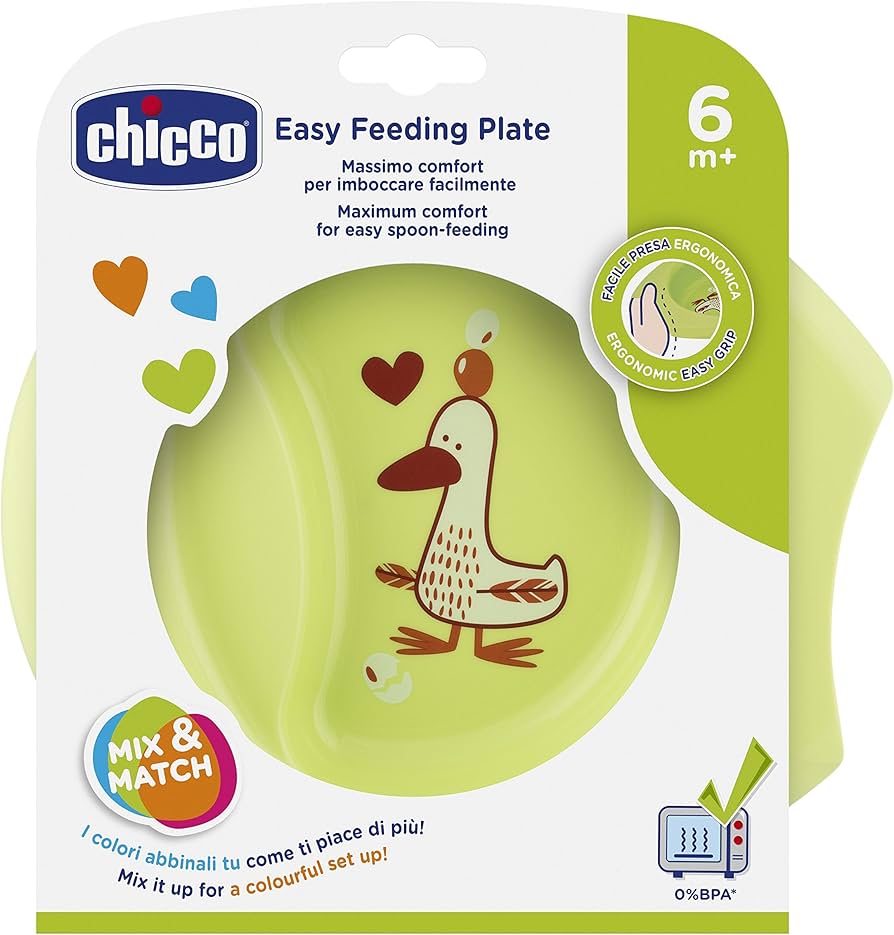
Chicco Easy Meal Weaning Set with Steamer Blender
- ✓ Steams and blends in one unit
- ✓ 500ml capacity
- ✓ BPA-free plastic body
* We earn a small commission — at no extra cost to you.
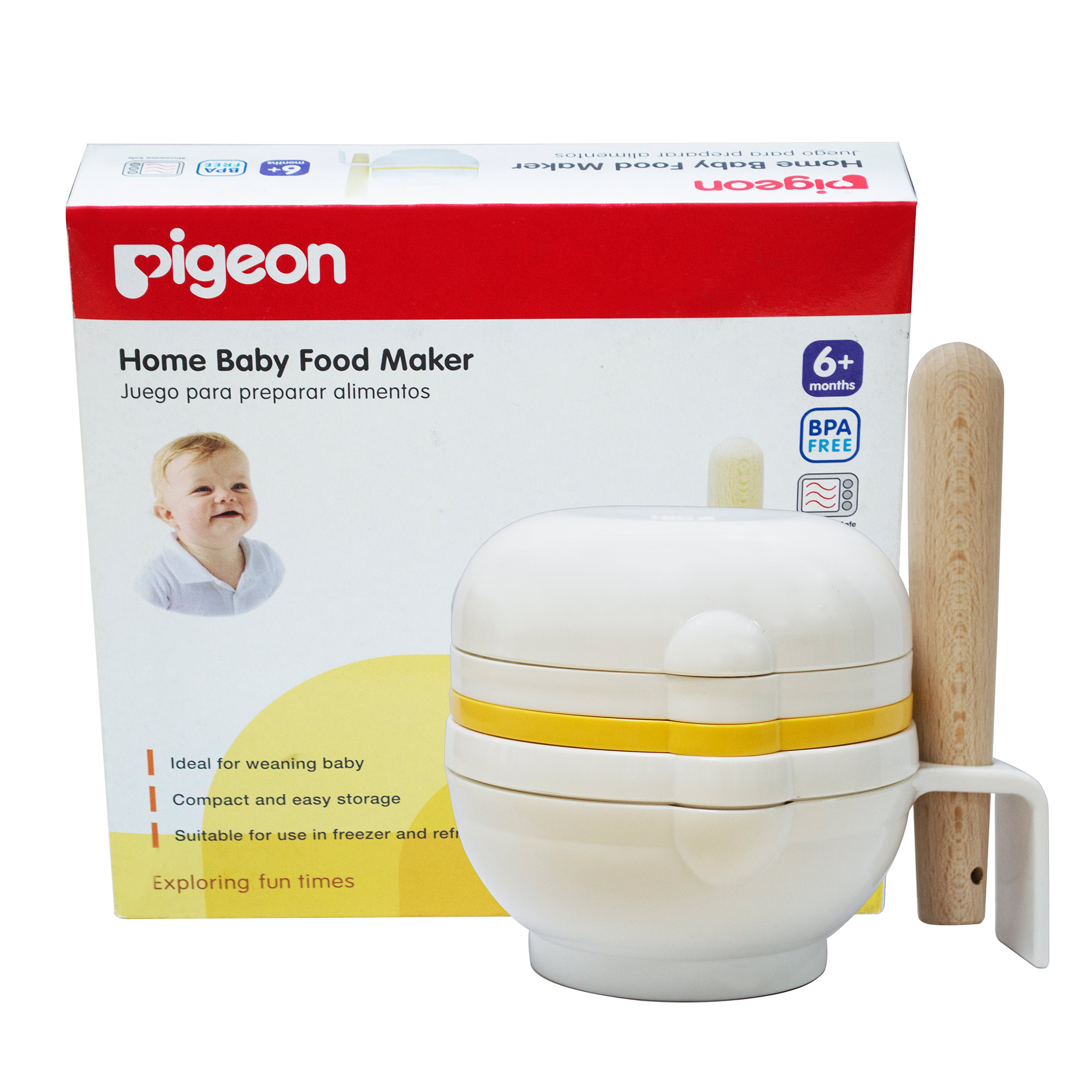
Pigeon Baby Food Maker All in One
- ✓ Steam, blend, defrost, reheat functions
- ✓ 2-tier steaming basket
- ✓ Auto shut-off safety feature
* We earn a small commission — at no extra cost to you.
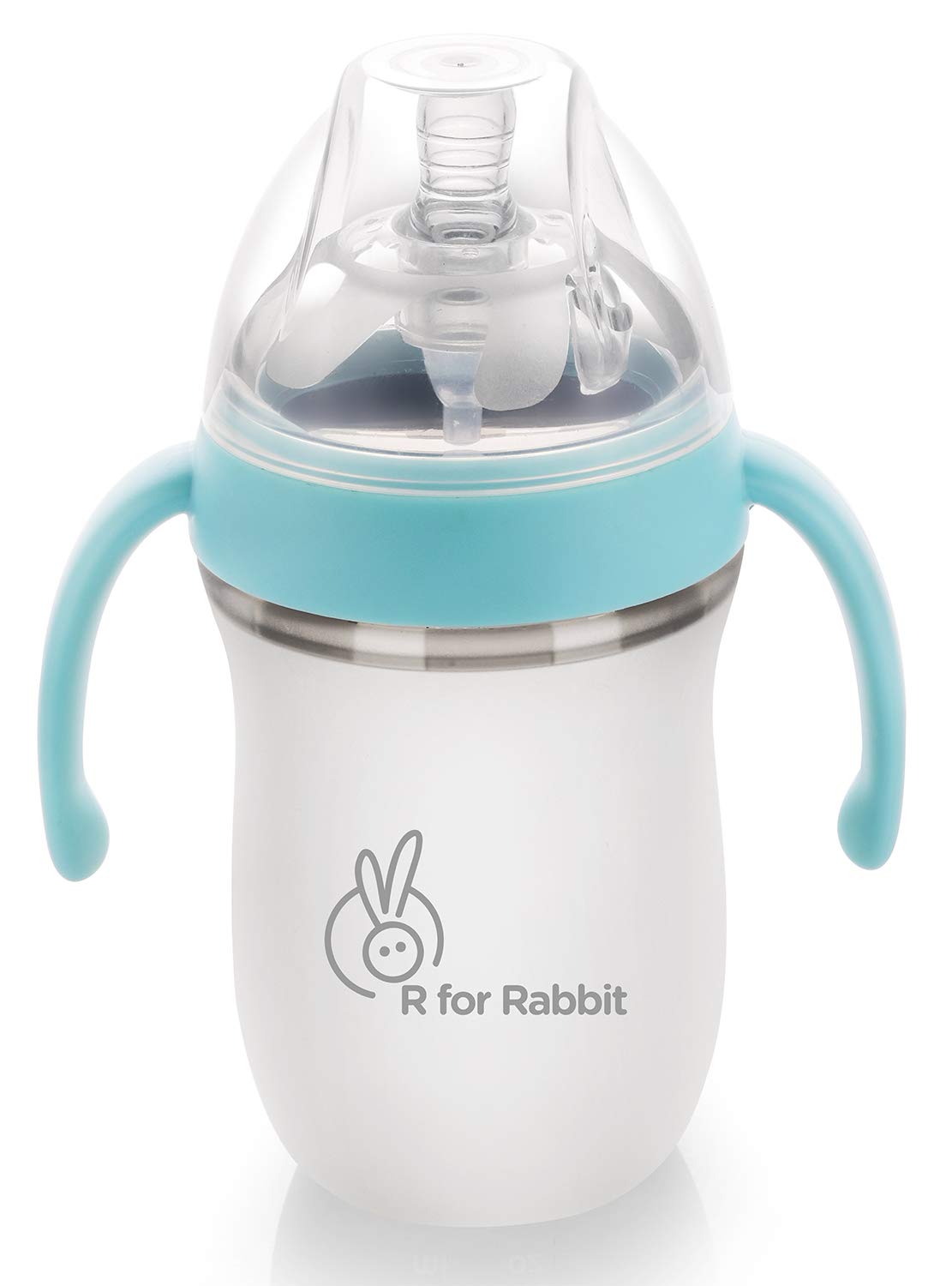
R for Rabbit First Bite Silicone Feeding Bowl Set
- ✓ Food-grade silicone
- ✓ Suction base to prevent spills
- ✓ Set of 3 bowls with airtight lids
* We earn a small commission — at no extra cost to you.
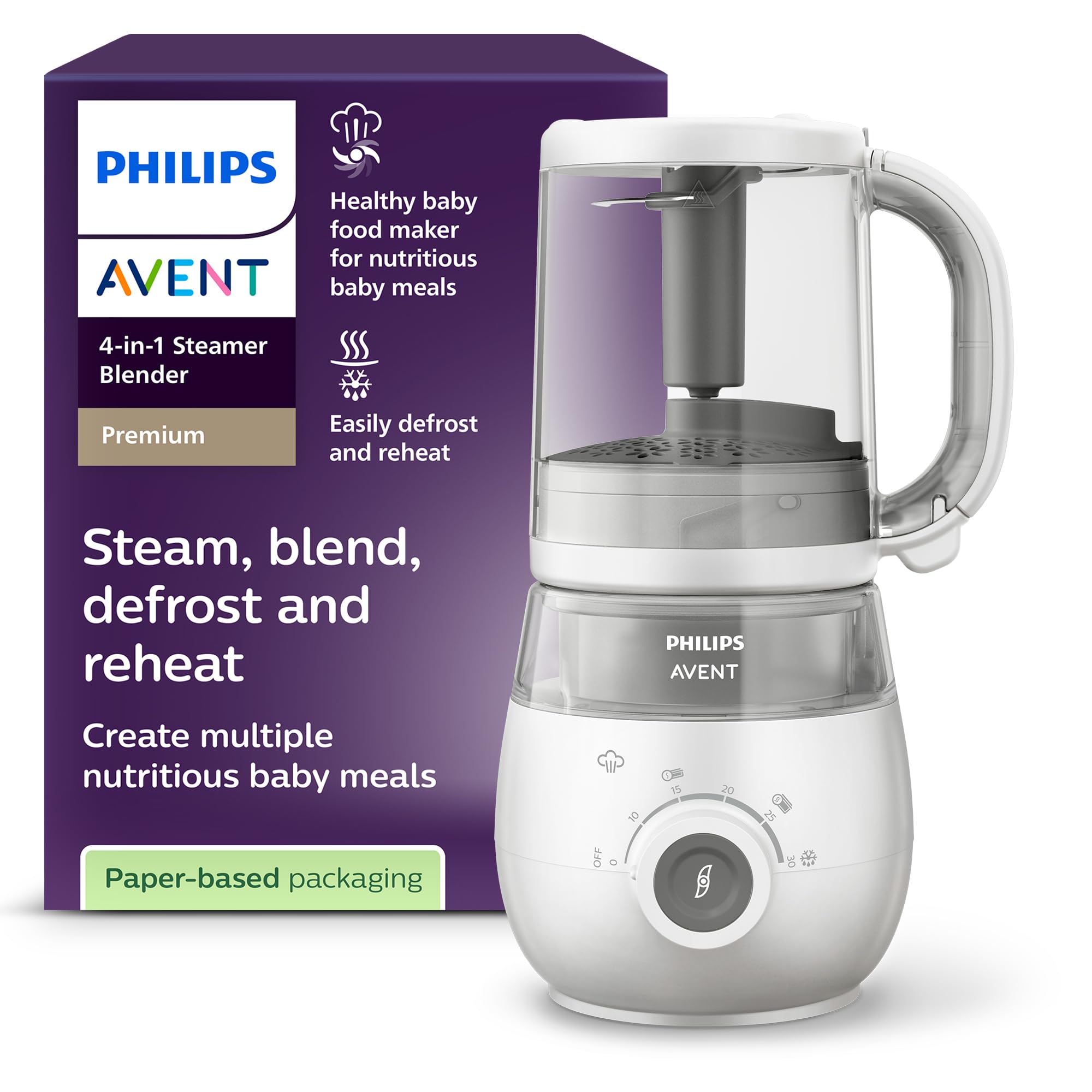
Philips Avent 4-in-1 Healthy Baby Food Maker
- ✓ Steams, blends, defrosts, reheats
- ✓ 1000ml jar capacity
- ✓ Spatula and recipe book included
* We earn a small commission — at no extra cost to you.
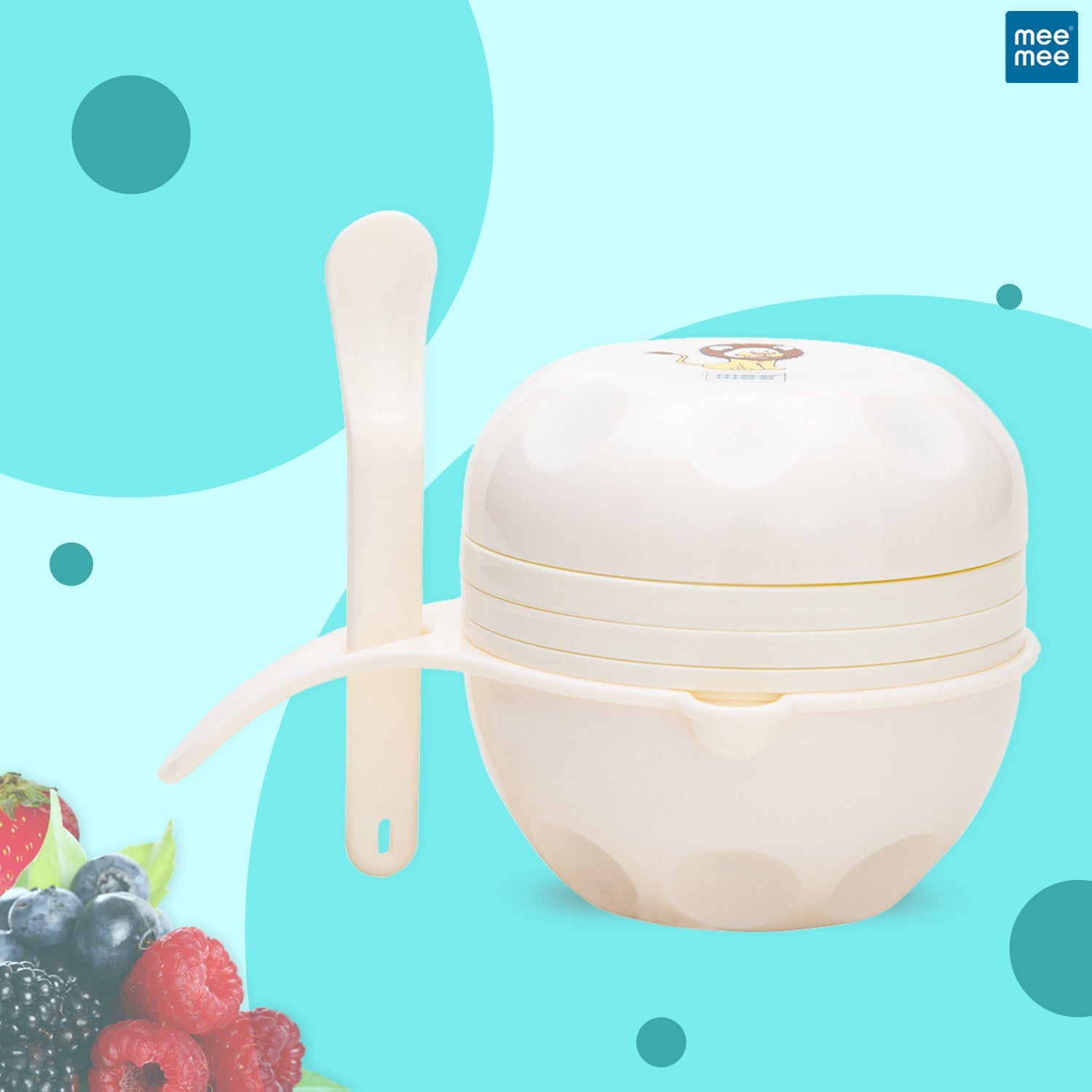
Mee Mee Premium Baby Food Grinder and Masher
- ✓ Manual grinder, no electricity needed
- ✓ Compact travel-friendly size
- ✓ Easy to clean stainless steel blades
* We earn a small commission — at no extra cost to you.